Foldable Phones: Worth the Hype or Still a Gimmick?

Verdict: Read This Before You Pay Foldable Money
Foldable phones have moved past the fragile-experiment phase. Current models survive lab testing at 200,000 folds, run full desktop-style multitasking, and fold into pockets like regular phones. The problem is the price: foldables still cost roughly three times more than a regular smartphone, according to Counterpoint Research data reported by SammyGuru, and every foldable screen still develops a visible crease.
The category launched in 2019 with devices that broke within days. Early units suffered screen flicker, hinge failure, and peeling protective layers. The gap between those first models and today is enormous: ultra-thin glass replaced plastic overlays, zero-gap hinge designs cut dust intrusion, and software now treats the unfolded display as a real tablet screen. What remains is a mature-but-expensive product, not a broken one.
Buy a foldable if you want a phone that unfolds into a small tablet and you can absorb the premium. Skip it if you keep phones for years in rough conditions, because dust, drops, and the hinge remain the weak points. The rest of this guide breaks down the numbers, the durability evidence, and who these devices fit.
What a Foldable Phone Actually Gives You
A foldable phone is a standard smartphone that opens into a bigger screen. Two designs dominate. The book style (Samsung Galaxy Z Fold line, Google Pixel Fold) opens like a book into a tablet-sized display. The flip style (Galaxy Z Flip, Motorola Razr) folds a normal phone screen in half so it fits into a small pocket or bag.

The pitch is simple: one device for phone and tablet. You read, edit documents, and watch video on the big screen, then fold it back to phone size for calls and one-handed use. Split-screen multitasking is the killer feature on book-style models. You run two or three apps side by side on a display that behaves like a small tablet. That is something no slab phone matches, and it is the one practical advantage that survives every criticism of foldables.
The flip style sells a different convenience. A full-size phone shrinks to half its length when closed. It disappears into a jeans pocket or a small bag. The outer cover screen handles notifications, music controls, and quick photos without opening the device. It is less about productivity and more about pocketability.
Price is the first reality check. A flagship foldable costs $1,500 to $2,000. A top-tier slab flagship costs $800 to $1,000. For that premium you get a bigger screen and a hinge, plus a thinner trade-in market, pricier screen repairs, and a device that holds its resale value less well. That math works for buyers who genuinely use the unfolded screen daily. It fails for buyers attracted mainly by the novelty.

Foldables remain a niche product, and price explains most of it. Counterpoint Research data cited by Droid Life puts foldables at about 2 percent of the global smartphone market. Analysts expect cumulative foldable shipments to cross 100 million units, per Counterpoint figures reported by SammyFans, which sounds large until you compare it with more than a billion smartphones shipped every year.
Price drops are coming, slowly. More brands now sell foldables, including Honor, OnePlus, Oppo, and Xiaomi, and competition pushes prices down over time. Analyst projections, including Counterpoint estimates cited by SammyGuru, expect a major brand entry to grow the foldable market in the coming year. Even so, the flexible display stack costs far more to manufacture than a rigid one, so foldables will stay in the premium tier for a while.
Durability: What the Folding Tests Actually Prove
Samsung rates its foldable displays for 200,000 folds in lab conditions. At 100 folds per day, that equals about five years of use. Other manufacturers publish similar cycle ratings, typically between 120,000 and 300,000 folds depending on the model and hinge design.

Lab numbers flatter the devices. Real-world tests add sweat, heat, dust, and uneven force. A widely reported independent test had a Korean YouTube channel fold a Galaxy Z Fold 7 by hand 200,000 times over several days of livestreaming, as documented at Shelaf.net citing Android Authority. The display survived the full 200,000 cycles. The speaker died and the hinge developed a creak along the way. The screen outlasted the body, which tells you where the real durability question sits: not the folding display, but everything around it.
Long-term owners report a consistent pattern across brands. The folding mechanism itself rarely fails outright. The failures come from the screen protector peeling at the crease, micro-scratches on the soft inner display, and hinge gaps collecting dust. YCP Tech, after testing 14 foldable phones, recommends storing them open, because resting folded keeps the display layers under sustained pressure at the fold point. Redditors report deeper creases after months of closed storage.
Foldable vs Slab: The Honest Comparison
| Factor | Foldable Phone | Slab Flagship |
|---|---|---|
| Price | ~3x a regular phone, premium repairs | Half the price or less, cheap screen fixes |
| Screen size | Tablet-size when open (book style) | Fixed 6.1-6.9 inch display |
| Durability | Rated 200,000 folds; vulnerable to dust, sand, drops on the fold | IP68 common; survives daily abuse |
| Water/dust resistance | Weaker; hinge gaps collect particles | Full IP68 standard on flagships |
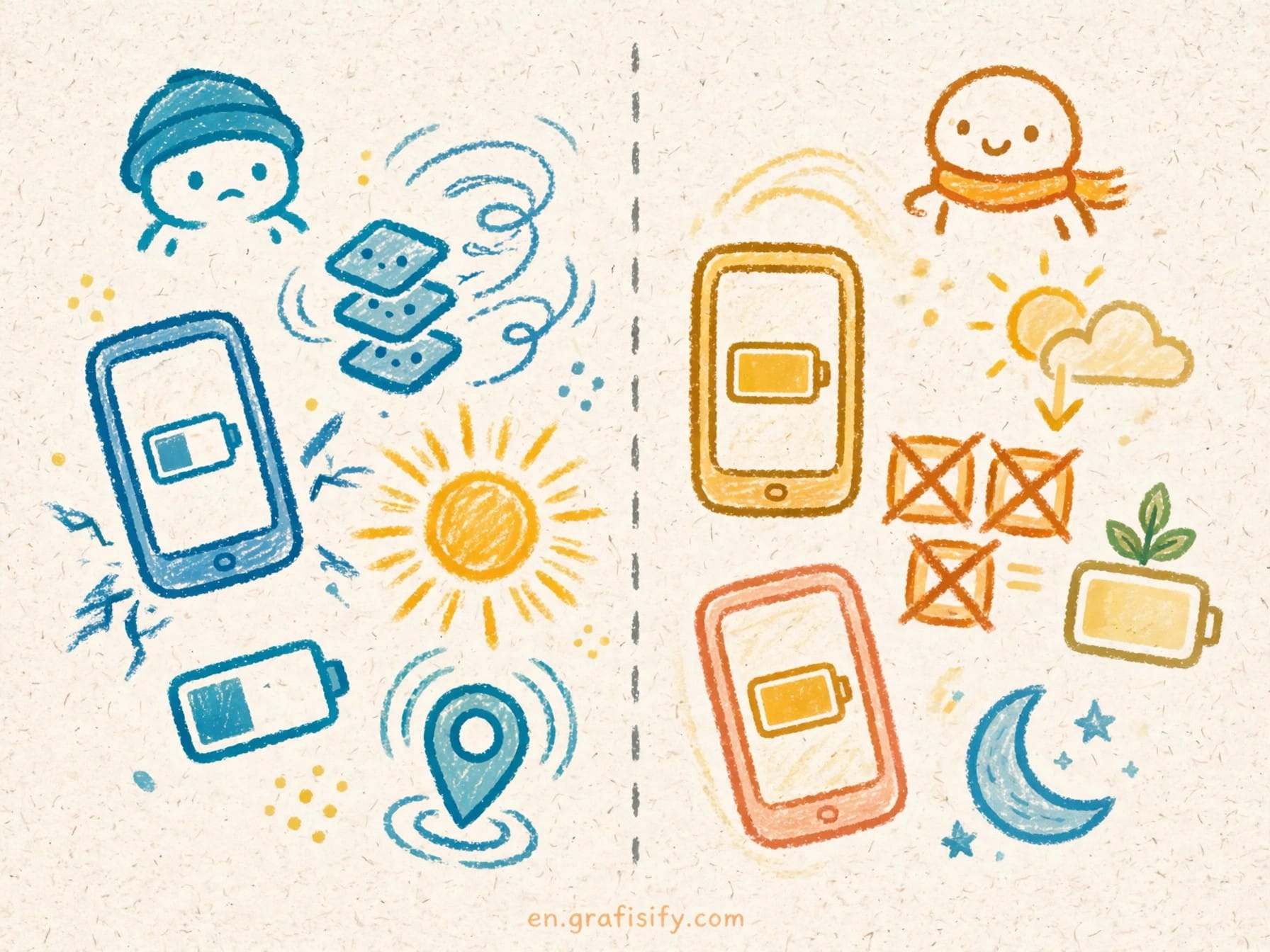
| Battery life | Bigger screens drain faster; see our guide on why phone batteries drain fast | More efficient per charge on average |
| Crease | Visible on every current model | No crease exists |
| Lifespan | 3-5 years with careful handling | 4-6 years typical; see how long smartphones last |
The Crease and Other Things Reviews Gloss Over
Every foldable OLED develops a visible crease. Ultra-thin glass and better hinge designs make it shallower, but physics sets a floor. The display stack bends around a small radius at the hinge, and repeated folding leaves an indentation. You stop noticing it during video, and it never blocks touch input. People sensitive to screen imperfections should see one in a store before buying.

The inner display is soft. It scratches from fingernails, keys, and grit that a rigid phone would shrug off. Manufacturers ship foldables with a factory screen protector, and removing or damaging it risks the display underneath. Replacement means a service center visit, not a five-minute DIY job.
Dust is the quiet killer. The hinge gap on many models lets fine particles reach the mechanism and the display edges. Beach trips and construction sites are genuinely risky. Water resistance lags behind slab phones as well. Some foldables carry an IP rating, but fewer than the IP68 protection standard on regular flagships. If your phone lives near water or dust, a foldable demands more care.
Who Should Buy a Foldable, and Who Should Not
Buy one if you read, annotate, or edit documents on your phone and want a bigger canvas without carrying a tablet. Frequent travelers benefit too: maps, boarding passes, and video calls all improve on the unfolded screen. Content reviewers and mobile gamers get real value from the extra space.
Skip one if you upgrade rarely and keep phones for four-plus years. The hinge adds a failure point that compounds over time, and replacement parts stay expensive. Skip one if you work outdoors, near the beach, or in dusty environments. Skip one if your budget is tight, because a slab flagship at half the price gives you a better camera, longer battery life, and cheaper repairs.
Business users form the core foldable audience, roughly four in ten buyers according to market analyses of the segment. That makes sense. The unfolded screen replaces a second device, and the premium is a business expense. For personal use, the calculation is harsher.
How to Make a Foldable Last
Store the phone open when it sits on a desk for hours. This reduces sustained pressure on the fold point and slows crease deepening. Keep it away from sand, dust, and grit. A single grain in the hinge can damage the inner display.
Use a case designed for foldables, with hinge coverage. Standard bumpers do not fit. Never peel the factory screen protector yourself; let a service center handle it. Check battery health periodically, because larger screens and constant multitasking stress the battery, and our guide on checking phone battery health applies doubly to foldables. Update the software on schedule, since manufacturers push hinge-behavior and display-care improvements in updates.
Handle the open-close motion normally. You do not need to baby the hinge, and lab testing shows the mechanism tolerates heavy use. Save the caution for the environment around the phone, not the folding itself.
Budget for accessories and repairs up front. A foldable case costs more than a slab case, and an inner-screen repair can run several hundred dollars. Knowing the repair price before you buy prevents an ugly surprise later. Some manufacturers bundle accident protection for the first year; take it if the price is sane.
Conclusion: A Great Second Device, a Tough First One
Foldable phones are no longer fragile experiments. The screens survive hundreds of thousands of folds, multitasking on the unfolded display is genuinely useful, and build quality improves every generation. The price premium, the crease, and the dust vulnerability are the remaining costs, and they are not small.
If the unfolded screen would replace a tablet you already carry, the premium buys real convenience. If it would not, a slab flagship gives you more phone for the money. Try one in a store, run your finger across the crease, check the price of a screen replacement, and decide with the full picture. That is the only test that matters for your wallet.
Tagged with:
foldable displayfoldable durabilityfoldable phonesphone buying tipssmartphone buying guide
Irfan is a Creative Tech Strategist and the founder of Grafisify. He spends his days testing the latest AI design tools and breaking down complex tech into actionable guides for creators. When he’s not writing, he’s experimenting with generative art or optimizing digital workflows.



 Artificial Intelligent
 Design & Creative
 Freelance
 Gadgets & Gear
 Insights
 Laptop
 Reviews
 Smartphone
 Tech Guides
 Vibe Coding