Who Owns AI-Generated Code? What the Law Says

You prompt an AI coding tool, it writes a feature, and you ship it. Then a client asks a simple question: who owns that code? The answer splits in two. Copyright law gives one answer. The tool’s terms of service give another. This article lays out both, with the sources, so you can see where your claim stands and where it stays thin.
Verdict: Two Answers, and Both Matter
US copyright law protects human authorship only. Code an AI writes from your prompts alone carries no copyright protection in the United States. Your own edits, your selection of outputs, and your arrangement of the pieces can be protected, and those human contributions are where your claim lives.
The major coding tools hand you the output by contract. OpenAI, Anthropic, Google, and GitHub each state that you own the output or that they claim none of it. A contract can only assign rights that exist, so each promise reaches only as far as the law allows. I checked the current terms of four major tools to map exactly where that line falls.
Paid business tiers add an indemnity promise, a vendor commitment to defend you if a third party claims the output infringes their rights. Free and consumer tiers carry no such promise. Generated code can still carry license risk. If output resembles copyleft code from training data, the license question lands on you, not the vendor.
Also Read:
What US Copyright Law Says About AI Output
The US Copyright Office published Part 2 of its report on copyright and artificial intelligence on January 29, 2025, after reviewing more than 10,000 public comments. Its conclusion is blunt: “Copyright does not extend to purely AI-generated material, or material where there is insufficient human control over the expressive elements.” The report adds that, with the technology generally available, prompts alone do not give a user enough control to count as the author of the output.
Prompts function as instructions. They convey ideas, and ideas are not protected expression. The report is explicit that effort does not change this. The time, expense, or work spent revising prompts is irrelevant, because copyright protects original authorship, not hard work. One artist prompted an image generator more than 600 times and still saw registration refused. The number of tries never enters the test.
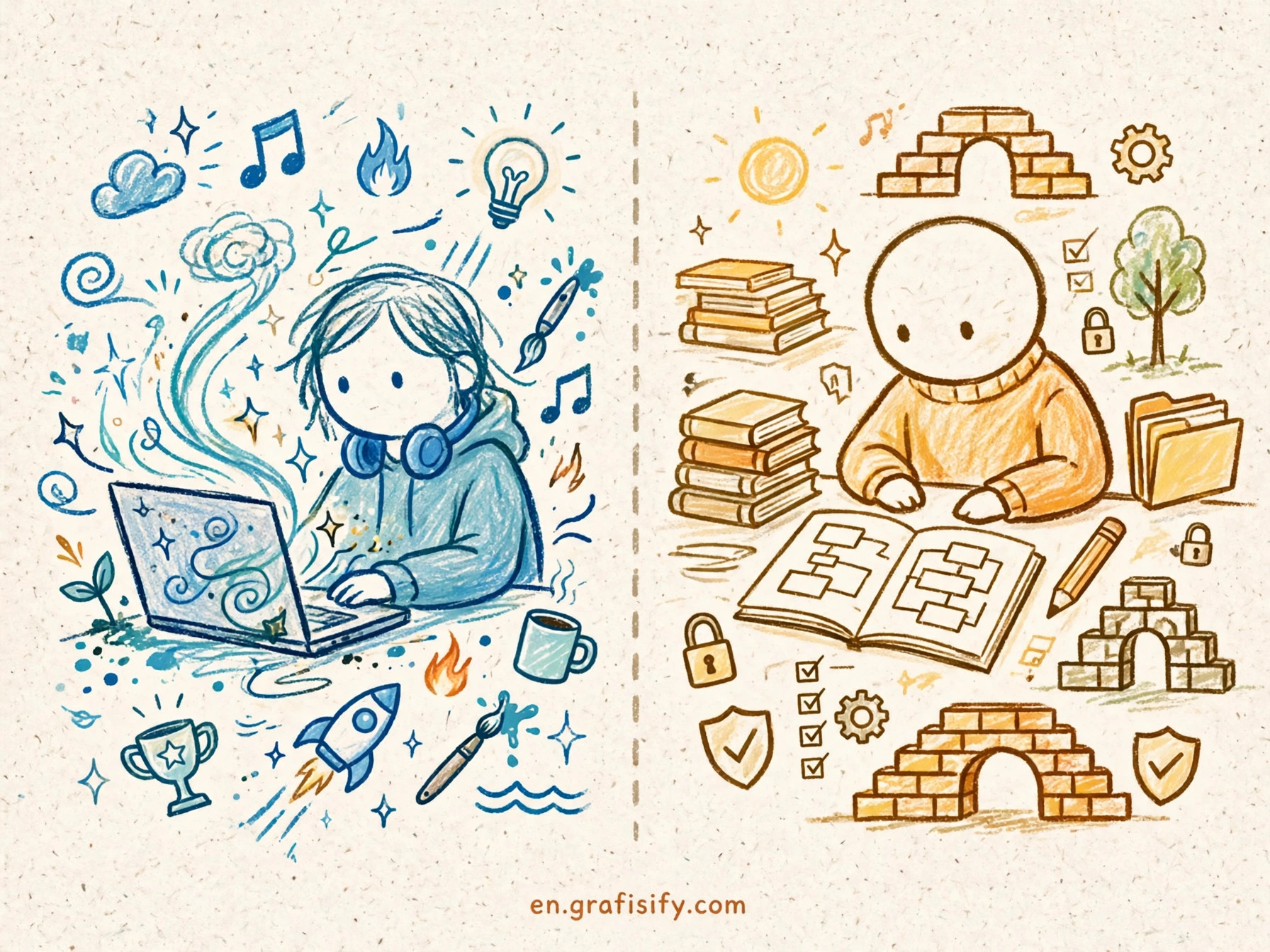
The report still leaves three routes to protection. First, expressive inputs: if you feed in your own copyrightable work and it shows through in the output, you remain the author of that portion. Second, selection and arrangement: choosing or arranging outputs in a creative way can be protected. Third, creative modification: substantive human edits to generated material can be protected. Each route turns on what a person decided, not what the model produced.
The Copyright Office applied the same test in 2023 to the comic book Zarya of the Dawn, whose images came from Midjourney. The author kept protection for the text and for the selection, coordination, and arrangement of text and images. The images themselves stayed outside protection. Registration guidance from March 2023 adds a duty to disclose AI-generated content that is more than minimal, and to exclude it from the claim.
One gap stays open for developers. No court has yet ruled on AI-generated code specifically. The report covers works in general, and the cases so far involve images. Code follows the same rule in principle, but the first code case will set the details.
This article is general information, not legal advice. If a contract or a dispute turns on ownership, talk to a lawyer who works in intellectual property.
Thaler v. Perlmutter: Prompts Are Not Authorship
Computer scientist Stephen Thaler applied to register an image called “A Recent Entrance to Paradise.” He listed his AI system, the Creativity Machine, as the sole author and himself as the copyright owner. The Copyright Office refused registration because no human authored the work. Thaler sued, and the case reached the US Court of Appeals for the D.C. Circuit.
On March 18, 2025, a unanimous three-judge panel upheld the refusal. The court held that the Copyright Act of 1976 requires every eligible work to be authored in the first instance by a human being. The judges pointed to language across the statute that presupposes human authors: references to an author’s lifespan and death, a surviving widow or widower, children or grandchildren, domicile, nationality, and the capacity to form an intention and execute a signature. Machines fit none of those words.
Thaler asked the court to rehear the case, and the court denied that request on May 12, 2025. He then petitioned the Supreme Court. On March 2, 2026, the Court declined to hear the appeal in Thaler v. Perlmutter, docket number 25-449. A denial of certiorari is not a ruling on the merits, but it leaves the D.C. Circuit decision standing, as Mayer Brown’s analysis notes.
The next test may come from a different case. Artist Jason Allen challenged the refusal to register “Théâtre D’opéra Spatial,” an image built with Midjourney through more than 600 rounds of prompting. His appeal, Allen v. Perlmutter, is pending in a Colorado federal court. If Thaler tested whether a machine can be an author, Allen tests how much human prompting and selection counts. The answer will shape how far prompt work can stretch toward authorship.
What the Big Coding Tools Promise in Their Terms
Copyright law and vendor contracts answer different questions. The law decides whether anyone can hold a copyright in the output. The contract decides what rights pass between you and the vendor. I compared the current published terms of each tool, and the table below shows what I found.
| Tool | Who owns the output | Indemnity for paid business use | Training on your code |
|---|---|---|---|
| OpenAI (ChatGPT, Codex, API) | You own the output. OpenAI assigns “all our right, title, and interest, if any, in and to Output.” | Yes, through Copyright Shield for Enterprise and API customers. Free and Plus tiers get none. | API data is not used for training by default. Consumer plans allow opt-out. |
| Anthropic (Claude, Claude Code) | Commercial Terms: the customer owns its outputs. Consumer terms assign Anthropic’s rights “if any.” | Yes, for paid use under Section K of the Commercial Terms. Consumer plans sit outside it. | API and Console inputs and outputs are not used for training by default. |
| Google (Gemini) | Google “won’t claim ownership over that content” under its Terms of Service. | Yes, for covered services such as Gemini for Google Cloud, under its indemnified services list. | Consumer Gemini may use content to improve services unless settings say otherwise. Enterprise tiers exclude training use. |
| GitHub Copilot | “GitHub does not claim ownership of your Input or Output.” You retain your code, including suggestions you incorporate. | Yes, for Enterprise customers under Microsoft’s Customer Copyright Commitment. Individual Pro and Free plans get none. | Individual licenses grant GitHub a license to train on inputs and outputs unless you opt out. Business and Enterprise licenses exclude that clause. |
OpenAI’s Terms of Use state that you own the output and assign you “all our right, title, and interest, if any, in and to Output.” Anthropic’s Commercial Terms state that the customer owns its outputs. Google’s Terms of Service state that Google “won’t claim ownership over that content.” GitHub’s Terms of Service state that GitHub “does not claim ownership of your Input or Output.” An independent review of generative AI tool terms by the Apache Software Foundation reached the same reading for these tiers in August 2026.
Read the hedges in those promises. OpenAI assigns its rights “if any.” Anthropic assigns its rights “if any” on consumer plans. Google promises only that it will not claim ownership. Each phrase stops short of guaranteeing that a copyright exists in the output. The vendor hands you whatever rights it holds. If the law says no copyright exists in raw AI output, the vendor has nothing to hand over, and your contract cannot create protection the law withholds.
GitHub adds a second condition worth noting. Its terms state that you are responsible for determining whether your use of output requires a third-party license and for complying with any such license. The vendor gives you the code and leaves the license check to you. That allocation of responsibility runs through every tool’s terms in some form. Each vendor also tells the customer to evaluate output for suitability and accuracy, with human review where appropriate.
The Indemnity Gap: Who Pays When Code Infringes
An indemnity is a vendor promise to defend you and pay covered costs when a third party sues over the vendor’s product. The most likely claim against shipped AI code is not about who owns it. The claim is that the code copies someone else’s protected work. All four major vendors publish an indemnity for paid business use, and none extends it to free or consumer tiers.
OpenAI’s Copyright Shield covers ChatGPT Enterprise and API customers. The phrase “Copyright Shield” does not appear in the consumer Terms of Use. Anthropic’s Commercial Terms, effective June 17, 2025, defend a customer’s paid use of the services under Section K, and that section names both output and training data. Consumer plans fall outside the Commercial Terms entirely. Google lists its covered services publicly, and Gemini for Google Cloud sits on that indemnified services list. Microsoft’s Customer Copyright Commitment covers paid Copilot, and GitHub’s Enterprise terms carry the indemnity for Copilot Enterprise.
Cover comes with conditions. OpenAI’s API terms can void cover when filters or citation tools are disabled or unused, or when output is modified or combined. Anthropic’s text carries no filter condition. Beta services sit outside cover at OpenAI, and negotiated enterprise agreements override the published text.
The practical line is simple. If you vibe-code a commercial feature on a free or consumer tier, you carry infringement risk alone. If you ship the same feature from a paid business tier, the vendor shares the risk under its published conditions. Check your tier before you ship, not after a claim arrives. A tier upgrade is cheap. A defense is not.
The Copyleft Risk Hiding in Generated Code
Code models train on public repositories, and public repositories include code under copyleft licenses such as the GPL. A model can produce output that resembles that licensed code, sometimes closely. If your codebase absorbs GPL-licensed code, the license can require you to release your own code under the same terms. That is the risk that keeps engineering leads awake, and no vendor indemnity removes it by itself.
A class action filed in 2022, Doe v. GitHub, challenged whether Copilot’s training respected open-source license terms. No court has yet ruled that generated code which resembles licensed code infringes the original license. The question stays open, and the uncertainty itself is the risk.
Tools exist to cut the risk down. GitHub Copilot offers duplication filters that block suggestions matching public code, and you should turn them on. License scanners can flag code that matches known open-source projects before it reaches your main branch. A human review gate at merge time catches what filters miss. The same review habit that protects you from security holes in vibe-coded apps also protects you from license surprises, and the two checks belong in the same review.
Testing helps too. Testing AI-generated code before you ship covers the test suite side of the same discipline. License checks are one more verification step, not a separate process.
How to Strengthen Your Claim to AI-Assisted Code
You cannot copyright raw AI output under current US law. You can build a stronger claim around the human work that surrounds it. The steps below follow the Copyright Office report directly.
Write the architecture and the key logic yourself. Let the model fill in scaffolding, boilerplate, and repetitive implementations. Your own expressive input is the clearest route to protection, and it also produces better code. A file where the structure, the naming, and the hard decisions came from you reads as your work because it is your work.
Edit generated code in a substantive way. Restructure functions, rewrite unclear logic, add your own tests, and choose between competing outputs with a reason you can state. Selection and arrangement count when the choices are creative, and modification counts when the edits change the expression. Light touch-ups and accepting the first suggestion do not build the same record.
Keep records of the human contribution. Save prompts, keep diffs, and write short review notes that state what you changed and why. The Copyright Office decides authorship case by case, and records show human control where memory cannot. If you ever register a copyright, the 2023 guidance requires you to disclose AI-generated content that is more than minimal and exclude it from your claim. Records make that disclosure accurate.
Use a paid business tier when you ship commercially. The indemnity is the main reason. The tier also changes the training terms: GitHub business and enterprise licenses exclude the training clause that applies to individual plans, and API use at OpenAI and Anthropic excludes training by default. Put the tool choice in writing for your team. Rules files for AI coding agents are a natural place to record which tools the team uses and what the review gate requires before merge.
Run a license scan before merge, and track the debt that AI code creates over time. Vibe-coded tech debt grows quietly when generated code ships without review, and license exposure is one form of that debt. A scan at merge time costs minutes. Untangling a license problem in a shipped product costs far more.
Conclusion: Own the Work, Not Just the Output
Two answers govern AI-generated code, and neither cancels the other. Copyright law protects your human contribution: the architecture you designed, the logic you wrote, the edits you made, and the choices you recorded. It does not protect raw output that a model produced from your prompts alone. Vendor contracts hand you the output and, on paid business tiers, a promise to defend it. Those contracts cannot create a copyright the law withholds.
That split is manageable once you see it. Vibe coding stays a powerful way to build, and the comparison with hand-written code in vibe coding vs traditional coding still favors AI assistance for speed. The work that makes the output yours is the human work around it: design it yourself, edit it with intent, record what you did, and ship it from a tier that backs you.
Do one audit this week. Check which tier your coding tool runs on and whether it carries indemnity. Turn on duplication filters. Write down who reviews AI-generated code before merge, and add a license scan to that gate. Then keep building. The tools will keep improving, the courts will keep ruling, and developers with clear records will hold the strongest claims when the rules settle.

Irfan is a Creative Tech Strategist and the founder of Grafisify. He spends his days testing the latest AI design tools and breaking down complex tech into actionable guides for creators. When he’s not writing, he’s experimenting with generative art or optimizing digital workflows.





 Artificial Intelligent
 Design & Creative
 Freelance
 Gadgets & Gear
 Insights
 Laptop
 Reviews
 Smartphone
 Tech Guides
 Vibe Coding






