eSIM vs Physical SIM: Which Is Right for Your Phone?
Quick Verdict
An eSIM is your best choice if you travel internationally, want to switch carriers instantly, or value physical security against SIM-swapping attacks. A physical SIM remains the safer bet if you frequently swap phones, live in a region with limited eSIM support, or prefer not to rely on carrier-side provisioning. Both work fine for daily use, but eSIM is where the industry is heading.
I have been testing eSIMs across multiple Android and iOS devices for the past two years, and the gap between digital and physical SIMs has narrowed considerably. In this comparison, I walk through the real-world differences in security, convenience, cost, and device compatibility so you can decide which one fits your lifestyle.
What Is an eSIM and How Is It Different From a Physical SIM?
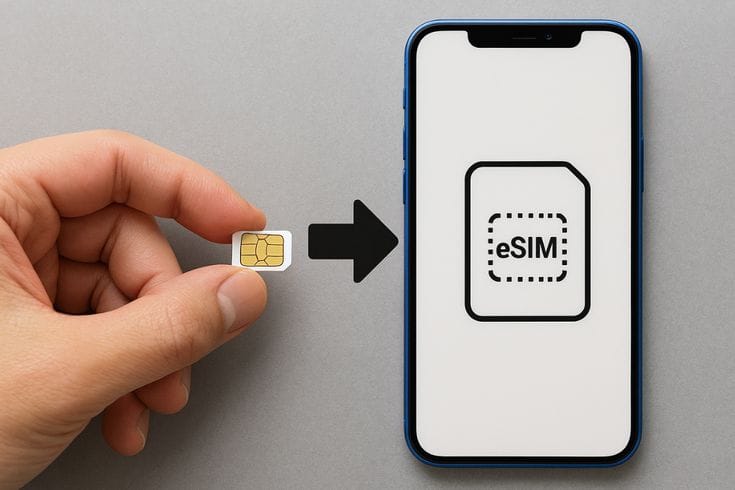
A physical SIM is the familiar plastic card you insert into your phone. It stores your subscriber identity (IMSI number, authentication key) on a tamper-resistant chip and is tied to a specific carrier. To switch carriers, you swap the card. To lose your phone with a physical SIM inside, you risk your number being transferred to a new device via a malicious SIM swap.
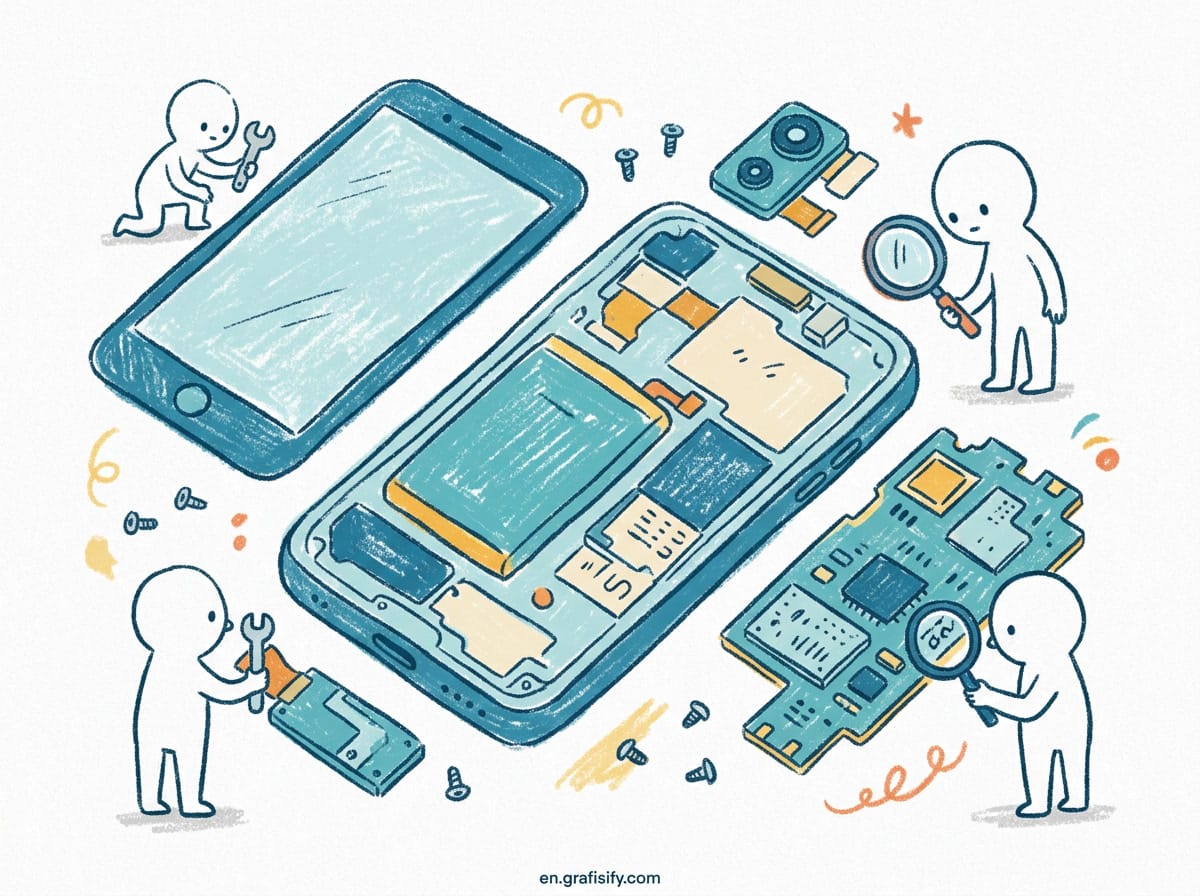
An eSIM (embedded SIM) is the exact same technology, but the chip is soldered directly onto your phone’s motherboard. There is no card to insert, no tray to eject. You activate it by downloading a carrier profile over Wi-Fi or scanning a QR code. Your phone can store multiple profiles (usually 5 to 10), though only one or two can be active at the same time depending on the device.
Also Read:
Many flagship phones now ship with eSIM-only configurations in certain markets. Apple has sold eSIM-only iPhones in the US since the iPhone 14 series. The Google Pixel 8 series and later, Samsung Galaxy S24 and newer, and recent flagship Android devices all support dual SIM setups with one physical SIM and one or more eSIM profiles.
If you are wondering whether your phone supports it, check the manufacturer’s spec sheet. Most devices released in 2024 and 2025 include eSIM capability. Notable exceptions include budget Android phones and some midrange models sold outside North America and Europe.
Security: eSIM Wins Against SIM Swapping
SIM-swapping attacks are among the most damaging threats to personal accounts. An attacker convinces your carrier to transfer your phone number to a SIM card in their possession. Once they control your number, they can reset passwords on your email, bank, and social media accounts tied to SMS-based two-factor authentication.
Also Read:
Physical SIM cards are more vulnerable here because the attack relies on social engineering at the carrier level. The attacker walks into a store or calls support, pretends to be you, and asks for a replacement SIM. With an eSIM, stealing your number is harder because there is no physical card to duplicate. Your profile is stored on the carrier’s server and tied to your device’s unique eSIM identifier. Re-provisioning an eSIM on a new device requires access to your account credentials and often a confirmation on your existing device.
Does this mean eSIMs are unhackable? No. Security researchers have demonstrated that vulnerabilities in eSIM provisioning systems exist, and certain attacks like SIM-jacking are still possible if the carrier’s backend is compromised. But the attack surface is smaller. A report from Panda Security notes that physical SIMs remain more susceptible to SIM swapping because the barrier to entry is a phone call. With eSIM, the attacker needs your online account password, which is a tier higher in difficulty.
For high-value targets, eSIM plus a PIN lock on your carrier account is the strongest consumer-grade defense available today. The Panda Security analysis confirms that SIM-swapping attacks remain far easier to execute on physical SIM cards than on eSIM profiles.
Convenience: Switching Carriers and Travel Use
This is where eSIM shines brightest. When I landed in Japan last year, I bought a data-only eSIM from Airalo before the plane landed. I scanned the QR code from the confirmation email, activated it in settings, and had data within 60 seconds. No standing in line at a kiosk, no tiny SIM ejection tool, no risk of losing the tiny card.
Travel eSIM providers like Airalo, Holafly, and Ubigi offer local and regional data plans at competitive rates. A 10-day unlimited plan in Europe costs roughly $20 to $40, which is often cheaper than your home carrier’s international roaming add-on. You can install the profile before you leave and activate it when you arrive. Some phones support automatic eSIM switching, so your primary line for calls stays active while the travel eSIM handles data.
Physical SIMs are more straightforward when you buy prepaid plans locally, especially in countries where eSIM support is still rare. In parts of Southeast Asia, Latin America, and Africa, local carriers may not offer eSIM provisioning at all. You walk into a convenience store, buy a SIM pack, and pop it in. No QR code, no settings menu, no carrier app required.
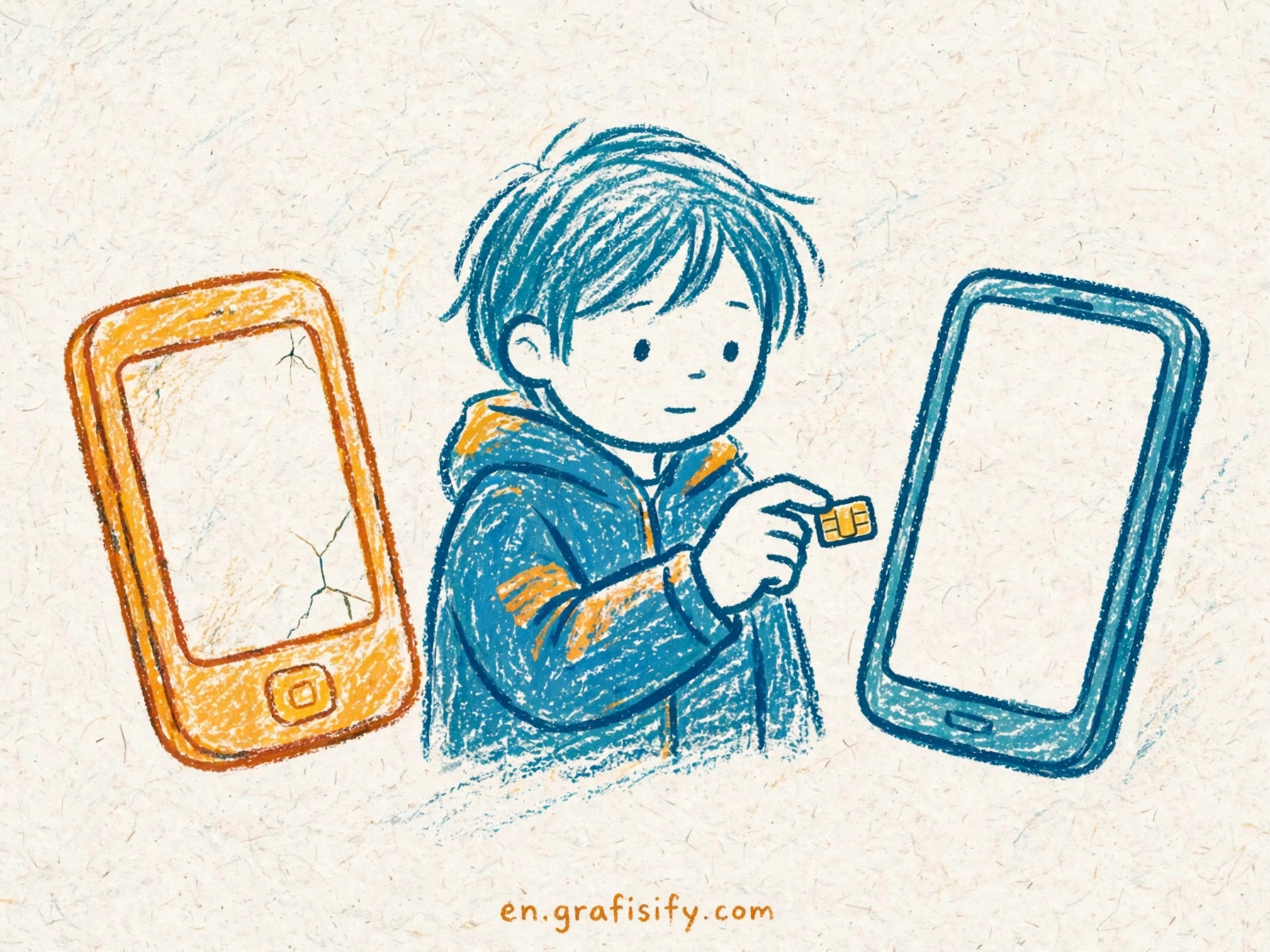
For frequent phone switchers, physical SIM is still less of a headache. Swapping a physical SIM between devices takes seconds. Moving an eSIM to a new phone requires deactivating it on the old device, downloading a new profile on the new device, and sometimes contacting your carrier for a reset code. Apple and Google have improved this with eSIM Quick Transfer (iOS) and automatic eSIM transfer (Android), but it is not as seamless as swapping a card.
Device Compatibility and Dual SIM Setup
Premium smartphones from 2023 onwards widely support eSIM, but implementation varies. Let me break down the key differences:
| Feature | Physical SIM | eSIM |
|---|---|---|
| Carrier switching speed | Swap card (30 seconds) | Download profile (1-3 minutes) |
| SIM-swap protection | Low (social engineering risk) | High (account-based provisioning) |
| Travel data plans | Buy local SIM at airport | Buy eSIM online before departure |
| Number of stored profiles | 1 per physical slot | 5-10 per device |
| Dual SIM support | 2 slots or nano + eSIM | 1 pSIM + 1-2 eSIMs |
| Physical loss risk | Yes (card can be lost) | No (embedded in device) |
| Device transfer | Instant (swap card) | Requires carrier reprovisioning |
| Budget phone support | Universal | Limited to midrange and above |
Dual SIM users should pay attention to which configuration works for your needs. Most eSIM-capable phones support one physical SIM plus one eSIM working simultaneously, called dual SIM dual standby (DSDS). Both lines ring for incoming calls, and you choose which line handles mobile data.
Phones like the carrier-locked devices from US carriers sometimes disable eSIM functionality until the phone is unlocked. Always verify compatibility with your carrier before buying an eSIM-only phone. If your carrier does not support eSIM activation, a physical SIM slot is essential.
If you need two physical SIM lines for work and personal use, you may be limited to older phone models or specific dual-SIM variants sold in Asia and China. Many manufacturers continue selling these variants alongside global eSIM-only versions.
Cost Analysis: eSIM vs Physical SIM
There is no direct cost difference for the SIM technology itself. Most carriers charge the same monthly rate whether you use a physical SIM or an eSIM. The cost differences appear in international travel and starter fees for third-party services.
International roaming: Traditional carrier roaming add-ons typically cost $10 to $15 per day in most countries worldwide. A travel eSIM from a provider like Airalo costs $3 to $6 per day for unlimited data, or $1 to $3 per gigabyte for flexible data-only plans. If you travel twice a year for two weeks each time, switching to travel eSIMs saves $100 to $200 annually.
Starter fees: Some carriers charge a one-time activation fee of $5 to $10 for an eSIM profile, while physical SIMs are often free or cost $1 to $5 at retail locations. These fees are typically waived for postpaid subscribers.
Multiple lines: If you maintain separate numbers for work, personal, and data usage, eSIMs eliminate the need to carry multiple phones or swap SIM cards physically. A single eSIM-compatible phone can store up to 10 profiles, though only two can be active at once.
The most expensive scenario is owning a phone that does not support eSIM when you need international connectivity. Either pay higher carrier roaming rates or purchase a separate pocket hotspot. If your phone supports eSIM, the long-term savings from travel alone justify making the switch.
How to Switch to eSIM (Step by Step)
Switching from a physical SIM to an eSIM is straightforward for most major carriers. Here is the general process based on my experience:
- Confirm compatibility. Check if your phone supports eSIM and if your carrier offers eSIM provisioning services. Major carriers in the US (AT&T, Verizon, T-Mobile), most European carriers, and many Asian carriers support it. Smaller MVNOs may not yet.
- Request an eSIM from your carrier. Log in to your account portal or visit a physical store. The carrier sends you a QR code by email or provides one on their website dashboard.
- Install the profile. On iPhone: Settings > Cellular > Add eSIM > Scan QR Code. On Android: Settings > Network and Internet > SIMs > Add eSIM. The profile downloads over Wi-Fi and activates in under two minutes.
- Label your lines. If you use dual SIM setup, label each line (Primary, Secondary, Travel) so incoming calls and messages route correctly.
- Keep your physical SIM as backup. Do not discard your physical SIM immediately until you confirm your eSIM works reliably for calls, texts, and data over at least 48 hours of testing.
If you are switching to a new carrier entirely, you can often start with an eSIM and skip the physical SIM delivery wait entirely. Some digital carriers like Google Fi and Tello operate as eSIM-only providers and complete activation within minutes.
For comprehensive advice on phone features beyond connectivity, see our battery care guide, our display refresh rate explained, and our smartphone update longevity breakdown.
Frequently Asked Questions
Can I use eSIM and physical SIM at the same time?
Yes, absolutely. Most eSIM-capable phones support one physical SIM and one eSIM working simultaneously. This is called dual SIM dual standby (DSDS). Both lines ring for incoming calls, and you choose which line handles mobile data usage.
Does eSIM drain battery faster than physical SIM?
In practice, no significant difference exists. The eSIM chip is identical to a physical SIM chip in power consumption and performs the same signal searching behavior. I tested both configurations on the same phone model, and battery drain remained within normal margin of error.
Can I switch eSIM to a new phone?
Yes, but the process varies by carrier. Some allow eSIM transfer through their official app or customer service website. Others require you to contact customer support and provide proof of purchase. The newer eSIM Quick Transfer feature on iPhone 15 and later transfers the profile directly between two devices in your iCloud account automatically.
What happens if I factory reset my phone with an eSIM installed?
The eSIM profile gets completely erased during reset. You must reinstall it from your carrier’s original QR code or reactivate through their app interface. Keep a screenshot of your carrier’s QR code saved in your password manager or a spare phone for emergency recovery situations.
Is eSIM available in every country globally?
Most developed countries now support eSIM technology, but coverage in emerging markets remains uneven. Carriers in India, Brazil, and parts of Africa offer eSIM for postpaid subscribers but may restrict it for prepaid customers. According to the GSMA Intelligence report, over 55 percent of all smartphones will use eSIM technology by 2030. If you travel to remote destinations, carrying a physical SIM card as backup is still smart preparation.
Final Thoughts
I recommend switching to an eSIM as your primary connection if your phone and carrier support it, keeping your physical SIM slot available for travel or backup purposes. The security advantage against SIM swapping alone justifies the one-time setup effort. International travelers will save significant money on roaming charges. For everyone else, the convenience of activating a new plan without waiting for a physical card arrives in mail is hard to beat.
Stick with physical SIM if you change phones frequently every few months, need two physical SIM lines permanently, or live in a region where eSIM support remains limited. The technology is not fully universal yet, and a physical SIM remains the safe choice when you need reliable instant connectivity anywhere.
If you shop for a new phone soon and consider eSIM important, examine the dual SIM configuration carefully. Some models sacrifice the second physical SIM slot for eSIM-only second line, which may or may not match your usage patterns. Research thoroughly before finalizing purchase decisions.
As GSMA forecasts predict, over 55 percent of smartphones will use eSIM technology by 2030. The transition toward digital connectivity is already underway. Making the switch now means you will already master the technology when physical SIM slots eventually disappear from future devices.
External sources used in this article: GSMA Intelligence eSIM adoption forecasts from August 2025, Panda Security SIM-swap comparison research, Airalo and Holafly travel eSIM pricing analysis, Apple iPhone eSIM transfer technical documentation, Android eSIM Quick Switch guide from Google support team.

Irfan is a Creative Tech Strategist and the founder of Grafisify. He spends his days testing the latest AI design tools and breaking down complex tech into actionable guides for creators. When he’s not writing, he’s experimenting with generative art or optimizing digital workflows.



 Artificial Intelligent
 Design & Creative
 Freelance
 Gadgets & Gear
 Insights
 Laptop
 Reviews
 Smartphone
 Tech Guides
 Vibe Coding