Android vs iPhone: How Long Phone Updates Actually Last

Quick Verdict
Most flagship phones now get five to seven years of updates, but the number on the box hides big differences in how fast and how completely those updates arrive. Samsung and Google lead with seven-year promises on their top models. Apple ships five to seven years of iOS support, with a track record that often outlasts the official line. Mid-range and budget Android phones still fall off a cliff at two to four years. If longevity matters more than launch-day specs, the brand and price tier you pick decide your phone’s real lifespan.
Why Update Support Matters More Than Specs
A phone does not stop working when the software updates stop. It stops being safe. Security patches close holes that attackers actively exploit, and the gap between a patched phone and an abandoned one widens every month. After support ends, you keep using the hardware, but you carry a device that no longer receives fixes for known vulnerabilities.
Update support also determines resale value. A buyer checks the update date, not just the camera. A phone with three years of support left sells faster and higher than an identical model with none. For freelancers and remote workers who treat their phone as a work tool, that residual value is part of the real cost of ownership. If you want to stretch a phone’s life before resale, start by clearing manufacturer clutter as we covered in our Android bloatware guide.
The good news is that the floor has risen fast. Where four years of support once meant you bought a premium iPhone, several Android flagships now match or beat it. The gap now lives in the mid-range and budget tiers, where marketing says “up to” and reality says “barely.”

The Brand Breakdown in 2026
Here is where the major brands actually stand on update commitments for their current flagship lines:
| Brand | Flagship OS Upgrades | Security Patches | Mid-Range Support |
|---|---|---|---|
| Samsung (Galaxy S / Z) | 7 years | 7 years | 4 to 5 years |
| Google (Pixel) | 7 years | 7 years | 5 years (Pixel A) |
| Apple (iPhone) | 5 to 7 years | 5 to 7 years | 5 to 7 years (all tiers) |
| Motorola | 5 years | 5 years | 3 to 4 years |
| Xiaomi / OnePlus | 4 years | 5 to 6 years | 2 to 4 years |
Samsung and Google set the pace with seven-year guarantees on their flagship phones, covering both OS upgrades and security updates. That commitment started with the Galaxy S24 and Pixel 8 families and now spans their top lineups, as Samsung documents in its Galaxy software update guide and Google confirms in its Android release notes. Apple does not publish a fixed year count, but iPhones consistently receive iOS updates for five to seven years, and every iPhone tier gets the same treatment. Motorola reached five years on recent flagships, while Xiaomi and OnePlus sit at roughly four years of OS upgrades with slightly longer security windows.

The table tells one story, but timing tells another. Samsung and Google deliver their promised updates on a regular monthly schedule, and major OS versions usually land within weeks of release. Apple pushes a single build to all compatible iPhones on the same day, which means no tier waits behind another. The brands that promise fewer years also tend to ship updates less predictably, so the real experience can feel shorter than the number suggests.
Android vs iPhone: Two Different Models
Android makers sell a promise measured in years. Samsung and Google state the number up front, which helps you compare at purchase time. The catch is fragmentation: a seven-year promise applies to the Galaxy S series, not the Galaxy A series you might actually buy. The same brand can offer seven years on one shelf and three on the next.
Apple runs a different model. It ships one OS to every supported device on the same day, and older iPhones get the update alongside the newest model, as listed on Apple’s iPhone support page. The trade-off is that Apple controls both the hardware and the software, so the seven-year reality depends on whether your specific iPhone makes the cut each fall. In practice, iPhones hold value and receive updates longer than their stated minimum, which is why a five-year-old iPhone still feels current.
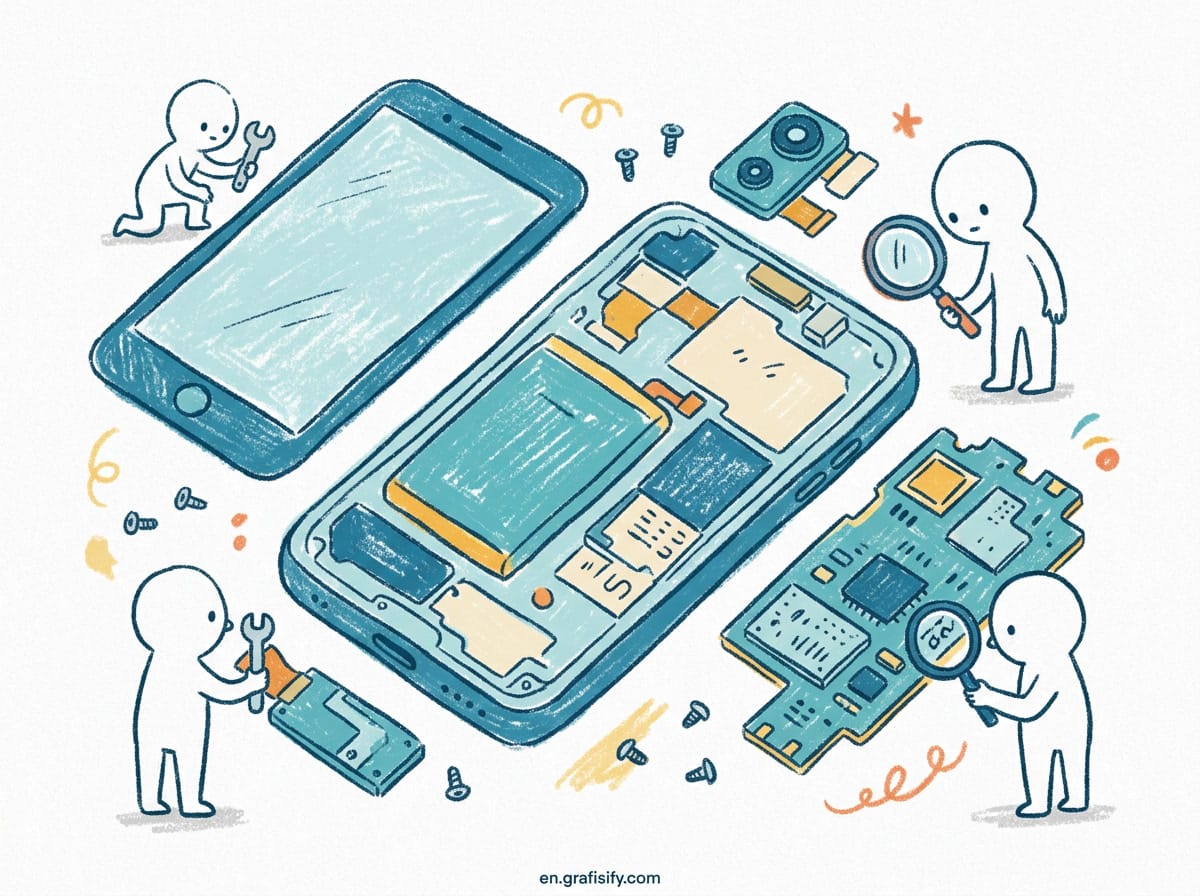
The practical difference shows up in the mid-range. An iPhone SE from a few years back still gets current iOS. A budget Android from the same period is often frozen on an old version with no path forward. If your budget caps you below flagship pricing, Apple’s uniform support gives you more years per dollar than most Android makers. Support length also shapes repair decisions, which we break down in our smartphone repairability teardown guide.
Where the Promises Break Down
The headline number hides three gaps you should watch for before buying.
First, OS upgrades and security patches are not the same thing. A brand may promise four OS versions but six years of security fixes. That is better than nothing, but it means your phone stays on an old Android version while still receiving critical patches. Know which clock you are reading.
Second, carrier and regional variants lag. A phone sold unlocked often updates faster than the same model locked to a carrier, because the carrier tests and approves the build on its own schedule. In some regions, the update cadence slips by months regardless of the brand promise.
Third, the mid-range gap is widening, not closing. Flagship support keeps extending, but affordable phones still ship with two to four years of support. The marketing rarely says which tier you are looking at, so check the specific model, not the brand reputation.
How to Check Your Phone’s Update Status
You do not need to guess how much support your phone has left. On Android, open Settings, then Software update or System update, and look for the last update date. Sites like TechRadar’s longevity explainer and the manufacturer support pages publish the promised end date per model. On iPhone, open Settings, then General, then Software Update, and compare your iOS version against the latest release to see how current you are. Write the end date on a note app so you are not surprised when the last patch arrives.
If your phone is past its support window, you still have options. Continuing to use it is fine for non-sensitive tasks, but avoid storing passwords or banking there. Some Android phones can run a custom ROM that extends life, though that path needs technical comfort and carries its own risks. The cleaner move is to factor remaining support into your next purchase decision now, while you still have a working device to trade in.
For buyers, the check is simple. Pick the model, then search its exact name plus “update support years” before checkout. The answer changes which phone is actually the better deal, even when the spec sheet says otherwise.
What to Buy for Longevity
If maximum lifespan is the goal, a Galaxy S series, Pixel, or recent iPhone all deliver five to seven years. The Pixel and Galaxy flagships win on stated commitment; the iPhone wins on uniform support across tiers and strong resale. Motorola’s recent flagships are solid at five years if you prefer that ecosystem.
For tight budgets, the calculus shifts. A used two-year-old iPhone often has more support life left than a new budget Android from a brand with short promises. Spend the same money on remaining update years, not on launch-day benchmark scores that age out in a season. A clear example: a two-year-old iPhone 15 still has four or more iOS years ahead, while a brand-new budget Android with a two-year promise may already be at the halfway mark on the day you unbox it.
Skip the trap of buying on features you will lose in two years. A phone that gets three OS upgrades and then freezes will feel old long before the hardware wears out. The support window is the real expiration date. The same principle applies to laptops and desktops, where we show how to lock down Windows 11 privacy before the next hardware cycle.
Frequently Asked Questions
Do all Samsung phones get seven years of updates?
No. The seven-year promise applies to recent Galaxy S and Z flagship models. Galaxy A and budget lines receive shorter support, typically four to five years. Always check the specific model.
Is iPhone support really longer than Android?
At the flagship level the difference is small: Apple offers five to seven years, Samsung and Google offer seven. The bigger gap appears in mid-range and budget phones, where iPhones keep receiving updates longer than most affordable Android devices.
What happens when my phone stops getting updates?
The hardware keeps working, but it no longer receives security patches. Avoid sensitive tasks like banking on an unsupported device, and plan your next purchase while your current phone still holds trade-in value.
Final Takeaway
Update support is the spec sheet nobody reads and the one that decides how long your phone stays useful. Samsung and Google now match Apple at seven years on flagships, but that promise lives only in their top tiers. Apple’s uniform support across price levels still gives budget buyers more years per dollar. Before you buy, check the exact model’s update window, not the brand’s reputation, and treat the end of support as the real expiration date of your device. For a fuller picture of the tools you run on that phone, see our roundup of the best AI meeting assistants.

Irfan is a Creative Tech Strategist and the founder of Grafisify. He spends his days testing the latest AI design tools and breaking down complex tech into actionable guides for creators. When he’s not writing, he’s experimenting with generative art or optimizing digital workflows.


 Artificial Intelligent
 Design & Creative
 Freelance
 Gadgets & Gear
 Insights
 Laptop
 Reviews
 Smartphone
 Tech Guides
 Vibe Coding