RAMageddon: Why Your Next Phone Costs More
The TL;DR Verdict
Memory chips cost more than double what they cost a year ago. AI data centers buy up the supply, so phone makers pay record prices for RAM and storage, then pass the bill to you. Samsung raised Galaxy S26 prices by up to $200, seven months after launch. Google raised the Pixel 10a by $100. I track phone prices each quarter, and I have never seen mid-cycle price hikes like this. If you plan to buy a phone in the next year, buy sooner rather than later, favor last-generation flagships at discount, and skip the 1TB storage tier unless you edit 4K video for a living.
RAMageddon, Explained
Analysts call it RAMageddon: a memory shortage that now sets the price of almost every phone on the shelf. Two chips sit at the center of the story. DRAM handles active apps and multitasking. NAND flash stores your photos, apps, and files. Prices for both more than doubled between late 2025 and early 2026, then jumped another 80 to 90 percent in a single quarter, according to Counterpoint Research data cited in the GSMA State of Mobile Internet Connectivity 2026 report.
AI data centers drive this shortage, not phones. Companies building AI infrastructure bid for the same wafer capacity that produces phone memory, and they pay far better. Memory makers such as Samsung, SK Hynix, and Micron shifted fab lines toward high-bandwidth memory for GPUs because margins on that silicon run two to five times higher than margins on the LPDDR5X chips in your phone. Phone makers get what is left, at prices that keep climbing.
TrendForce put numbers on the climb: conventional DRAM contract prices rose 90 to 95 percent in the first quarter of 2026 alone, with another 58 to 63 percent jump the next quarter. Spot prices for short-term memory surged as much as 700 percent over the past year. The Wall Street Journal reported that Micron’s contract price for one data center memory chip climbed from $350 to $1,300, a 271 percent increase. No phone brand can absorb raw-material costs like these forever.
Also Read:

The Price Hikes, Brand by Brand
Samsung fired the loudest shot. Seven months after the Galaxy S26 launch, the company raised prices across most of the lineup on its US site. The base Galaxy S26 moved from $899 to $999. The S26+ moved from $1,099 to $1,199. The S26 Ultra 256GB moved from $1,299 to $1,399. The 1TB Ultra jumped from $1,799 to $1,999, a $200 single-step increase. Samsung linked the move to elevated RAM and storage chip costs, with strong AI demand named as the cause.
The sting cuts deeper than one adjustment. The S26 series launched in March carrying a $100 premium over the S25, to cover higher RAM costs. Add the October round, and a base S26 buyer now pays $200 more than the equivalent S25 buyer paid. Shoppers who waited for the usual mid-year discounts got the opposite: higher tags.
Google followed the same script. The Pixel 10a launched in March at $499, a price that made it the easy budget pick. Google has now lifted it to $599, a $100 increase, with the 256GB version climbing from $599 to $699. Google hardware leadership warned at the start of the year that a severe supplier-driven memory crisis would reach phones on sale now. That warning came true.
Also Read:

Budget brands feel it worst. Xiaomi’s Redmi A7 launched at around $110, about 40 percent more than the Redmi A5 cost at launch a year earlier, with near-identical hardware. Memory now makes up almost half the total bill of materials for a phone with a wholesale price under $200, up from about a fifth in early 2025. For mid-range phones at $400 to $600 wholesale, memory takes close to 30 percent of component costs. Thin margins leave budget makers no room to absorb the shock, so shelf prices move fast.
| Model | Old Price | New Price | Increase |
|---|---|---|---|
| Samsung Galaxy S26 | $899 | $999 | +$100 |
| Samsung Galaxy S26+ | $1,099 | $1,199 | +$100 |
| Samsung Galaxy S26 Ultra 256GB | $1,299 | $1,399 | +$100 |
| Samsung Galaxy S26 Ultra 1TB | $1,799 | $1,999 | +$200 |
| Google Pixel 10a 128GB | $499 | $599 | +$100 |
| Google Pixel 10a 256GB | $599 | $699 | +$100 |
| Xiaomi Redmi A7 | $79 (A5) | $110 | +40% |
Apple has not sat this out either. The company raised iPhone prices in recent cycles, and the new iPhone 18 Pro line carries premium tags with Apple’s first 2nm chip, the A20 Pro, plus a variable-aperture 48MP main camera. Premium buyers now face a market where every flagship tier costs more than the generation before it, and the gap between generations keeps widening.
AI Data Centers Grab the Memory First
Phone memory and AI memory come from the same factories. That single fact explains the whole crisis. Samsung, SK Hynix, and Micron run a limited number of wafer fabs. Hyperscale cloud companies order high-bandwidth memory for AI accelerators at premium margins, so fab managers allocate lines to those orders first. Phone-grade LPDDR5X and UFS 4.1 wafers get the leftover capacity.

Data centers now take about 70 percent of 2026 memory-chip demand by some estimates. New production capacity needs at least two years to come online, so relief sits far in the future. SK Hynix expects the memory shortage to last through late 2027. Micron’s CEO sees tight memory markets stretching past 2026. One forecast even puts wafer shortages on the table until 2030.
Gartner translated the chip math into shelf prices: combined DRAM and SSD costs could climb 130 percent by year end, pushing PC prices up 17 percent and smartphone prices up 13 percent. On a $1,000 handset, that adds $130. IDC modeled a 13.9 percent drop in global smartphone shipments for 2026, to 1.09 billion units, the steepest annual contraction on record. The newest GSMA and Counterpoint figures run grimmer still: a 14 percent fall to 1.08 billion units, the largest single-year decline the industry has ever recorded.
Counterpoint’s earlier forecast told the same story from the price side. The average selling price of smartphones climbs 6.9 percent year over year, about double the firm’s previous estimate. Low-end phones saw bill-of-materials costs rise 20 to 30 percent. Mid and high-end devices saw 10 to 15 percent. Consumers pay the difference.

Shrinkflation: More Money, Less Phone
Price hikes tell half the story. The other half is shrinkflation: you pay more and get less RAM for it. TrendForce reports that low-end phones will drop back to 4GB of RAM, down from the 6 to 8GB standard. The number of phone models offering 12GB of RAM has fallen about 40 percent. Models with 8GB have fallen around 50 percent.
Memory makers also wind down production of older DDR4 chips, the exact memory most entry-level phones still use. That squeeze hits the cheapest devices hardest, the phones bought by people who can least afford a price jump. Gartner’s analyst was blunt: the increase removes vendors’ ability to absorb costs, making low-margin entry-level devices nonviable. The firm flagged the possible disappearance of the sub-$500 PC segment by 2028. Phones follow the same curve.
Check spec sheets before you buy. A phone that looks like a deal may carry last year’s RAM spec at this year’s price. Compare the memory configuration against the previous generation, not only the headline price. I check the RAM and storage line first on every spec sheet now, because that line moves while the marketing stays the same.
Buy Now or Wait
Conventional wisdom says wait for discounts. This market punishes that instinct. PCMag noted that many buyers delayed purchases through the year expecting prices to fall, then met higher tags instead. Component costs rise quarter after quarter, so patience costs money.
That said, timing still matters. Buy a phone you need now rather than later, because the price trend points one way. But do not rush into a brand-new flagship at full price when the previous generation sells at a real discount. Last-generation flagships keep most of the camera and chip performance, and brands set their prices before the latest memory surge. Carrier trade-in offers also grow more generous during price shocks, since brands use them to soften sticker shock without cutting list prices.
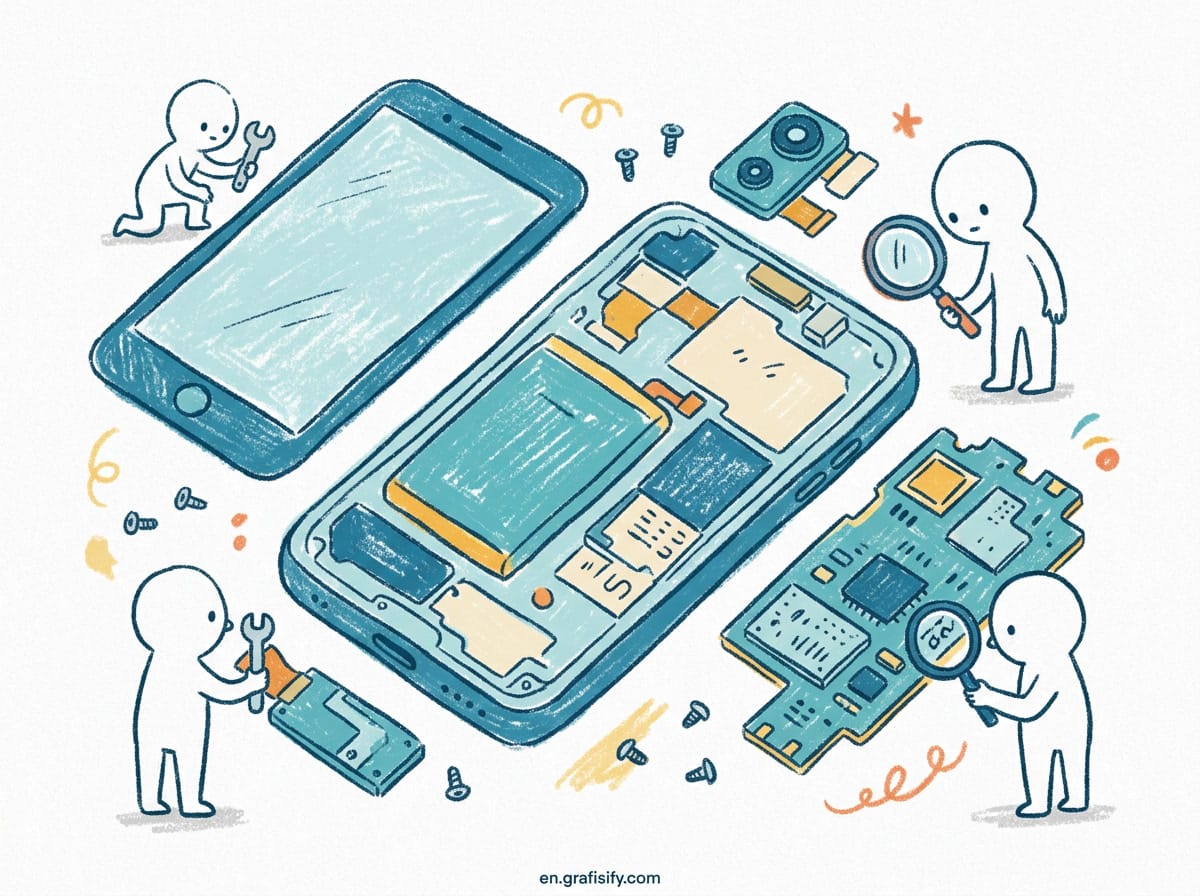
If your current phone still runs fine, the smartest move is no purchase at all. Modern flagships receive five to seven years of software updates, so a two-year-old phone has plenty of life left. Our guide on how long phone updates last breaks down the support windows brand by brand. Pair that with a battery replacement and a cleanup, and you can skip this whole pricing storm. Our walkthrough on removing bloatware from your Android phone frees up storage and speed without spending a cent, and teardown data on smartphone repairability shows which models make a battery swap easy.
Foldables escaped Samsung’s latest round of hikes, and the S26 FE kept its price too. If you want Samsung hardware without the new premium, those lines deserve a look. The OnePlus 16 launches October 12 with flagship specs, and its pricing will test whether any brand still dares to undercut the market.
7 Moves to Beat the Price Surge
- Buy last generation. A Galaxy S25 or iPhone 17 at discount beats a new model at a hiked price for most buyers. Camera and chip gains shrink each year.
- Skip the 1TB tier. Storage carries the steepest memory markup. The S26 Ultra 1TB costs $200 more than before, while cloud storage and USB-C drives cost far less per gigabyte.
- Lock in trade-in value. Trade-in offers sweeten during price shocks. Get a quote before your old phone loses more value.
- Check the RAM spec. Shrinkflation hides in spec sheets. Confirm you get at least 8GB on a mid-range phone and 12GB on a flagship before you pay flagship money.
- Consider the FE and a-series. The S26 FE dodged the hike. Mid-range cameras have closed the gap with flagships, as our Pixel 9a vs iPhone 16e vs Galaxy A56 camera test shows.
- Keep your phone longer. A battery swap and storage cleanup add two years of life. Five to seven years of updates means your current phone may outlast the shortage.
- Watch carrier deals, not list prices. Retailers lag behind manufacturer hikes. Amazon and Best Buy had not updated S26 listings when Samsung raised its own site, so deals hide in the gap.
Final Verdict: What to Do Next
RAMageddon is not a blip. Memory prices doubled, then doubled again, because AI data centers outbid phone makers for the same silicon. Samsung, Google, and Xiaomi passed the cost to buyers. Analysts see tight supply through 2027, and new fabs need years to change the math. Expect more mid-cycle hikes, not fewer.
Your move depends on your phone. If it works, keep it, clean it up, and replace the battery when it fades. If you must buy, buy sooner, buy last generation at discount, and put the savings toward storage in the cloud instead of a 1TB tier. I would not wait for a discount that the data does not promise. The cheapest phone you will buy this cycle is the one you buy before the next hike.
For the full breakdown of which mid-range phone survives this market, read our Pixel 9a vs iPhone 16e vs Galaxy A56 buying guide, then check the full Samsung price-hike analysis, the Pixel 10a price-hike report, the GSMA shipment forecast, Counterpoint’s smartphone price forecast, the memory shortage cost breakdown, and the iPhone 18 Pro vs Galaxy S26 price comparison. That keeps money in your pocket.

Irfan is a Creative Tech Strategist and the founder of Grafisify. He spends his days testing the latest AI design tools and breaking down complex tech into actionable guides for creators. When he’s not writing, he’s experimenting with generative art or optimizing digital workflows.






 Artificial Intelligent
 Design & Creative
 Freelance
 Gadgets & Gear
 Insights
 Laptop
 Reviews
 Smartphone
 Tech Guides
 Vibe Coding




