AI Washing: How to Tell Real AI From Marketing Hype
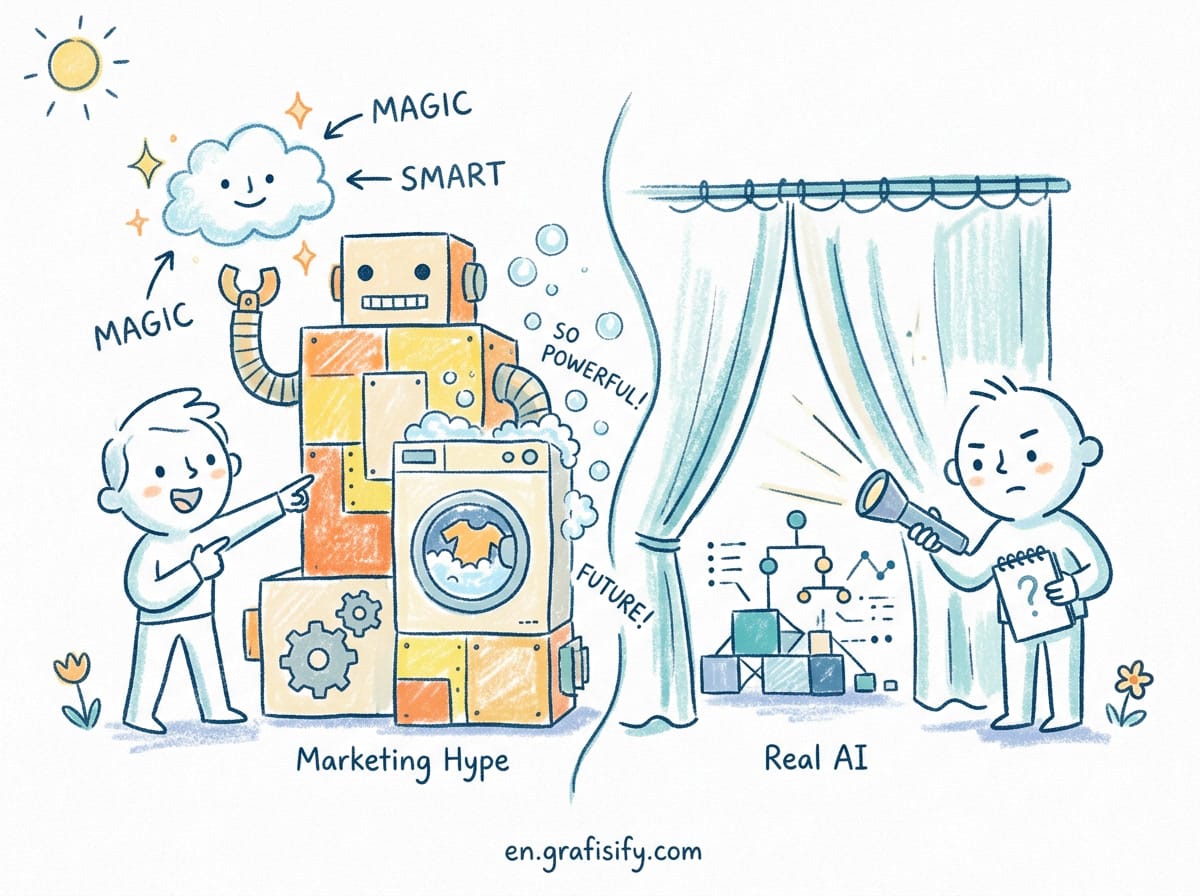
Every product on the market seems to have an AI layer now. Your email client suggests replies. Your accounting tool auto-categorizes transactions. Your CRM scores leads. Some of these features are genuinely useful. A surprising number of them are nothing more than a rule-based script wearing an AI label.
AI washing is the practice of marketing an ordinary feature as artificial intelligence. It is the technological equivalent of greenwashing, and it has quietly become one of the most widespread credibility problems in the software industry. This article breaks down how AI washing works, why it is so hard to spot, the real damage it causes, and a practical framework you can use to separate genuine AI from empty labels.
What counts as real AI
Artificial intelligence, in the way the term is actually used by practitioners, means software that learns patterns from data and improves its behavior without being explicitly programmed for every case. A system that adjusts its output based on new examples is AI. A system that follows a fixed set of if-then rules is not.
Consider the difference in concrete terms. A spam filter that blocks a message because it matches a known sender domain is following a rule. A spam filter that improves its detection after you label a few messages as unwanted, without anyone writing a new rule, is doing machine learning. The first is automation. The second is AI. The distinction is not academic, because the two carry very different costs, failure modes, and maintenance requirements.
The distinction matters because the two behave differently in production. A rule-based system is predictable, cheap to run, and easy to audit. A machine learning system can generalize to inputs it has never seen, which makes it more flexible and also harder to explain. Both have their place. The problem starts when vendors deliberately blur the line.
The classic tell is vocabulary. A product that was described as “workflow automation” a year ago is now described as “AI-powered workflow intelligence.” Nothing changed under the hood. The pricing went up, and the marketing team reworded the landing page. You are paying for a rename, not an upgrade.
Why the hype machine runs so hot
AI washing is rational behavior for vendors because the market rewards it. Adoption statistics are enormous. McKinsey reported that roughly 88 percent of organizations were using AI in at least one business function by 2025, and investor and board attention has made “AI strategy” a near-compulsory slide in every earnings call.
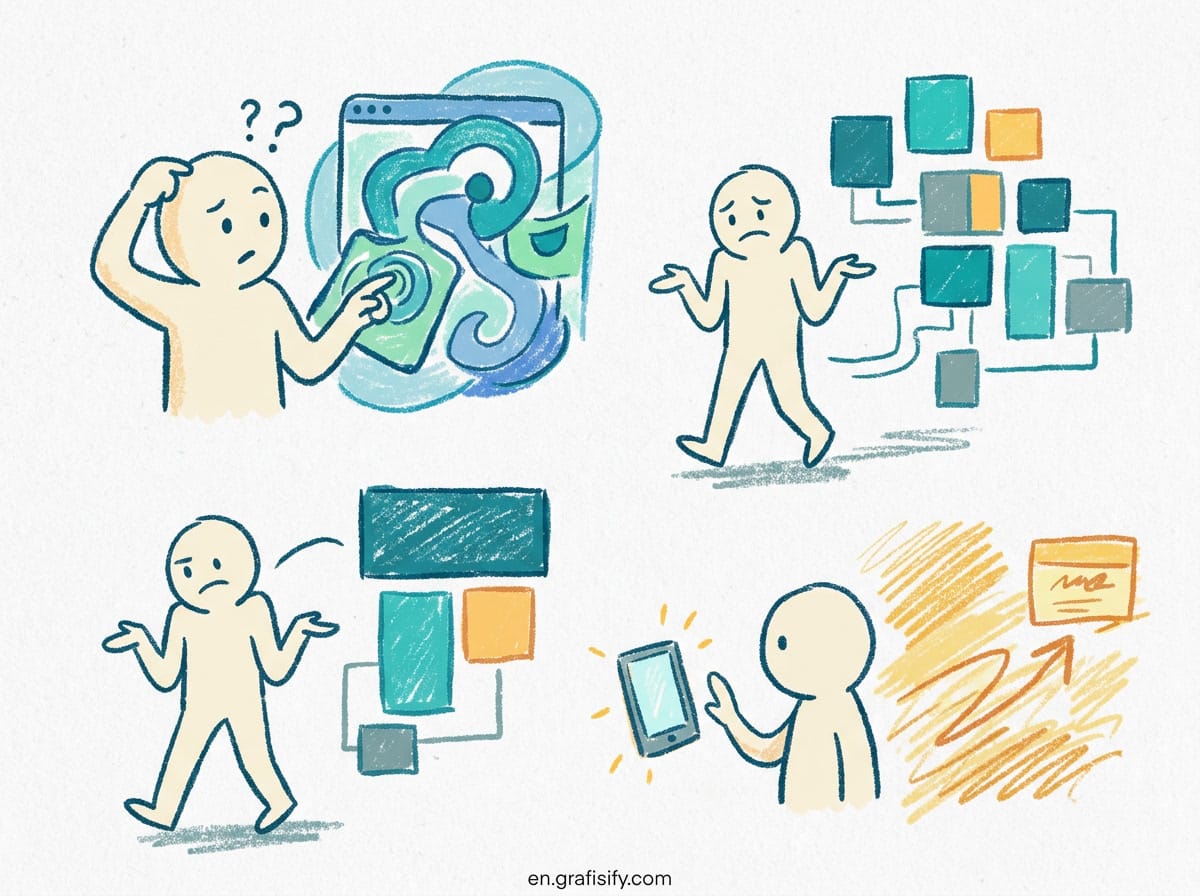
That pressure creates an incentive to claim more than you deliver. A tool that lets a support agent copy a canned response is presented as “conversational AI.” A spreadsheet with a dropdown list is called an “intelligent decision engine.” When the label is free and the payoff is real, vendors will keep reaching for it.
Regulators have started to notice. The SEC began issuing guidance and enforcement actions around AI washing in 2025 and 2026, targeting companies that claim to use AI or machine learning when they actually rely on basic automation. The message is clear: marketing claims now carry legal risk. That is a meaningful shift from the “move fast and label things AI” era.
The hidden cost of empty labels
The most obvious cost of AI washing is wasted budget. Teams adopt tools expecting autonomous capability and then discover the feature is a fixed ruleset that needs constant manual maintenance. The gap between the demo and the daily reality is where money disappears.

The less obvious cost is broken trust. When a product fails to live up to its AI claims, users stop believing the entire category. This is why skepticism about AI features is now rational behavior. Repeated overclaiming trains buyers to ignore genuine improvements alongside the fake ones. It poisons the well for the products that do the work.
There is also a talent cost. Engineers asked to maintain a so-called AI system that is actually a tangle of brittle rules spend their time firefighting edge cases. They cannot build real capability on top of a foundation that was never machine learning in the first place. The label misleads the buyers and the builders equally.
Pilot purgatory and the production gap
The overclaiming problem connects directly to a second, well-documented failure: the gap between AI pilots and deployed systems. Research across IDC, MIT, McKinsey, and BCG consistently shows that a large majority of enterprise AI pilots never reach production, with estimates ranging from 88 to 95 percent failing to advance beyond proof of concept.
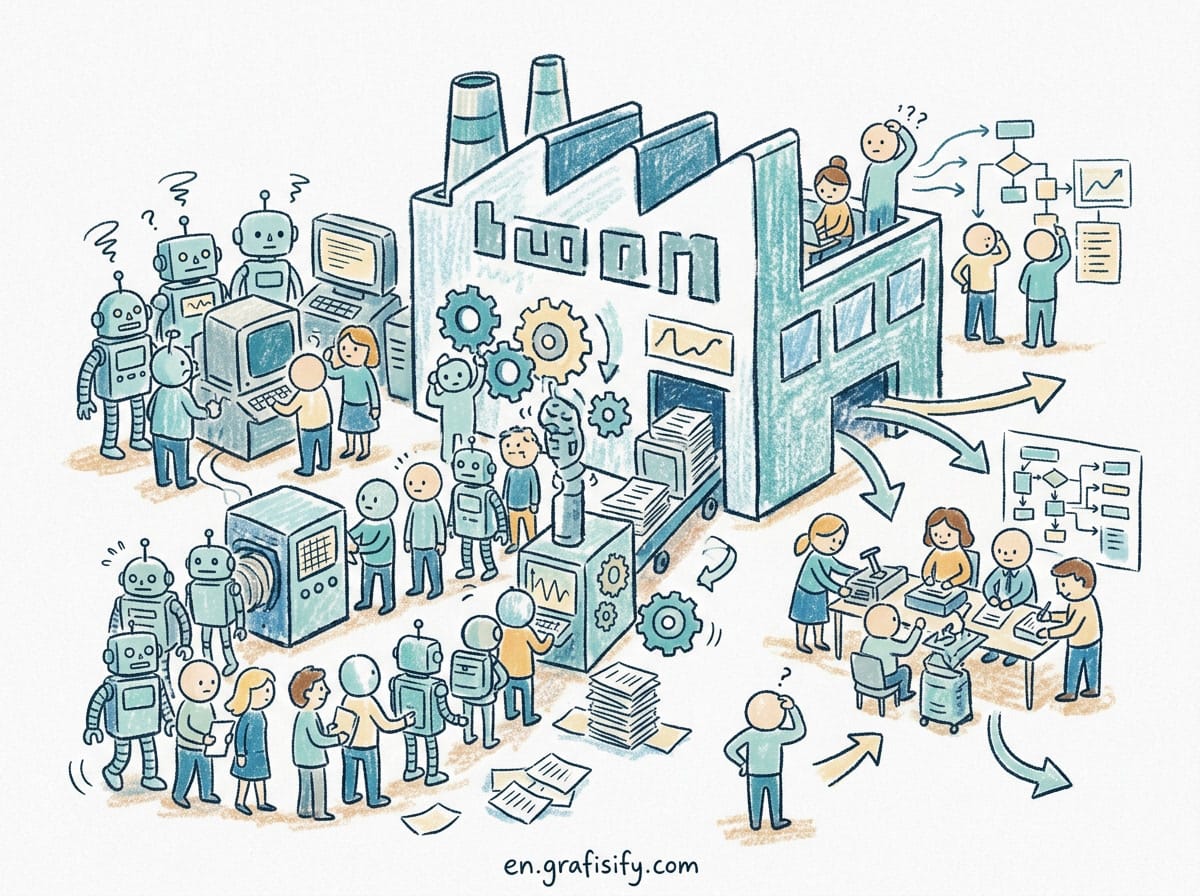
Part of the reason is real technical difficulty. Production AI requires reliable data pipelines, monitoring, retraining cycles, and clear ownership. Many organizations underestimate this. But part of the reason is also that the pilot was never a serious technical bet. It was a checkbox for an executive who wanted to say the company was doing AI.
You can see the pattern in the numbers. A project that exists to demonstrate capability has a different success bar than a project that exists to move a business metric. Pilot purgatory is what happens when a project is launched for optics and then quietly kept alive because canceling it would be embarrassing.
A framework for separating real AI from hype
You do not need a machine learning PhD to evaluate an AI claim. You need to ask the right questions. The table below lays out the key checks and what the answers tell you.
| Question to ask | Signs of real AI | Signs of AI washing |
|---|---|---|
| Does it learn from your data? | Output improves with more examples over time | Behavior is identical regardless of input history |
| Can it handle new cases? | Generalizes to inputs it has not seen | Breaks or needs rules added for each new case |
| Is the claim specific? | Vendor names the model, method, or metric | Vague phrases like “intelligent” with no detail |
| How does it fail? | Clear explanation of limitations and edge cases | No discussion of failure modes at all |
| What is the cost model? | Ongoing training or inference costs explained | Flat subscription hiding what actually runs |
The single most useful test is simple: change the input and watch whether the system genuinely adapts. Feed it a new kind of document, a new phrasing of a request, or a new edge case. If the output degrades into a template or an error, you are looking at a ruleset, not a model.
What buyers and teams should do now
For buyers, the practical move is to demand specificity before signing. Ask the vendor which model runs behind the feature, what data it was trained on, and how it is updated. A serious vendor answers these questions directly. A washing vendor deflects with brand language and roadmap promises.
For engineering teams, the move is to test claims in a small, isolated pilot with a real metric attached. Do not evaluate a demo. Evaluate a week of real usage against a defined success number. If the feature does not move the metric, cut it regardless of how impressive the marketing sounded.
For leadership, the move is to reward honest reporting. Publicly celebrate teams that identify a tool as overhyped as much as teams that find a genuine win. The fastest way to drain AI washing out of your organization is to stop rewarding the people who repeat vendor claims and start rewarding the people who verify them.
Frequently asked questions
Is AI washing illegal? It can be. The SEC has begun treating exaggerated AI claims as a compliance and disclosure issue, and enforcement actions in 2025 and 2026 targeted companies that marketed rule-based systems as AI. The legal exposure depends on whether the claim misled investors or customers in a way that violates securities or consumer protection rules.
Does AI washing mean AI is useless? No. It means the label is unreliable. Plenty of features genuinely use machine learning and deliver real value. The problem is that the label alone tells you nothing, which is exactly why you need to verify claims directly.
What is the fastest way to test an AI claim? Run the input test. Give the system a case it has not seen and watch whether it adapts or falls back to a template. Real AI generalizes to new inputs. A ruleset does not.
Why do so many AI pilots fail to reach production? The research points to a combination of underestimated operational complexity and pilots launched for optics rather than outcomes. When a project exists to signal capability rather than move a metric, the incentive to ship it to production disappears.
Key takeaways
Real AI learns from data. AI washing relabels ordinary automation and charges a premium. The two are easy to confuse because the marketing sounds identical. The checks above make the difference visible.
Regulators are beginning to treat overclaiming as a compliance problem, which raises the stakes for vendors and lowers the risk of skepticism for buyers. Pilot purgatory is a warning sign that AI projects are being run for optics rather than outcomes. None of this means AI is a fraud. It means the label has become unreliable, and that makes verification a core job for anyone who buys, builds, or signs off on software.
The most practical habit you can adopt is the input test. Change the data and watch what happens. The systems that genuinely adapt are worth your money. The ones that are just telling you what you want to hear are not.

Irfan is a Creative Tech Strategist and the founder of Grafisify. He spends his days testing the latest AI design tools and breaking down complex tech into actionable guides for creators. When he’s not writing, he’s experimenting with generative art or optimizing digital workflows.
You might also like


 Artificial Intelligent
 Design & Creative
 Freelance
 Gadgets & Gear
 Insights
 Laptop
 Reviews
 Smartphone
 Tech Guides
 Vibe Coding