The AI Productivity Paradox: Why Adoption Isn’t Making Companies Faster
The AI Productivity Paradox: Why Adoption Isn’t Making Companies Faster
Here is the uncomfortable truth about the AI boom: companies keep buying AI, and the productivity numbers keep refusing to move. In 2025 McKinsey reported that roughly 88% of organizations were using AI in at least one business function, and a later survey put adoption even higher. Yet measured productivity growth across most developed economies has stayed stubbornly close to its long-run average. Corporate spending on AI tools exploded through 2025 and 2026, and the economy-wide output per hour numbers look almost identical to the years before ChatGPT existed.
Something is off. Nearly every knowledge worker you meet has some story about how a chatbot wrote a memo, drafted an email, or cleaned up a spreadsheet. The tools are undeniably faster at isolated tasks. And yet the productivity gains that CFOs were promised have mostly not shown up in the places they expected.
This gap has a name: the AI productivity paradox. Understanding why it happens matters more than any benchmark score, because it determines whether the next wave of AI investment actually pays off or just continues to burn budget. This article is an analysis, not a prediction. It looks at the numbers, the reasons those numbers lag, and what separates the small group of organizations that genuinely capture value from everyone else.
What the Data Actually Shows
The paradox is best understood by looking at three separate measurements that all point in the same direction: individual gains exist, company-level gains are rare.
The MIT study of customer service representatives is the most cited bright spot. Giving workers access to a generative AI assistant improved their productivity by roughly 14% on average, and the largest gains went to the least experienced workers. The writing-task experiments are even more dramatic. Studies of college-educated professionals doing routine writing and analytical work found ChatGPT measurably cut completion time, in some cases by 40% or more for the tasks measured.
Those numbers are real. They are also narrow. They measure specific, well-defined tasks over a short window, usually with motivated participants and clean instructions. That is not the same thing as what happens when AI gets dropped into a messy workplace with unclear goals, overlapping systems, and people who are skeptical, untrained, or simply too busy to learn yet another tool.
When you measure the messy reality, the picture changes. Gartner surveyed supply chain organizations in early 2025 and found that 72% were deploying GenAI, yet most reported middling results for productivity and return on investment. Its analysts noted a specific pattern: productivity gains at the individual, desk-based level were not translating into gains at the team level. Individuals got faster. Teams did not.
McKinsey’s own 2025 survey found the same asymmetry at scale. Of the organizations using AI, only about one-third had scaled it beyond pilots, and just a small slice, on the order of 6%, qualified as high performers who were capturing significant enterprise value. The executives McKinsey surveyed were not delusional about their own progress: many said their main challenge was that the technology had not yet moved from experiments into day-to-day operations.
For the most economical framing, look at Denmark. An NBER-linked study tracked Danish companies and workers through a rapid, largely mandatory rollout of AI across a wide range of firms. Workers adopted the tools quickly and productivity did rise. But after two years, earnings and hours worked were basically unchanged. Firms reorganized tasks rather than cutting jobs, and the productivity windfall did not flow through to the people using the tools. It was adoption without payoff for most of the workforce.
The pattern across all these studies is consistent. The tools work. The organizations that simply hand them out and expect magic largely do not.
Also Read:
Why Individual Gains Don’t Add Up
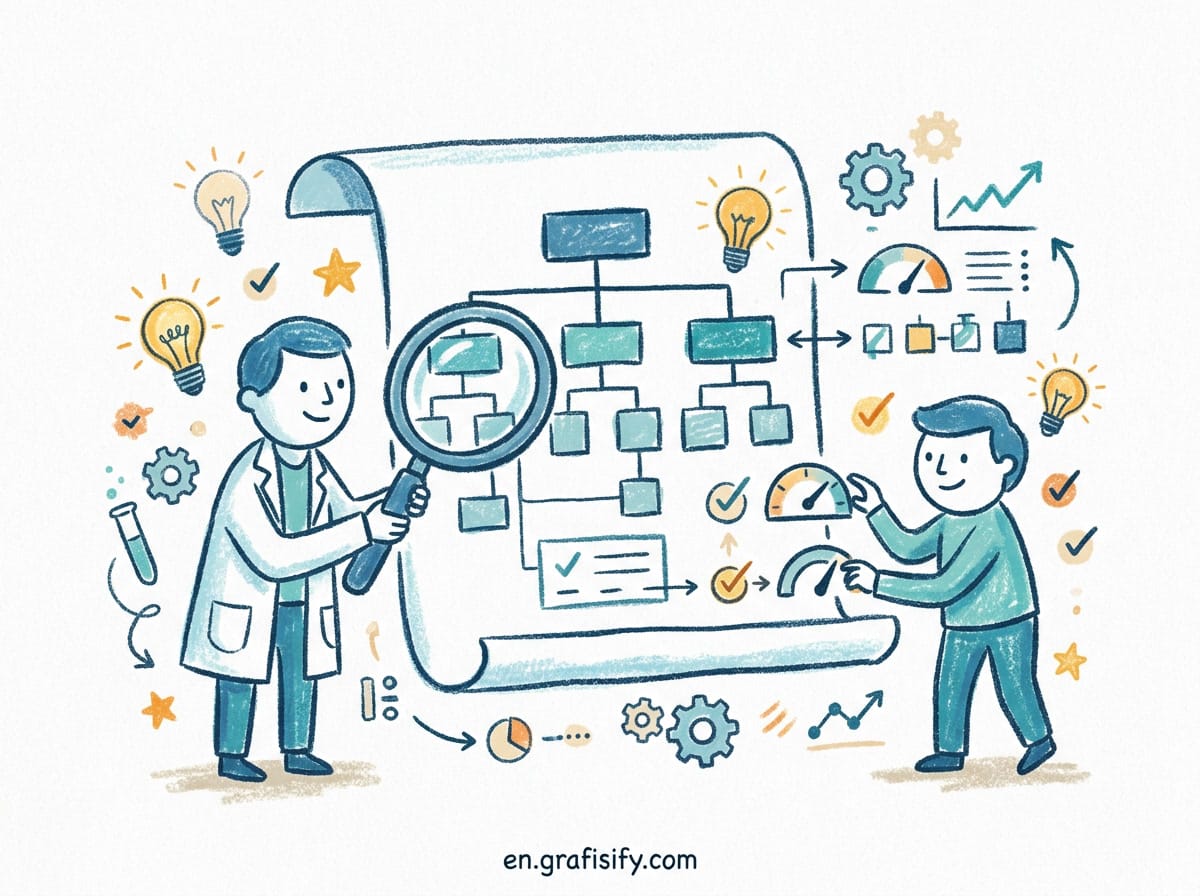
There are four reasons the individual gains do not translate into company gains, and all four are fixable.
Reason one: the measurement problem
Most companies measure productivity the wrong way, or do not measure it at all. They track seat count, license cost, and hours saved on discrete tasks, then stop. Aggregate productivity is hard to measure in knowledge work because the outputs are ambiguous. A lawyer who closes a contract faster has also freed time that may or may not be reinvested. A marketer who drafts a campaign in an hour may use the saved time to listen to more pitches or to do nothing at all. Without a clear definition of the work product, you cannot tell whether AI made the company faster or just made individuals busier.
Reason two: the experience gap
The clearest and most defensible finding in this literature is that AI benefits depend heavily on who is using it. In the customer service study, the biggest gains went to the least experienced workers, because the AI effectively mentored them toward good answers. But in many white-collar settings the opposite is true. The much-discussed studies from Denmark and from consulting firms found that experienced, senior workers got real gains from AI assistance, while junior and mid-level workers, the people without deep context about how the work actually gets done, saw little improvement or sometimes did worse. When an organization assumes that a tool is self-explanatory and that everyone can use it equally, it quietly entrenches the existing hierarchy of knowledge instead of flattening it.

Reason three: process friction
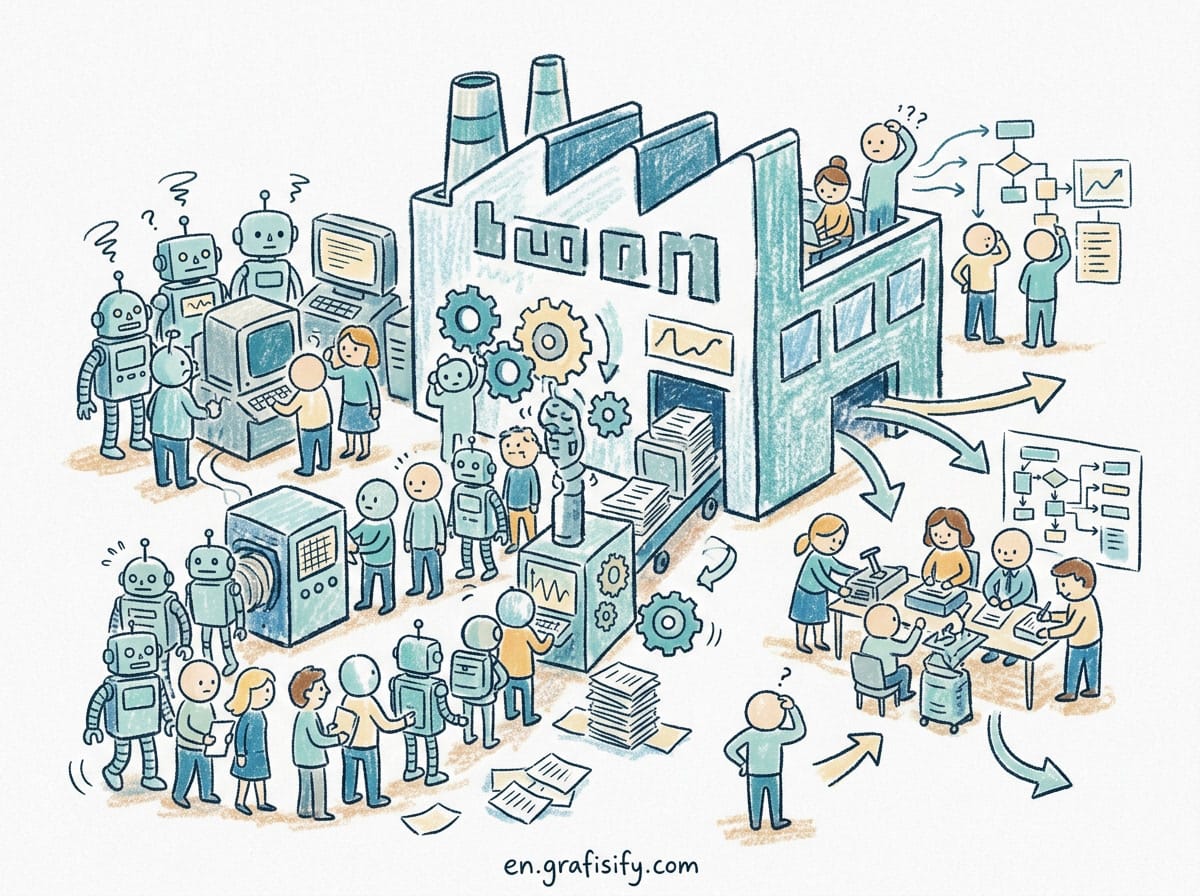
AI sits on top of broken processes and amplifies them. If your company already has unclear requirements, fragmented data, and handoffs between teams that drop information, a tool that can draft a document in ten seconds does not fix any of that. It just produces a bad draft faster. The Gartner finding that team-level productivity did not rise despite individual gains is almost certainly this dynamic in action. A worker who becomes individually faster still has to wait on a colleague, a system, or a decision that has not gotten faster.
Reason four: the wrong incentives
Many AI rollouts reward the wrong thing. If the metric is adoption rate, you get employees clicking the button so the dashboard looks good, then silently doing the work themselves because they do not trust the output. If the metric is hours saved, you get inflated estimates and cherry-picked wins. The organizations that capture value instead define a specific business problem, point the AI at it, and measure the outcome. That sounds obvious. Almost nobody does it.
The Experience Gap, in Practice
The experience gap deserves its own section because it quietly reframes what the productivity paradox means. The common assumption when AI arrived was that it would automate the routine work that juniors do, letting them spend more time on higher-level judgment. The data suggests the exact opposite in many cases. The people who benefit most are the ones who already had the judgment, because they know what good looks like and can vet the AI’s output. The people who would benefit most from a second pair of eyes, the juniors, often cannot tell whether the AI’s answer is excellent or confidently wrong.
This produces an uncomfortable conclusion: AI is most valuable to the people who need it least. A solo developer with years of context can use an assistant to move faster on boilerplate. A new hire with no context may accept a subtly wrong suggestion and compound the error. The same tool, the same prompt, wildly different outcomes depending on who sits in front of it.
For managers, this is not an argument against AI. It is an argument for pairing AI adoption with training and, more importantly, with context transfer. The organizations that see real gains tend to be the ones that pair the tool with clear expectations, curated prompts, and review workflows, so that the junior gets the mentorship effect rather than the confidence trap.
What the High Performers Do Differently
McKinsey’s small group of high performers, and the handful of firms with strong returns in the other studies, share repeatable behaviors. These are more instructive than any single statistic.
| Behavior | Typical organization | High performer |
|---|---|---|
| Metric | Adoption rate, license count | Relevant business outcome |
| Scope | Many small pilots | Few high-value workflows |
| Training | One-off onboarding video | Ongoing, role-specific, with context transfer |
| Trust | Assume output is correct | Built-in human review and validation |
| Process | AI bolted onto broken process | Redesign the process around the AI |
| Measurement | Hours saved (self-reported) | End-to-end time and quality vs baseline |
High performers treat AI as a workflow redesign, not a software install. They pick a small number of workflows where the input is well-defined and the output is measurable, then they invest in the surrounding process: cleaning the data, writing the prompts, defining the review step, and setting the success metric before they ever deploy. They also accept that the first version will be imperfect and iterate, rather than expecting a turnkey result.
None of this is glamorous. It is the unglamorous work of actually using a tool well, and it is precisely the work that most companies skip because it is not what the vendor advertised.
Does This Mean AI Is Overhyped?
No. It means the hype was misplaced in where the value lives. The paradox is not evidence that AI does nothing. It is evidence that the value of AI is conditional on implementation, and that most organizations have not yet done the implementation part.
The individual-level studies are unambiguous: AI genuinely speeds up many knowledge tasks. The gap between those results and company-level outcomes is an implementation gap, not an effectiveness gap. The technology is doing what it does. The systems around it have not caught up.
There is a sobering second point buried in the Danish data. Even when adoption is rapid and productivity rises, the gains do not automatically flow to workers in the form of higher pay or shorter hours. If your goal as an individual is to benefit from AI, the evidence says the benefit comes from using it to do higher-value work and build skills, not from assuming the market will reward you for merely having access to it. Your leverage is in what you do with the tool, not in the tool itself.
Key Takeaways
Here is the practical summary for anyone deciding whether and how to invest in AI, whether as a manager or as an individual.
- Individual gains are real. Expect AI to speed up specific tasks, sometimes dramatically. Do not expect it to automatically lift team or company productivity.
- Measure a business outcome, not adoption. Pick one workflow with a clear input and measurable output, set the baseline before you deploy, and track the end-to-end result.
- Pair the tool with context, not just access. AI helps people who know what good looks like. Invest in training and review workflows so juniors get the benefit instead of the confidence trap.
- Fix the process, then add the AI. Bolting AI onto a broken workflow just produces bad output faster. Redesign the process around the tool.
- Most organizations are still in the pilot phase. Only about a third have scaled beyond experiments, and a small fraction capture real value. That is a gap you can exploit.
- For individuals, the leverage is in the skills. The Danish data shows adoption alone does not lift wages. Using AI to do higher-value work is what compounds.
Frequently Asked Questions
Why does AI not improve overall productivity despite all the investment?
Because individual task gains do not automatically translate to team or company gains. Organizations often measure the wrong things, skip implementation work, and bolt AI onto broken processes. The studies consistently show a wide gap between what the tools do in isolation and what companies capture in practice.
Is the AI productivity paradox real or just a measurement problem?
Both. The biggest drivers are real implementation failures: the experience gap, process friction, and misplaced incentives. But a genuine measurement problem makes it worse, because most companies track adoption or hours saved rather than the actual business outcome they care about.
Who benefits most from AI at work?
It depends on the task. In repetitive, well-defined work, the least experienced workers often gain the most because the AI acts as a mentor. In complex, judgment-heavy work, the most experienced workers gain the most because they can vet the output. The common thread is that context determines the outcome.
What separates organizations that actually capture value from AI?
High performers pick a small number of measurable workflows, redesign the process around the AI, invest in ongoing role-specific training and review, and measure a business outcome rather than adoption. Most organizations do the opposite: many pilots, little measurement, and a one-time onboarding video.
Should AI make me slower to worry about job security?
It should make you focus on leverage. The Danish data shows AI adoption alone did not change earnings or hours, but it did reorganize tasks. Workers who use AI to move up the value chain, doing higher-value work and building skills, are in a stronger position than those who treat access to the tool as the win itself.
Final Thoughts
The AI productivity paradox is not a mystery once you separate the individual from the system. The tools are fast. The organizations that capture it are the ones that do the unglamorous work of measurement, training, context transfer, and process redesign. That is the boring answer, and it is also the true one.
The window is open right now because most of your competitors are still in the pilot phase. They bought the licenses, celebrated the adoption dashboard, and stopped. The ones who go further, who pick a workflow, fix the process, teach their people to vet the output, and measure the actual result, are the ones who will turn the paradox into an advantage. The technology works. The question was never whether it works. The question is whether you build the system around it that lets it pay off.

Irfan is a Creative Tech Strategist and the founder of Grafisify. He spends his days testing the latest AI design tools and breaking down complex tech into actionable guides for creators. When he’s not writing, he’s experimenting with generative art or optimizing digital workflows.
You might also like


 Artificial Intelligent
 Design & Creative
 Freelance
 Gadgets & Gear
 Insights
 Laptop
 Reviews
 Smartphone
 Tech Guides
 Vibe Coding