Run AI Workflows in Isolated Docker Containers: A Guide

Quick Verdict: Why Containerize Your AI Stack?
Running AI models, coding agents, and vector databases on bare metal leads to dependency hell, silent driver mismatches, and messy system clutter. Containerizing your AI workflows with Docker separates your host environment from volatile Python packages, CUDA libraries, and API keys. The key is decoupling serving runtimes from model weights, configuring GPU passthrough correctly with NVIDIA Container Toolkit, and enforcing strict resource limits to avoid silent out-of-memory (OOM) kernel kills.
| Deployment Metric | Bare Metal / Virtualenv | Docker Containerized Stack |
|---|---|---|
| Environment Isolation | No (Shares host CUDA/Python packages) | Yes (Complete filesystem & dependency sandbox) |
| GPU Passthrough Setup | Manual CUDA pathing per project | NVIDIA Container Toolkit (--gpus all) |
| Model Weight Storage | Mixed into project directory | External Host Volume / S3 Mount |
| Deployment Reproducibility | Low (Host OS version drift) | High (Immutable Dockerfile layer build) |
| OOM Crash Prevention | Unpredictable (Host RAM exhaustion) | Enforced (limits.memory & shared memory buffers) |
1. The Architecture of Containerized AI Workloads
Traditional web applications are lightweight and stateless. AI workloads are the exact opposite: they depend on multi-gigabyte binary blobs, heavy C++ extensions, and tight GPU kernel integrations. If you approach an AI container like a standard Node.js or Flask app, you end up with 30GB Docker images and agonizingly slow cold-start deployment times.
Docker GPU passthrough is not full hardware virtualization like QEMU or KVM. Instead, the Linux kernel manages device files while the NVIDIA Container Toolkit injects the host GPU driver libraries into the container namespace at runtime. Your host OS supplies the underlying nvidia.ko kernel driver, while the container supplies the CUDA toolkit and application binary. This requires one fundamental rule: the host driver version determines the maximum CUDA version available inside your container.

2. Setting Up NVIDIA Container Toolkit for GPU Acceleration
Containers cannot see host graphics cards by default. To enable hardware acceleration for local LLMs, vLLM, or PyTorch, you must install the NVIDIA Container Toolkit on your Linux host. Do not attempt to install NVIDIA GPU drivers inside your Dockerfile; drivers belong exclusively on the host system.
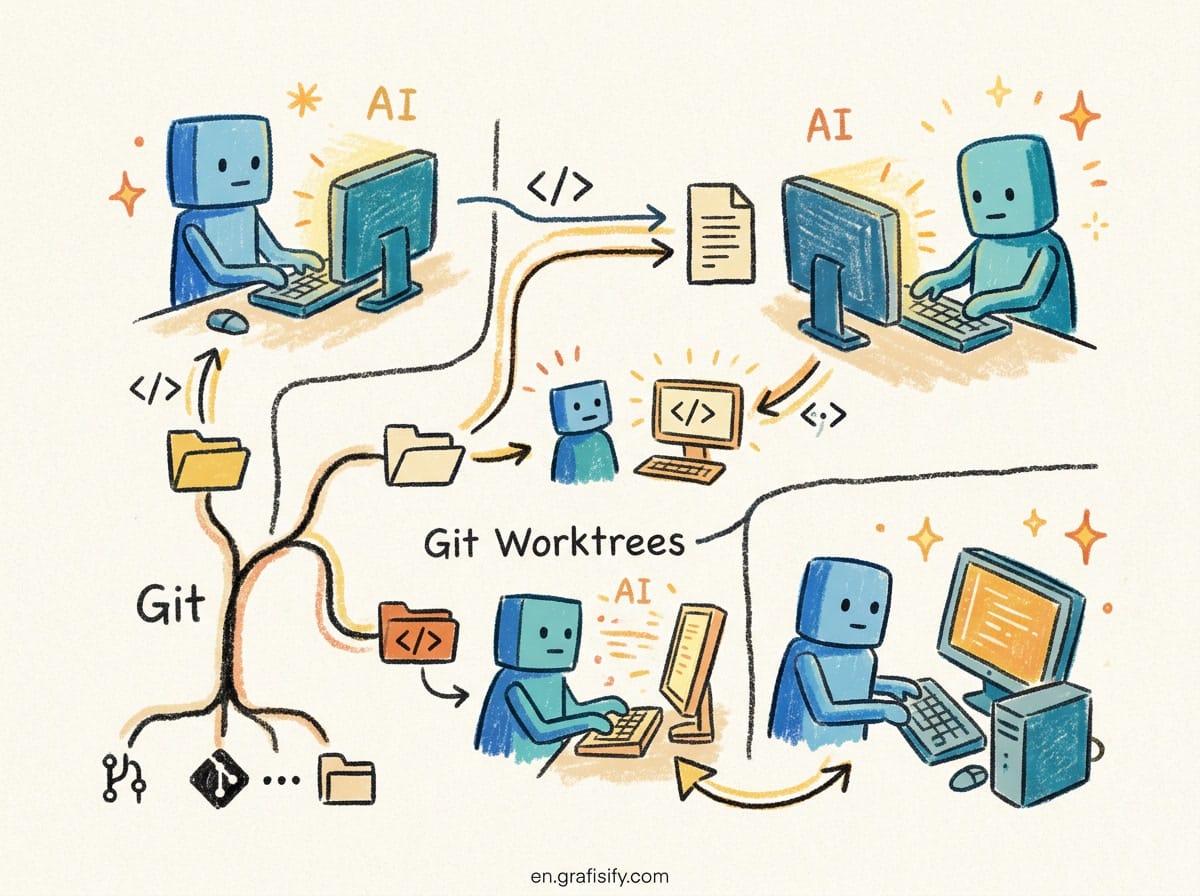
Configure the container runtime by executing the toolkit utility to update your Docker daemon configuration:
sudo nvidia-ctk runtime configure --runtime=docker
sudo systemctl restart docker
Once restarted, verify GPU access inside an isolated container with a single command:
docker run --rm --gpus all nvidia/cuda:12.4.0-base-ubuntu22.04 nvidia-smiIf the nvidia-smi output displays your GPU hardware and driver version, containerized GPU passthrough is functional. You can isolate specific cards in multi-GPU machines using the device flag, such as docker run --gpus '"device=0,1"'.
3. Key Dockerfile Patterns for AI Engineering
Building small, fast-starting containers requires layer optimization and multi-stage builds. Always start from runtime base images rather than devel images unless your workflow requires active compilation during container startup. Multi-stage builds separate build tools from runtime execution, reducing image footprint by up to 70 percent.
# Stage 1: Build virtual environment
FROM python:3.11-slim AS builder
WORKDIR /app
RUN python -m venv /opt/venv
ENV PATH="/opt/venv/bin:$PATH"
COPY requirements.txt .
RUN pip install --no-cache-dir -r requirements.txt

# Stage 2: Runtime environment
FROM python:3.11-slim AS runner
WORKDIR /app
COPY --from=builder /opt/venv /opt/venv
ENV PATH="/opt/venv/bin:$PATH"
ENV PYTHONUNBUFFERED=1

RUN useradd -m -u 1000 aiuser
USER aiuser

COPY --chown=aiuser:aiuser . /app
EXPOSE 8000
CMD ["python", "app.py"]
Never bake large model weights into your Docker image layer. When weights are stored inside the container image, every code change invalidates the cache and forces a multi-gigabyte re-upload to your registry. Store model weights in external volume mounts or download them to host caches via environment variables like HF_HOME=/cache/hf.

4. Managing Shared Memory and Preventing Silent OOM Kills
The host kernel OOM killer is the most common reason AI containers crash silently under load. Machine learning frameworks like PyTorch and vLLM utilize shared memory for inter-process communications and tensor parallelism. Docker default configurations limit container shared memory (/dev/shm) to 64MB, causing DataLoader worker crashes or NCCL failures during high-throughput inference.
Fix shared memory starvation by passing --shm-size=8g or using --ipc=host during docker run commands. Additionally, separate your host RAM allocation budget from your GPU VRAM allocation. Host RAM must account for expanding context length KV-caches, tokenization buffers, and pre-fetched data streams.
5. Multi-Container AI Stacks with Docker Compose
Production AI features rarely exist in isolation. A standard vibe coding workflow or local RAG pipeline involves an LLM engine (Ollama or vLLM), a vector database (Qdrant or ChromaDB), and an application server. Docker Compose v2 lets you orchestrate the full stack cleanly with hardware reservations.
services:
  ollama:
    image: ollama/ollama:latest
    container_name: ollama-engine
    ports:
      - "11434:11434"
    volumes:
      - ollama_storage:/root/.ollama
    deploy:
      resources:
        reservations:
          devices:
            - driver: nvidia
              count: 1
              capabilities: [gpu]
        limits:
          memory: 16g
          cpus: "4.0"
    restart: unless-stopped

  qdrant:
    image: qdrant/qdrant:latest
    container_name: vector-db
    ports:
      - "6333:6333"
    volumes:
      - qdrant_storage:/qdrant/storage
    restart: unless-stopped

volumes:
  ollama_storage:
  qdrant_storage:
6. Production Security and Container Hardening
AI agent containers frequently execute generated code, read files, or interact with external tool endpoints. Securing these environments requires applying strict container boundaries:

- Run as Non-Root: Declare an explicit
USER 1000inside your Dockerfile so compromised model processes cannot modify host mount privileges. - Read-Only Root Filesystem: Pass
--read-onlyflag withtmpfs /tmp:size=1gto prevent arbitrary runtime code modifications. - Drop System Capabilities: Strip unnecessary Linux capabilities using
--cap-drop=ALLand re-grant only network capabilities if serving APIs. - Secret Management: Avoid passing API credentials directly in environment variables where process lists can inspect them. Use Docker Secrets or runtime file mounts.
Key Takeaways for AI Engineers
Building reliable containerized AI environments comes down to five fundamental practices:
- Keep host drivers updated: Install the NVIDIA driver on the host system and let NVIDIA Container Toolkit inject CUDA runtime components dynamically.
- Decouple model weights from images: Use volume mounts (
-v /data/models:/models) so container images stay lightweight and fast to pull. - Adjust shared memory limits: Set
--shm-size=8gto prevent PyTorch and NCCL inter-process crashes during inference. - Pin dependency versions: Explicitly freeze Python libraries and CUDA base image tags to maintain 100% reproducible environments.
- Enforce resource boundaries: Set strict RAM and CPU caps in Docker Compose so context spikes do not trigger system-wide kernel panics.

Irfan is a Creative Tech Strategist and the founder of Grafisify. He spends his days testing the latest AI design tools and breaking down complex tech into actionable guides for creators. When he’s not writing, he’s experimenting with generative art or optimizing digital workflows.



 Artificial Intelligent
 Design & Creative
 Freelance
 Gadgets & Gear
 Insights
 Laptop
 Reviews
 Smartphone
 Tech Guides
 Vibe Coding