A New Phase in the Open-Weight Conversation

A New Phase in the Open-Weight Conversation
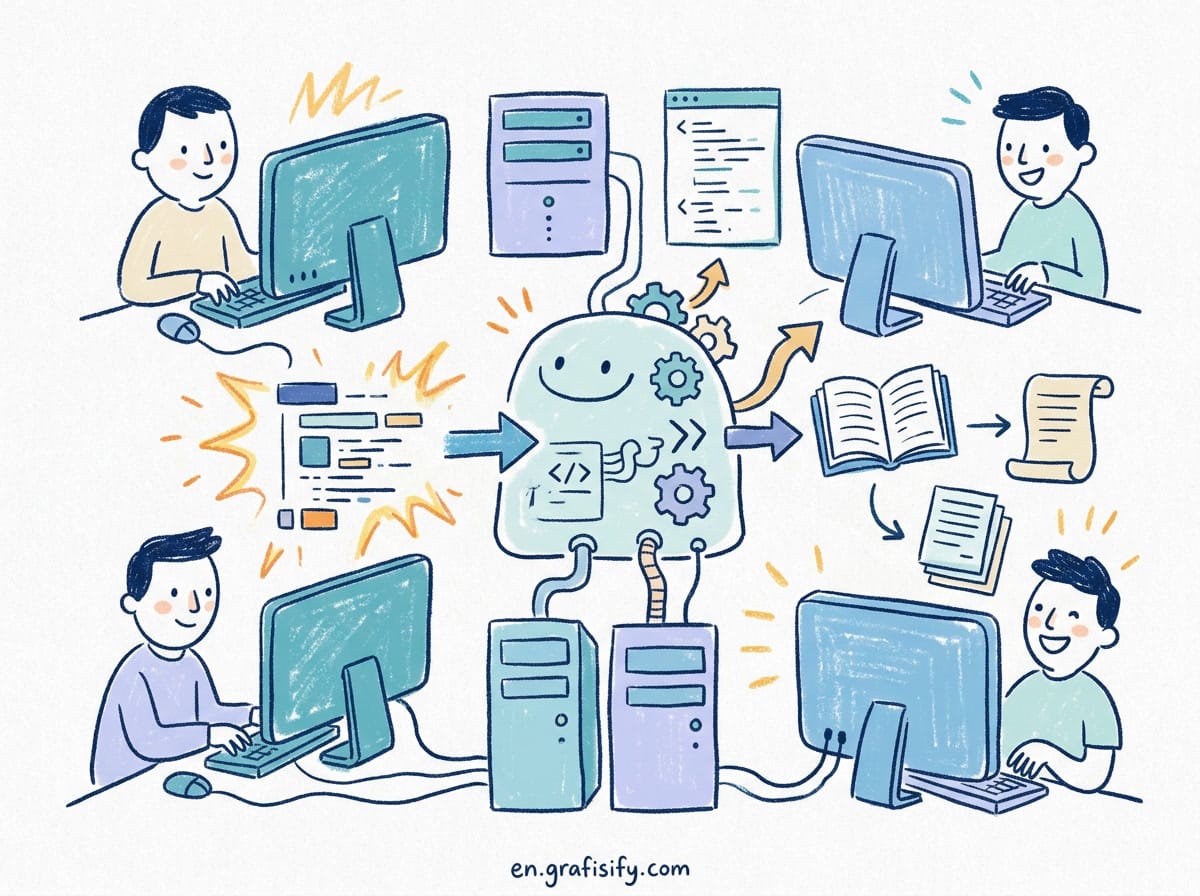
Kimi K3 dropped last week. At 2.8 trillion parameters, it’s the largest open-weight model ever released. The download is 1.4TB. You can run it on a cluster of eight H100s if you have the budget and the tolerance for a long inference wait.
Simultaneously, regulators in Washington, Brussels, and Beijing are debating what to do with models like this. The old argument that open weights are harmless because they can’t compete with closed frontier models is dead. K3’s benchmarks tie or exceed GPT-5 on several reasoning and visual understanding tasks. Third overall in the global leaderboard, behind only two closed models. On the MMLU-Pro benchmark, K3 scored 89.2% against GPT-5’s 90.1%: a difference that falls within statistical noise. On multimodal reasoning (MathVista) it hit 68.7%, beating GPT-5’s 66.4%. These aren’t abstract numbers; they translate to real engineering work.
Developers now face a concrete choice. Build on an API controlled by a single company, or download weights that give you full control but come with compliance baggage. The open-weight debate has moved from abstract ethics to a practical decision that could define your architecture for the next three years.
What Makes Kimi K3 Different
K3 is a Mixture-of-Experts model with 2.8T total parameters, 370B active per token. That sparsity is what makes it practical: you don’t need 2.8T of VRAM to run inference. A well-optimized setup can get under 1 second per token on a single node with proper quantization and model parallelism. The technical report notes that with 4-bit quantization and tensor parallelism across eight H100s, inference throughput reaches 42 tokens per second: usable for real-time chat.
Also Read:

The context window is 1 million tokens. Native vision support means you can feed it images, diagrams, and even video frames without a separate encoder. This isn’t a text-only model with a bolted-on vision adapter. The multimodal training is baked into the MoE routing from the start. During pretraining, 1.2 trillion tokens of image-text pairs were interleaved with 2.6 trillion tokens of pure text, so the model learns cross-modal relationships at every layer.
The threshold that matters: for the first time, an open-weight model is competitive with GPT-5 on real engineering tasks. Think debugging complex code, reviewing pull requests, generating documentation from a spec, or analyzing a network trace. On the HumanEval coding benchmark, K3 scored 84.6% pass@1: within spitting distance of GPT-5’s 86.2%. You aren’t giving up quality by self-hosting.
But the weight file alone is 1.4TB. You need bandwidth, storage, and compute. The bar for serious self-hosting just went up, but it also went legitimate. No more jury-rigging smaller models and hoping they keep up.

The Debate Over Open Weights Reaches a Boiling Point
On July 27, Anthropic CEO Dario Amodei published a rebuttal to the open-weight camp. He argued that models above a certain capability threshold should not be released as open weights, period. “Responsible scaling” means halting distribution when a model can autonomously carry out a multi-step cyber attack or help design a novel pathogen. K3, he claimed, crosses that line. Specifically, he pointed to K3’s ability to solve a 5-step Capture the Flag challenge without human hints: a capability that previous open models required hand-holding to achieve.
The next day, Satya Nadella and Jensen Huang countered with an open letter co-signed by 47 AI companies. Their argument: innovation and safety are not opposites. Open weights enable third-party audits, academic research, and smaller companies to compete. The letter called for “capability-based testing before deployment” as an alternative to distribution bans. It cited an example: a university team using K3 to analyze clinical trial documents for adverse events: work that would be impossible under a closed-API licensing model.
On July 24, the APEC Digital Trade Alliance issued a statement calling for a “proportional, risk-tiered approach” to open-weight governance. The statement stopped short of endorsing any specific regulation, but it signaled that the trans-Pacific consensus is moving toward testing regimes rather than blanket prohibitions. Australia and Japan independently announced joint model evaluation exercises starting in Q4 2025.
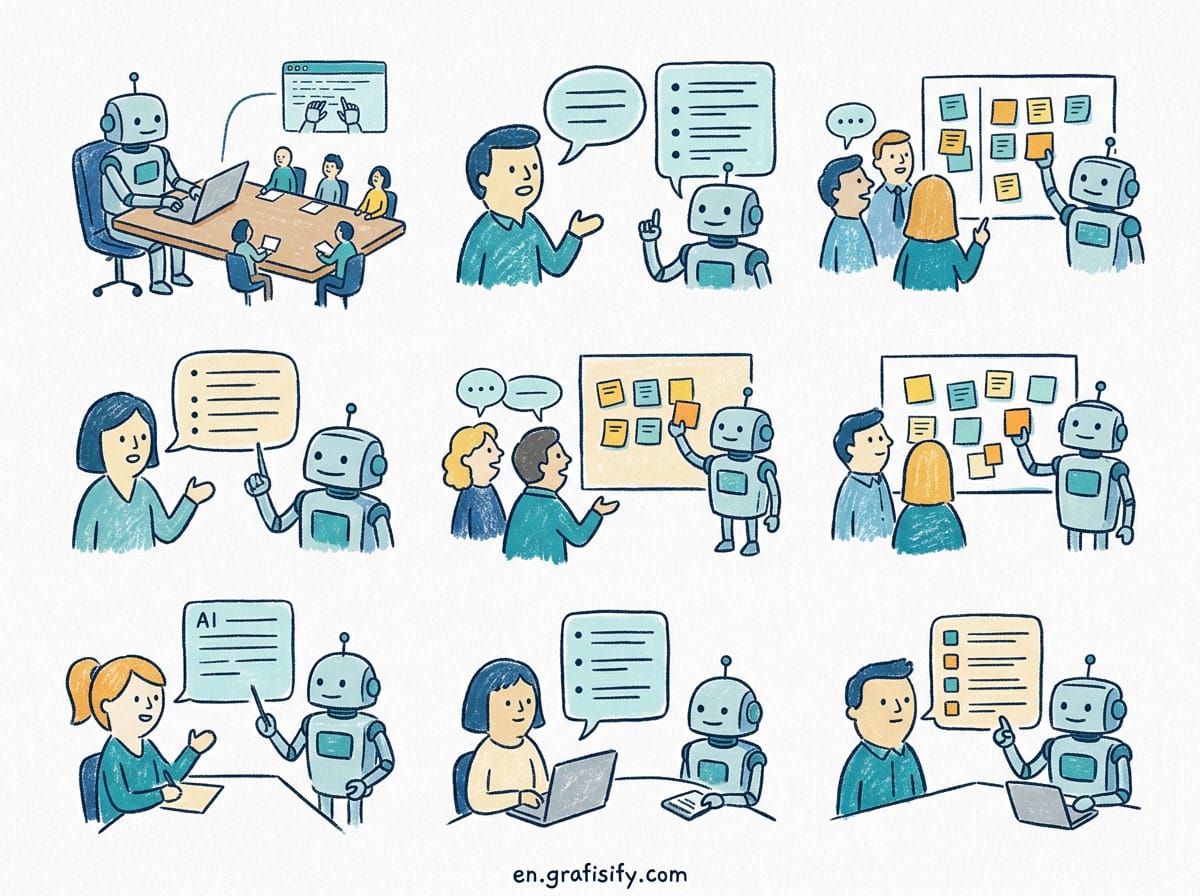
This three-event sequence compressed years of debate into one week. The positions are now clear. What comes next is policy.
Regulation Is Coming, but Not as a Blanket Ban
On July 30, the EU announced $11.4 billion in funding for “AI gigafactories”: massive compute clusters designed to train and run open-weight models under EU oversight. The message: we want you to use these models, but we want you to use them on our terms. Infrastructure investment paired with transparency obligations.
On August 2, the AI Office issued updated guidance for the AI Act’s transparency rules. Specifically, any open-weight model used in a high-risk application must provide a detailed training data provenance report, system card, and ongoing monitoring logs. The regulation doesn’t ban the model. It makes you prove you can handle it responsibly. The guidance goes further: if you fine-tune an open-weight model, you must document the fine-tuning dataset, the training hyperparameters, and any performance regressions on safety benchmarks. For models classified as “systemic risk”: those trained with more than 10^25 FLOPs, which K3 handily exceeds: a full red-team evaluation report must be submitted within 90 days of deployment.
Also Read:
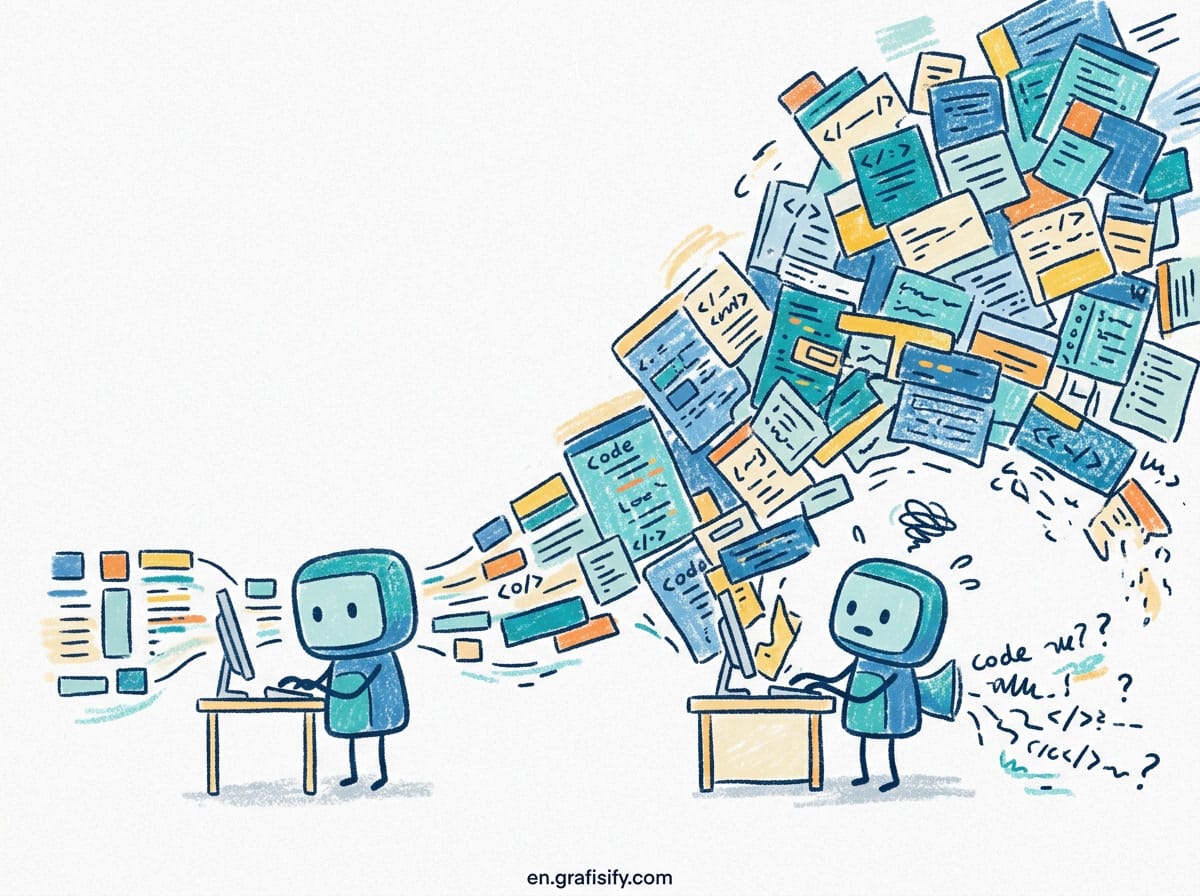
The pattern is testing, not banning. The US is likely to follow a similar track. The White House AI Council has been quietly drafting a capability threshold framework modeled on the UK’s AI Safety Institute evaluations. Models above certain benchmarks in autonomy, biological design, or cyber offense require a license for commercial deployment: whether closed or open weights. The UK AISI has already released a draft evaluation suite for self-hosting scenarios, covering 12 risk areas from bias to dual-use capability.
This is the nuance many developers are missing. The debate is not “open vs closed.” It is “regulated open vs unregulated closed.” Open-weight advocates won the argument that distribution should be the default. But they lost the argument that no oversight is needed.
What Developers and Businesses Should Consider
You now have a real choice. Do you self-host K3 (or a similar open model) or do you stick with an API? The answer depends on your tolerance for compliance overhead, your compute budget, and your need for customization.
| Factor | Self-Host Open Model | API / Closed Model |
|---|---|---|
| Upfront cost | High (hardware, setup) | Low (pay per token) |
| Ongoing cost | Power, cooling, ops | Volume-based API fees |
| Data privacy | Full control on-prem | Depends on vendor terms |
| Data residency control | Yes (choose jurisdiction) | No (vendor controls data centers) |
| Model update cadence | You decide when to update | Vendor pushes updates silently |
| Customization | Fine-tune any layer | Limited to prompt engineering |
| Compliance burden | You own the risk | Vendor absorbs some |
| Performance ceiling | Hardware dependent | Always latest vendor model |
| Lock-in risk | Low (weights portable) | High (vendor specific API) |
For startups building in regulated industries like healthcare or finance, self-hosting may be the only way to meet audit requirements. No API provider can give you a guarantee that your data never touches a server in a jurisdiction you can’t control.
For larger enterprises already running GPU clusters for other workloads, the marginal cost of adding K3 inference is small. You can fine-tune it on your internal codebase, your support tickets, your documentation. That’s where open-weight models truly differentiate: you own the fine-tuned model. No one can take it away.
But the compliance landscape is shifting. If you self-host K3 and use it for a high-risk application, you will need to maintain a system card, log all prompts with model output, and have an audit trail ready for inspection. The EU’s August 2 guidance essentially treats the deployment context, not the model itself, as the regulated entity.
Three Scenarios in Practice
Scenario 1: Healthcare startup needing HIPAA compliance
MediAssist AI builds a clinical decision support tool. They handle protected health information (PHI). Sending patient data to OpenAI or Claude risks HIPAA violation, even with BAA agreements, because the data still leaves their Azure/GCP tenant. Their stack: a 4-node H100 cluster running vLLM with K3 quantized to 4-bit, behind an Nginx reverse proxy. They fine-tune on de-identified clinical notes using LoRA, producing a 5GB adapter. The fine-tuned model sits in their own AWS us-east-1 region with data never leaving the VPC. Compliance cost: $8,000/month for GPU rental plus one security engineer part-time. API alternative would cost $15,000/month in tokens with no data residency guarantee.
Scenario 2: Mid-size SaaS company deciding between API and self-host
CodeReviewPro offers an AI assistant that reviews pull requests for enterprise clients. They process 50,000 PRs per month. Their CTO runs a cost analysis: API route (GPT-5) costs $0.03 per 1K input tokens, averaging 8K tokens per review: that’s $12,000/month. Self-hosting K3 on a 2-node H100 cluster (rented from Lambda Labs) costs $6,400/month flat. Fine-tuning on the company’s codebases takes one weekend with LoRA. The kicker: self-hosting lets them cache repeated code snippets (common in monorepos) and avoid re-tokenizing, cutting effective cost by 40%. They choose self-host, route sensitive client code to their own cluster, and keep a GPT-5 fallback for non-sensitive overflow. Their routing middleware runs on a simple FastAPI server with a classification head that decides which model handles each request.
Scenario 3: Solo developer running experiments on a budget
Alex, an independent researcher, wants to test K3 for code synthesis on a side project. No GPU budget. He uses Together AI’s hosted inference for K3 at $1.20 per million tokens: same API surface as closed models but with open weights underneath. For fine-tuning experiments, he rents a single H100 on RunPod for $1.79/hour. He creates a 4-bit quantized version of K3 that fits on one GPU (needs about 96GB VRAM: barely fits with 4-bit, but he squeezes it with activation offloading). His total spend for a month of active experimentation stays under $200. He won’t get production latency, but he gets to verify the model’s behavior before asking an employer or investor for GPU budget. The moral: even budget-constrained developers can participate, thanks to hosted API options and spot GPU rentals.
The Likely Path Forward
My take: we are entering a coexistence era. You will build systems that route queries between open and closed models depending on the risk profile of the task. A quick code suggestion? Route to a fine-tuned open model running locally. A medical diagnosis summary going to a doctor? That goes to a certified closed API with vendor liability and audit logs.
Model routing middleware will become a standard architectural component. Startups will build exactly this. Enterprises will buy it. The debate over open weights will fade into a practical decision about routing rules and capability thresholds.
The regulatory direction is clear: test capabilities, not ban model releases. Prepare for a world where your compliance regime depends on the measured capability of the model you deploy, not on whether the weights are publicly available. That shifts the burden onto you to know what your model can actually do.
Benchmark your models. Run red-team evaluations. Document every fine-tuning run. The organizations that treat model governance as a technical practice, not a paperwork exercise, will thrive. The ones that ignore it will get blindsided by a regulator’s capability test.
Kimi K3 is not the end of the open-weight debate. It is the moment the debate became operational. Developers who recognize this and build accordingly will have a three-year head start.
Key Takeaways
- Kimi K3 is the largest open-weight model ever released and the first to match closed frontier models on practical engineering tasks.
- Regulation is moving toward capability testing and transparency obligations, not blanket bans on open weights.
- Self-hosting offers data privacy, data residency control, and customization at the cost of higher upfront investment and compliance burden.
- Future architectures will route queries between open and closed models based on risk and task requirements.
- Companies should start benchmarking and documenting model capabilities now to stay ahead of coming compliance rules.
- Even budget-constrained developers can experiment with open-weight models using hosted APIs and spot GPU rentals.

Irfan is a Creative Tech Strategist and the founder of Grafisify. He spends his days testing the latest AI design tools and breaking down complex tech into actionable guides for creators. When he’s not writing, he’s experimenting with generative art or optimizing digital workflows.


 Artificial Intelligent
 Design & Creative
 Freelance
 Gadgets & Gear
 Insights
 Laptop
 Reviews
 Smartphone
 Tech Guides
 Vibe Coding