Why Small AI Models Win in Production

The Short Answer
Most teams route every AI request through the biggest, most expensive model they can access. That default is now one of the largest avoidable costs in production AI. Peer-reviewed work and public case studies show a fine-tuned 7B or 8B model routinely matches or beats a frontier API on well-defined tasks while costing 10 to 25 times less per token. The teams quietly winning are not abandoning frontier models. They route about 80 percent of traffic to small models and escalate only the genuinely hard 20 percent.
One documented enterprise migration cut infrastructure spend from roughly $3,000 per month to $127 per month by moving routine agentic steps off frontier APIs. The pattern repeats: audit call volume by task complexity, move the routine work to a small model, keep the frontier model as an escalation path.
What Counts as a Small Model
Definitions vary, but the practical band is clear. Small language models sit roughly between 1 billion and 30 billion parameters, with the sweet spot for most production work between 7B and 13B. Cohere defines its small tier as Command R7B at 7B parameters, the Tiny Aya family at 3.35B, and North Mini Code at 30B total parameters with only 3B active. OpenAI’s open-weight gpt-oss-20b runs inside 16GB of memory, and gpt-oss-120b fits on a single 80GB GPU, both shipped natively quantized in MXFP4.
The serving math scales almost linearly with parameter count. A 3B model costs roughly 25 times less to serve than a 70B model for equivalent throughput. That single ratio explains why the architecture question is usually economic, not academic.

Why Specialization Beats Raw Scale
The Chinchilla paper broke the assumption that more parameters automatically means better results. It showed a smaller model with enough quality training data and a properly allocated compute budget can outperform a much larger one. Data quality and compute allocation matter more than parameter count. That finding reshaped how serious teams approach model selection.
Production workloads are mostly narrow. Classifying an inbound support message, extracting invoice fields, normalizing messy spreadsheet rows, routing a request to the right workflow: these are pattern-matching and rule-following tasks, not open-ended reasoning. A small model fine-tuned on your specific schema beats a general-purpose frontier model because it only knows what to look for and ignores everything else. NVIDIA researchers argued in a 2025 paper that agent systems repeat these narrow specializations constantly, which makes small models cheaper for most agent invocations with selective escalation to larger models only when required.
LoRA freezes base weights and trains lightweight adapters, cutting trainable parameters and memory by orders of magnitude. QLoRA adds 4-bit quantization, enabling fine-tuning on a single consumer GPU. Post-training quantization via GPTQ and AWQ shrinks memory footprint while holding accuracy. Specialize the model you can afford has become standard engineering practice, and open source tooling is where most teams implement it.
The Evidence, With Its Caveats
Predibase’s LoRA Land study fine-tuned across 10 base models and 31 tasks. The 4-bit LoRA fine-tuned models beat their base models by 34 points on average and beat GPT-4 by 10 points on average, with 25 fine-tuned Mistral-7B models served from a single A100. The caveat matters: those results are per-task and narrow, averaged over specialized tasks amenable to fine-tuning. The paper’s own verb is “rival.” It does not prove small models beat frontier models in general, and citing it that way is a misreading.
Quantization research backs the deployment side. Kurtic and colleagues at Red Hat, Neural Magic, and ISTA ran more than 500,000 evaluations across the Llama-3.1 family, published as arXiv:2411.02355 and accepted to ACL 2025. They report FP8 weight-and-activation quantization is effectively lossless across all model scales, well-tuned INT8 shows 1 to 3 percent accuracy degradation, and INT4 weight-only rivals 8-bit. Their deployment guidance: W4A16 is most cost-efficient for synchronous setups, W8A8 for asynchronous continuous batching. Once 4-bit weights hold accuracy, the memory footprint stops being a research question and becomes a line item.
On break-even timing, Pan, Chodnekar, Roy, and Wang (arXiv:2509.18101) put numbers on the on-premise question. Break-even against commercial APIs arrives fast for small and mid-size models: Qwen3-30B against Claude-4 Opus in about 0.3 months, Llama-3.3-70B in about 2.3 months. Large models often blow past two years and need roughly 50 million tokens per month to justify self-hosting. Their reference hardware costs: an RTX 5090-32GB around $2,000, an A100-80GB around $15,000, a two-A100 medium deployment around $30,000.
Also Read:
Stanford HAI’s 2025 AI Index reports the inference cost for a system performing at GPT-3.5 level dropped by more than 280x between November 2022 and October 2024, driven mostly by small models and open-weight alternatives closing the gap with closed counterparts.
Where Small Models Actually Win
Three workload classes dominate.
Structured extraction. Pulling names, dates, amounts, and entities from invoices, support tickets, or emails. A small model fine-tuned on your schema outperforms a general-purpose large model because it ignores everything outside the schema.
Also Read:
Classification and routing. Deciding whether a customer message needs a human, triggers a refund, or searches a knowledge base. A fine-tuned small model classifies faster and cheaper than forwarding every input through a frontier API.
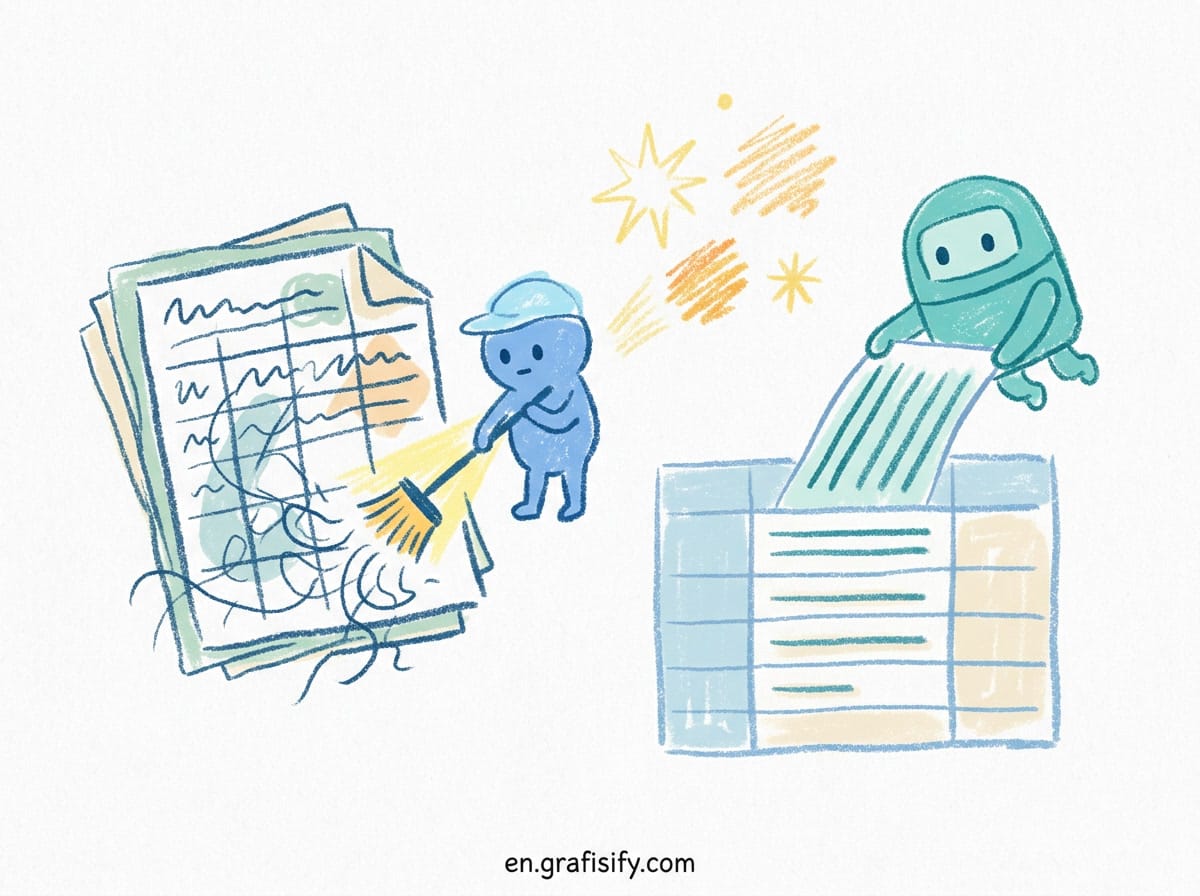
Data normalization. Turning disorganized inputs into structured rows. A fine-tuned 3B model returns reliable results in milliseconds, while a frontier model adds latency and cost with no quality gain.
Microsoft’s Phi-3-mini at 3.8B was designed to run on a modern smartphone while producing output quality comparable to much larger systems. Mistral 7B beat Llama 2 13B across tested benchmarks using grouped query attention and sliding window attention, both built to cut inference cost. Google’s Gemma line ships at 2B and 7B with pre-trained and instruction-tuned variants, and Google announced Gemma 4 under Apache 2.0 spanning edge devices to 31B parameters, with the family passing 400 million downloads and 100,000 community variants.
When You Still Need the Frontier
Small models are not universally better, and pretending otherwise is how teams ship broken products. Open-ended reasoning with unbounded inputs and no crisp definition of correct is where general capability is the axis that matters, and frontier models lead there.
Long-horizon agentic work compounds small per-step error rates into failed trajectories. A model that is 3 percent worse per step is far more than 3 percent worse over fifty steps. Multi-step agent runs expose this brutally, because each step inherits the last step’s mistakes.
Broad general knowledge, sophisticated creative writing, and very long contexts still favor larger models. The most challenging benchmarks continue to show meaningful quality gaps between small and large models. The practical question is whether those gaps matter for your specific application. For most production use cases they do not, and the cost, speed, and deployability advantages of small models are decisive.
A Practical Routing Architecture
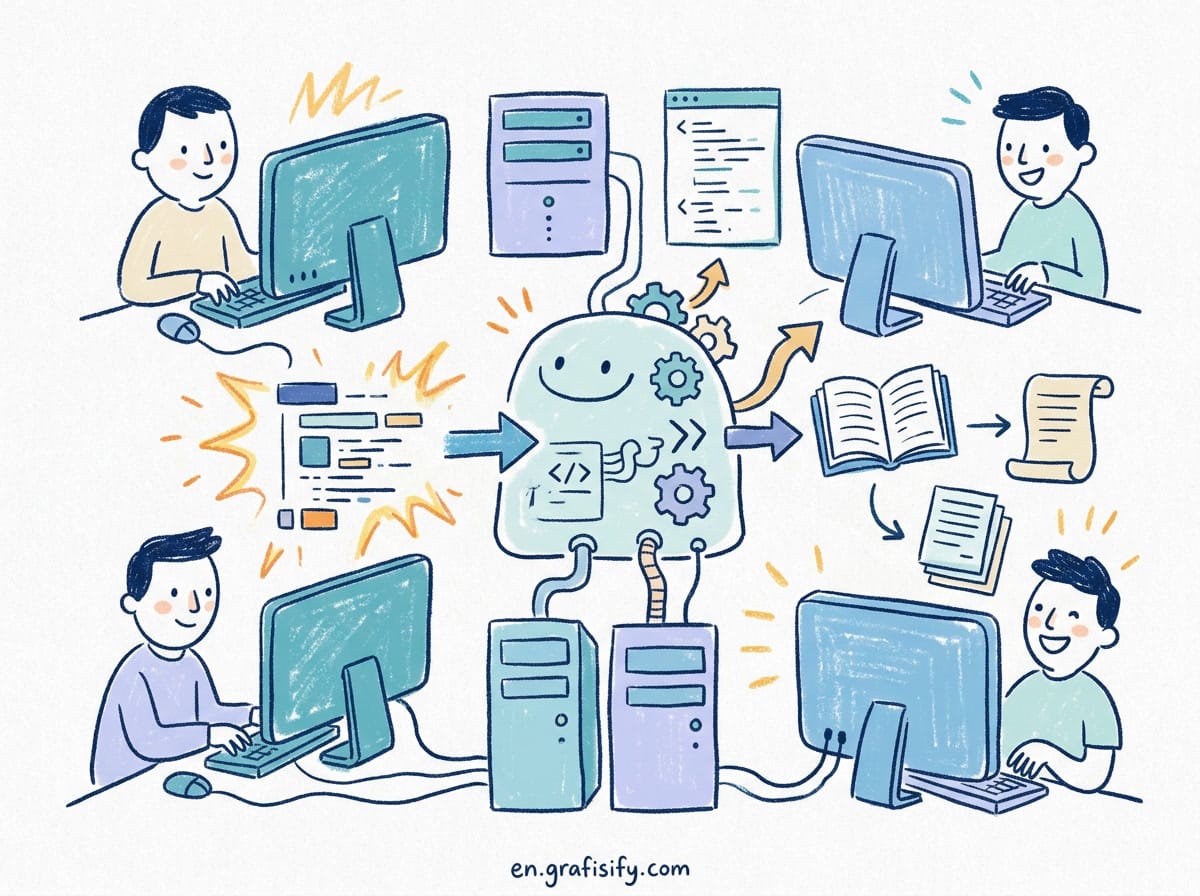
Build tiered routing instead of picking one model for everything. Send routine traffic to a small model, escalate ambiguous or high-stakes cases to the frontier, and log every escalation as training data for the next fine-tune.
| Task type | Recommended tier | Typical cost impact |
|---|---|---|
| Field extraction from invoices and forms | Small (3B to 8B, fine-tuned) | 10x to 25x cheaper per token |
| Support ticket classification | Small (7B, fine-tuned) | Sub-100ms latency |
| Data cleaning and normalization | Small (3B, fine-tuned) | Runs on CPU or one consumer GPU |
| Multi-step agent workflows | Hybrid: small steps, frontier checkpoints | Escalation cost only on hard steps |
| Open-ended reasoning and analysis | Frontier API | Pay per genuinely hard call |
The routing layer is the actual product. Cohere frames it as model portfolios: assign specific tasks to the models best suited for them, a right-sizing approach that optimizes performance while controlling cost. If payback is a function of model size, the correct default is to route each task to the smallest model clearing its accuracy bar and escalate deliberately. Defaulting upward is still a cost decision, just one made by omission.
What Self-Hosting Actually Costs You
Owning inference is real work. Capacity planning, batching strategy, an evaluation harness someone maintains, on-call coverage, hardware depreciation, and patching the serving stack never appear in a break-even calculation, but they reliably show up on a calendar. The payback figures assume utilization. If your volume is low or spiky, an API is cheaper and better, and the right answer is to keep paying it.
Data residency is the plainest non-negotiable driver. Local inference means input never leaves your boundary, turning a contractual assurance into a structural one. Under the European Commission’s official AI Act schedule, obligations for general-purpose AI models entered application on 2 August 2025, Commission enforcement powers and the high-risk compliance framework apply from 2 August 2026, and GPAI models on the market before 2 August 2025 must comply by 2 August 2027. Those are dates procurement can plan against.
Latency sets a physics floor no model improvement removes. A round trip to a hosted API has irreducible network cost, and workloads on factory floors, in vehicles, or fully offline cannot depend on connectivity at all. A fast-moving frontier also argues against over-committing: a local deployment freezes a snapshot, and you own every upgrade and regression after it.
The Tooling Stack That Made This Possible
Open source now covers nearly every layer needed to run small models in production. vLLM developed PagedAttention to cut memory waste in traditional attention and raise throughput. llama.cpp normalized running models on commodity hardware. The GGUF format exists for exactly this use case. Ollama bundles the whole experience so a developer can have a local model running in minutes.
On the specialization side, LoRA and QLoRA cut adapter training cost, while GPTQ and AWQ handle post-training compression. Microsoft’s Phi-2 at 2.7B reached comparable or better results than much larger models on complex benchmarks through curated training data and methodology rather than scale alone.
Licensing deserves precision. Many widely discussed open models are better described as open-weight: the weights are public, but training data, training code, or the full pipeline may not be. The Open Source Initiative’s AI Definition is working to formalize that distinction. Open-weight and open source are related but not identical, and the difference matters when you are building a product on top of a model. Mistral 7B and the gpt-oss family ship under Apache 2.0, which is among the more permissive options available.
How to Start Without Regretting It
Begin with an audit, not a migration. Tag every API call by task type, then look at volume and complexity per task. You will typically find a long tail of calls that are trivially easy being served by the most expensive model in your stack.
Pick one high-volume, low-complexity task. Fine-tune a 7B or 8B model on a few thousand examples. Serve it behind the same interface as your current API call. Shadow-run it alongside the frontier model on real traffic for two weeks and compare outputs. If accuracy holds, cut over that one task and keep everything else unchanged.
Then repeat. Each routed task funds the next experiment, and the escalation log from your router becomes labeled training data. Within a quarter you will know whether 80/20 routing holds for your workload, because you will have the numbers rather than a vendor’s benchmark slide.
The goal was never to go small for its own sake. Match the model to the task, measure the result, and let the routing layer carry the complexity. That is the part of the system worth building well.

Irfan is a Creative Tech Strategist and the founder of Grafisify. He spends his days testing the latest AI design tools and breaking down complex tech into actionable guides for creators. When he’s not writing, he’s experimenting with generative art or optimizing digital workflows.


 Artificial Intelligent
 Design & Creative
 Freelance
 Gadgets & Gear
 Insights
 Laptop
 Reviews
 Smartphone
 Tech Guides
 Vibe Coding