How to Choose the Right Laptop Based on How You Actually Work

Let’s be real for a second. Walking into a tech store or browsing an online catalog these days feels less like shopping and more like navigating a minefield. You’re bombarded with acronyms—CPU, GPU, RAM, SSD, OLED, Hz—that scream for your attention, promising the moon but often delivering a device that just doesn’t fit your vibe. It’s a cacophony of tech jargon designed to confuse rather than clarify.
The truth? Most people end up overpaying for power they’ll never use, or worse, skimping on the one feature that actually matters for their workflow. Understanding how to choose the right laptop isn’t about memorizing spec sheets; it’s about honest introspection regarding your daily grind. Whether you’re a pixel-pushing designer or a spreadsheet warrior, the perfect machine exists, but you have to know where to look.
The Verdict
If you don’t have time to read the whole manifesto, here’s the gist: Stop looking at numbers first. Look at your calendar. If you travel, prioritize battery life and build quality over raw horsepower. If you sit at a desk rendering 4K video, ignore the “thin and light” marketing fluff and get something with adequate cooling. Your workflow dictates the specs, not the other way around.
The “Specs” Trap: Why Numbers Often Lie
It’s tempting, isn’t it? Seeing that “Core i9” or “Ryzen 9” sticker and assuming it’s automatically better than the “i5” sitting next to it. But here’s the dirty little secret of the tech industry: thermal throttling. You can shove a Ferrari engine into a Honda Civic, but if the engine overheats in five minutes, you aren’t going anywhere fast.

When figuring out how to choose the right laptop, you need to understand that performance is a balancing act. A super-slim laptop with top-tier specs will often slow itself down (throttle) to keep from melting. Conversely, a slightly bulkier chassis with “lower” specs might outperform the slim model simply because it can breathe. Don’t fall for the marketing hype on the box. Instead, look for reviews that test sustained performance.
And honestly? Unless you are compiling massive codebases or rendering 3D animations, you probably don’t need the top-tier chip. You need a balanced system. A mid-range processor paired with fast RAM and a lightning-quick SSD is usually the sweet spot for 90% of users. It’s the “Goldilocks” zone—not too hot, not too slow, just right.
Defining Your Work Profile: The “Who Are You?” Test
Before you drop a month’s rent on a slab of aluminum and glass, let’s categorize your actual workflow. Be honest with yourself. Aspiring to edit videos is different from actually editing videos daily.

1. The Digital Nomad (Battery is King)
You work from coffee shops, airport lounges, and occasionally a park bench. You are allergic to power outlets. For you, the CPU speed is secondary to efficiency. You need a machine that sips power rather than guzzling it.
- Priority: Battery life (10+ hours real-world), Screen brightness (400 nits+ for outdoor use), Portability.
- Specs to target: Apple M-series chips (absolute game-changers here) or Intel Evo certified laptops.
- Deal-breaker: Anything heavy or with a massive power brick. If it hurts your back, it’s the wrong laptop.
2. The Creative Powerhouse (Visuals & GPU)
Your screen is your canvas. Whether you’re grading footage in DaVinci Resolve or designing UI in Figma, you need color accuracy and graphical grunt. This is where how to choose the right laptop gets tricky because you can’t just rely on the CPU.
- Priority: Color-accurate display (100% sRGB or DCI-P3), Dedicated GPU (NVIDIA RTX series usually wins here), High RAM (32GB minimum).
- Specs to target: OLED panels, H-series processors.
- Deal-breaker: A dim screen or integrated graphics. Integrated graphics have come a long way, but for heavy 3D work? No thanks.
3. The Spreadsheet Warrior (RAM & Real Estate)
You have 45 Chrome tabs open, three Excel sheets with macros running, and Slack pinging in the background. You don’t need graphical power; you need multitasking headroom.
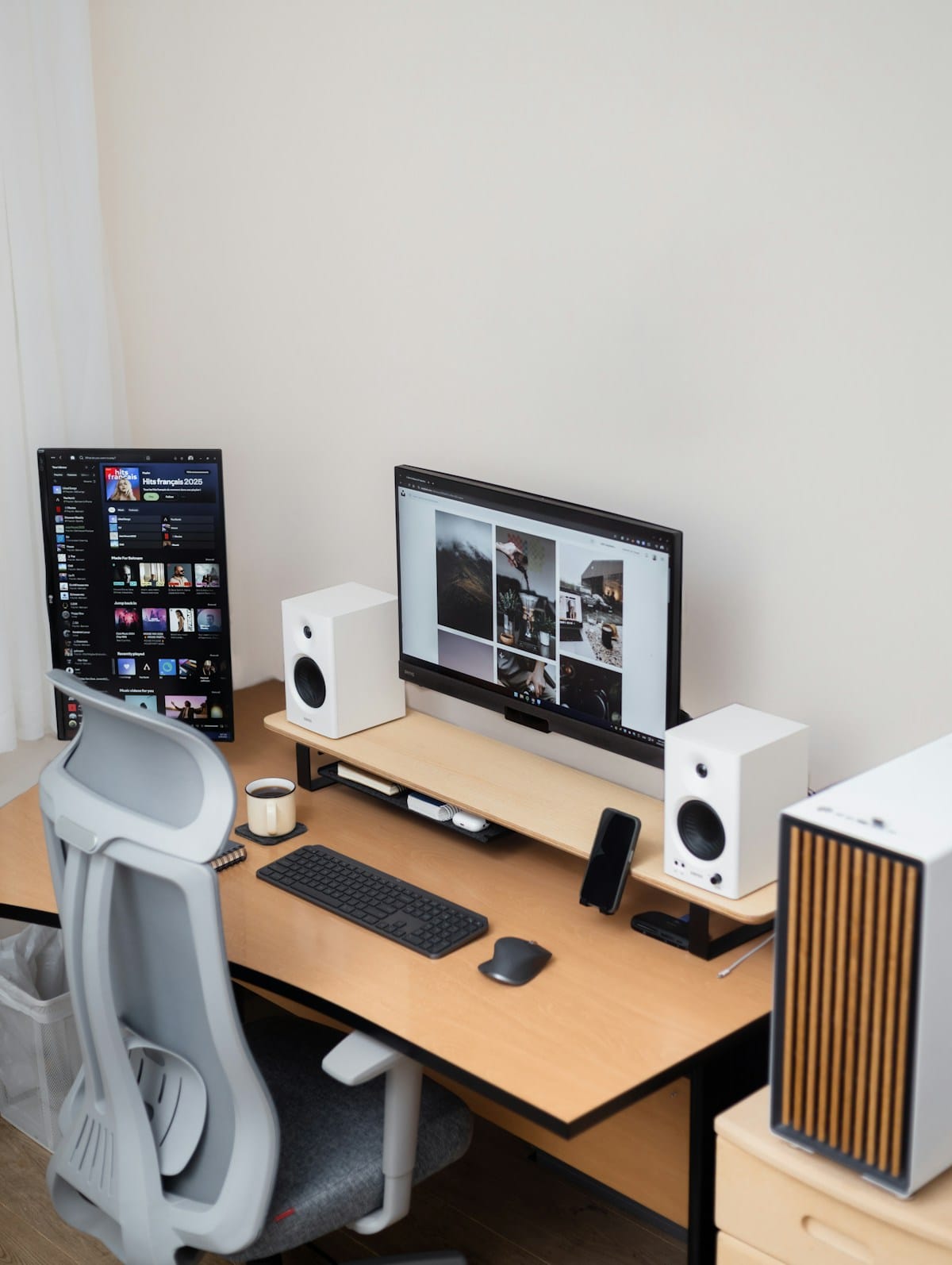
- Priority: RAM (16GB is the floor, 32GB is comfortable), Screen Aspect Ratio (16:10 allows for more vertical rows), Keyboard quality.
- Specs to target: Mid-range CPU (i5/i7 or Ryzen 5/7), NVMe SSD.
- Deal-breaker: 8GB of RAM. In 2024, 8GB is a bottleneck that will make you want to throw the machine out the window.

Operating Systems: The Ecosystem Wars
We can’t discuss how to choose the right laptop without touching the third rail of tech politics: Windows vs. macOS. (Sorry Linux users, you guys already know what you want).
Windows is the utilitarian choice. It’s compatible with everything. If your work involves proprietary legacy software, gaming on the side, or you just like having control over every file in your system, Windows is your home. It’s chaotic sometimes, sure, but it’s versatile.
macOS, on the other hand, is the walled garden. But wow, are the flowers nice in there. The optimization between hardware and software is unmatched. If you own an iPhone and use creative apps, the integration is seamless. It just works. But be prepared to pay the “Apple Tax” on upgrades—storage and RAM prices are frankly insulting.
Also Read:
For more deep dives into ecosystem compatibility, check out our extensive tech guides on software integration.
The Overlooked Essentials: Keyboard, Trackpad, and Ports
Here is where many buyers get “boncos” (lose out). You focus so hard on the processor that you forget the parts you actually touch. You interact with the keyboard and trackpad thousands of times a day. If the keys feel mushy or the trackpad is erratic, your expensive machine becomes a torture device.
Ports matter too. The dongle life is miserable. If you are a photographer, does it have an SD card slot? If you present often, does it have HDMI? USB-C is the future, but we are living in a transition period. Having a legacy USB-A port can save you from a lot of embarrassing “does anyone have an adapter?” moments in meetings.
Pros and Cons of Different Form Factors
When learning how to choose the right laptop, consider the shape of the device.
Clamshell (Traditional):
Pros: Better cooling, sturdier hinges, usually better keyboards.
Cons: Can’t use it as a tablet.
2-in-1 (Convertibles):
Pros: Versatile, touch screen is great for scrolling or drawing, media consumption mode.
Cons: Hinges can be fragile points of failure, often slightly heavier, glossy screens (glare city).
Budgeting: Where to Spend and Where to Save
Let’s talk money. Where do you get the most bang for your buck?
Spend on: The Screen and the Keyboard. These are your primary interfaces. A bad screen causes eye strain; a bad keyboard causes RSI. Also, spend on RAM. You can rarely upgrade RAM these days, so buy what you think you’ll need for the next 3-4 years.
Save on: Storage (sometimes). If the laptop has a thunderbolt port, you can use fast external SSDs. Don’t pay manufacturer markups for 2TB of internal storage if you work mostly in the cloud. Also, save on the CPU tier. The difference between an i7 and an i9 in a thin laptop is often negligible due to thermal limits mentioned earlier.
For external reference, sites like NotebookCheck offer granular details on screen response times and fan noise levels that manufacturers often hide.
Final Thoughts: It’s Personal
Ultimately, there is no single “best” laptop. There is only the best laptop for you. The process of how to choose the right laptop requires you to ignore the shiny ads and look at your messy, chaotic, beautiful workflow.
Do you need a tank that survives a construction site? A featherweight for your backpack? A render station that sounds like a jet engine? Once you define the work, the machine chooses itself. Don’t buy for the person you want to be (the one who might start 3D modeling someday); buy for the person you are right now. Your wallet—and your sanity—will thank you.

Irfan is a Creative Tech Strategist and the founder of Grafisify. He spends his days testing the latest AI design tools and breaking down complex tech into actionable guides for creators. When he’s not writing, he’s experimenting with generative art or optimizing digital workflows.






 Artificial Intelligent
 Design & Creative
 Freelance
 Gadgets & Gear
 Insights
 Laptop
 Reviews
 Smartphone
 Tech Guides
 Vibe Coding