How AI Is Changing Shopping Behavior: What the Data Says About Product Discovery
How AI Is Changing Shopping Behavior: What the Data Says About Product Discovery
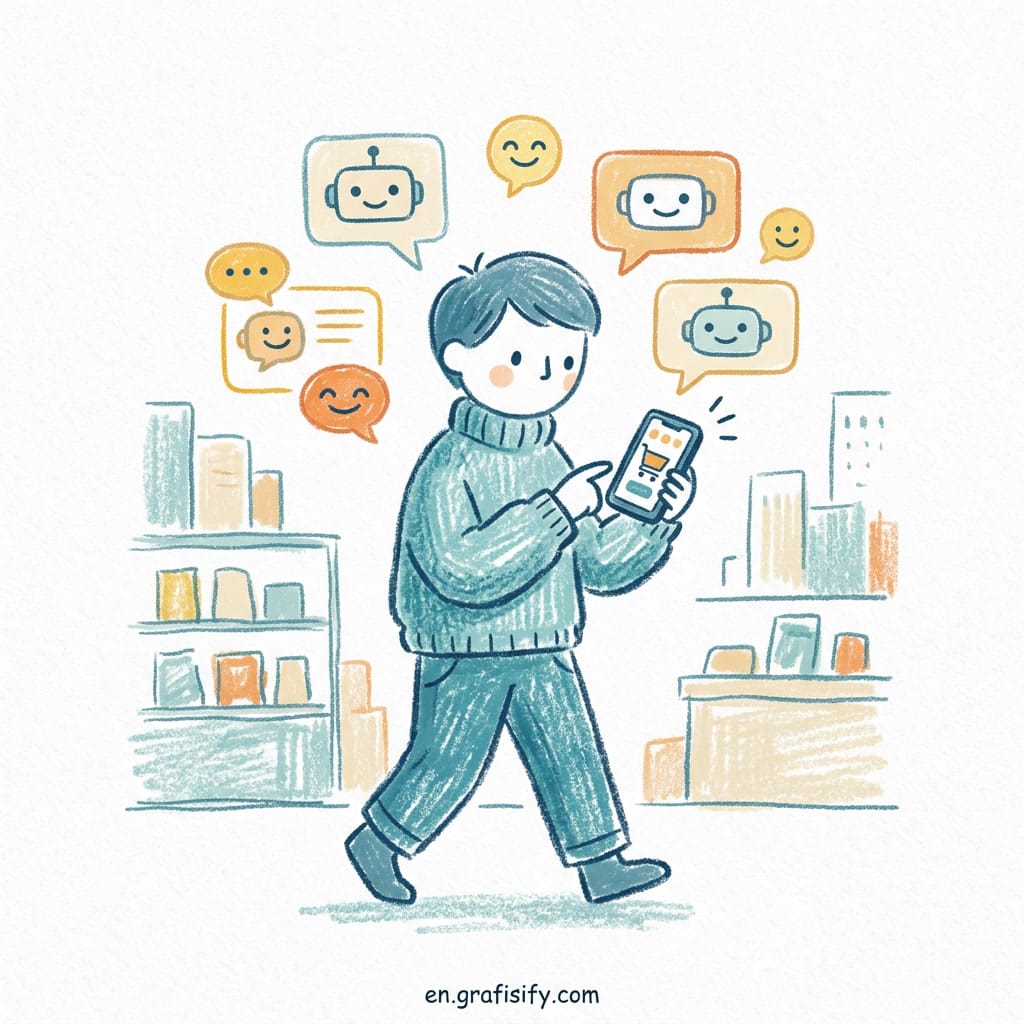
You type a question into ChatGPT instead of Google. It recommends a product. You click through and buy it. That scenario is no longer rare. Data from 2026 shows a structural shift: AI assistants are becoming the front door to product discovery, and the numbers are too big to ignore. Here is what the research actually says about how AI is changing shopping behavior, and what it means for anyone who shops online.
According to NIQ Research, 42 percent of American consumers used AI tools to shop in the past month. That isn’t a fringe behavior anymore. It has crossed the chasm from early adopters into the mainstream. And the implications ripple through everything: how brands get discovered, how Google ranks pages, how you decide what to buy.
This article pulls together data from seven major studies into one readable guide about how AI is changing shopping behavior. No marketing spin, no hype. Just what the numbers show and what they mean for you.
How AI Is Changing Shopping Behavior: What’s Really Happening?
The most striking change is where people start their product search. Industry data from Similarweb found that AI platforms now outperform traditional search engines 2.6 to 1 at the discovery stage. When a shopper doesn’t know exactly what they want, they turn to ChatGPT, Claude, or Gemini before Google.
Think about how you used to shop online. You typed a keyword into Google, scanned the organic results, maybe clicked a few ads. That funnel is being dismantled. The new funnel starts with an AI conversation: “Find me a wireless mouse with a silent click under $50.” The AI returns a curated answer with reasoning. You don’t browse ten pages of search results. You get one recommendation.
Google has responded with AI Overviews and a deeper Gemini Shopping Graph integration. But the damage to traditional organic search is real. Data from Ecommerce Times shows AI Overviews cratered organic click-through rates by 20 to 35 percent for ecommerce queries. If you run a website that depends on search traffic, that number is existential.
From Keyword Search to Conversational Commerce
The shift isn’t just about which platform wins. It’s about how people express intent. A Google search is short: “best running shoes wide feet.” An AI conversation is richer: “I need running shoes for wide feet, mostly for pavement, budget under $150, and I prefer something with good arch support.” The AI understands context, follows up, and narrows down options without the user having to reframe the query five times.

This changes everything for product discovery. Keywords still matter, but context matters more. Brands that rank high in traditional SEO aren’t guaranteed to appear in AI recommendations. A whole new visibility layer has emerged, sometimes called Generative Engine Optimization or GEO. McKinsey projects that $750 billion in commerce will flow through AI search by 2028.
By the Numbers: How Many Americans Actually Use AI to Shop

Let me break down the key data points so you can see the picture clearly. I have pulled these from the original research yourself so you don’t have to dig through PDFs.
| Statistic | Source | Year |
|---|---|---|
| 42% of US consumers used AI to shop in the past month | NIQ | 2026 |
| 37% of shoppers start product searches with AI, not Google | Eight Oh Two | 2026 |
| AI beats search 2.6x at the product discovery stage | Similarweb | 2026 |
| Shopify AI-driven traffic grew 8x year-over-year | Shopify/Gartner | 2026 |
| 86% of AI shoppers verify recommendations before buying | Product.ai | 2026 |
| 73% of consumers uneasy about AI using their personal data | Quad/Harris Poll | 2026 |
| $750B projected through AI search commerce by 2028 | McKinsey | 2026 |
Here is the thing. These numbers tell a consistent story. AI adoption for shopping is accelerating fast, but trust hasn’t caught up. People use AI to discover products, then verify through other channels before buying. That dual behavior pattern defines the current moment.

The Trust Paradox: Consumers Love AI Recommendations But Verify Everything
Data from Product.ai’s Trust in AI Commerce Report reveals a fascinating contradiction. 86 percent of consumers who use AI for shopping verify the recommendations before making a purchase. They cross-check prices on Amazon, read reviews on Reddit, or search Google for the product name. The AI saves them discovery time but doesn’t replace their skepticism.
That’s smart behavior, honestly. AI models hallucinate product specs, recommend discontinued items, and sometimes favor paid relationships over objective quality. The first generation of AI shopping tools is impressive but far from perfect.
Who Trusts AI More? Demographic Divides
Gen Z leads adoption. Over half of consumers under 30 have used AI for product research in the past month, according to the NIQ data. Boomers lag significantly, with only about a quarter reporting similar usage. The gap is predictable but narrowing as AI tools become more embedded in everyday platforms like Google Search and social media.

Income also correlates with adoption. Higher-income households are more likely to use AI for shopping, probably because they own more smart devices and subscribe to premium AI services. But the trend line is clear across all demographics: usage is rising, and the acceleration shows no signs of slowing. My own experience testing these tools backs this up, I have watched the recommendation quality improve dramatically in just the past six months.
How AI Is Reshaping Product Discovery and Upending Traditional SEO
Traditional search engine optimization is built on a clear contract. You write content, Google indexes it, users search keywords and click your link. AI search breaks that contract. When a user gets a direct answer from an AI, they never visit the source website. The organic traffic that sustained publishers, review sites, and ecommerce brands for two decades is being siphoned off.
PYMNTS Intelligence data confirms that the shopping funnel has shortened. Consumers spend less time browsing because AI removes the need to visit multiple comparison sites. The conversion rate can actually increase because the AI filters out irrelevant options up front. But the traffic that used to flow to third-party review sites, price comparison engines, and content publishers is redirected to AI platforms.
For businesses, this creates a new challenge. You no longer optimize just for Google. You need to optimize for AI recommendation systems. That means structured data, clear product attributes, authoritative third-party citations, and content that answers conversational queries, not just keyword-based ones.
The New Shopping Journey: AI, Verification, and the Multi-Channel Reality
Real shopping behavior in 2026 follows a multi-surface pattern. It isn’t “AI replaces everything.” It’s more layered than that.
The typical shopper starts with an AI query for broad discovery. Then they move to a verification channel: Google for traditional search, YouTube for video reviews, or Reddit for community opinions. Then they check social proof on TikTok or Instagram. Finally, they purchase on Amazon, a brand website, or a physical store. AI handles the first step. Everything else stays remarkably traditional.
This multi-surface behavior is backed by data from Accenture’s Consumer Pulse 2026, which found that over half of AI-using shoppers still search Google to verify AI recommendations. The AI is a concierge, not a replacement for critical thinking.
What This Means for the Average Shopper in 2026
Three practical takeaways from all this data.
Your decision process will get faster. AI removes the grunt work of comparing specs across multiple tabs. You describe what you need, get a curated shortlist, and spend your energy on verification instead of discovery. Decision time drops from hours to minutes for most product categories.
Fewer unbiased review sites will survive. The economics of content publishing are under pressure. If organic traffic drops 30 percent due to AI Overviews, review sites that depend on affiliate revenue face an existential squeeze. Fewer independent sources mean you need to be more deliberate about where you get your verification information.
Brand discovery shifts from search to conversation. Brands you have never heard of can get recommended by AI based on objective attributes. This is both an opportunity for new brands and a threat to established ones that rely on brand recognition alone. The best product with the best data structure wins the AI recommendation.
Frequently Asked Questions: How AI Is Changing Shopping Behavior
How are Americans using AI to shop in 2026?
Mostly for product research and discovery. People ask AI for recommendations, compare features, and check prices. Actual purchasing through AI agents is still early-stage, but discovery through AI is already mainstream at 42 percent adoption according to NIQ.
Is AI replacing Google for product searches?
Partially. AI has taken over the discovery stage, where users don’t know exactly what they want. Google still dominates when users know the specific product they want to buy. The split’s roughly 37 percent of initial searches starting with AI according to Eight Oh Two data.
Do consumers trust AI shopping recommendations?
Enough to use them for discovery, but not enough to act on them without verification. The Product.ai Trust Report found that 86 percent of AI shoppers verify recommendations before buying. Trust is growing but remains conditional.
Which AI tools do shoppers use most for product discovery?
ChatGPT leads by a wide margin, followed by Google’s Gemini and Anthropic’s Claude. Social platforms like TikTok are also increasingly used as discovery tools, blurring the line between social media and shopping.
How has AI changed the way people discover products online?
The biggest change is the shift from self-serve browsing to conversational curation. Instead of browsing categories and filtering manually, shoppers describe their needs and get a tailored recommendation. This shortens the discovery phase but shifts the verification burden to other channels.
Sources and further reading:
- NIQ – AI is rewiring the way Americans shop
- NIQ – 42% of consumers now use AI to shop
- Similarweb via FourWeekMBA – AI beats search at discovery
- Product.ai – Trust in AI Commerce Report
- Ecommerce Times – AI Overviews impact on ecommerce SEO
- McKinsey – New front door to the internet
- New Consumer – Early AI shopping data

Final Thoughts: Will AI Change How You Shop?
The data says yes, it already has. Forty-two percent of Americans have used AI to shop in the past month. That number will be higher next year, and higher the year after. The question is no longer whether AI will change shopping behavior. It’s how you adapt your own habits to make better decisions in a world where the front door to product discovery is a conversation, not a search bar.
Start paying attention to where your own product research begins. If you notice yourself asking ChatGPT before Google, you are part of the shift. And honestly? That’s probably a good thing if you verify the recommendations before you buy.

Irfan is a Creative Tech Strategist and the founder of Grafisify. He spends his days testing the latest AI design tools and breaking down complex tech into actionable guides for creators. When he’s not writing, he’s experimenting with generative art or optimizing digital workflows.
You might also like



 Artificial Intelligent
 Design & Creative
 Freelance
 Gadgets & Gear
 Insights
 Laptop
 Reviews
 Smartphone
 Tech Guides
 Vibe Coding