How to Find Freelance Clients: 7 Channels That Actually Work

The Verdict: Warm referrals and niche positioning are your fastest paths to paying clients. Content marketing builds the pipeline behind them. Marketplaces like Upwork work, but only if you treat them as a lead-gen system, not a bidding war.
Why Most Client Hunting Fails
The average freelancer spends 10 or more hours per week hunting for clients. Most of that time disappears into the same dead ends: spray-and-pray proposals, a generic profile that reads like everyone else’s, and zero follow-up after the first “no.”
The math is brutal. Upwork reports that 28% of skilled knowledge workers now freelance, and that number keeps climbing. You are not competing against a handful of local freelancers. As we covered in our guide to working with international clients across time zones, global competition is the new baseline. You are competing against thousands of people with the same tags, the same “I can help your business grow” intro, and the same willingness to discount.
The root problem isn’t effort. It’s that most freelancers approach the hunt as a volume game. Send 50 proposals, get 2 replies, book 1 client. That works occasionally, but it burns time and erodes your rate. When you send identical pitches to every listing, you signal that you haven’t done the work to understand the buyer.
Also Read:

The fix is to stop treating every channel as equally viable. Each channel has a different cost per hour, a different time to first client, and a different conversion ceiling. You need to know which ones reward your specific position and which ones are simply a race to the bottom.
The channels below are ranked by real-world effectiveness, not by what’s popular. Your job is to pick the two or three that fit your niche and your energy, then go deep. Shallow coverage across all seven beats deep coverage of one, every time.


The 7 Channels Compared
Not all channels are created equal. Here’s how they stack up on effort, speed, conversion, and cost.
| Channel | Effort | Time to First Client | Conversion | Upfront Cost |
|---|---|---|---|---|
| Niche positioning | High | Slow | Highest | Low |
| Warm referrals | Low | Fastest | Very high | None |
| LinkedIn outreach | Medium | Medium | Medium | None |
| Cold email | Medium | Medium | Low | Low |
| Upwork and Fiverr | High | Fast | Low | Low |
| Content marketing | Very high | Slowest | High | Low |
| Communities and repeat work | Low | Fast | High | None |
Niche Positioning: The Foundation
Clients don’t search for generalists. They search for someone who has solved their exact problem before. When a hiring manager needs blog posts for a cybersecurity SaaS, they type “cybersecurity SaaS content writer” into Google or LinkedIn. They don’t type “freelance writer” and sort through 40,000 results.
Narrowing your focus feels counterintuitive. You worry about turning away work. In practice, the opposite happens. A niche makes you the obvious choice for a specific buyer, and obvious choices command higher rates. A generalist writer charges $50 an hour. A B2B SaaS writer who understands PLG metrics and can interview technical founders charges $150 an hour. Same skill set, different positioning.
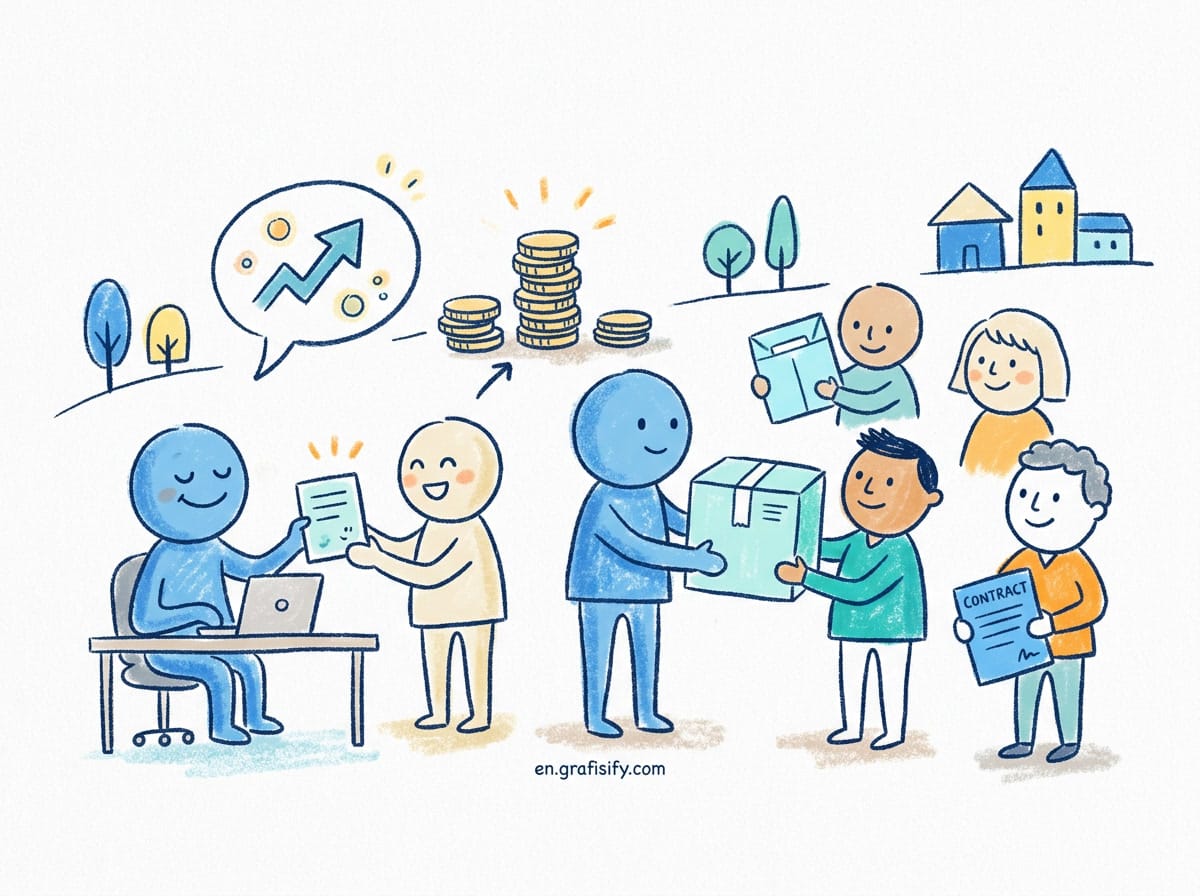
The shift is simple. Change “freelance writer” to “SaaS content writer for B2B” or “healthcare compliance copywriter” or “fintech UX writer.” Pick the niche where you have the most proof, not the one that sounds most impressive. If you spent three years writing for a logistics company, that’s your niche: thin competition and buyers desperate for writers who understand the terminology.
Once you pick the niche, update three things. Your profile headline, which is the first thing clients see on LinkedIn or Upwork. Your summary, which should state the specific problems you solve and who you solve them for. And your portfolio, which should show 2-3 focused projects in that niche. Delete the unrelated work. A portfolio with three relevant case studies outperforms one with fifteen scattered samples, because relevance signals expertise faster than volume.
Don’t overthink this. You can pivot later. Spend a weekend updating your materials, then test the positioning by pitching for 30 days and adjust the wording if responses are weak. The goal is to make your offer so specific that a client thinks, “Finally, someone who gets my industry.”

Warm Referrals and Your Network
Cold pitching works, but it’s the hardest path to a client. Referrals convert at a dramatically higher rate because the trust already exists. Someone you’ve worked with vouches for you, and the client’s guard drops. No lengthy discovery call to prove you’re competent. The recommendation does that work for you.
Your warm network is bigger than you think. Past clients, former colleagues, current and former bosses, and friends who know what you do. Most freelancers ignore these people or assume they’d reach out if they knew someone. They won’t. They’re busy, and they forget what you do for a living. You have to remind them, gently and repeatedly.
Start with a simple availability message. Short, direct, and easy to forward:
“Hey [Name], I’m taking on new clients this month. I help [specific niche] companies with [specific problem]. If you know anyone who needs that, I’d appreciate an intro. If not, no worries at all.”
That’s it. No hard sell, no pressure. Send it to your entire network, but don’t spam it everywhere at once. Personalize it slightly for each person. A former colleague wants to know what you’ve been working on recently. A past client wants to know you’re still around and still good.
Then build a light reminder system. Add “Currently accepting new [niche] clients” to your email signature, reaching every person you email. Post on LinkedIn every few weeks, sharing a client win or a lesson learned. The goal isn’t to go viral. It’s to stay top-of-mind so your name comes up first.
Follow up occasionally. Every two or three months, send a short check-in to past clients. Ask how their business is going. Remind them you’re available. Most freelance work comes from people you’ve already worked with, and the ones who don’t have work now will remember you in six months when they do.
LinkedIn and Cold Outreach, Done Right
LinkedIn is not a job board. It’s a professional homepage where potential clients check you out before they ever reply. If your profile looks like a resume dump, you’re losing leads before the conversation starts. Treat it like a landing page: clear headline, specific value proposition, and proof of work in the form of case studies or client results.
The outreach itself comes down to volume and quality, but not the way most people think. Posting daily content and hoping the algorithm rewards you is a long game with uncertain returns. Direct outreach is faster, but spammy messages get you ignored or reported. The sweet spot is 20 to 25 personalized requests per day. That’s a safety limit: it keeps you under spam flags, and it forces you to actually tailor each message. A message that references a specific project, a shared connection, or a real problem the client likely has will outperform a generic template sent to 200 people.
Consistency beats virality. One thoughtful message every workday for a month beats a viral post that earns followers who never hire. Follow up once or twice, spaced a few days apart, because most deals close on the second or third touch.
Cold email works the same way, and it’s an extension of LinkedIn rather than a replacement. Tools like Instantly help you run outreach at scale, manage deliverability, and rotate inboxes so your messages actually land. That’s useful when you want to book clients without depending on marketplace algorithms. But the tool doesn’t do the thinking. Personalization still matters, and so does follow-up. A sequence of three emails, each adding value or referencing something specific, beats a single perfect email that gets ignored.
The goal is not to blast. The goal is to build a pipeline where you’re talking to a handful of serious prospects at any given time.
Upwork and Fiverr: Marketplaces With a Strategy
Marketplaces still work. The problem is that most freelancers treat them like lotteries: send twenty generic proposals, hope one sticks. That approach floods the platform with noise and buries your work. The freelancers who actually earn on Upwork and Fiverr treat the platform like a search engine, not a social network.
First, optimize your profile for search. Clients search for specific services, so your title, skills, and portfolio descriptions should use the exact terms they’d type. “WordPress developer” beats “digital craftsman” if clients are searching for WordPress developers. Fill out every section, add portfolio pieces that show outcomes, and keep your availability current. A half-finished profile signals risk, and clients on marketplaces are already nervous about quality.
Second, be selective with proposals. Send fewer, better ones. One strong proposal that shows you read the job post, understood the problem, and have relevant proof beats twenty weak templates. Mention their specific project, ask one sharp clarifying question, and state a clear deliverable. That’s it. Clients skim. Make the first two lines count.
Third, think long term. A client who pays well and communicates clearly is worth more than five one-off gigs, so deliver early, over-communicate, and ask for a review when the job closes. Those reviews compound. A profile with ten five-star reviews and a repeat client track record will outrank a profile with fifty mediocre ones.
Niche boards and industry Slack groups are the quieter alternative, and specialists like FreelancePizza cover the tactics in depth. Less competition, more direct access to decision-makers, and usually better rates. Look for communities where your target clients already hang out: design-focused Discords, developer Slack channels, industry-specific forums. Participate genuinely, answer questions, and let people see your work. When someone posts a request that matches your skills, you can respond with context instead of a cold pitch. It’s slower to build, but the clients you get there tend to stick around.

Content Marketing and a Portfolio Website
Publishing where your clients already spend time is the fastest way to get found. Consistent output matters, and so does personal branding for freelancers to tie that content to a recognizable name. LinkedIn, Medium, and industry blogs are the big three, and one solid article per month that answers a real client question is enough.
Write about outcomes, not features. If you’re a web developer, write “How to Cut Page Load Time by 40% Without a New Host.” If you’re a copywriter, write “Why Your Landing Page Converts at 2% and How to Fix It.” The goal is to show you understand their problem before they ever contact you.
Repurpose everything. One article becomes a LinkedIn post, a Twitter thread, and a short case study. You’re distributing one piece four ways, not creating four pieces of content.
If you are just starting out and have no client work yet, read how to build a freelance portfolio with no clients before you build the site. Your portfolio website does the heavy lifting once someone clicks through. It needs to answer three questions in under ten seconds: what you do, who you help, and how to hire you. If a visitor can’t figure out all three, they leave.
Keep your portfolio tight. Three to five projects, not everything you’ve ever done. Each project should show the problem, your solution, and a measured result. “Redesigned checkout flow” is weak. “Redesigned checkout flow, cut cart abandonment by 18% in six weeks” is strong. Numbers matter because they give the client a reason to believe you.
Make contact easy. Put your email in the header, the footer, and on every project page. A contact form is fine, but your direct email should be visible. Don’t make someone hunt for a way to reach you.

Communities, Repeat Clients, and the Long Game
Slack groups, Reddit, Discord, and industry forums are where your clients talk about their problems. Join a few that fit your niche, pay attention first, and answer the questions that come up repeatedly with specifics, not generic advice.
Help without selling. When you answer a question well, people check your profile. That’s the lead. Directly pitching in a community thread gets ignored at best and banned at worst. Be the person who shows up with useful answers, and the inquiries follow.
Repeat clients and referrals are the sustainable pipeline. A client who hired you once will hire you again and mention you to colleagues if the work was good, which is why remote work productivity matters beyond your own output. One strong long-term client beats five one-off projects, so deliver well and stay in touch after the project ends.
The long game means accepting that most of what you do won’t pay off immediately. Communities, content, and relationships compound until you have a network that brings work to you.
Start this week: join two communities, answer one question in each, and set a monthly reminder to publish one article.
Key Takeaways
- Publish one solid article per month where your clients already read, then repurpose it across platforms.
- Your portfolio must answer what you do, who you help, and how to hire you in under ten seconds.
- Show 3-5 projects with measured results, not a complete work history.
- Join two or three niche communities and help without selling; repeat clients and referrals are worth more than any single new lead.
- The long game wins: content and community work compound over six to twelve months.
Frequently Asked Questions
How long does it take to find the first client?
Two to eight weeks of consistent outreach for most freelancers. The first client is hardest because you have no social proof, so offer a small project to get a case study, then use it to land the next one.
Should I focus on Upwork or referrals first?
Referrals if you have any network at all. A referral comes with built-in trust, while Upwork is a race to the bottom on price and the platform takes a cut. If you have zero network, use Upwork to build a portfolio, then move toward referrals as soon as you can.
Should I cold email companies?
Yes, but target small companies and startups. They’re more likely to read and act. Personalize the first line, show you understand their business, and offer one specific improvement in under 150 words. Follow up once after five to seven days, then move on.
How many LinkedIn requests should I send per day?
Ten to fifteen is a safe range. More than that and LinkedIn may flag your account, so only send requests to people who fit your ideal client profile.
Do I need a website?
Yes, even a simple one-page site. Clients will Google you, and if they find nothing they assume you’re not serious. One page with your services, a portfolio example, and a contact method is enough.

Irfan is a Creative Tech Strategist and the founder of Grafisify. He spends his days testing the latest AI design tools and breaking down complex tech into actionable guides for creators. When he’s not writing, he’s experimenting with generative art or optimizing digital workflows.







 Artificial Intelligent
 Design & Creative
 Freelance
 Gadgets & Gear
 Insights
 Laptop
 Reviews
 Smartphone
 Tech Guides
 Vibe Coding