Personal Branding for Freelance Designers

Why Personal Branding Matters More Than Your Portfolio
Most freelance designers treat their brand like a second-class citizen. The portfolio gets the attention. The logo gets an afternoon. The color palette gets whatever looked good on Dribbble that week. Then they wonder why clients can’t describe what they do, or why they keep losing projects to designers with weaker work but sharper positioning.
Personal branding is not a logo. It is the sum of every touchpoint a client has with you: your portfolio, your Twitter replies, your invoice design, your email tone, the way you present work in a meeting. When those pieces don’t add up, clients feel it. They might not articulate it, but they feel the friction. That friction costs you trust, and trust costs you money.
A consistent brand cuts through that noise. It tells clients who you are before you open your mouth. It makes your work feel intentional rather than accidental. It turns a “good designer” into a specific designer, the one they remember when a project comes up.
Branding also protects your rates. When a client sees a cohesive identity across your portfolio, social presence, and communication, they assume you are established. Established means experienced. Experienced means you can charge more without justifying it. Designers who skip branding end up fighting for every dollar in the proposal stage because the client has no signal of credibility beyond the portfolio itself.

The Three Pillars of a Designer’s Personal Brand
Every memorable freelance brand rests on three things: visual identity, voice, and positioning. Miss one and the whole thing wobbles.
Visual Identity: More Than a Color Palette
Visual consistency means your portfolio, social posts, proposals, and invoices share the same DNA. Pick one primary typeface and one secondary. Use them everywhere. Pick 3-5 colors and stick to them across every platform. When someone scrolls past your work on Instagram or Behance, they should recognize it as yours without seeing your name.
This does not mean your work all looks the same. The branding layer sits on top of your project work, not inside it. A designer who brands themselves in dark green and cream can still produce projects in neon pink. The branding is the frame, not the painting.

Practical steps: create a one-page brand sheet. Include your hex codes, type scale, logo lockup, and photo style. Refer to it every time you make something public. If you’re not embarrassed by how simple it is, you are overcomplicating it.
Voice: How You Sound Is Part of How You Design
Voice is the most neglected pillar. Designers obsess over kerning but type their Instagram captions like a corporate press release. Your writing is a design output. Every tweet, email, and case study description either reinforces or dilutes your brand.
Pick a tone and keep it. If you’re direct and technical, be that. If you’re playful and curious, be that. The only wrong answer is switching between them depending on which platform you’re on. Clients read your DMs and your website copy in the same session. The disconnect is jarring.
Also Read:
Write a three-word voice statement. Something like “warm, precise, curious” or “sharp, funny, no-bullshit.” Use it as a filter. Before you post anything, ask: does this sound like those three words? If not, rewrite or delete.
Positioning: What Are You the Person For?
Positioning answers one question: what kind of work do you want to be known for? Not what you can do. What you want to be hired for. Most freelancers resist this because narrowing feels like closing doors. The opposite is true. When you’re the “SaaS dashboard designer” instead of “a designer who can do anything,” the right clients find you faster. The wrong ones self-filter out.
Your positioning shows up in your portfolio curation, your bio, your case study selection, and the conversations you start online. If you want to design fintech products, your portfolio should lead with fintech. Your Twitter should discuss fintech design problems. Your case studies should solve fintech challenges. Consistency compounds.

Where Most Designers Lose Consistency (and How to Fix It)
| Touchpoint | Common Inconsistency | Fix |
|---|---|---|
| Portfolio | Different typography from website | Use same type scale on both |
| Social media | Random color palette per post | Create 3 post templates, reuse |
| Proposals | No visual branding at all | Add logo + brand colors to header |
| Formal tone in one message, casual in the next | Pick one tone, document it, audit monthly | |
| Invoices | Default template, no branding | Customize with logo + accent color |
| Case studies | Different structure every time | Create a case study template, follow it |
The pattern is simple: inconsistency comes from not having a system. Each touchpoint gets improvised separately, and improvisation drifts. The fix is templates. Not to stifle creativity. To free it. When the boring decisions are already made, you can spend your energy on the work that matters.
Social Media for Designers: Show the Process, Not Just the Final Image
Designers who only post finished work are invisible 90 percent of the time. The algorithm rewards frequency, and polished case studies take days to produce. Process content fills the gap: sketches, wireframes, color explorations, rejected concepts, before-and-after comparisons.
Process content does two things. It demonstrates your thinking, which is what clients actually buy. And it builds trust faster than any finished piece because people see the work behind the work. A client who watched you iterate through six logo concepts trusts your final recommendation more than a client who only saw the polished result.
You do not need a content calendar. Pick one format and repeat it weekly: “Here’s a design problem I solved this week” or “Here’s a before/after from a client project.” Consistency of format is more important than frequency. One solid post per week, same structure, for six months, beats three random posts per week that no one recognizes.
Case Studies That Actually Get You Hired
Most designer case studies read like a timeline: research, wireframes, mockups, final. Clients don’t care about your process. They care about results. A case study that leads with “Increased conversion by 34 percent” will get read. One that leads with “I started with user research” will get scrolled past.
Structure every case study the same way: problem, constraint, solution, result. Keep it tight. Three to four paragraphs total. Show images that illustrate the challenge, not just the polished deliverable. If you can include a client quote, do it. Social proof closes more deals than any design award.
Keep your case study format consistent across your portfolio. When a client reads three of your case studies and each one follows the same structure, they subconsciously trust that you have a methodology. That trust is worth more than any single project in your portfolio.
Tools to Keep Your Brand Consistent Without Losing Your Mind
You do not need a brand agency. You need a few tools and the discipline to use them.
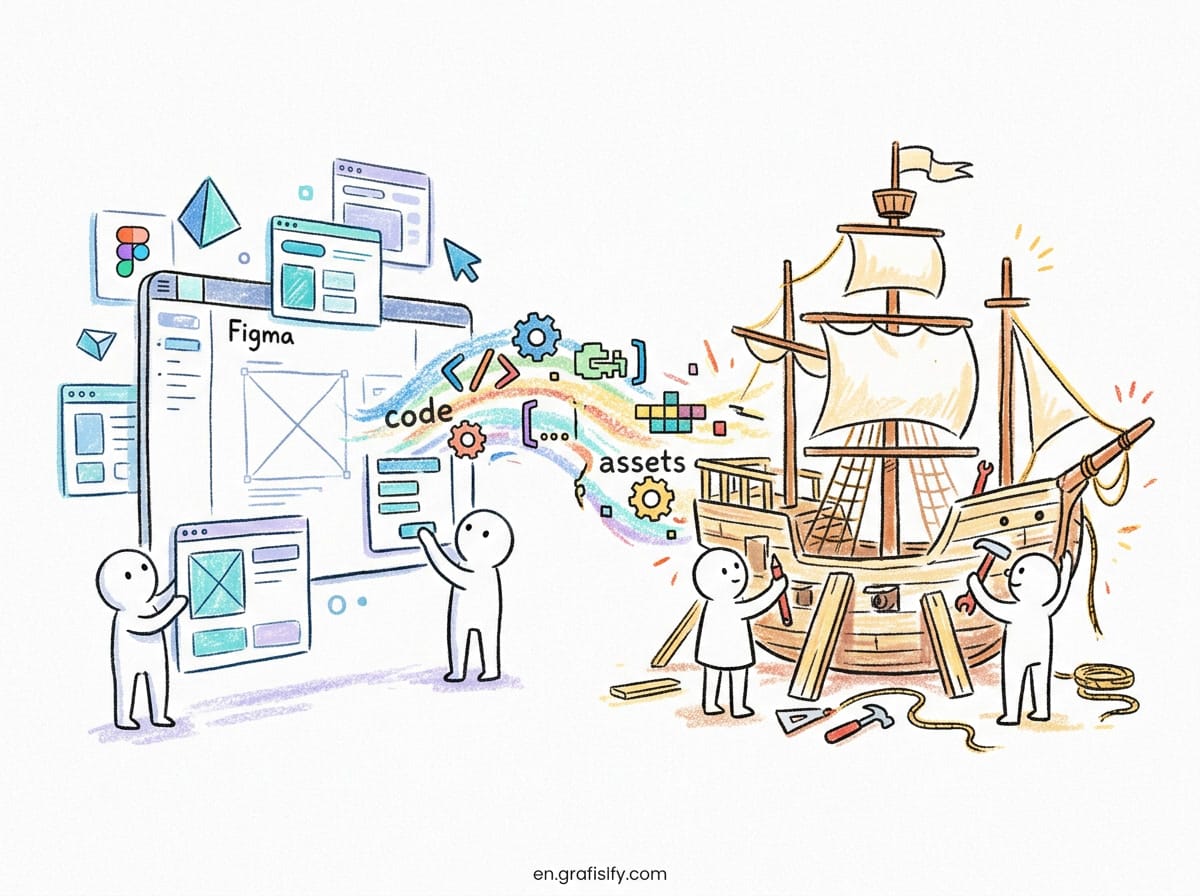
Figma for brand assets. Create a single Figma file called “Brand Kit” with your colors, type scale, logo variations, and social templates. Every new project starts from this file.
Notion or Google Docs for voice guidelines. Write down your three-word voice statement, your bio in three lengths (one-line, paragraph, full), and examples of “sounds like us” and “doesn’t sound like us.” Update it when your voice evolves.
A portfolio site you control. Do not build your entire brand presence on platforms you don’t own. Behance and Dribbble are discovery channels. Your own site is your brand headquarters. Make sure the visual identity matches across both.
Email signature. Small thing, big signal. A clean email signature with your name, title, website link, and one accent color tells clients you pay attention to details. A default “Sent from my iPhone” tells them you don’t.
Common Branding Mistakes That Cost You Clients
Even designers who care about branding fall into the same traps. The most common: rebranding too often. Switching your color palette every quarter because you got bored confuses people. Brand recognition takes repetition. If you change your look every three months, you never build it.
Another trap is over-designing your brand. A personal brand does not need a 40-page style guide. It needs a few decisions made and stuck to. The designer who ships a consistent brand with three colors and one typeface wins over the designer who has been “working on their rebrand” for six months.
The third mistake is separating your personality from your brand. Clients hire people, not portfolios. If your social presence is sterile and professional while your client calls are warm and funny, you have a disconnect. Let your actual personality through. The designers with the strongest brands are the ones who stopped trying to sound like everyone else.
Key Takeaways
- Personal branding is consistency across every client touchpoint, not just a logo.
- Visual identity, voice, and positioning are the three pillars. Missing one creates friction.
- Process content on social media builds trust faster than polished final images.
- Case studies should lead with results, not process. Use the same structure every time.
- Templates and tools prevent drift. A one-page brand sheet is enough to start.
- Clients hire designers they remember. Consistency is what makes you memorable.

Irfan is a Creative Tech Strategist and the founder of Grafisify. He spends his days testing the latest AI design tools and breaking down complex tech into actionable guides for creators. When he’s not writing, he’s experimenting with generative art or optimizing digital workflows.




 Artificial Intelligent
 Design & Creative
 Freelance
 Gadgets & Gear
 Insights
 Laptop
 Reviews
 Smartphone
 Tech Guides
 Vibe Coding