How to Build a Freelance Portfolio With No Clients

Why an empty portfolio keeps new freelancers from ever starting
Most people who want to freelance never send a single proposal. The reason is almost never skill. It is the portfolio. Every job board and client page asks for examples of your work, and when you have none, you assume nobody will hire you.
That assumption is wrong. Clients hire freelancers who can prove they can solve a specific problem. Proof does not have to come from a paying client. It can come from work you created deliberately, with a made-up brief, to a professional standard.
Upwork’s own portfolio guide is blunt about this. It states that mock-ups and personal projects count as valid portfolio pieces, and it suggests 3 to 5 strong pieces per skill area rather than dozens of weak ones. The platform knows that beginners do not start with client work. It built its guidance around that reality.
The freelancing market is large enough that you do not need to be discovered by everyone. Upwork’s Freelance Forward study counted 64 million Americans freelancing in 2023, roughly 38 percent of the US workforce, contributing an estimated 1.27 trillion dollars to the economy. Most of those people were not born with a full client roster. They built proof first, then the clients followed.
What clients actually look for in a portfolio
Clients are not grading you like a professor. They are trying to answer one risk question: can this person deliver the outcome I need, on time, without me having to manage every step?
When a client opens your portfolio, they scan for three things in order. First, relevance. Does this work look like the project they are hiring for? Second, process. Can they see how you thought through a problem, not just the shiny final image? Third, reliability signals. Is there a clear case study, a description of your role, and a believable timeline?
Beginners fixate on beauty. Clients fixate on fit. A clean landing page mock-up you designed for a fake coffee shop tells a client nothing about whether you can handle their ecommerce rebuild. A case study that shows the same coffee shop’s checkout flow, the problem, your solution, and the result tells them something real.
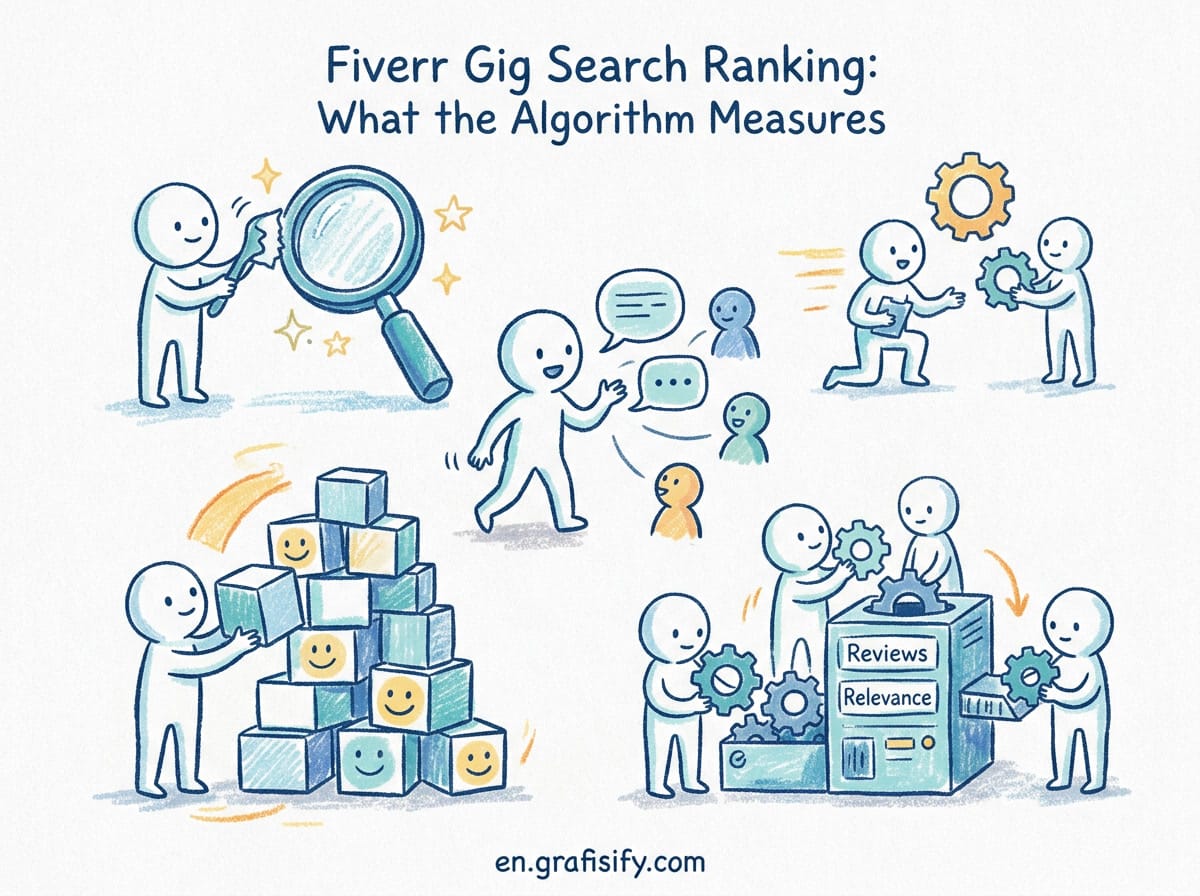
The best portfolio pieces are not the ones with the most impressive visuals. They are the ones that let a client picture you doing their exact job.
One detail that surprises new freelancers is how little a client wants to scroll. Most decision makers decide in the first few seconds whether your work is worth a closer look. That means your first piece matters far more than your tenth, and your worst piece can undo the impression your best one created. Edit ruthlessly, organize around a single niche, and make the strongest work impossible to miss.
The spec project method: build proof without a client
A spec project is a piece of work you design, build, or write to a fictional brief, executed to the same standard you would deliver to a paying customer. It is the fastest way to fill an empty portfolio, and it is completely legitimate.
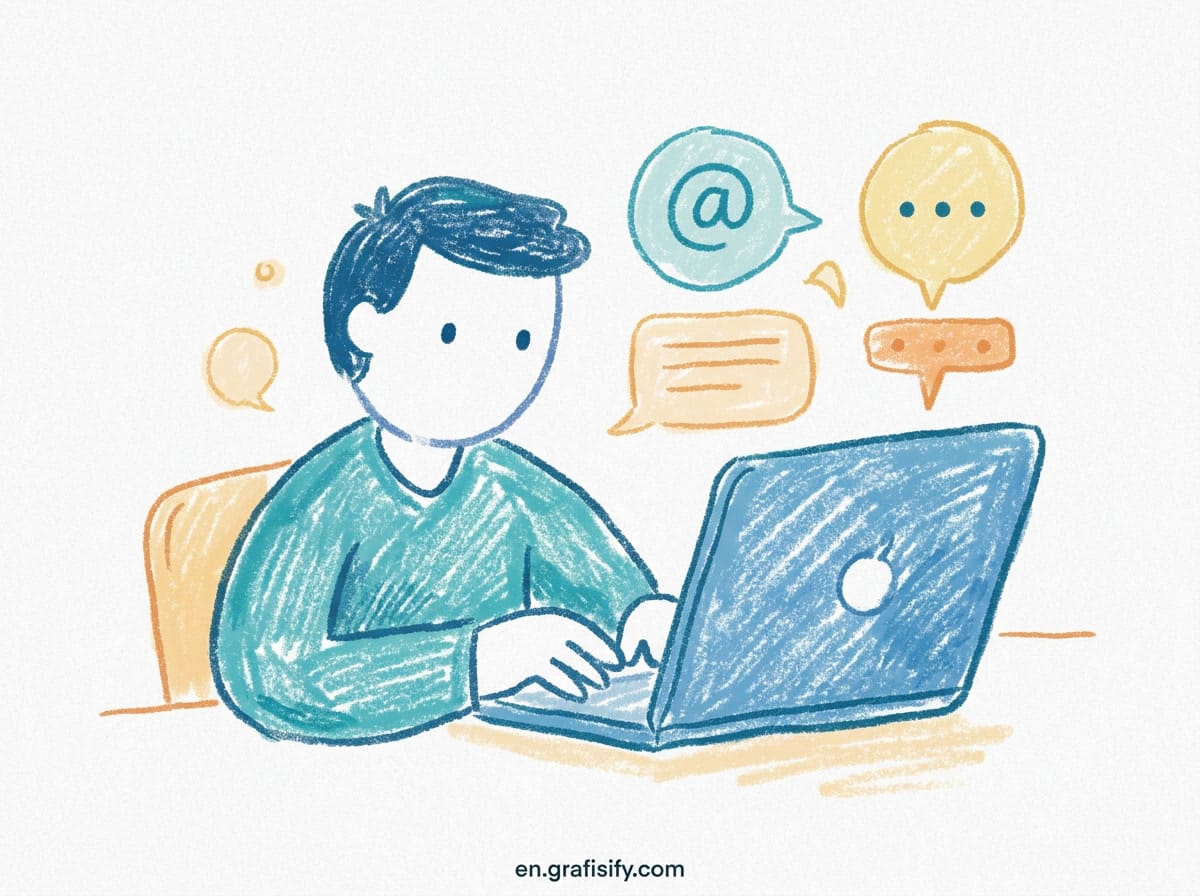
Here is how to do it well. Pick one niche you want to work in, not three. Write a realistic brief for a business in that niche, including the background, the audience, and the constraint you are working under. Then deliver the work as if a real client were waiting on it, with a timeline, revisions, and a written case study explaining your choices.
Do not invent a fake client or claim a project was paid when it was not. Clients and platforms check, and a lie about your experience destroys trust faster than an empty portfolio ever could. Label the work clearly as a personal or conceptual project. Honesty reads as confidence, and confidence is part of what you are selling.
| Approach | Time to first sample | Cost | Looks like paid work? |
|---|---|---|---|
| Spec project (personal brief) | 1 to 2 weeks | Free | Yes, when done well |
| Volunteer work for a nonprofit | 2 to 4 weeks | Free, but you donate time | Yes, real client |
| Redesign of an existing brand | 1 week | Free | Yes, but label as personal |
| Unpaid internship or trial project | Ongoing | Time only | Sometimes |
Which option fits depends on your niche and your comfort. Spec projects and brand redesigns give you full control over quality and can be finished quickly. Volunteer work adds a real organizational relationship and a genuine reference, but it takes longer and you cannot control the outcome as tightly.

Three spec projects you can start this week
You do not need a grand plan to begin. Each of these produces a portfolio-ready piece within days.
First, a fictional-brand landing page. Pick a local business type you understand, invent a name and a product, and design a full landing page with a headline, a hero section, a benefits block, and a call to action. Then write a short case study about the layout decision and the psychology behind your copy choices. Designers and marketers can both use this.
Second, a paid-work sample for a writer or editor. Take a topic within your niche and write a 1,500-word article, a short email series, or a set of product descriptions. Present it as an actual deliverable with a headline that earns the click. Writers often undervalue this because the work feels like homework, but it is exactly what a client will pay for.
Third, a full case study of something you have already done. Did you rebuild a friend’s small business site? Automate a spreadsheet for your own side project? Improve a process at a previous job? Document that work as a case study even if nobody paid you. The outcome, not the invoice, is what convinces a client.
How to structure one case study that does the selling
One detailed, well-written case study is worth more than ten sketchy thumbnails. Here is the structure that works across design, code, writing, and marketing.
Start with the context. What was the project, who was it for, and what was the core problem? Then state your role honestly. If you did everything, say so. If you collaborated, describe your specific contribution. Ambiguity here makes clients nervous. Then explain your process. What did you research, what options did you consider, and why did you pick the direction you did?
Finally, show the result. Use numbers where you have them. A faster load time, a higher email open rate, a clearer navigation flow, a piece that ranked for a keyword. If you genuinely have no metric, say what the outcome was in concrete terms rather than vague praise.
Clients remember stories, not screenshots. A case study that tells a clear before-and-after story is the most reliable trust builder in your entire portfolio.
Common portfolio mistakes to avoid
There are a few patterns that quietly sink otherwise decent portfolios. The first is showing everything. Fifteen average pieces bury your three strong ones. Curation signals confidence; dumping warns the client you cannot edit yourself.
The second is missing context. A bare image with no explanation makes the client guess what you did and why. Always pair each piece with a sentence or two about the brief, your role, and the outcome.
The third is inconsistency. If your portfolio mixes a polished logo project with a low-effort sketch, the client reads the low-effort piece as your real standard. Keep the bar even, even if it means showing fewer pieces.
The fourth is ignoring the platform the client is on. A portfolio that looks great on your personal site but renders as broken images on Fiverr or Upwork will not convert. Optimize each submission for where the client actually sees it.
Adapting your portfolio for Fiverr, Upwork, and your own site
Every channel shows your work differently, and treating them as one portfolio pasted everywhere costs you clients. On Fiverr, buyers browse gigs with a small preview and a handful of images, so your visual samples carry the weight. Use the first image to show your strongest, most relevant result, add captions, and keep the total tight so the buyer does not have to hunt.
On Upwork, clients read your profile and proposal together. The portfolio serves as supporting evidence for the claims you make in your proposal, so link a specific case study that mirrors the job you are applying for. A generic “view my work” link is weak. A pointed “here is the exact type of project I just delivered for a similar business” is strong.
Your personal site is the one place you control the whole story. Use it to link the pieces into a narrative, show your process, and include a clear way to contact you. Many freelancers skip the personal site and rely entirely on marketplaces. That works while the marketplaces are healthy, but owning one place where your work and contact details live is a cheap form of insurance.
Turning the portfolio into your first clients
A portfolio does not find you clients by itself. It is the asset you point to when you make your case, and its job is to make that case short and convincing.
Update your Fiverr gig description and your Upwork proposal template so that the portfolio link is a highlighted part of the pitch, not an afterthought at the bottom. When you send a proposal, reference one specific case study and explain why it maps to the client’s project. A client who sees you have already solved a version of their problem is far more likely to reply.
Keep adding to the portfolio as you complete real work, and retire the spec pieces once you have paid samples that cover the same ground. There is no rule that says the personal projects must stay forever. They are a bridge, and bridges get crossed and then reused.
Frequently asked questions
Is it okay to use fake or invented projects in my portfolio?
Yes, as long as you label them honestly. A clearly labeled personal or conceptual project is a legitimate portfolio piece. Claiming a spec project was paid client work is not, and it will damage your reputation if discovered. Honest labels protect you and build more trust than inflated claims.
How many portfolio pieces do I need before I start pitching?
Three strong, relevant pieces are enough to start. Upwork’s own guidance suggests 3 to 5 pieces per skill area. Quality and relevance beat quantity, and one detailed case study can carry you further than a dozen unlabeled images.
Should I work for free to get portfolio samples?
Only if the exchange is genuinely worth it, such as meaningful volunteer work that gives you a real reference and a real client relationship. Never work for free for a for-profit client just to get a sample. A spec project you control completely is usually a better use of your time.
Fiverr’s own research found that a large share of freelancers work independently as their primary occupation, and that pattern only becomes sustainable when a steady flow of new clients trusts your past work. That flow starts with a handful of honest samples, made to a professional standard, presented as a clear story. You can build those this week. The clients come after, and they come faster than you expect.

Irfan is a Creative Tech Strategist and the founder of Grafisify. He spends his days testing the latest AI design tools and breaking down complex tech into actionable guides for creators. When he’s not writing, he’s experimenting with generative art or optimizing digital workflows.


 Artificial Intelligent
 Design & Creative
 Freelance
 Gadgets & Gear
 Insights
 Laptop
 Reviews
 Smartphone
 Tech Guides
 Vibe Coding