Best Docking Stations for a Clean Desk Setup
Why a Single Cable Fixes Your Whole Desk
Look at most desks and the mess is never the monitor, the keyboard, or the mouse. It is the cables. Charger here, display cable there, a USB hub dangling off the side of the laptop, a dongle for Ethernet that you misplaced twice this week. Every device adds a wire, and the pile grows until half your setup is just cord.
A docking station solves that in one move. It takes all those separate cables and folds them into a single connection to your laptop. One plug and your monitor, keyboard, mouse, wired network, and charger all come alive at once. That is the whole point of the product, and it is why docking stations have become the backbone of clean desk setups rather than a nice-to-have accessory.
This guide walks through what a dock actually does for your workspace, how to read the three competing technologies on the shelf, and which one to buy based on how you actually work. No jargon dumping. Just the math that matters for a tidy, productive desk.
Here is what a single docking cable buys you in practical terms:

- One plug to rule your whole desk. Monitor, keyboard, mouse, Ethernet, and charging all come online at once.
- A closed laptop that works like a desktop. The lid stays down and the machine becomes a workstation instead of a slab.
- Fast, repeatable pack-up. Unplug one cable and the entire setup disconnects, with nothing to remember.
- Real cable reduction. Chargers, display cables, and hubs collapse into a single tidy run to the laptop.
What a Docking Station Actually Does for Your Desk
A dock turns a laptop into a desktop machine without forcing you to leave the laptop plugged into half a dozen things. On the laptop side you connect one cable. On the far side of the dock sit the ports: HDMI or DisplayPort for monitors, USB for peripherals, Ethernet for a stable network, and a power channel that recharges the machine while it works.
The payoff is practical, not cosmetic. You stop hunting for the right port and the right cable every time you sit down. Your laptop lid stays closed and becomes a docked workstation instead of an open slab taking up half your desk. And when you pack up to leave, one cable disconnects everything. No more unplugging eight things and trying to remember which brick goes with which device.
People who switch setups between home and office feel this the most. Instead of paying attention to cabling at both desks, they plug one cable into their laptop and everything they care about is already there. The desk looks cleaner, but the real win is that nothing has to be reconnected from memory.
Thunderbolt 4, USB-C, and DisplayLink: The Three Ways Docks Work
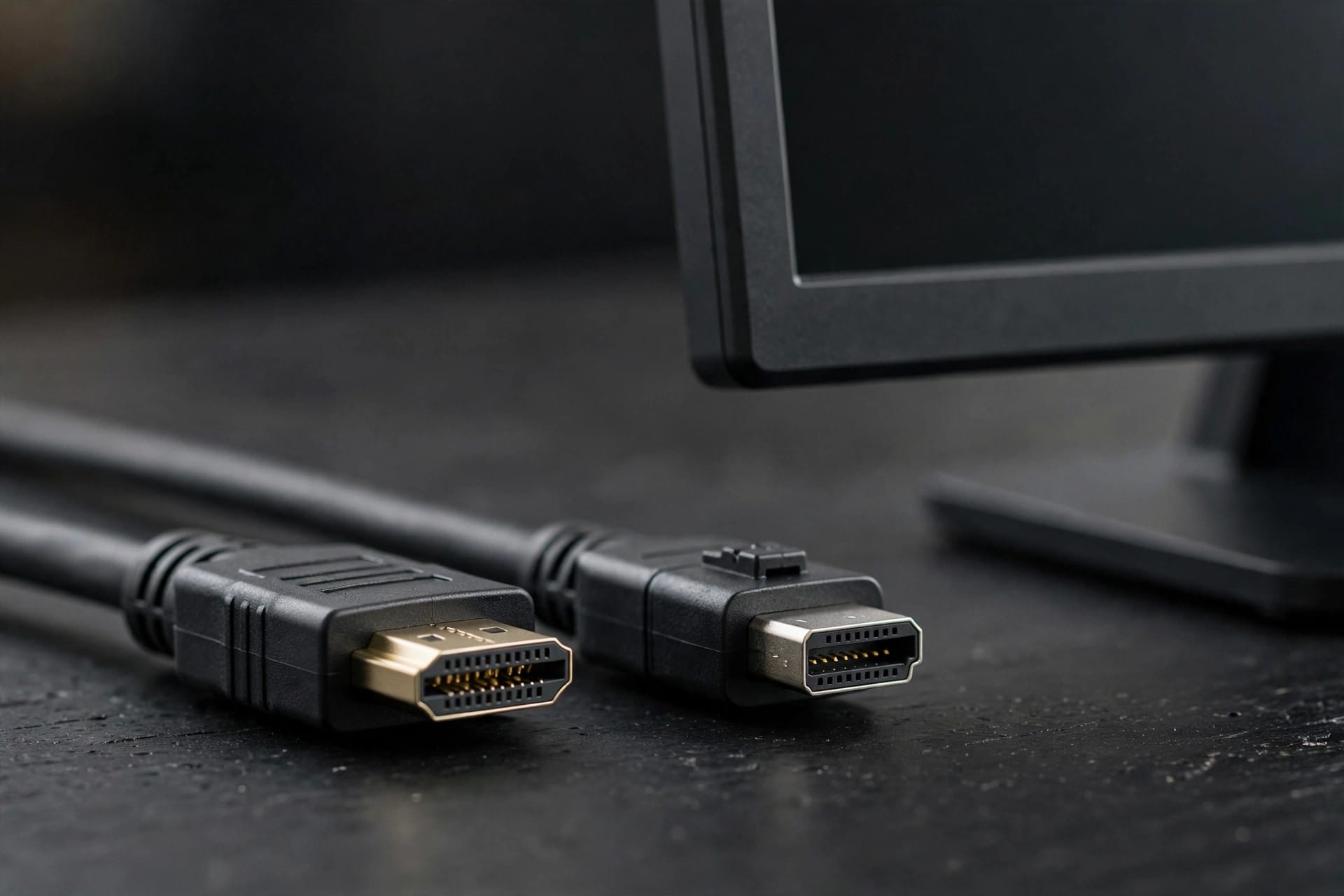
Before buying anything, you need to know which of the three dock families you are looking at. They all add ports, but they behave very differently under load, and picking the wrong one leads to monitors that blink, half the expected refresh rate, or driver headaches that send you back to the cable pile.
Thunderbolt 4 Docks
Thunderbolt 4 is the premium option and the one serious workstation buyers aim for. It carries 40Gbps of bandwidth over a single cable, which is enough to drive two 4K monitors at 60Hz on native GPU output. No software rendering, no compression tricks, no drop in performance. The dock uses the GPU already in your laptop, so everything feels as responsive as if the monitors were wired directly.
Certification matters here. Thunderbolt 4 docks go through Intel hardware validation, which is why they tend to cost more than generic USB-C hubs. You are paying for reliability that shows up in daily life: monitors wake from sleep consistently, dual 4K stays at 60Hz, and the dock keeps working across Windows and Mac hardware. The Plugable TBT4-UD5 is a strong representative of this class, holding dual 4K and 100W of charging in a single certified unit.
Also Read:
USB-C Docks and Hubs
USB-C docks are the middle ground and the most common on store shelves. They use the DisplayPort Alt Mode built into most modern laptops to push video alongside data and power. The catch is that many laptops only expose one DisplayPort lane through their USB-C port. That limits you to a single high-resolution monitor at a decent refresh rate, or two displays at lower resolutions and refresh rates.
That does not make them bad. For a single 4K monitor plus USB peripherals plus charging, a good USB-C dock like the UGREEN Revodok Pro delivers everything most people need at a fraction of the Thunderbolt price. The 7-in-1 model runs dual 4K at 60Hz, delivers 100W of power, and does it in an aluminum body that sits flat on the desk. If your workflow runs one or two monitors, this is usually the smart buy.
DisplayLink Docks
DisplayLink is the compatibility workaround. Instead of using the laptop GPU, a DisplayLink dock renders video through a driver and sends it as compressed data to the monitors. That means it works on almost any laptop, including base MacBooks that natively support only one external display. The tradeoff is real: the CPU does extra work, there is minor latency, and you must install and keep the driver updated.

For most desk setups DisplayLink is overkill and adds friction. It earns its keep in one specific situation: when your laptop simply refuses to drive multiple external monitors on its own, and no dock can change that because the limitation lives in the chip, not the dock. Base M1 and M2 MacBooks top out at one external display, and a Thunderbolt dock cannot bypass that. A DisplayLink dock like the TobenONE is the only way to push a triple-monitor setup from that hardware.
Docking Station Comparison Table
| Dock | Protocol | Max Displays | Power | Best For |
|---|---|---|---|---|
| Plugable TBT4-UD5 | Thunderbolt 4 | Dual 4K or single 8K | 100W | Creative pros, developers |
| CalDigit TS4 | Thunderbolt 4 | Dual 4K@60Hz | 98W | Mixed Windows and Mac fleets |
| UGREEN Revodok Pro 7-in-1 | USB-C | Dual 4K@60Hz | 100W | Best value single or dual monitor |
| Dell Pro Dock WD25 | USB-C / DP Alt | Up to 4 | 100W | Corporate reliability, warranty |
| Anker Nano 13-in-1 | USB-C | Triple display | 100W | Flexible home and office setup |
| TobenONE DisplayLink | DisplayLink | Triple (any laptop) | 100W | MacBooks with display limits |

The table above assumes you pick based on the displays and power you actually need. If a dock promises four display ports but the laptop feeding it only exposes one native DisplayPort lane, the second monitor quietly drops to a lower resolution or a lower refresh rate. Read your laptop spec first, then match the dock to what the machine can actually push.
Key Takeaways Before You Buy
Four things decide whether a dock makes your desk cleaner or just adds another box to it.
Match the dock to your laptop ports, not your wish list. A Thunderbolt 4 dock is wasted on a laptop with only USB-C ports, and a base MacBook cannot drive two external monitors through any normal dock. Check the host laptop first.
Dual 4K at 60Hz is the reliability bar. Anything claiming more displays or higher refresh rates on a single cable needs Thunderbolt 4 or Thunderbolt 5 to back it up. If a cheap dock promises triple 4K, expect compression and driver dependence.
DisplayLink is for compatibility, not speed. It is the right answer when your laptop limits external displays, but the CPU overhead and driver updates make it the wrong answer when a native dock would work.
Power delivery matters as much as ports. A dock that cannot feed your laptop enough wattage under load defeats the single-cable clean setup. Aim for 100W or more so an open laptop charges while you work instead of slowly draining.
Clean Desk Setup Essentials Around the Dock
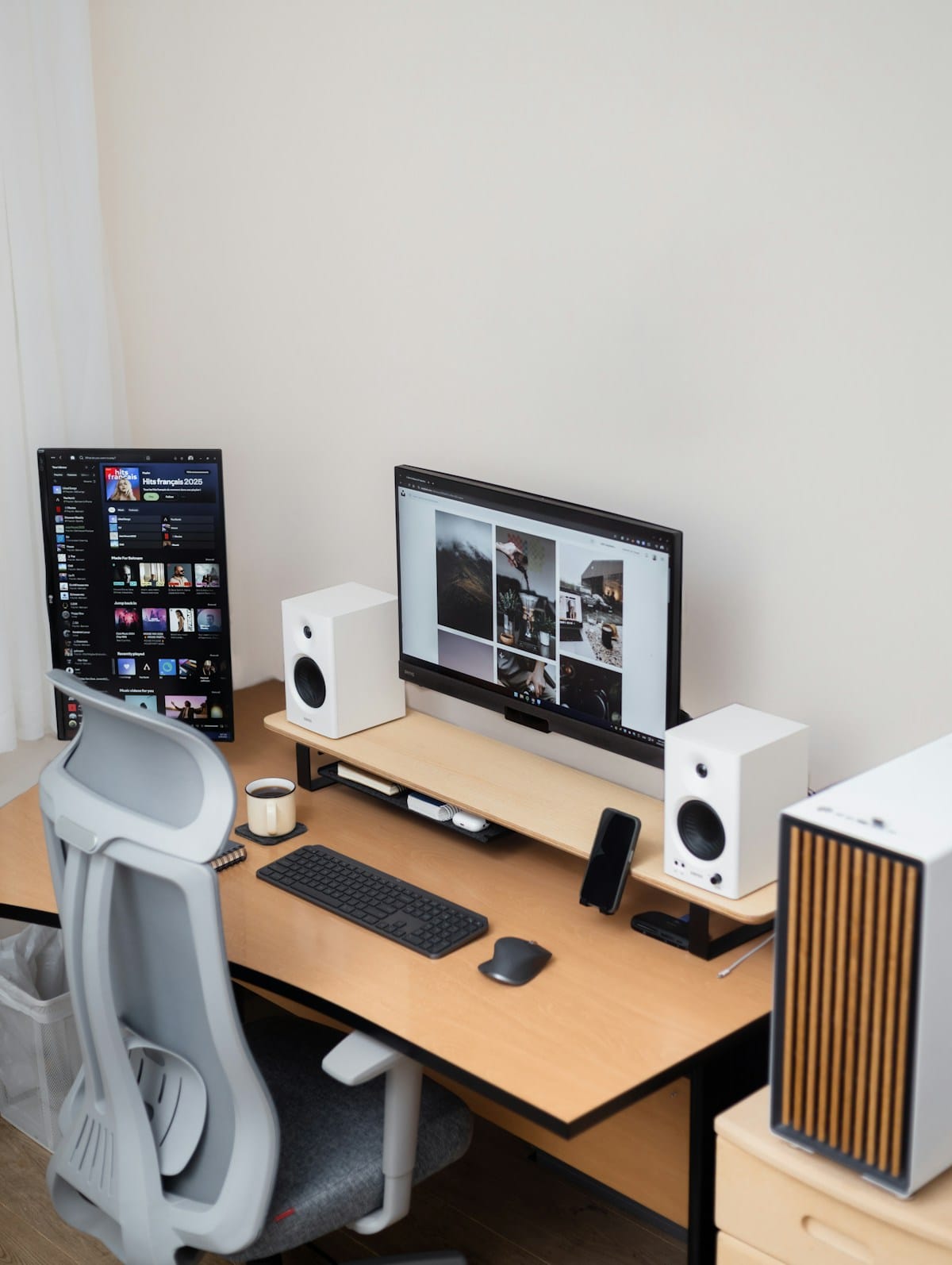
A dock removes the cable pile, but it works best when the rest of the desk is set up to keep it that way. Start with a monitor arm or a riser that lifts the screen to eye level. That single change frees desk space, improves posture, and gives the dock and its cables a place to live out of the way. Most people spend money on the dock itself and skip the mount, then wonder why the desk still looks cramped.
Cable management comes next. Velcro straps, a tray clipped under the desk, and a power strip you can hide turn a tangle into a single neat run. Route the host cable and the monitor cables along the back and down to the tray, and let the dock sit there with the power brick. The visible part of your desk should show only the monitor, keyboard, and mouse.
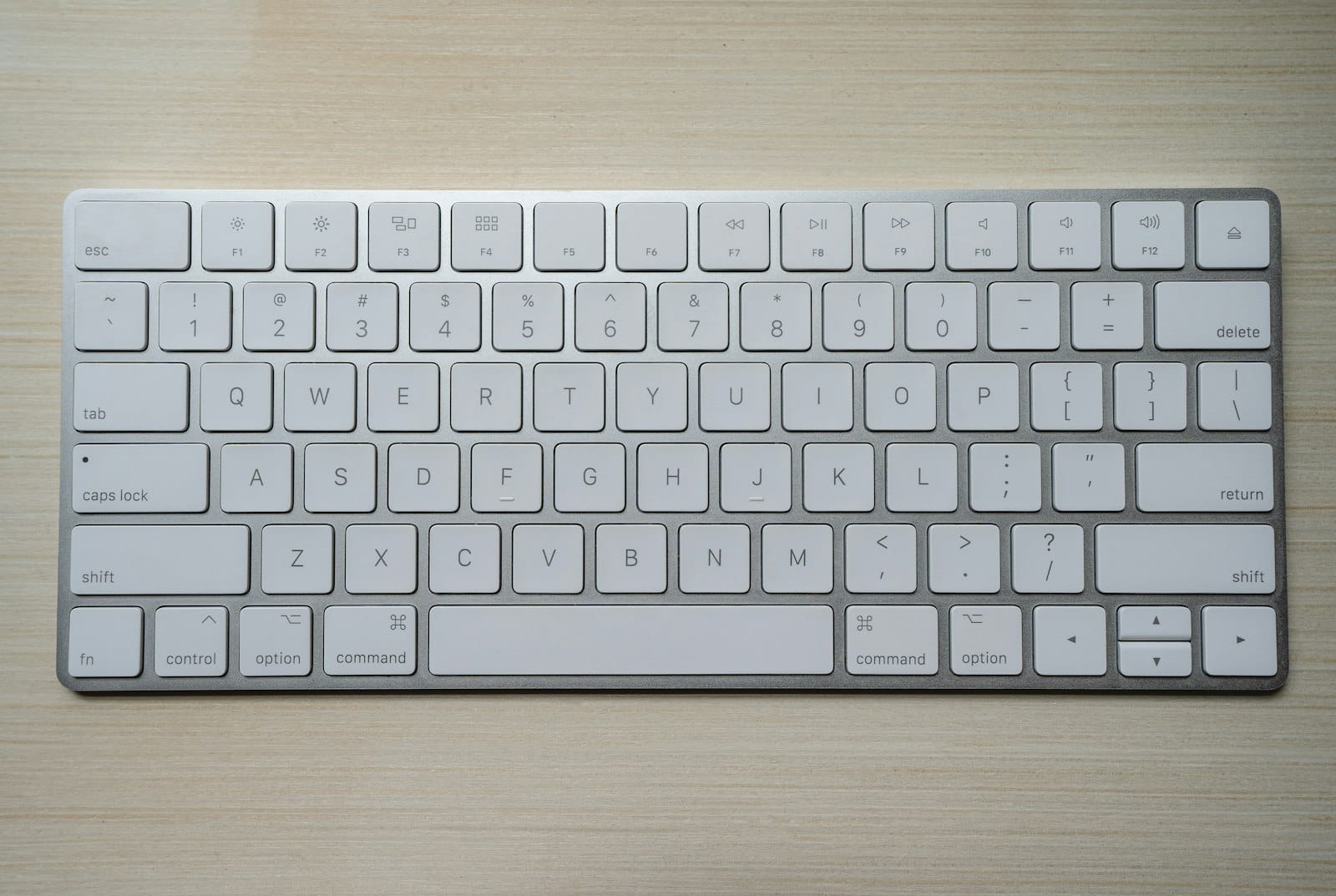
Pick a keyboard and mouse that do not add wires you have to route. A wireless mechanical keyboard and a wireless mouse keep the surface clean, and since both connect to the dock or the laptop once, they do not complicate the single-cable rule. If you prefer wired gear for latency or reliability, count those ports when you choose the dock so you do not run out of USB on day one.
Finally, think about where the laptop goes. A vertical stand next to the dock keeps the lid closed and the machine out of the way, which completes the desk setup look and lets the dock do the work of connecting everything. The closed lid also keeps the fans free and the screen protected when the laptop becomes a desktop machine full time.
How to Decide and Set Up Your Dock
The best dock is the one that disappears into your workflow. Start with how many monitors you need and what your laptop can drive. One monitor and a standard USB-C port points you to a value USB-C dock. Two 4K monitors or heavy creative work points you to Thunderbolt 4. A MacBook stuck on one external display points you to DisplayLink.
Once you have the dock, the clean desk follows with two small habits. Mount or place the dock somewhere it can breathe and hide its brick under the desk. Route the single host cable along the back edge so it enters the laptop cleanly. Then commit to the one-cable rule: when you dock, only the host cable connects, and everything else lives on the far side of that split.
A docking station will not organize your drawer or fix a cable you refuse to route. What it does is remove the repeated, daily act of plugging in half your gear by hand. For most people that single change removes more desk clutter and daily friction than any other accessory, and it costs less than a new monitor while making the one you already own feel like part of a real workstation.
Frequently Asked Questions
Do I need a docking station if I have a USB-C hub? It depends on how many monitors and how much power you need. A hub adds ports but often shares bandwidth and delivers less charging. A true dock drives multiple displays at full refresh rate and feeds your laptop enough wattage to work under load. If you run one 4K monitor and simple peripherals, a hub may be enough. Once you add a second display or heavy creative work, a dock is the right call.
Will any dock work with my laptop? Not automatically. Check the host port first. A Thunderbolt 4 dock needs a Thunderbolt 4 or USB4 port on the laptop to unlock its full bandwidth. A USB-C dock works with any full-featured USB-C port but may cap display count or resolution. And a base MacBook with one external display limit cannot be bypassed by a standard dock, only by a DisplayLink model.
Why does my second monitor stay blank or blink? That is almost always a bandwidth or lane limitation, not a broken dock. Many laptops expose only one DisplayPort lane through USB-C, so the second display drops resolution or refresh. Read the laptop spec, then match the dock to what the port can actually push. Native GPU output through Thunderbolt 4 avoids this for dual 4K setups.
How much power should my dock deliver? Aim for 100W or more. That keeps an open laptop charged while the dock runs monitors, peripherals, and Ethernet at the same time. A dock that delivers too little wattage makes the machine slowly drain under load, which defeats the single-cable setup you bought it for.
Is DisplayLink worth it? Only when you need more external displays than your laptop natively supports, such as a base MacBook capped at one. DisplayLink works across almost any hardware, but it adds CPU overhead, minor latency, and driver maintenance. If your laptop can drive the monitors you want on its own, a Thunderbolt or USB-C dock is the cleaner choice.


Irfan is a Creative Tech Strategist and the founder of Grafisify. He spends his days testing the latest AI design tools and breaking down complex tech into actionable guides for creators. When he’s not writing, he’s experimenting with generative art or optimizing digital workflows.






 Artificial Intelligent
 Design & Creative
 Freelance
 Gadgets & Gear
 Insights
 Laptop
 Reviews
 Smartphone
 Tech Guides
 Vibe Coding