Stanford CS229 Review 2026 Practitioner Guide: Is Andrew Ng’s ML Course Worth It?
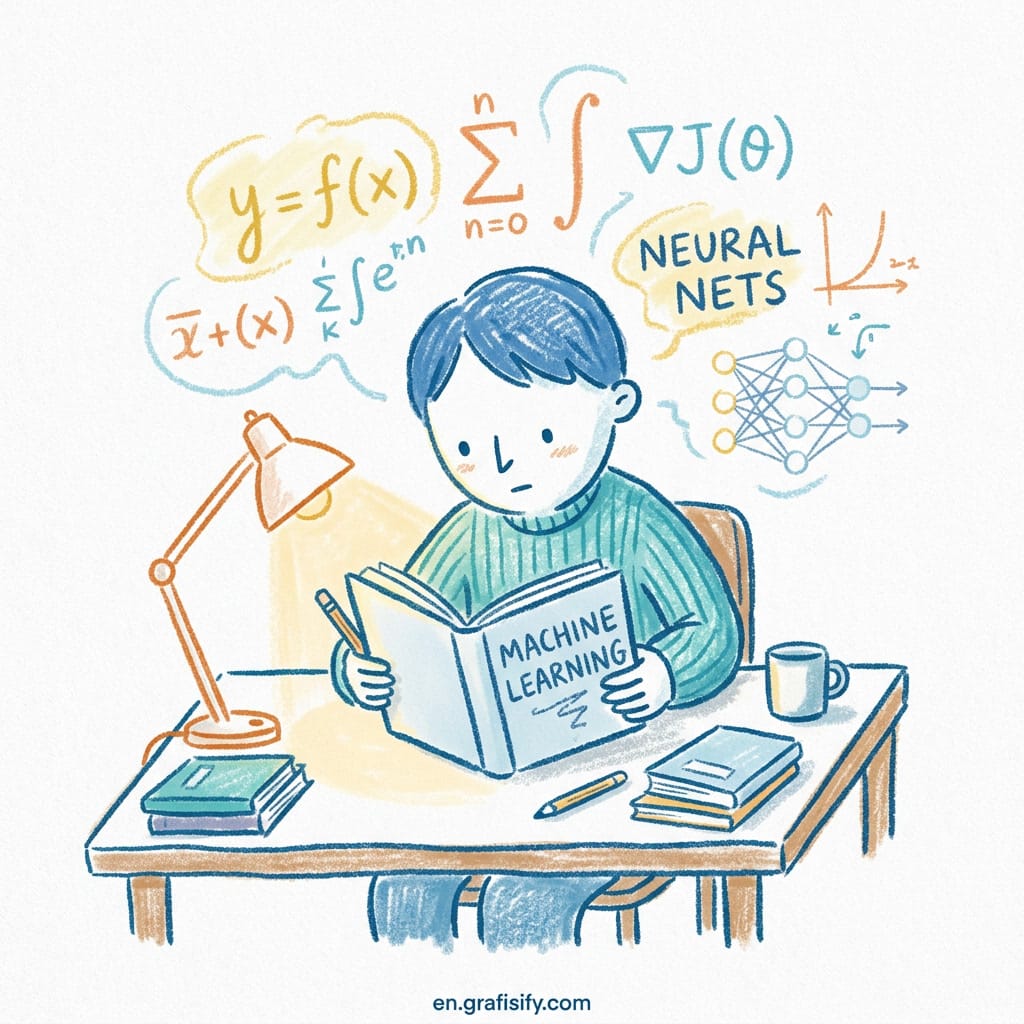
Stanford CS229 Review 2026 Practitioner Guide: Is Andrew Ng’s ML Course Worth It?
Stanford CS229 is still the most rigorous machine learning introduction you can find in 2026, but it isn’t for everyone. The math is heavy, the workload is crushing, and the material assumes you already know calculus and linear algebra cold. If you are a working professional with limited time, a beginner without a math background, or someone looking for a quick practical start, this course might actually be the wrong choice. Here is exactly who should take it, who should skip it, and what the alternatives offer instead.
Do you have twenty hours a week to dedicate to machine learning math? That’s the real question before you sign up for Stanford CS229. Andrew Ng’s legendary course at Stanford has been the gold standard for ML education since 2008. Thousands of students have taken it, and the lecture videos on YouTube have millions of views. But in 2026, with dozens of ML courses available – fast.ai, DeepLearning.AI, Coursera, Udacity – the question this Stanford CS229 review 2026 practitioner guide answers is simple: is it still the right fit for you right now?
What Is Stanford CS229? A Look at the Machine Learning Foundation Course
CS229 is Stanford University’s flagship machine learning course, taught by Andrew Ng himself. It covers the mathematical foundations of supervised learning, unsupervised learning, learning theory, reinforcement learning, and control as detailed on the official Stanford CS229 website. The course has been offered since 2008 and has evolved with the field, with detailed course reviews on Medium tracking its evolution, but its core philosophy has stayed the same: teach ML from first principles, not from libraries. For more on AI learning paths, check out our AI guides and tutorials.
Here is the thing that most course reviews skip: CS229 teaches you to derive gradient descent by hand. You write linear regression from scratch in Python – not with scikit-learn, not with PyTorch – just NumPy. That’s a different kind of learning from the modern “import the library and run” approach. It takes longer, but the understanding sticks.
What Makes CS229 Different From Other Courses
The biggest difference is mathematical depth. CS229 covers the derivations behind every algorithm. You learn why gradient descent converges, not just how to call it. You prove that the normal equation gives the optimal solution for linear regression. You derive the EM algorithm for Gaussian Mixture Models. Most online courses skip these proofs entirely.
Stanford CS229 also includes topics that are rare in online alternatives: VC dimension, bias-variance tradeoff proofs, Bayesian inference, and the PAC learning framework. If you want to understand ML at the research-paper level, this is where you start.
Prerequisites: Can You Handle the Math?
The official prerequisites are multivariate calculus (MATH 51 at Stanford), linear algebra (MATH 104), and probability theory (CS 109). In practice, you need to be comfortable with matrix derivatives, eigendecompositions, and probability density functions. If those terms sound foreign, you’ll struggle with CS229.

Stanford CS229 Review 2026 Practitioner Perspective: What You Actually Learn

Let me be honest: I took CS229 as a working professional, and it was one of the hardest things I’ve done. The course runs for ten weeks. Each week includes one lecture (about 90 minutes), one discussion section, and one problem set that takes 8-15 hours. The final project requires another 20-30 hours. Total time commitment: 15-25 hours per week.
What Is Covered in CS229
- Supervised learning: Linear regression, logistic regression, SVMs, neural networks, decision trees, and ensemble methods
- Unsupervised learning: K-means, Gaussian Mixture Models, Expectation-Maximization, factor analysis, PCA, ICA
- Learning theory: Bias-variance tradeoff, VC dimension, regularization, cross-validation, feature selection
- Reinforcement learning: MDPs, value iteration, policy iteration, Q-learning, policy gradients
- Advanced topics: Bayesian inference, graphical models, Kalman filters, and state-space models
The course has updated its curriculum every year. In the 2025-2026 offering, it added more coverage of transformers and attention mechanisms, though the focus remains on the classical foundations that make modern architectures possible.
What CS229 Does NOT Cover
Stanford CS229 doesn’t teach you to deploy models, build ML pipelines, or use modern MLOps tools. It doesn’t cover deep learning frameworks like PyTorch or TensorFlow in depth. It assumes you’ll learn the practical tooling elsewhere. This Stanford CS229 review 2026 practitioner perspective shows that if you want a course that teaches you to build and ship a production ML model, fast.ai or DeepLearning.AI are better choices.

Pros and Cons of Stanford CS229 for 2026 Learners
| Pros | Cons |
|---|---|
| Unmatched mathematical rigor: you truly understand ML from the ground up | Crushing workload: 15-25 hours per week is unrealistic for most professionals |
| Taught by the legend himself: Andrew Ng’s explanations are clear and intuitive | Outdated practical stack: problem sets use Octave/MATLAB in parts (Python in newer versions) |
| Stanford brand and network: the name carries weight in resumes and interviews | Math prerequisites are steep: no hand-holding for calc, linear algebra, or probability |
| Free audit option: all lectures are on YouTube with the same syllabus | Expensive for credit: $6,300 for Stanford enrollment, though a free audit is available |
| Covers learning theory: topics like VC dimension are almost impossible to find elsewhere | Limited modern coverage: deep learning and transformers are covered but not deeply |
Not all ML courses are created equal. Knowing the difference saves months of wasted effort.
Stanford CS229 vs the Alternatives: Which Course Should You Choose?
The biggest mistake people make is choosing between CS229 and alternatives without understanding what each one actually builds. Here is a comparison that goes beyond just listing prices.
| Course | Focus | Time/Week | Math Level | Best For |
|---|---|---|---|---|
| Stanford CS229 | Foundations & theory | 15-25 hrs | Very high (grad-level math) | Researchers, PhD prep, engineers who want deep understanding |
| fast.ai Practical Deep Learning | Practical implementation | 10-15 hrs | Low (code-first approach) | Practitioners who want to build and ship models fast |
| DeepLearning.AI Specialization | Balanced theory & practice | 5-10 hrs | Medium (college-level math) | Career switchers and intermediate learners |
| Coursera ML Specialization (Ng) | Scaled-down CS229 | 4-6 hrs | Low-medium | Absolute beginners and busy professionals |
The short answer: CS229 is for people who want to understand ML. The Coursera Specialization is for people who want to use ML. They serve different goals, and confusing the two is how you end up frustrated.
Who Should Take Stanford CS229 in 2026?
Based on my experience and conversations with other students, these are the people who get the most from CS229:
- PhD students and researchers: if you are reading papers, you need the theory CS229 provides
- ML engineers transitioning from software engineering: the math gap between “import sklearn” and understanding model behavior is filled by this course
- Anyone preparing for ML research interviews: FAANG research roles ask the exact types of questions CS229 covers
- Students planning to take advanced ML courses: CS229 is the prerequisite for Stanford’s CS 229M (mathematical), CS 229T (theory), and CS 230 (deep learning)
Who Should Choose Something Else
Beginners with no math background: take the Coursera Machine Learning Specialization first. It covers the same intuition without the proofs. If you complete that and want more depth, CS229 will still be there.
Working professionals with limited time: if you have 5-8 hours per week, fast.ai or DeepLearning.AI will give you more practical value per hour. A half-finished CS229 that you abandon in week 4 is worse than a completed fast.ai course.
Anyone focused on deep learning and generative AI: CS229 spends most of its time on classical ML. If your goal is to build LLM applications or diffusion models, take a course focused on modern deep learning architectures instead.
Money matters. Time matters more.
The Real Cost: Free vs $6,300
Stanford CS229 offers two access paths. The free option: all lectures are on YouTube, with problem sets and notes available on the course website. You can learn the entire curriculum without paying a cent. The paid option: enroll at Stanford for $6,300 (tuition for one course as a non-degree student). You get a grade, a transcript, instructor feedback on problem sets, and the Stanford network.
For most people, the free option is the right call. The lectures are identical. The problem sets are the same. The difference is accountability and feedback. If you are self-disciplined enough to work through 10 problem sets on your own, don’t pay.
Frequently Asked Questions: Stanford CS229 Review 2026 Practitioner
Is Stanford CS229 worth it for working professionals?
Only if you can commit 15+ hours per week for ten weeks. Most working professionals can’t sustain that. Consider the free audit option first to test the workload before committing financially.
How does CS229 compare to the Coursera Machine Learning Specialization?
They are taught by the same instructor (Andrew Ng) but at completely different levels. The Coursera version simplifies proofs, uses Python libraries, and takes 4-6 hours per week. CS229 is about ten times the workload with ten times the depth.
What are the prerequisites for CS229?
Multivariate calculus, linear algebra (including matrix derivatives and eigendecompositions), and basic probability theory. Andrew Ng’s course on Coursera isn’t enough preparation; you need actual college-level math.
Does CS229 cover deep learning and transformers?
Yes, but briefly. The 2025-2026 version added more coverage of transformers and attention mechanisms. However, the course focus remains on classical ML foundations. If your primary interest is deep learning, take Stanford CS 230 or fast.ai instead.

Final Thoughts: Is Stanford CS229 the Right Course for Your 2026 ML Journey?
Stanford CS229 is the best ML theory course in the world, but it demands more time and math than most people have. The honest answer: take it if you are preparing for research, an advanced degree, or a role that requires deep understanding. Skip it if you want to build and ship ML products – fast.ai or DeepLearning.AI will serve you better.
Start with the free YouTube lectures. Do the first problem set. If you enjoy it and can handle the math, commit to the full course. Your 2026 ML learning path doesn’t have to start with CS229, but if you pick the right path for your goals, you’ll learn faster and build more.

Irfan is a Creative Tech Strategist and the founder of Grafisify. He spends his days testing the latest AI design tools and breaking down complex tech into actionable guides for creators. When he’s not writing, he’s experimenting with generative art or optimizing digital workflows.
You might also like








 Artificial Intelligent
 Design & Creative
 Freelance
 Gadgets & Gear
 Insights
 Laptop
 Reviews
 Smartphone
 Tech Guides
 Vibe Coding