How AI Agents Are Reshaping Business Operations

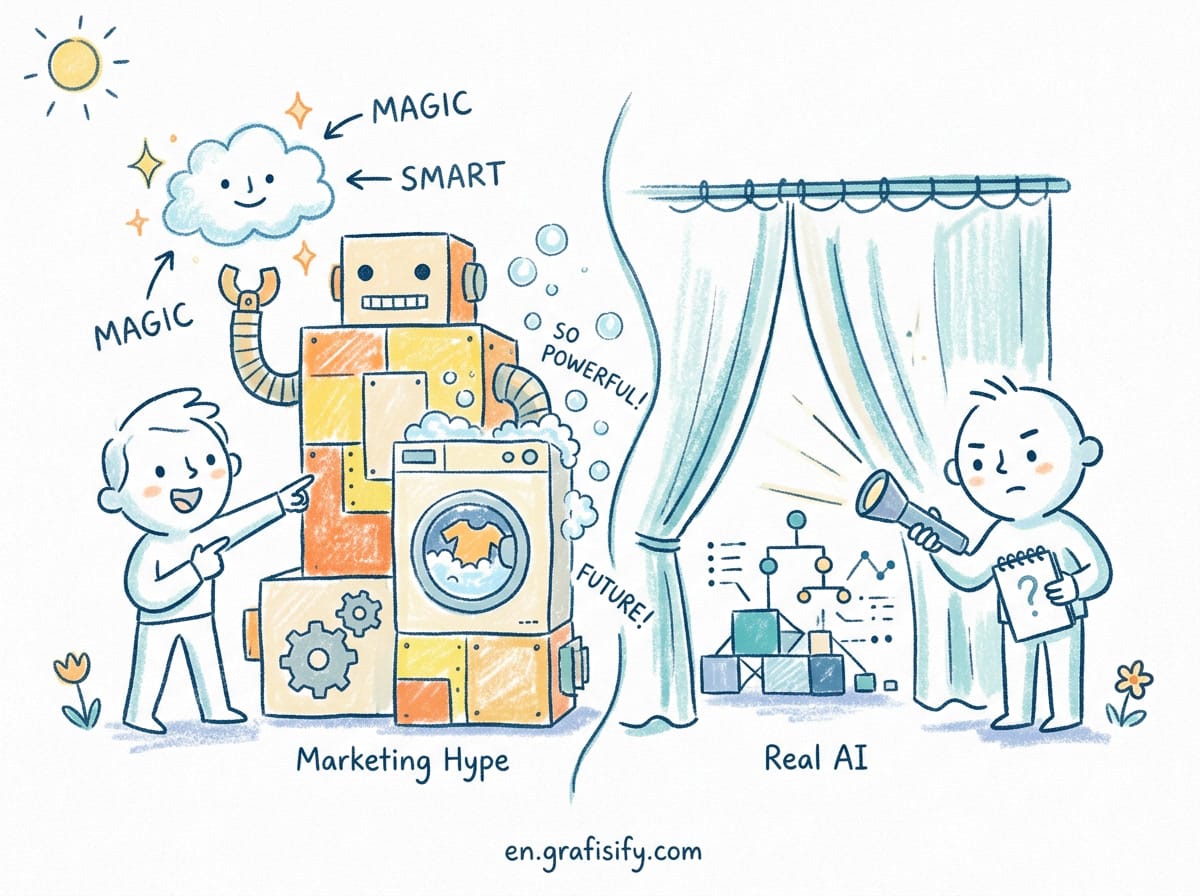
Quick Verdict: AI agents have officially crossed the threshold from experimental toy to business necessity. The numbers are staggering: the global market hit $10.91 billion in 2026, and enterprises running agents at scale report an average ROI of 171%. But here’s the catch: only 11% of companies that started with AI agents have actually gotten them into production. The gap between adoption and real results is the single biggest business challenge of the year.
Let’s be real: 2026 is the year AI stopped being something you chat with and became something that works for you. OpenAI, Google, Anthropic, and the entire ecosystem have shifted focus from smarter models to smarter agents. Google just launched Search agents at I/O 2026 with Gemini 3.5 Flash. Salesforce is embedding agents into every CRM workflow. The question isn’t whether AI agents matter anymore. The question is whether your business is ready for what comes next.
What most people don’t realize: this shift is bigger than the move from desktop to mobile. Think about it. Mobile changed how we access information. AI agents are changing who (or what) does the work.
What Are AI Agents? A Clear Definition for 2026
An AI agent is a system that combines a large language model with tools, permissions, and memory to autonomously plan and execute tasks. Google describes it as “a system that combines advanced AI model intelligence with tool access permissions, capable of proactively taking action on behalf of humans under user control.”
That’s a mouthful. Here’s the simpler version.
A chatbot answers questions. An AI agent does things.
If you ask a chatbot “what’s the weather in Chicago?” it tells you. If you give an AI agent the goal “plan my team offsite in Chicago,” it searches for venues, checks availability, compares prices, sends emails, books the space, and reports back. No step-by-step instructions needed. Just the goal.
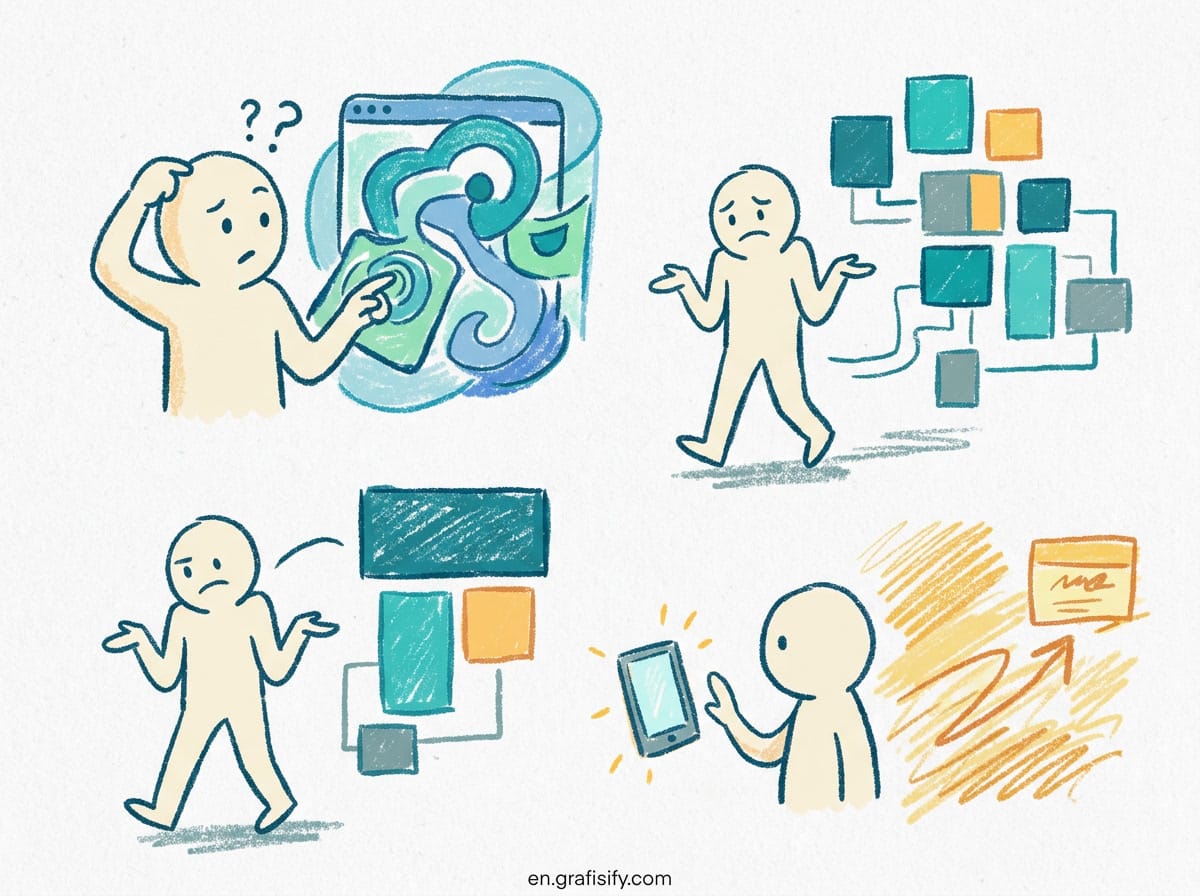
The difference comes down to five things.
| Characteristic | Traditional AI Assistant | AI Agent |
|—|—|—|

| Interaction Mode | Waits for commands | Proactively senses and acts |
| Execution Scope | Single tasks | Cross-system workflows |
| Decision Capability | Provides suggestions | Autonomous decision-making |
| Learning Ability | Static model | Continuous learning and optimization |
| Tool Integration | Limited | Deep multi-system integration |
Think of an AI agent like a digital employee. It gets a goal. It figures out the steps. It uses whatever tools it needs. And it adapts when things go wrong.

The Market Reality: $10.9 Billion and Growing at 46%
The AI agent market in 2026 isn’t theoretical. It’s measurable, and it’s moving fast.
SaaS Ultra’s 2026 analysis pulling data from Gartner, McKinsey, Salesforce, Bain, and NVIDIA puts the global market at $10.91 billion this year. Projections show it hitting $50.31 billion by 2030 at a 45.8% CAGR. The enterprise agentic AI slice alone, task-specific agents running in production, was $2.58 billion in 2024 and should reach $24.50 billion by 2030.
The Deloitte Tech Trends 2026 report confirms the direction. Their analysis shows the focus has shifted from pilots and proof-of-concepts to scaling intelligent, AI-driven operations. Automation and innovation are no longer experimental. They’re the new baseline for competitive advantage.
Here’s what that means for a typical US business. If you’re not already planning how AI agents fit into your operations, your competitors almost certainly are. And they’re not waiting.
The Production-Readiness Gap
Here’s the number that keeps executives up at night.
79% of enterprises have adopted AI agents in some form. Only 11% run them in production at scale.
That gap is what analysts call the “production-readiness gap.” It’s the defining challenge of 2026. Nearly four in five companies have experimented with agents. Fewer than one in nine are actually getting value from them.
Why does the gap exist? Three main reasons.
Security concerns top the list: 51% of service leaders say security worries have delayed or limited AI initiatives. Integration complexity comes second: most enterprise systems weren’t built for agentic AI. And governance is third: most companies jumped into pilots without documenting baselines or establishing oversight.
The 12% that succeed share four consistent traits. They invested in infrastructure before deployment. They documented governance before pilots. They captured baseline metrics before measuring ROI. And they put dedicated business owners in charge with real accountability.
How AI Agents Are Different From Everything Before
The jump from “tools that help you work” to “tools that work for you” is bigger than most people realize.
Google’s 2026 AI Agent Trends Report identifies five shifts. The most important one: the complete upgrade from copilot to agent. In 2025, most enterprises used copilot-type AI. You had to issue a command before the AI would act. In 2026, AI agents begin executing tasks autonomously.
They sense changes in their environment: emails, CRM updates, system alerts, market shifts. They decide whether to act based on preset rules and learned experience. And they complete tasks rather than just providing suggestions.
The report predicts 85% of executives will rely on AI agents for real-time business decisions. 80% of enterprise applications will embed AI agents by the end of the year. And employee roles will transform into “AI agent supervisors” who manage, audit, and improve agent performance instead of doing the work themselves.
Let that sink in. Google is saying the majority of enterprise software will have agents built in by the end of this year.
Real ROI: What the Data Shows
The average ROI from deployed AI agents is 171%. For US enterprises specifically, that number jumps to 192%.
Azumo’s 2026 analysis of 65 AI agent statistics reveals the distribution behind those averages. 74% of companies see positive ROI within the first year. 39% of enterprises use more than 10 AI agents. The median knowledge worker using agents saves 6.4 hours per week.
But the picture isn’t all rosy. 19% of deployments never reach payback. And 88% of production deployments fail on the first attempt. The companies that succeed treat agents as infrastructure, not experiments.
Customer service is the most mature use case. AI agents handle roughly 30% of service cases today, growing to 50% by 2027. That’s not replacing humans. That’s handling the first line of support so human agents can focus on complex problems.

Pros and Cons of AI Agents in 2026
Pros
Massive efficiency gains. Knowledge workers save over six hours a week. That’s almost a full working day reclaimed.
Measurable ROI. Average returns of 171% within the first year for successful deployments. Few enterprise technologies deliver that kind of payback.
Always-on operations. Agents work 24/7. They don’t take lunch breaks, sick days, or vacation.
Scale without headcount. One agent can handle thousands of customer interactions simultaneously. Adding capacity is a config change, not a hiring cycle.
Continuous improvement. Unlike static software, agents learn and adapt over time. Every interaction makes them smarter.
Cons
Security risks are real. 51% of organizations have delayed agent initiatives due to security concerns. Granting tools and permissions to autonomous systems opens new attack surfaces.
Integration is hard. Most enterprise systems weren’t designed for agentic access. Legacy APIs, siloed data, and no standardized agent protocols create friction.
Talent gap. Companies need “AI agent supervisors” who understand both the technology and the business domain. Those people are scarce and expensive.
Failure rates are high. 88% of the time, the first production deployment fails. You need budget for iteration.
Job transformation creates anxiety. Agents handle tasks, not jobs. But the boundary keeps shifting, and workforce planning gets complicated.

Action Plan: How to Get Started With AI Agents
Step 1: Pick One Workflow
Don’t try to agentize your entire business. Pick one repetitive, rules-heavy workflow with clear inputs and outputs. Customer ticket triage. Meeting scheduling. Invoice processing. One thing. Master it first.
Step 2: Capture Baselines
Before you deploy anything, measure your current state. How long does the process take? How many people are involved? What’s the error rate? What does it cost? Without baselines, you’ll never prove ROI.
Step 3: Document Governance
Define what the agent can and cannot do. Document escalation paths. Set up logging and auditing from day one. The companies that fail are the ones that figure out governance after something goes wrong.
Step 4: Start Small, Measure Everything
Deploy to a limited scope. Maybe one team, one region, one type of request. Measure everything against your baselines. Iterate based on real data, not assumptions.
Step 5: Plan for Supervision
Someone needs to manage the agent. Review its decisions. Handle edge cases. Improve its performance over time. That’s the “AI agent supervisor” role Google talks about. It’s a real job now.
Final Thoughts
AI agents are not a futuristic concept anymore. They’re a $10.9 billion market. They’re embedded in Google Search, Salesforce CRM, and enterprise systems worldwide. They’re saving knowledge workers six hours a week and delivering 171% ROI for companies that do it right.
But the production-readiness gap is real. 79% of enterprises have tried. Only 11% are succeeding. The difference comes down to fundamentals: infrastructure, governance, measurement, and dedicated ownership.
The businesses that figure this out in 2026 won’t just operate more efficiently. They’ll operate differently. Agents will handle the repetitive work. Humans will focus on the strategic, creative, and relationship-driven work that machines can’t do.
The real question isn’t whether AI agents will reshape business operations. They already are. The question is whether your business will be part of the 11% that captures the value or part of the 79% still trying to figure it out.
What’s your first workflow going to be?

Irfan is a Creative Tech Strategist and the founder of Grafisify. He spends his days testing the latest AI design tools and breaking down complex tech into actionable guides for creators. When he’s not writing, he’s experimenting with generative art or optimizing digital workflows.
You might also like





 Artificial Intelligent
 Design & Creative
 Freelance
 Gadgets & Gear
 Insights
 Laptop
 Reviews
 Smartphone
 Tech Guides
 Vibe Coding