The Invisible Web: Why the Internet of Things Is Rewriting the Rules of Modern Life

Picture this scenario: It’s 6:00 AM. Your alarm clock doesn’t just wake you up; it signals your coffee maker to start brewing a dark roast. Simultaneously, your window shades slowly rise to let in natural light, and your thermostat adjusts from a sleep-friendly 68 degrees to a cozy 72. By the time you step into the shower, your car is already defrosting the windshield because it checked the local weather API and noticed a frost warning.
Ten years ago, this sounded like science fiction—or at least something reserved for a grandiose “Home of the Future” exhibit at Epcot. Today, it’s just Tuesday.
Welcome to the Internet of Things (IoT). While the acronym gets thrown around in boardroom meetings and Best Buy aisles alike, the concept is often misunderstood. It isn’t just about asking Alexa to play Taylor Swift or checking your Ring doorbell. It represents a fundamental seismic shift in how the physical world interacts with the digital one.
As we move deeper into this decade, IoT is transitioning from a buzzword into the backbone of modern infrastructure. But what is it, really? How does it work? And perhaps most importantly, should you be worried about your toaster gossiping about your dietary habits? Let’s cut through the noise and break it down.

Beyond the Buzzword: What Actually Is IoT?
At its core, the Internet of Things is surprisingly simple concept wrapped in complex engineering. It refers to the billions of physical devices around the world that are now connected to the internet, all collecting and sharing data.
Historically, the internet was a network of people. We communicated through computers, sending emails, typing into search engines, and uploading photos. The “things” were passive tools.
Here’s the kicker: In the IoT era, the internet becomes a network of objects. These objects talk to each other, to the cloud, and to us. Turning a physical object into an IoT device effectively gives it a digital nervous system. It creates a bridge between the physical and digital worlds, allowing machines to be smarter, more responsive, and surprisingly autonomous.

“If you think the internet has changed your life, think again. The Internet of Things is about to change it all over again. We are moving from an era of connected people to an era of connected intelligence.”
The Three Pillars of Connection
To understand how a “dumb” object becomes “smart,” you have to look at the anatomy of an IoT system. It generally breaks down into three distinct layers:
- The Hardware (Sensors & Actuators): This is the “face” of the operation. Sensors collect data (temperature, motion, air quality), while actuators perform actions (turning on a light, locking a door).
- The Connectivity (The Highway): The data needs a road to travel on. This could be Wi-Fi, Bluetooth, cellular (5G), or specialized networks like Zigbee or LoRaWAN.
- The Processing (The Brain): Once data reaches the cloud (or a local edge processor), software analyzes it. This is where the magic happens—deciding that the temperature is too high and triggering the AC to turn on.
The Evolution: From Coke Machines to Smart Cities
While IoT feels like a recent Silicon Valley invention, its roots are surprisingly academic—and caffeine-fueled. The “Hello World” moment for IoT actually happened in the early 1980s at Carnegie Mellon University.

A group of programmers, tired of walking to the Coca-Cola machine only to find it empty or the sodas warm, modified the machine. They installed micro-switches to track the bottles and connected it to the departmental server. They could check the stock and temperature from their desk computers. It was primitive, but it was the first true IoT device.
Fast forward to 1999, and Kevin Ashton, a visionary working at Procter & Gamble and later MIT, coined the phrase “Internet of Things.” He argued that computers were too dependent on human beings for information. He envisioned a world where computers could gather their own data using sensors like RFID chips.
Why Is It Exploding Now?
If the idea has been around for decades, why is it dominating the headlines now? It’s a perfect storm of technological convergence:
- Cheap Sensors: The cost of accelerometers, GPS chips, and thermometers has plummeted.
- Connectivity is Ubiquitous: With the rollout of 5G, we can connect more devices with lower latency than ever before.
- IPv6: We ran out of IP addresses (the unique numbers assigned to devices) under the old standard. IPv6 gives us enough addresses for every atom on the face of the earth to have its own IP.
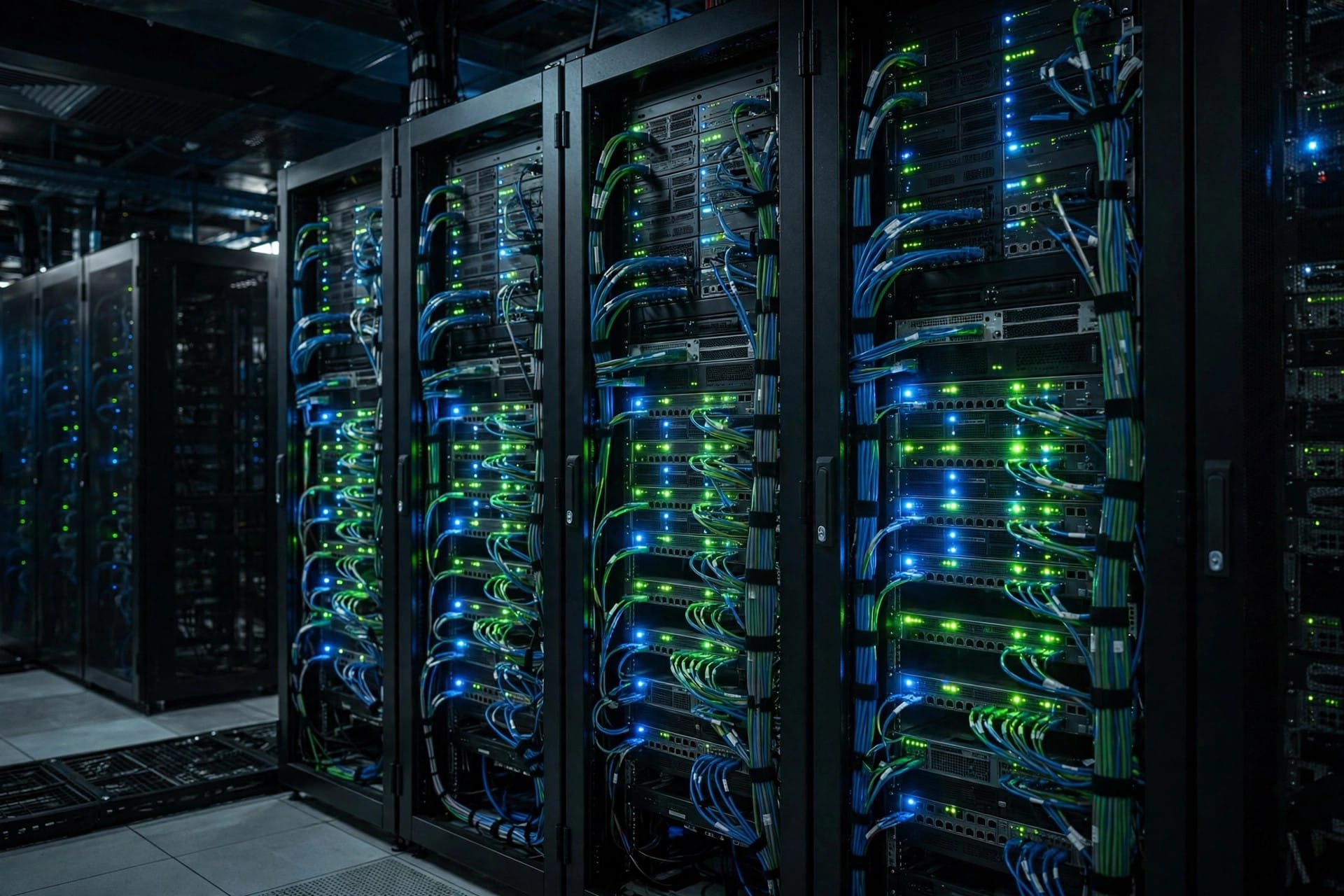
- Cloud Computing: We now have the massive server power needed to store and crunch the zettabytes of data these devices generate.
The Consumer vs. The Industrial Beast
When most non-techies hear “IoT,” they think of consumer gadgets. And rightly so—the Consumer IoT (CIoT) market is massive. This includes your Apple Watch tracking your atrial fibrillation, your Roomba mapping your floor plan, and your smart fridge telling you you’re out of milk.
However, the real revolution—and the real money—is happening in the background, in what we call the Industrial Internet of Things (IIoT), often dubbed “Industry 4.0.”
The Hidden Efficiency Engine
In the industrial sector, IoT isn’t a novelty; it’s a survival mechanism. Jet engines, like those made by GE, are now laden with thousands of sensors transmitting performance data in mid-flight. Airlines use this to predict maintenance needs before a part fails, saving millions in delays and preventing catastrophes.
In agriculture, “smart farming” uses soil sensors to tell irrigation systems exactly how much water crops need, drastically reducing waste. In logistics, shipping containers can report their own location and internal temperature, ensuring vaccines stay cold and electronics stay dry. While you enjoy your smart thermostat, the IIoT is quietly optimizing the global supply chain that delivered it to your doorstep.
The Elephant in the Room: Security and Privacy
We cannot have an honest conversation about IoT without addressing the glaring vulnerabilities. There is an old joke in the cybersecurity industry: “The ‘S’ in IoT stands for Security.”
The problem is structural. In the rush to get “smart” products to market, many manufacturers treat security as an afterthought. We’ve seen cheap webcams shipped with hard-coded default passwords that can’t be changed. We’ve seen smart teddy bears that leak recordings of children’s voices.
The Mirai Wake-Up Call
The danger isn’t just about someone hacking your toaster to burn your bagel. It’s about the network. In 2016, the Mirai botnet attack took down huge swaths of the internet (including Netflix and Twitter) not by hacking servers directly, but by hijacking insecure IoT devices—cameras, routers, DVRs—and using them to flood the web with traffic.
Furthermore, there is the privacy paradox. To make your life easier, these devices need to know everything about you. Your smart speaker listens for its wake word; your thermostat knows when you aren’t home; your fitness tracker knows your heart rate spikes during scary movies.
“We are trading privacy for convenience at an unprecedented scale. Every connected device is a data collection point, and often, consumers aren’t the customers—they’re the product being sold to advertisers.”
When you bring a device into your home, you are effectively inviting the manufacturer (and their third-party partners) into your living room. The bottom line? Read the terms of service, change your default passwords, and put your IoT devices on a separate “Guest” Wi-Fi network if possible.
The Future: AIoT and Ambient Computing
So, where do we go from here? The next phase isn’t just about connection; it’s about intelligence. We are moving toward the Artificial Intelligence of Things (AIoT).

Currently, most IoT devices are data gatherers. They send data to the cloud, where an algorithm processes it. In the future, thanks to more powerful chips, devices will process data locally (Edge Computing). Your security camera won’t just record video; it will recognize a stranger and lock the door instantly without needing to ask a server in Virginia for permission.
This leads us to the concept of Ambient Computing. This is the holy grail of tech: technology that is so integrated into our environment that it becomes invisible. You won’t “use” a computer; the computer will simply be the room you are standing in, reacting to your presence, voice, and needs seamlessly.
Conclusion: The Connected Reality
The Internet of Things is arguably the most significant technological development since the World Wide Web itself. It is transforming our homes into personal assistants, our factories into self-healing organisms, and our cities into responsive ecosystems.
For the non-techie, the advice is simple: Embrace the convenience, but respect the complexity. Understand that “smart” means “connected,” and “connected” means “vulnerable.” As we wire up our world, we gain incredible control over our environment, but we also hand over the keys to our data.
The revolution is already here. The question isn’t whether you will join the Internet of Things—you likely already have. The question is, are you driving the technology, or is the technology driving you?
Tagged with:
Connected DevicesCybersecurityDigital TransformationFuture of TechIIoTInternet of ThingsIoTSmart Hometech trendsTechnology Explained
Irfan is a Creative Tech Strategist and the founder of Grafisify. He spends his days testing the latest AI design tools and breaking down complex tech into actionable guides for creators. When he’s not writing, he’s experimenting with generative art or optimizing digital workflows.
You might also like



 Artificial Intelligent
 Design & Creative
 Freelance
 Gadgets & Gear
 Insights
 Laptop
 Reviews
 Smartphone
 Tech Guides
 Vibe Coding