It sounds dramatic, doesn’t it? But here’s the truth: the internet is a noisy, chaotic place. Your users are distracted, skeptical, and suffering from decision fatigue. They don’t want to “Submit” anything; submitting implies yielding to authority, filling out taxes, or losing a wrestling match. None of those sound fun. To increase conversion, you need to speak directly to the lizard brain—the primal part of the psyche that craves instant gratification, fears missing out, and loves a good bargain. Using the right power words for Call-to-Action triggers isn’t just about grammar; it’s about psychology. It’s a total game-changer.
The Psychology Behind the Click: Why Words Matter
Why do we click? Is it a conscious decision? Rarely. Most of the time, it’s an emotional reflex rationalized by logic seconds later. When a user hovers over a button, there is a tiny, invisible friction. A subconscious voice asks, “Is this worth the effort?” or “What happens if I click this and get spammed?” High-converting CTAs act as grease for this friction. They lower the perceived cost of interaction while skyrocketing the perceived value.
Think about it. If you see a button that says “Download,” you know you’re getting a file. Fine. Functional. Boring. But what if that button says “Get My Free Guide”? Suddenly, there is ownership (“My”), value (“Free”), and a tangible asset (“Guide”). The shift is subtle, but the impact on your click-through rate (CTR) can be massive. We are talking about moving from a tepid 1% conversion to a roaring 5% or more. In the marketing world, avoiding that “boncos” (total loss) scenario comes down to these micro-optimizations.

To truly master power words for Call-to-Action strategies, you have to stop thinking like a robot and start thinking like a human who is busy, lazy, and asking, “What’s in it for me?”
The “Action” in Call-to-Action: Verbs That vibrate
Passive voice is the enemy of conversion. If your button text reads like a college textbook, you’ve already lost. The most effective power words for Call-to-Action are strong, imperative verbs that command attention without being aggressive. You want to lead the user, not shove them.
1. Get
It’s short, punchy, and implies receiving rather than doing. “Get” is arguably the heavyweight champion of CTA copy. Unlike “Order” or “Buy,” which imply a loss of money, “Get” implies a gain. Get Your Quote. Get Started. Get Access. It’s a no-brainer.
2. Start
“Start” is hopeful. It suggests the beginning of a journey or a solution to a problem. “Start Your Free Trial” feels like opening a door, whereas “Register” feels like filling out paperwork at the DMV. Combined with “Now,” it creates a sense of immediacy that is hard to ignore.
3. Try
Commitment issues? We all have them. “Try” is soft. It lowers the barrier to entry because it implies reversibility. If you don’t like it, you can stop. “Try It Free” is the ultimate risk-reversal phrase.
Injecting Urgency: The FOMO Factor
Humans are procrastinators. If we can do it tomorrow, we will. Your job is to make “tomorrow” not an option. Scarcity and urgency are potent tools in your arsenal when selecting power words for Call-to-Action elements. However, a word of caution: don’t fake it. If your offer ends in 24 hours, say so. If it doesn’t, don’t lie. Users can smell fake urgency from a mile away.

Words like “Now,” “Today,” “Instantly,” and “Limited” work because they trigger the Fear Of Missing Out (FOMO). Studies by CXL and other conversion experts consistently show that adding time-sensitive language can boost conversions significantly. Compare “Download App” with “Download App Now.” The second one commands a response in the present moment.
- Bad: Sign Up
- Good: Sign Up Today
- Better: Join Before Doors Close
Value-Driven Power Words: Showing the Benefit
Here is where things get interesting. Sometimes the best way to get a click is to remind the user exactly what they are getting. We call this “benefit-driven copy.” Instead of focusing on the act of clicking, focus on the result of the click.
“Free” is the nuclear weapon of marketing words. Dan Ariely, a behavioral economist, has proven time and time again that the difference between $0.01 and $0.00 is irrationality huge. If you can honestly use the word “Free” in your button, do it. “Watch Free Video” will almost always outperform “Watch Video.”

Other heavy hitters in this category include “Bonus,” “Exclusive,” “New,” and “Save.” If you are running an e-commerce site, changing “Buy Now” to “Save 20% Now” reframes the purchase as a smart financial decision rather than an expenditure. It turns a spender into a saver. Genius, right?
The “Low Friction” Strategy: Removing Anxiety
Anxiety kills conversion. When a user stares at your CTA, they are subconsciously worrying about credit cards, spam emails, or being locked into a contract they can’t escape. Addressing these fears directly in or near your button copy can be the tipping point.
Phrases like “No Credit Card Required,” “Cancel Anytime,” and “Guaranteed” act as safety nets. While these are often placed as micro-copy underneath the main button, integrating the sentiment into the CTA itself can work wonders. For instance, “Start My Risk-Free Trial” hits three emotional notes: Action (Start), Ownership (My), and Safety (Risk-Free).
And honestly? If you aren’t testing these variations, you are flying blind. For more insights on optimizing your digital assets, check out our deep dives at Grafisify Tech Guides to keep your strategy sharp.
The First-Person Possessive Trick
This is a classic optimization tactic that still holds water. Changing the determinant from the second person (“Your”) to the first person (“My”) allows the user to visualize owning the product before they even have it. It’s subtle, but psychological.
Michael Aagaard of ContentVerve famously ran a test where he changed “Start your free 30-day trial period” to “Start my free 30-day trial period.” The result? A 90% increase in click-through rate. Yes, 90%. Just by changing one word. It turns the button from a command issued by the company into a declaration made by the user.
The “Anti-Power” Words: What to Avoid
We’ve talked about what to do, but let’s chat about what to delete from your vocabulary immediately. These words are friction-heavy, boring, or intimidating.
“Submit”: As mentioned, it’s terrible. It sounds bureaucratic.
“Click Here”: It’s 2024 (or later). Users know buttons are clickable. You don’t need to give them instructions on how to use a mouse. Use that valuable real estate for persuasion, not instruction.
“Register”: Sounds like work.
“Learn More”: Sometimes necessary, but often a crutch for lazy copywriters. It implies reading, time, and effort. Try “Discover the Secrets” or “See How It Works” instead.
Design and Context: The Ecosystem of the Button
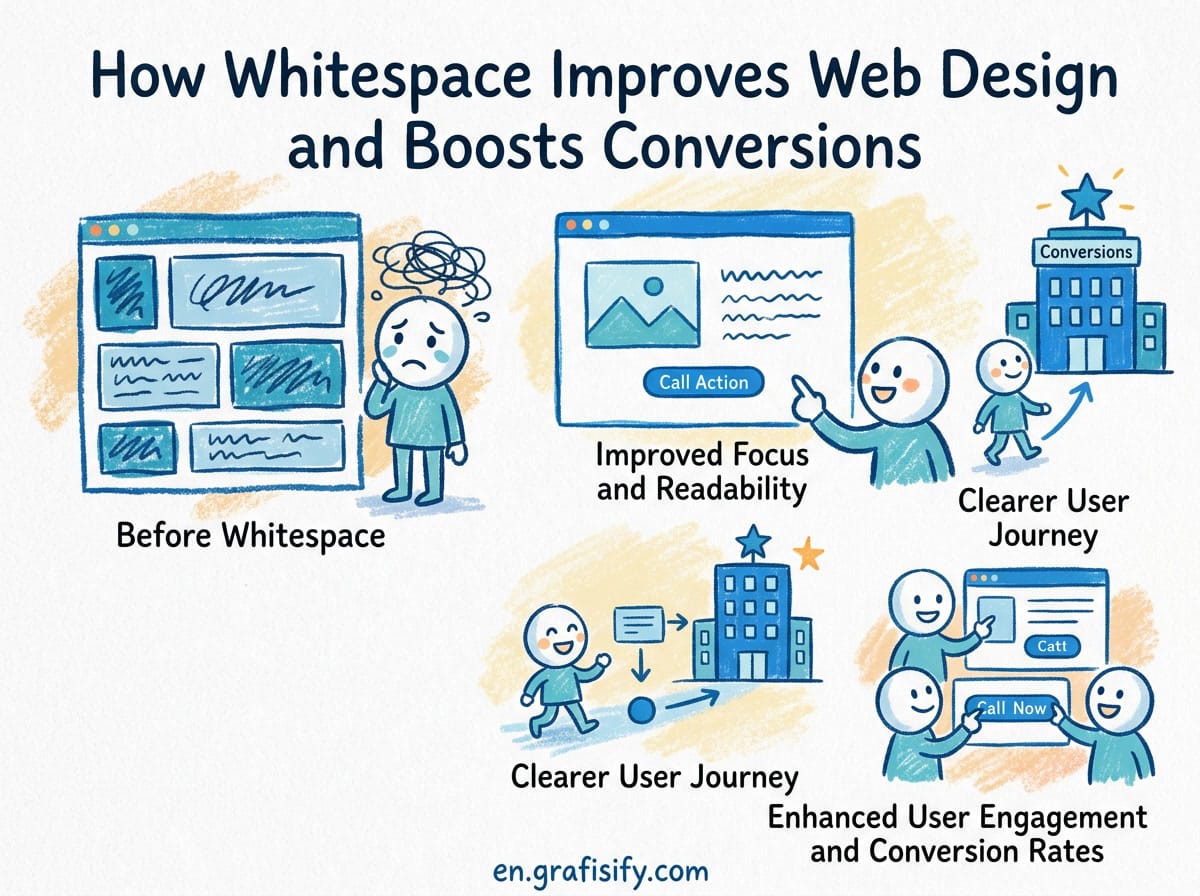
You can’t just slap a power word on a gray, tiny button and expect magic. The visual hierarchy plays a massive role. Your power words for Call-to-Action need to live on a button that contrasts with the background, uses readable typography, and has enough whitespace to breathe. This is often referred to as the “Von Restorff effect”—also known as the isolation effect—which predicts that an item that stands out like a sore thumb (in a good way) is more likely to be remembered and interacted with.
Furthermore, the copy leading up to the button (the headline and subheadline) must align with the button text. If your headline promises a discount, your button shouldn’t just say “Download.” It should say “Get My Discount.” Cohesion is key.
A/B Testing: The Only Way to Know
Here is the hard truth: what works for a SaaS company selling enterprise software might flop for a boutique sneaker brand. Best practices are just starting points. You need to validate your assumptions through rigorous A/B testing.
Don’t just test the color (red vs. green is a debate as old as time). Test the copy. Pit “Get Started” against “Launch My Campaign.” Pit “Free Trial” against “See It in Action.” According to Neil Patel, even small tweaks in wording can lead to double-digit percentage gains in conversion. Don’t leave it to guesswork.
Verdict: Words Are Your Best Salespeople
At the end of the day, your CTA button is the moment of truth. It is the threshold between a visitor and a customer. Using generic, low-energy copy is a disservice to the product you’ve worked so hard to build. By leveraging power words for Call-to-Action that increase conversion, you are essentially hiring a 24/7 salesperson who knows exactly what to say to close the deal.
So, audit your buttons today. Are they passive? Are they boring? Or do they demand attention, offer value, and promise a solution? Change the words, and you might just change your business trajectory. Now, go Get Your Conversion Spike.



 Artificial Intelligent
 Design & Creative
 Freelance
 Gadgets & Gear
 Insights
 Laptop
 Reviews
 Smartphone
 Tech Guides
 Vibe Coding