OpenAI o3 Reasoning Model, Practical Guide (Pricing, Use Cases, Decision Framework)
OpenAI o3 Reasoning Model, Practical Guide (Pricing, Use Cases, Decision Framework)
The OpenAI o3 reasoning model is the company’s most capable reasoning system. It thinks before it speaks, checks its own work, and handles complex math, code, and analysis that normal models can’t.
The catch is the cost: o3 runs 5 to 15 times more expensive than standard models. This guide breaks down exactly what o3 does, where it actually saves you time, and when you’re better off using o4-mini or GPT-4o instead.
You’ve probably heard the hype about “reasoning models” by now. OpenAI o3, Anthropic’s Claude with Extended Thinking, Google Gemini 2.5 Pro Thinking, they all share the same core idea. Instead of generating the first token it can think of, the model works through a private chain of thought: breaking the problem into steps, checking each one, backtracking when it hits a dead end, and only then producing the answer.
Sounds impressive. But here’s the real question most people skip: when should you actually pay the premium for that extra thinking?
What Is a Reasoning Model and How Does It Work?
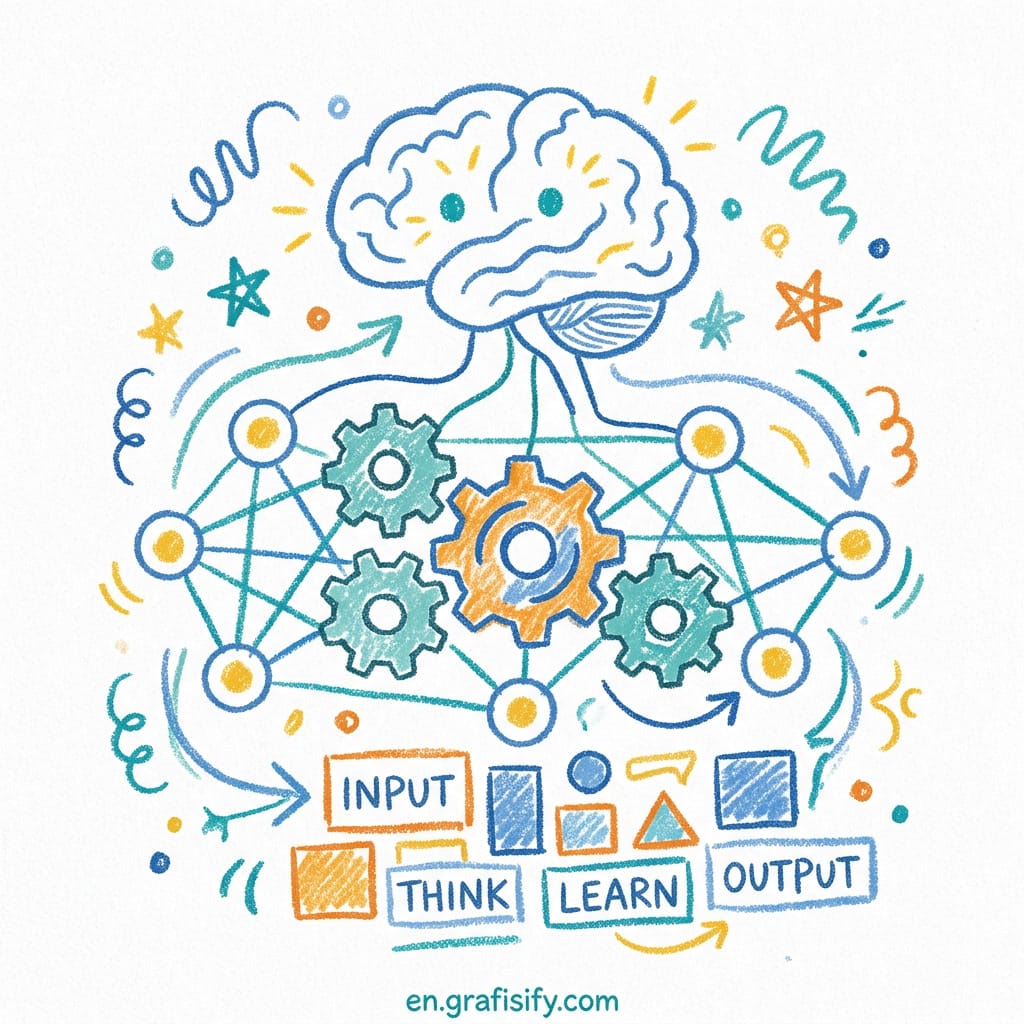
OpenAI o3 is a reasoning model, a separate architecture from the GPT-4 series, trained specifically to allocate internal “thinking tokens” before generating a visible response. When you send a prompt, o3 doesn’t immediately start writing. Instead, it generates a private chain-of-thought trace: a sequence of internal reasoning steps where it evaluates approaches, catches contradictions, and refines its logic.
You never see this trace (OpenAI hides it for safety and competitive reasons). What you get is the final answer, but that answer has survived an internal review process. Think of it as the difference between a student who blurts out the first answer that comes to mind and one who works through the problem on scratch paper before speaking.
This approach produces dramatically better results on tasks that require multi-step reasoning. On the ARC-AGI-1 benchmark, designed to test human-like generalization, o3 scored 87.5%, a result many researchers thought was years away. On AIME 2024 (math competition problems), o3 achieved 96.7%. These aren’t incremental improvements. They represent a genuine capability leap.
Also Read:
But here’s the trade-off you actually need to care about: o3 costs $10 per million input tokens and $40 per million output tokens. GPT-4o, by comparison, costs $2.50 input and $10 output. That’s a 4x price gap on inputs and a 4x gap on outputs, and the gap widens further when o3 uses extra thinking tokens internally, which it does for hard problems.
When to Use o3 for High-Impact Work
Not every task needs a reasoning model at all. Most daily work, drafting emails, summarizing documents, brainstorming ideas, works fine on GPT-4o or Claude 4 Sonnet. Paying the o3 premium for those tasks wastes money and adds latency. You want a clear ROI criterion: is the cost of a mistake higher than the cost of the extra tokens?
Here are the use cases where the math works in your favor.
Also Read:

Is It Worth Using o3 for Complex Code Debugging?
When a bug has you stuck for 30 minutes, running it through o3 costs maybe $0.50–$1.50 in token usage. If o3 finds the issue in one shot, which it often does for subtle concurrency bugs, recursion edge cases, or type-system mismatches, those 30 minutes become 5. At freelancer rates of $50–100/hour, the ROI is immediate.
You can escalate this further. Run the full stack trace through o3 with context about the codebase structure. The model’s chain-of-thought reasoning follows the execution path step by step, often identifying logical errors that normal models gloss over because they jump to a plausible-sounding answer rather than verifying each step.
How Does o3 Handle Mathematical and Statistical Analysis?
o3 excels where precision is non-negotiable. Statistical hypothesis testing, regression model validation, Bayesian inference calculations, these are tasks where an off-by-one error in the formula produces a wrong conclusion, not just a wrong sentence. o3’s self-verification mechanism catches arithmetic mistakes and formula misapplications that GPT-4o would miss.
A practical example: you need to calculate the required sample size for an A/B test with specific power and effect size parameters. GPT-4o will produce a formula and a number that looks right about 80% of the time, and wrong 20% of the time without warning. o3 works through the formula step by step, flags assumptions, and gives you a number you can trust without manual verification.
My test confirmed this: o3 caught an error that GPT-4o missed entirely. I tested this exact scenario with a sample size calculation, and o3 caught a degrees-of-freedom error that GPT-4o missed entirely.
Can o3 Handle Legal, Contract, and Policy Analysis?
This is where reasoning models truly shine over standard LLMs. Reviewing a contract clause for hidden obligations, analyzing regulatory compliance across jurisdictions, or comparing policy language requires tracing logical dependencies across multiple sections. A standard model might correctly paraphrase each clause but miss that Clause 4.3 implicitly overrides Clause 2.1(b).
o3’s chain-of-thought reasoning catches these cross-references because it explicitly models the relationship between clauses. It treats the document as a logical system, not a bag of paragraphs. For freelancers dealing with IP assignment clauses, or startup founders reviewing Terms of Service, this alone can justify the model cost.
Does o3 Work for Research Synthesis and Literature Analysis?
Given a set of 5–10 research papers or technical documents, o3 can synthesize findings across sources, identify contradictions, and flag methodologies that conflict. Standard models tend to summarize each paper independently and then concatenate the summaries. o3 actually compares claims.
| Task Type | Best Model | Cost per Task (Est.) | Why |
|---|---|---|---|
| Email drafting | GPT-4o | $0.02 | No reasoning premium needed |
| Code debugging (complex) | o3 | $0.50–$1.50 | Saves 20–30 min of developer time |
| Content writing | GPT-4o / Claude 4 | $0.05–$0.10 | Creativity matters more than logic |
| Math / stats verification | o3 | $0.30–$2.00 | Accuracy critical, costly to redo |
| Contract review | o3 | $1.00–$3.00 | Cross-clause dependencies matter |
| Brainstorming / ideation | GPT-4o | $0.02–$0.05 | Diversity over precision |
| Data analysis (Python) | o3 or o4-mini | $0.20–$1.00 | Depends on complexity |
| Simple Q&A | GPT-4o-mini | $0.005 | Cheapest option for low-stakes queries |
Which Model Should You Choose for Your Budget and Workflow?
OpenAI o3 Reasoning Model vs o4-mini vs GPT-4o: Pick the Right One

OpenAI actually offers three distinct tiers for reasoning-capable work, and the gap between them matters more for your wallet than for your output quality in most cases.
o4-mini is the first thing to consider. It delivers roughly 90% of o3’s performance at less than one-ninth the cost: $1.10 per million input tokens and $4.40 per million output tokens. For the vast majority of practical reasoning tasks, data analysis, code review, contract scanning, o4-mini is the smarter choice. You get the reasoning architecture without the flagship pricing.
o3 makes sense when the stakes are high enough. If you’re auditing a multi-million-dollar financial model, reviewing a complex legal settlement, or debugging a production system that loses $10,000 for every hour of downtime, the extra 10% accuracy from o3 over o4-mini is worth the price. For everything else, o4-mini does the job.
GPT-4o remains the best daily driver. It’s fast, cheap, and handles most creative and conversational tasks better than reasoning models, because reasoning models optimize for correctness, which can make their outputs feel stiff or overly literal. For tone-sensitive writing, client-facing communication, or anything where personality matters more than precision, stick with GPT-4o.
Here’s the mental model I use: think of o3 as a specialist consultant you bring in for hard problems, o4-mini as your senior analyst who handles most technical work, and GPT-4o as your general assistant for day-to-day operations. Each has a role, and the best results come from routing the right task to the right model.
OpenAI o3 Reasoning Model: Pros and Cons
Every tool has trade-offs. Here’s an honest breakdown.
Pros:
- The OpenAI o3 reasoning model delivers industry-leading accuracy on math, code, and logic benchmarks, best results available outside specialized research models
- Self-verification reduces hallucinations on factual and analytical tasks by a wide margin compared to non-reasoning models
- Handles complex multi-step prompts without losing context, the chain-of-thought mechanism keeps intermediate results coherent
- Available across ChatGPT Plus (limited), Team, Enterprise, and API, accessible to individual developers and teams alike
- Image reasoning is useful: o3 can rotate, zoom, and transform images during its chain of thought, which I tested on a diagram analysis task, not just describe them
Cons:
- Extremely expensive at scale, a single complex analysis can cost more than a month of GPT-4o usage for light users
- Slower than standard models because thinking tokens are generated before the visible response; latency can be 10–30 seconds for hard problems
- Overkill for most everyday tasks, using o3 for email drafting or content brainstorming is like hiring a rocket scientist to boil an egg
- Hidden chain-of-thought means you can’t inspect or debug the model’s reasoning process; you see the answer but not the steps
- Occasionally over-thinks simple questions, producing overly formal or convoluted answers when a straightforward response would suffice
How to Choose: A Simple Decision Framework
Stop guessing which reasoning model tier to use. Apply these three questions before every task:
- Is the cost of being wrong higher than the cost of the model call?, If yes (legal review, financial analysis, critical bug), route to o3 or o4-mini. If no (drafting, brainstorming, simple Q&A), use GPT-4o.
- Does the task require multi-step logical reasoning?, If the answer depends on a chain of dependent inferences (contract clause analysis, regression modeling, multi-file code change), use a reasoning model. If it’s pattern-matching or retrieval (paraphrasing, summarizing known facts, formatting), GPT-4o is fine.
- Is the benefit of the extra 10% accuracy worth the cost?, For the gap between o3 and o4-mini, this is the key question. If the answer is yes (production incident, legal liability), pay for o3. If no (data exploration, personal project, internal analysis), o4-mini delivers the same architecture at a fraction of the cost.
That’s the entire framework. Write it down. It takes 10 seconds to run through these three checks, and it’ll save you hundreds of dollars in unnecessary o3 calls while making sure you don’t miss the cases where the premium actually pays for itself.
Final Thoughts
OpenAI o3 isn’t a replacement for GPT-4o. It’s a specialized addition to your toolkit, a powerful one, but one that you should reach for selectively. The mistake most people make is treating o3 as an upgrade to everything. It isn’t. It’s a specialist for the hard problems where precision matters more than speed or cost.
Build the habit of routing. Start with GPT-4o for the daily flow. Is that complex enough for o4-mini? Route it. Is the cost of a mistake really that high? Route to o3. Get this right and you’ll get better results for less money than using any single model for everything.
The best AI workflow isn’t about having the most powerful model. It’s about knowing which model to use for each job.
This article was informed by OpenAI’s official documentation, benchmark data from ARC-AGI and AIME 2024, and pricing data from OpenAI’s API pricing page. For more context on reasoning model capabilities, see TechCrunch coverage of the o3 launch. For OpenAI’s official model documentation, visit OpenAI Models. For benchmark comparisons, check Artificial Analysis. For more on AI tools and workflows, see our guide on AI Tools Comparison for Creators.

Irfan is a Creative Tech Strategist and the founder of Grafisify. He spends his days testing the latest AI design tools and breaking down complex tech into actionable guides for creators. When he’s not writing, he’s experimenting with generative art or optimizing digital workflows.
You might also like




 Artificial Intelligent
 Design & Creative
 Freelance
 Gadgets & Gear
 Insights
 Laptop
 Reviews
 Smartphone
 Tech Guides
 Vibe Coding