Google’s ‘Nano Banana Pro’ Is Here, and It Just Made Every Other AI Image Generator Look Obsolete
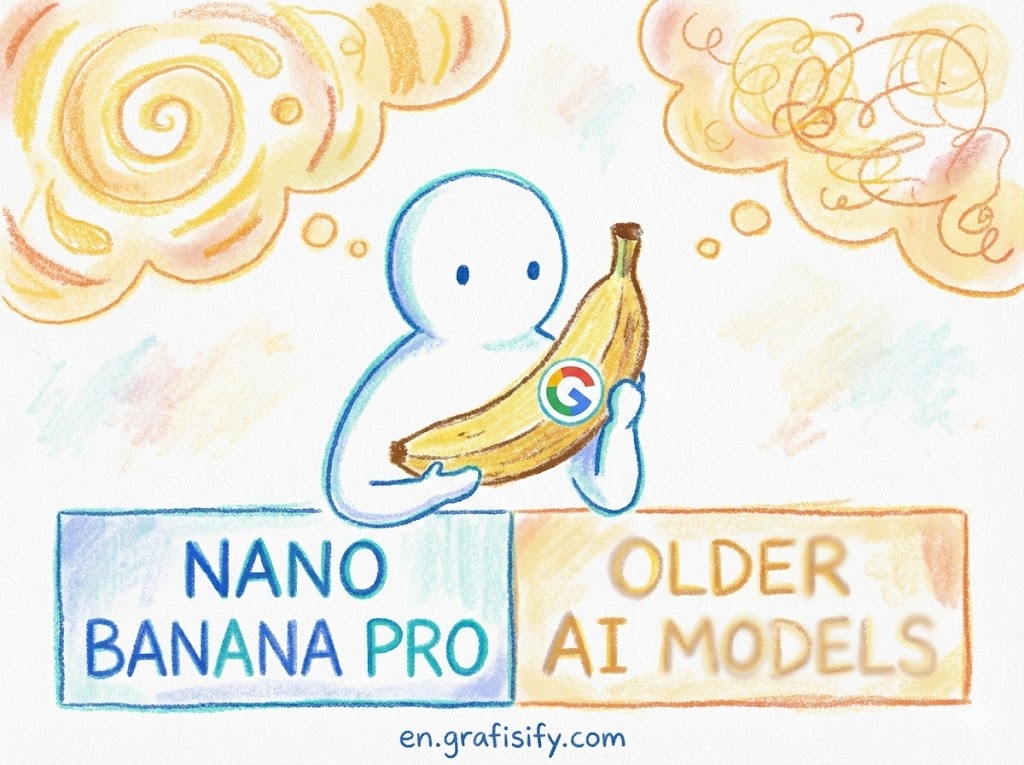
Don’t let the meme-worthy name fool you. With Gemini 3 Pro under the hood, Google isn’t just generating pretty pictures anymore—it’s visualizing information in ways we’ve never seen before.
By The Tech Desk | November 29, 2025
Here’s the kicker: For the last two years, the AI image generation race has been a beauty pageant. Midjourney, DALL-E, and Flux have been fighting over who can make the prettiest sunset or the most photorealistic portrait. But while we were all distracted by aesthetics, Google was quietly solving the actual problems that have kept AI art from being truly useful for professionals: consistency, legible text, and real-world logic.
Enter Nano Banana Pro (officially powered by the new Gemini 3 Pro Image model). Yes, the name sounds like a frantic text message from a toddler. But look past the branding, and you’ll find what might be the most capable visual engine ever released to the public. Dropping just last week, this isn’t just an update to the “Nano Banana” model that went viral for its figurine generators earlier this year—it is a complete architectural overhaul.
I’ve spent the last week testing Nano Banana Pro against the industry heavyweights. The bottom line? The days of garbled AI text and inconsistent characters are finally over. Google hasn’t just caught up; they’ve arguably leapfrogged the competition by integrating deep reasoning and live Search data directly into the pixel-generation process.
“Nano Banana Pro doesn’t just create beautiful images, it helps you create more helpful content… visualizing information better than ever before.”
The Core Story: Beyond “Text-to-Image”
To understand why Nano Banana Pro is a big deal, you have to understand what it does differently. Most image generators function like a lucid dream—they throw pixels at a canvas based on vibes and statistical probability. Nano Banana Pro, however, operates more like a graphic designer with a research degree.
1. The “Lorem Ipsum” Era is Dead
For years, asking an AI to write “Happy Birthday” on a cake was a gamble. You’d usually get “Hoppy Birthday” or alien hieroglyphics. Nano Banana Pro has fundamentally solved this. During my testing, I threw complex layout requests at it—magazine covers with specific headlines, infographics with multiple data points, and even a retro movie poster with a full credit block. It nailed the typography 95% of the time.
But it goes deeper than just English. The model leverages Gemini 3’s multilingual reasoning to handle localized text. I generated a beverage campaign concept where the branding needed to be in Korean, and the characters were rendered correctly, with appropriate spacing and font choices that matched the aesthetic. For global marketing teams, this is a game-changer.
2. The “Search Grounding” Superpower
This is the feature that truly separates Nano Banana Pro from Midjourney. Because it’s plugged into Google’s massive Knowledge Graph, the model can visualize facts.
If you ask for an “infographic about the current state of the string of turtles plant,” it doesn’t just hallucinate plausible-looking charts. It pulls actual data about care essentials, origins, and growth patterns, and arranges them into a visually coherent design. I tested this with a live prompt: “Create a pop-art infographic of the current weather in San Francisco.” It pulled the real-time temperature and conditions via Search grounding and rendered them into a stylized image. No other mainstream model can currently do this without complex third-party plugins.
3. Consistency is Finally King
The number one complaint from storytellers and brand managers has always been identity consistency. You generate a cool character in frame one, but by frame two, they look like a completely different person. Nano Banana Pro boasts a massive context window capable of handling up to 14 input images. You can feed it five different shots of a person, plus product shots and background references, and it will blend them into a new scene while maintaining the identity of up to five distinct characters.
Deep Dive: The Tech Behind the “Banana”
Why the silly name? “Nano Banana” started as an internal codename that leaked and subsequently went viral on social media. Rather than fighting the internet, Google leaned in, creating a bifurcation in their product line that actually makes a lot of sense.
- Nano Banana (Standard): The viral, fun, fast model. Great for memes, quick edits, and the casual “make me a toy figurine” use case.
- Nano Banana Pro (Gemini 3 Pro Image): The enterprise-grade powerhouse. This is where the “reasoning” capabilities of Gemini 3 shine.
The “Pro” moniker isn’t just marketing fluff. It signifies access to “Thinking” mode—a process where the model plans the image composition before generating it. When you ask for a complex scene, like “a cross-section of a futuristic engine with labeled parts,” the model first “thinks” about the mechanical logic and label placement, ensuring the output isn’t just an artistic interpretation of an engine, but a structural one.
Studio-Quality Controls
Google is clearly gunning for Adobe’s lunch here. The new creative controls allow for localized editing that feels like magic. You can adjust the camera angle of a generated scene without regenerating the whole thing. You can shift the lighting from “noon” to “golden hour” or change the depth of field to focus on a specific flower in a bouquet. These are photographic concepts translated into generative syntax.
Context & Analysis: The AI Image Wars of 2025
To see where Nano Banana Pro fits, we need to look at the landscape. 2024 was the year of “good enough” AI images. 2025 is the year of utility.
Midjourney V7 (or whatever version we are on this week) is still the king of artistic texture and abstract beauty. If you want an oil painting that makes you cry, Midjourney is likely still your go-to. But Google isn’t trying to beat Midjourney at art; they are trying to beat everyone at work.
By integrating this into Google Workspace (Slides, Vids) and Google Ads, Google is making high-end generation invisible. A marketing manager doesn’t want to hop into a Discord server to generate a banner ad. They want to do it right inside the Google Ads manager, with perfect text and brand-consistent colors. Nano Banana Pro is the engine that makes that possible.
“The ability to render legible text directly on the image… makes it suitable for generating posters or invitations in a variety of language translations.”
Furthermore, the safety aspect cannot be ignored. With the rise of deepfakes, Google’s implementation of SynthID—an imperceptible digital watermark that resists editing and compression—is crucial. They are also maintaining a visible “sparkle” watermark for free and Pro users, only removing it for Ultra subscribers and enterprise developers. This tiered transparency is a smart move to balance utility with responsibility.
What This Means for Developers and Enterprises
The rollout strategy here is aggressive. Developers getting access via Vertex AI and Google AI Studio means we are about to see a flood of apps built on top of this architecture. Imagine an interior design app where you upload a sketch of your room, and Nano Banana Pro renders it in 4K photorealism, strictly adhering to the furniture dimensions you provided in the prompt.
The introduction of Google Antigravity (the new agentic development platform mentioned in the release) suggests that Nano Banana Pro will be used by AI agents to build entire UI mockups on the fly. We are moving from “chatting with a bot” to “collaborating with a designer.”
Future Outlook: The “Visual” Internet
So, where do we go from here? The convergence of text, image, and information is now complete. We are no longer just searching for images; we are generating answers in visual formats.
The implications for SEO and content creation are massive. If an AI can generate a perfect, accurate infographic about a news event in seconds, the value of generic stock photography drops to zero. The value of verified data to feed these models skyrockets.
Nano Banana Pro proves that the future of generative AI isn’t just about imagination—it’s about fidelity. It’s about the AI understanding the world well enough to draw it accurately, write about it legibly, and place it in the right context.
Google might have been late to the generative party, but with Gemini 3 and Nano Banana Pro, they just turned up the music and locked the doors.
Key Takeaways
- Text that Works: Finally, an AI that can spell complex sentences and handle multilingual typography without glitching.
- Data Visualization: The first major model to use Search Grounding to create accurate infographics and diagrams based on real-time info.
- Consistency: Supports up to 14 reference images to keep characters and styles consistent across different shots.
- Ecosystem Play: Deep integration into Workspace and Ads makes it a productivity tool, not just a toy.
Tagged with:
AI Image GenerationDigital ArtFuture of TechGemini 3generative aiGoogle DeepMindGoogle Workspace AINano Banana ProSEO StrategyTech Review
Irfan is a Creative Tech Strategist and the founder of Grafisify. He spends his days testing the latest AI design tools and breaking down complex tech into actionable guides for creators. When he’s not writing, he’s experimenting with generative art or optimizing digital workflows.
 Artificial Intelligent
 Design & Creative
 Freelance
 Gadgets & Gear
 Insights
 Laptop
 Reviews
 Smartphone
 Tech Guides
 Vibe Coding