5 Revolutionary Ways How Google Gemini Works to Change the Web

The Verdict: Google Gemini isn’t just another chatbot; it is a fundamental shift in AI architecture. By utilizing a “native multimodal” approach and a sophisticated Mixture of Experts (MoE) design, it processes information more like a human brain than a calculator, offering unprecedented speed and context understanding.
What is How Google Gemini Works?
Understanding how Google Gemini works requires looking beyond simple text prediction. It is a next-generation, multimodal AI architecture built from the ground up to perceive and reason across text, code, audio, images, and video simultaneously. unlike predecessors that stitched separate models together, Gemini processes diverse inputs natively to generate complex, nuanced outputs.
The Core Mechanics: 5 Key Pillars of Gemini’s Architecture
1. Native Multimodality from Day One
The most distinct feature of how Google Gemini works is its native multimodality. Most Large Language Models (LLMs) before it were trained primarily on text, with vision or audio capabilities bolted on later as separate “towers.” This resulted in a disjointed understanding where the AI didn’t truly “see” an image but rather analyzed a text description of that image. Gemini, however, was pre-trained on different modalities simultaneously.
Think of it like learning a language. Old models learned to read French but had to translate a picture of a croissant into the word “croissant” before understanding it. Gemini looks at the picture and understands the concept directly, alongside the smell, the taste (metaphorically), and the cultural context. This allows for seamless reasoning across inputs—you can show it a video of a melting pot and ask why the sauce is separating, and it analyzes the visual frames and audio cues in real-time.
This architectural choice allows for superior performance in complex tasks. For instance, according to Google DeepMind’s technical report, this native understanding enables the model to reason about complex visual charts and code simultaneously, significantly reducing the “hallucination” rate found in models that rely on patching different neural networks together.

2. The Mixture of Experts (MoE) Efficiency
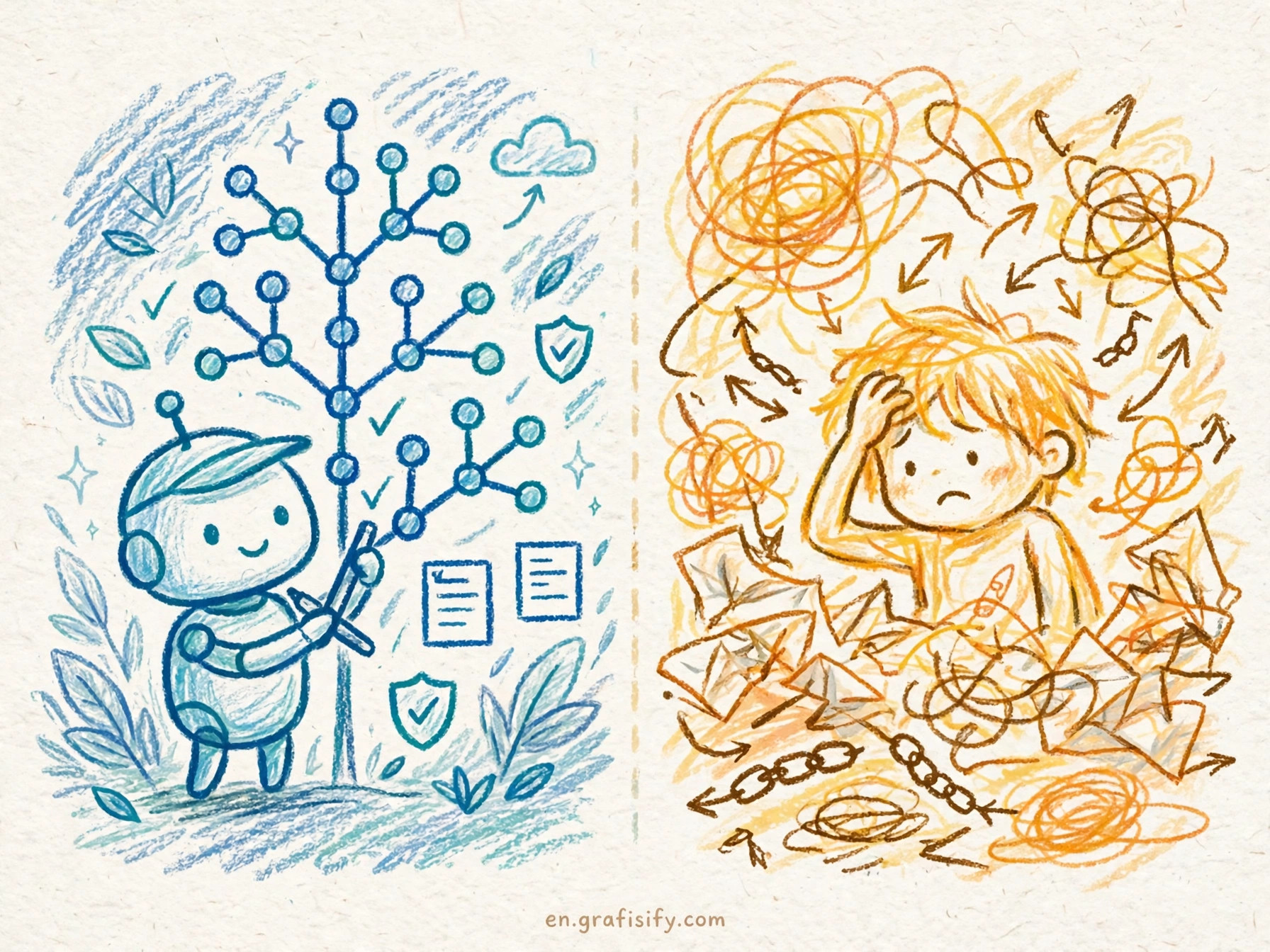
If you tried to activate your entire brain every time you wanted to tie your shoes, you’d be exhausted in minutes. This is where the Mixture of Experts (MoE) architecture comes into play. Instead of activating the entire massive neural network for every single prompt, Gemini utilizes a sparse gating network to select only the most relevant “experts” within the model to handle the request.
When you ask how Google Gemini works regarding Python coding, the model routes your query specifically to the parameters optimized for coding and logic, ignoring the parts of its “brain” dedicated to creative poetry or French history. This makes the model significantly more efficient to run and faster to respond, which is crucial for the “Flash” variants of the model that need to operate at low latency.
This efficiency doesn’t just save on computing costs; it improves accuracy. By specializing different pathways within the model, Gemini ensures that the neural neurons firing are the ones most capable of solving the specific problem at hand, resulting in a higher quality of output without the computational drag of a dense model.

3. Advanced Transformer Mechanisms
At its heart, Gemini is still built on the Transformer architecture, a deep learning model introduced by Google researchers in 2017. However, Gemini utilizes enhanced versions of attention mechanisms. The “attention” mechanism allows the model to weigh the importance of different parts of the input data. It decides which words in a sentence (or pixels in an image) are most relevant to each other.
For how Google Gemini works, this attention mechanism has been scaled to handle massively long sequences. It allows the AI to maintain coherence over long conversations or large documents. It essentially has a “memory” of what was discussed earlier in the context window, preventing the AI from losing the thread of the conversation.
This evolution of the Transformer architecture allows for parallel processing of data sequences, which is what gives Generative AI its speed. Unlike Recurrent Neural Networks (RNNs) that processed data sequentially (word by word), Transformers process the whole sentence (or image) at once, allowing Gemini to spot patterns and relationships that sequential models would miss.

4. Massive Context Windows
One of the game-changing aspects of Gemini is its ability to handle an enormous context window—up to 1 million or even 2 million tokens in pro versions. The context window is essentially the “short-term memory” of the AI. Most early models capped out at a few thousand words, meaning they would forget the beginning of a book by the time they reached chapter three.
Gemini’s architecture allows it to hold vast amounts of information “in mind” simultaneously. You can upload an entire hour-long video, a codebase with thousands of lines, or a massive PDF, and ask specific questions about minute details. The model doesn’t just scan for keywords; it “reads” the entire context to provide an answer based on the holistic data set.
This capability fundamentally changes how Google Gemini works for enterprise users. It moves the utility from simple creative writing to complex data analysis, legal discovery, and video editing assistance, as the model can “watch” a movie and tell you exactly at what timestamp a specific actor appears.

5. Reinforcement Learning from Human Feedback (RLHF)
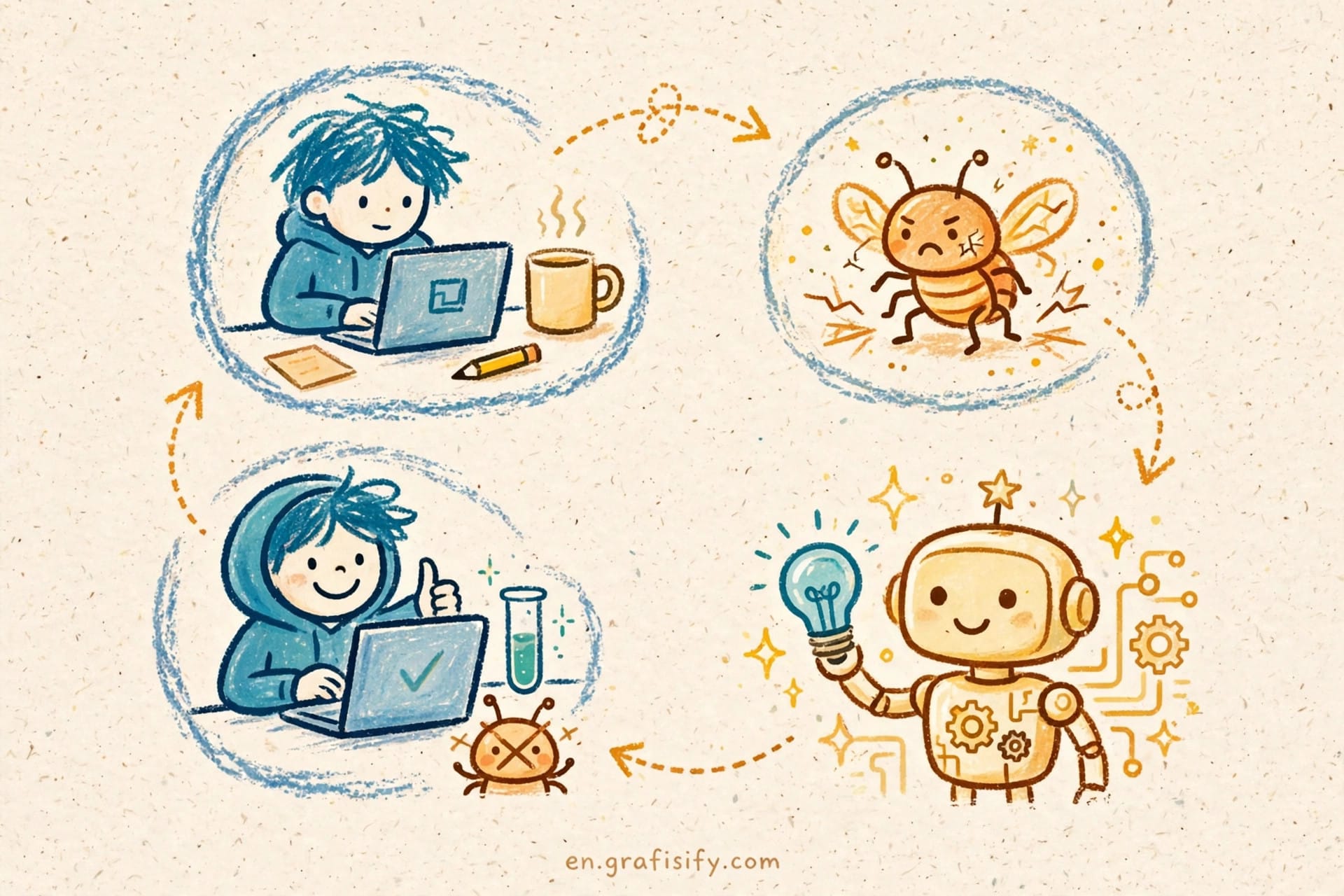
The raw intelligence of the model is refined through a process called Reinforcement Learning from Human Feedback (RLHF). After the initial pre-training on massive datasets, the model generates responses that are ranked by human raters. These rankings are used to train a “reward model” that teaches Gemini which answers are helpful, harmless, and honest.
This step is critical for safety and usability. Without RLHF, a raw model might answer a query about how Google Gemini works correctly but in a rude tone, or it might provide dangerous instructions if not aligned with safety guidelines. The fine-tuning process sculpts the raw intelligence into a helpful assistant.
Google has implemented specific safety filters at this stage to prevent the generation of hate speech, sexually explicit content, or dangerous activities. This layer of “governance” acts as a final check before the token is generated and sent back to the user, ensuring the output aligns with Google’s AI principles.
Practical Application: Optimizing for Gemini’s Logic
Knowing the mechanics behind the machine allows you to use it more effectively. Since Gemini is multimodal native, you shouldn’t limit yourself to text prompts. To get the most out of the tool, feed it mixed media. Upload a screenshot of your UI design alongside your code snippet; the model can correlate the visual elements with the CSS classes much better than a text-only model could.
Furthermore, because of the massive context window, you should avoid “chain of thought” prompting where you feed information in small chunks. Instead, dump the entire dataset or document into the prompt at once. Gemini thrives on having the full context available in its “working memory” rather than trying to piece together fragmented inputs.
Pros & Cons of the Gemini Architecture
✅ The Good
- Native Multimodality: Seamless reasoning across video, audio, and text without needing plugins.
- Massive Context: Can process vastly more data (up to 2M tokens) than most competitors.
- Ecosystem Integration: deeply integrated with Workspace (Docs, Gmail, Drive) for workflow automation.
❌ The Bad
- Over-Filtering: Safety guardrails can sometimes trigger false positives, refusing benign requests.
- Hallucinations: Like all LLMs, it can still confidently state incorrect facts.
- Resource Intensity: The Ultra models are computationally heavy, sometimes leading to slower generation times compared to lighter models.
Final Thoughts
The shift in how Google Gemini works represents a maturation of the AI industry. We are moving away from text-generators that guess the next word, toward reasoning engines that perceive the world through multiple senses. By combining the efficiency of Mixture of Experts with native multimodality, Google has created a tool that is arguably the most versatile “Swiss Army Knife” in the current AI landscape.
Whether you are a developer looking to refactor code or a creative looking to analyze video footage, understanding the architecture helps you unlock the tool’s true potential. Ready to dive deeper into using these tools? Read our related guide on mastering prompts for multimodal AI.
Tagged with:
AI ArchitectureAI TechnologyDeepMindFuture of SearchGoogle GeminiLarge Language ModelsMachine LearningMultimodal AINeural NetworksTech Guide
Irfan is a Creative Tech Strategist and the founder of Grafisify. He spends his days testing the latest AI design tools and breaking down complex tech into actionable guides for creators. When he’s not writing, he’s experimenting with generative art or optimizing digital workflows.


 Artificial Intelligent
 Design & Creative
 Freelance
 Gadgets & Gear
 Insights
 Laptop
 Reviews
 Smartphone
 Tech Guides
 Vibe Coding