How to Run a Client Discovery Call as a Freelancer
Verdict: A Discovery Call Saves You From the Wrong Client
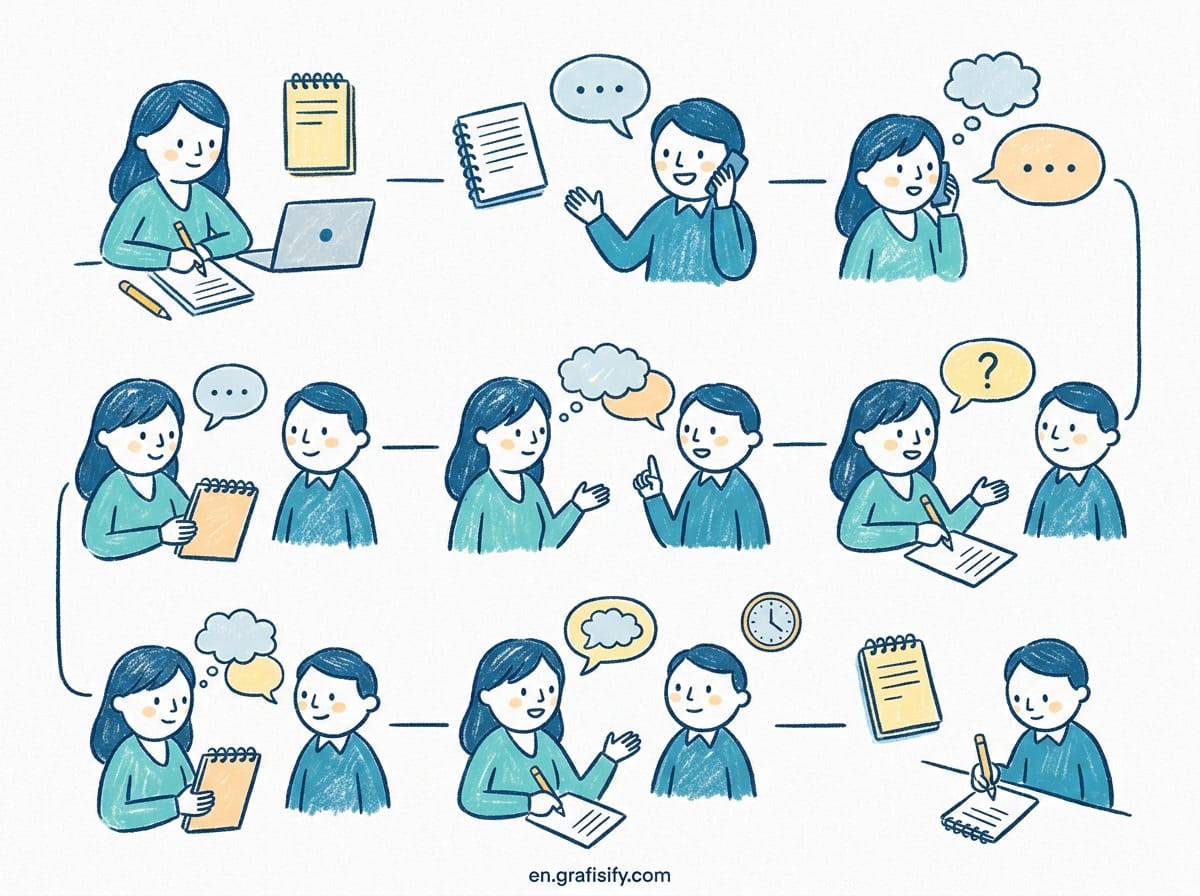
A client discovery call is a short conversation, usually 15 to 30 minutes, that you hold before you write a proposal or name a price. Its only job is to tell you whether this person is worth your time. Skip it and you will burn hours on a lead who never had a budget, never had decision power, or never had a real problem you could solve. Run it well and you walk into every proposal with the context you need to win the work and price it correctly. Below is a practical framework you can use on your next call.
What a Discovery Call Actually Is
A discovery call is the first real conversation you have with a prospect after they show interest. They might have filled out your contact form, replied to a cold email, or found you through a referral. The call happens before any scoping document and before any quote.
The goal is not to sell. You are not pitching on this call. You are qualifying: figuring out if this lead fits the kind of work you do, has the means to pay, and faces a problem your service actually solves. As one self-employed guide puts it, this is where you “qualify the lead, set expectations, and decide if the work is worth your time.” Think of it as a two-way interview. The prospect is also deciding if they trust you.
Freelancers who skip this step tend to learn the hard truth on a discovery call: roughly half of all sales time gets wasted on unproductive prospecting and unqualified calls. A structured 20-minute conversation filters that waste before it reaches your calendar. The research behind that number comes from discovery-call statistics tracked across sales teams, and the pattern holds for solo workers too. When you are the whole business, every wasted hour comes straight out of your delivery time.
Also Read:

The independent guide at Self-Employed explains the call as a 15 to 30 minute conversation that happens before you write a proposal or quote a price. Treat that window as a hard cap. If a call runs past 30 minutes and you still have no answer on fit, the structure failed, not the prospect.

The BANT Framework Keeps You Focused
Walking into a call without a structure leads to friendly chats that go nowhere. The BANT framework gives you four buckets to fill, and it works just as well for a solo freelancer as for a sales team. BANT stands for Budget, Authority, Needs, and Timeline.

- Budget. Do they have money allocated, or are they hoping it is cheap? You do not need the exact number, but you need a range that matches your rate.
- Authority. Are you talking to the person who approves spending, or an employee who has to ask permission? If they cannot sign off, your close gets delayed.
- Needs. Can your service actually solve what they described? If their problem is outside your scope, say so and refer them elsewhere.
- Timeline. When do they want this done? A request for results next week when your pipeline is full is a mismatch, not an opportunity.
You do not grill them with a checklist. You weave these into a normal conversation. But if two of the four come back weak, that is your signal to pass. The BANT model is detailed in the discovery-call playbook at Selling Signals, which frames it as the standard way to judge fit before you spend another hour.
Qualified Lead vs Unqualified Lead
The fastest way to decide after a call is to compare the signal against a clear standard. Use this table as your scorecard.
| Signal | Qualified Lead | Unqualified Lead |
|---|---|---|
| Budget | Names a realistic range or has approval | “We’ll figure out payment later” |
| Authority | Is the decision maker or owns the budget | Needs sign-off from someone absent |
| Needs | Matches your core service | Wants something you do not offer |
| Timeline | Clear date that fits your capacity | Vague or impossibly urgent |
| Communication | Answers directly, shares context | Evasive, sends one-word replies |
If a lead hits three or more on the qualified side, move them to a proposal. If they land on the unqualified side, thank them and close the loop. Disqualifying fast is a skill, not a failure.
The Free Consulting Trap
The most expensive mistake on a discovery call is turning it into free consulting. A prospect asks how you would approach their problem, you walk them through a full strategy, and they thank you and disappear to do it themselves. You just delivered paid value for free.
The fix is a boundary. On a discovery call you explain your general approach and methodology, not a custom solution. If they want the detailed plan, that lives in the paid proposal. One freelance guide frames it directly: letting discovery calls become free consulting is a costly trap, and the answer is to vet leads before they reach your calendar. Send a short intake form ahead of the call so the basics are covered, and reserve your deep thinking for paid work. The breakdown at BulletHQ contrasts a discovery call with a sales call and shows exactly where the line gets crossed.
You can read more about building that front-end system in our guide on finding freelance clients through channels that work, and on writing proposals that win clients.
A Simple Call Structure You Can Reuse
You do not need a script, but you do need a flow. Here is a structure that keeps the call on track without feeling like an interrogation.
Open with context (2 minutes). Thank them for the time, state the call will take about 20 minutes, and say what you hope to learn. Setting the frame up front makes the questions that follow feel natural.
Ask about their situation (5 minutes). What are they working on, what tools do they use, who is on the team? This is the “situation” step borrowed from the SPIN selling model, where you map out where they are today before anything else. Pipedrive’s guide to discovery call questions walks through the SPIN and BANT approaches side by side if you want a deeper framework.
Find the problem (5 minutes). What is breaking or slow or costing them money? This is where the real need shows up. Listen more than you talk. The prospect should be doing most of the talking.
Confirm fit and next step (5 minutes). Summarize what you heard, state whether it sounds like a fit, and name the next step: a proposal, a follow-up, or a polite pass. End on a positive note either way. That contact may refer you later.

Questions Worth Asking
You do not need ten questions. Eight to twelve thoughtful ones create enough depth without overwhelming the conversation. A few that consistently surface real signal:
- What made you start looking for help now?
- Who else is involved in this decision?
- What does success look like three months after we finish?
- What happened with the last person who tried this?
- If we started next month, what would block you?
Notice none of these ask for a budget directly. The money question comes later, once they trust you understand their problem. By then they are usually willing to share a range.
Tools That Make the Call Easier
You do not need a heavy stack, but three things help. A scheduling tool like Calendly removes the back-and-forth of picking a time. A lightweight CRM or even a spreadsheet tracks where each lead sits so no one falls through. A simple intake form sent before the call collects the basics so you spend call time on the parts a form cannot capture.
The intake form does most of the quiet work. Ask for their company, the project they have in mind, their rough budget band, and their deadline in writing before you book the call. By the time you dial in, you already know whether the budget and timeline pass. The call then confirms the softer signals: do they communicate clearly, do they respect your expertise, and does the problem actually match what you do. That split, form first then call, is what keeps a 20-minute conversation from drifting into a 50-minute free consult. Keep your tools boring and reliable. The point is speed, not features.
If you want to tighten how you manage multiple clients after the call converts, our piece on building a client acquisition system extends this into a repeatable pipeline. And for the paperwork side, freelance contracts and invoicing covers what to send once the call turns into a yes.
Final Thoughts
A discovery call is not a sales pitch and it is not a free consultation. It is a filter. The freelancers who grow steady businesses are the ones who protect their time by qualifying hard at the front end, then showing up to qualified calls with a structure and real questions. Spend 20 minutes before every proposal and you will stop losing weeks to leads that were never going to pay. Pick one framework, run it on your next three calls, and keep the leads that pass.

Irfan is a Creative Tech Strategist and the founder of Grafisify. He spends his days testing the latest AI design tools and breaking down complex tech into actionable guides for creators. When he’s not writing, he’s experimenting with generative art or optimizing digital workflows.






 Artificial Intelligent
 Design & Creative
 Freelance
 Gadgets & Gear
 Insights
 Laptop
 Reviews
 Smartphone
 Tech Guides
 Vibe Coding