The Verdict: It’s 2026. If you are still memorizing syntax, you’re playing the game on hard mode for no reason. Vibe coding isn’t just a buzzword; it’s the equalizer that lets solo founders ship products that used to require a team of five.
Let’s be real for a second. The barrier to entry for building software has crashed through the floor. It used to be that if you didn’t know the difference between Java and JavaScript, your SaaS idea was dead in the water—or destined to burn a hole in your pocket hiring expensive dev agencies.
Enter the era of vibe coding. Coined casually by Andrej Karpathy and now the de facto standard for indie hackers, this approach is less about writing code and more about managing energy, intent, and logic using natural language. But how do you actually do it? If you are looking for the ultimate vibe coding tutorial for beginners 2026, you have landed in the right corner of the internet. We aren’t just talking theory here; we are going to walk through the messy, beautiful reality of building a product with AI as your junior developer.
What Exactly is Vibe Coding?
Think of it this way: In the old world, you were the bricklayer. You had to place every single brick (line of code) perfectly level, or the wall would collapse. In the vibe coding world, you are the architect and the foreman. You point at the empty lot and tell your crew (the AI), “I want a modern brick wall here, about six feet high, with a rustic finish.”

The crew builds it. You look at it and say, “Nah, too dark. Make it lighter.” They rebuild it instantly.
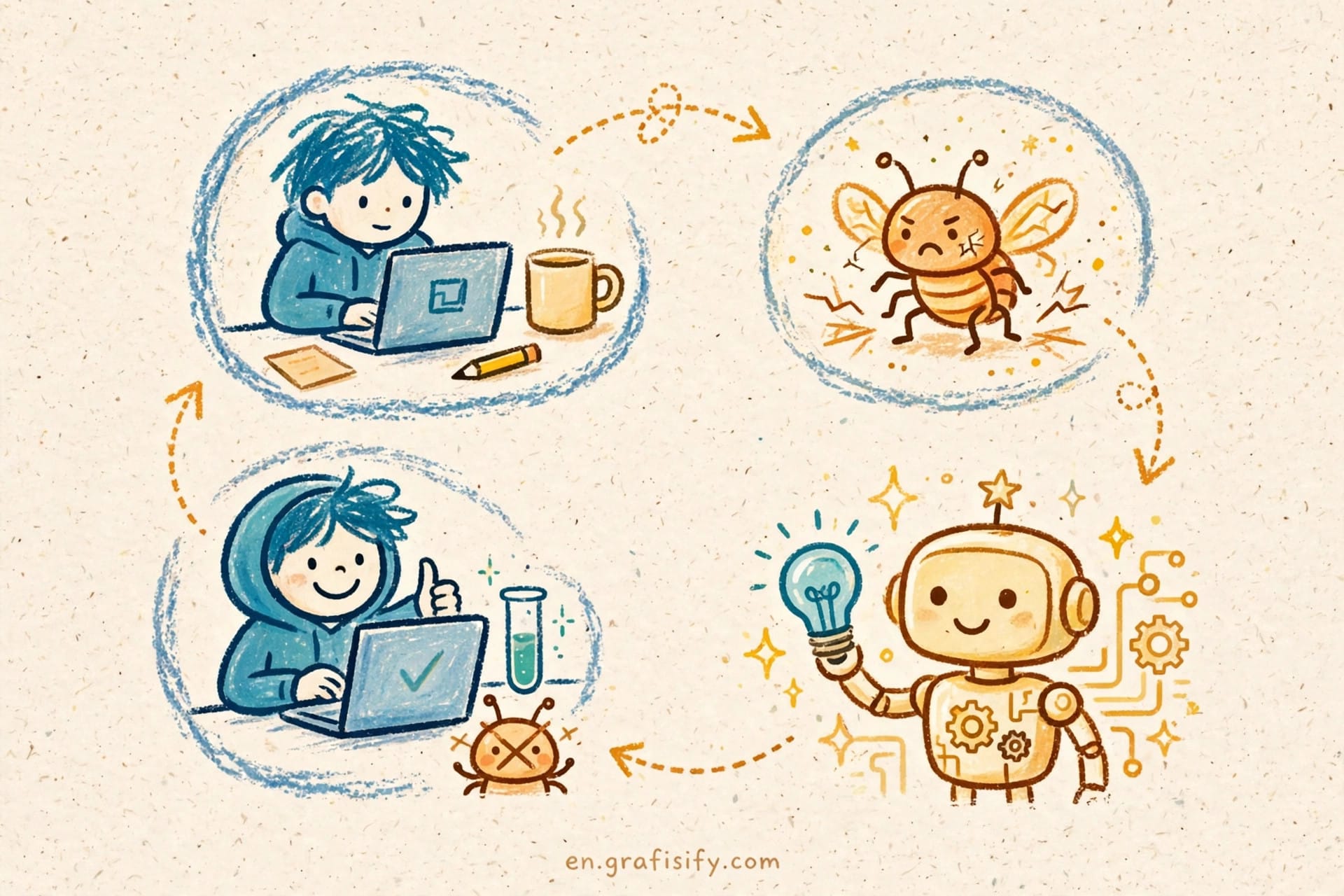
That loop—that continuous conversation where you iterate on the result rather than the implementation—is vibe coding. It relies on tools like Replit, Cursor, and Windsurf that understand context deep enough to handle the heavy lifting. But don’t get it twisted; it’s not magic. It requires a specific skill set: clear communication, logic structuring, and the ability to spot when your AI is hallucinating (because, trust me, it will).
The Toolkit: Replit vs. Cursor for the 2026 Entrepreneur
Before we dive into the vibe coding tutorial for beginners 2026 workflow, you need to pick your weapon. For most non-programmers, the choice boils down to two heavy hitters.
1. Replit (The All-in-One Powerhouse)
Replit is currently the king of the hill for vibe coding, specifically because of its “Replit Agent.” It sets up the environment, installs the packages, creates the database, and deploys the app. You literally just talk to it.
- Best for: Building a web app from scratch (0 to 1).
- The Vibe: “Build me a dashboard that tracks Bitcoin prices.”
2. Cursor (The Surgeon’s Scalpel)
Cursor is a fork of VS Code with AI baked into its soul. It’s incredibly fast and powerful but requires a bit more technical know-how to set up the local environment. It shines when you need to edit existing code or handle complex logic.
- Best for: Iterating heavily on specific features or working with a larger codebase.
- The Vibe: “Refactor this component to use React Hooks instead of classes.”
For this guide, we are focusing on Replit because it offers the path of least resistance for a true beginner.

Understanding the Workflow: Ask Mode vs. Agent Mode
This is where most newbies get “boncos” (totally lost/bankrupt of ideas). They treat the AI like a Google search bar. To succeed, you need to understand the two primary modes of interaction.
Ask Mode (Chat)
This is for questions. “How do I change the background color?” or “Explain what this function does.” It doesn’t touch your files. It just gives you advice. Use this when you are confused.
Agent Mode (Builder)
This is the game-changer. The Agent has permission to write files, install dependencies, and run commands. When you are following a vibe coding tutorial for beginners 2026, you spend 90% of your time here. You give a directive, and the Agent executes it. It’s the difference between asking for a recipe and asking a chef to cook dinner.

Step-by-Step: Building a Crypto Profit Calculator
Let’s stop yapping and build something. We are going to create a simple SaaS tool: A Crypto Profit Calculator that lets users input their buy price, sell price, and investment amount to see their gains (or losses, let’s be real).
Phase 1: The Initial Prompt (Setting the Foundation)
Open Replit and hit the “Create new Repl” button. Select the Agent. Your first prompt needs to be comprehensive. Don’t just say “make a calculator.”
Try this prompt:
“Create a responsive web application using React, Tailwind CSS, and Vite. The app is a Crypto Profit Calculator. It should have input fields for ‘Investment Amount ($)’, ‘Buy Price ($)’, and ‘Sell Price ($)’. As the user types, automatically calculate the Profit/Loss in dollars and percentage. Display the result in a large, colorful card—green for profit, red for loss. Include a ‘Reset’ button.”
Notice the detail? We specified the tech stack (React/Tailwind) and the behavior (automatic calculation). The Agent will now spin up the environment. Watch it work. It’s oddly satisfying.
Phase 2: Vibe Checking & Iteration
Once the Agent says “Done,” hit the Run button. Does it work? Probably. Does it look good? Maybe not.
This is the “Vibe Check.” Maybe the font looks like it’s from 1998. Maybe the input boxes are tiny. This is where you iterate.
Follow-up Prompt:
“The UI looks a bit dry. Let’s modernize it. Use a dark mode theme with a sleek, glassmorphism effect on the main calculation card. Use the ‘Inter’ font. Make the input fields large with rounded corners. Add a subtle animation when the profit number changes.”
See? You aren’t coding CSS. You are describing the aesthetic.
Phase 3: Handling Logic Errors
Let’s say you test it, and you realize entering “0” in the Buy Price crashes the math (division by zero). A developer would hunt for the line of code. You? You just complain to the Agent.
Fix Prompt:
“When I enter 0 for the Buy Price, the result says NaN. Please fix this bug by handling the division by zero case. Show a message saying ‘Enter valid price’ instead.”
For more on structuring these technical prompts, check out our guide on mastering technical workflows.
The Hard Truth: You Still Need to “Read” Code
Here is the part most influencers won’t tell you. You can’t be completely illiterate. You don’t need to be able to write a complex `useEffect` hook from memory, but you need to be able to look at the code and vaguely understand what is happening.
Why? Because the AI will lie. It will sometimes import a library that doesn’t exist. It will write a function that loops forever. If you can’t open the file and see that `calculateProfit` is missing a return statement, you are going to be stuck in a loop of frustration.
Think of it like being an editor. You don’t write the book, but you need to know enough grammar to catch typos. Vibe coding requires code literacy, not necessarily code fluency. Learning the basics of HTML structure and how JSON data looks is a non-negotiable prerequisite for any serious vibe coding tutorial for beginners 2026.
Pros and Cons: Is It Worth It?
Is this method the future? Absolutely. Is it flawless? Not even close.
The Pros
- Speed: You can go from idea to deployed app in 20 minutes.
- Cost: Zero dollars on developers. Just a subscription to Replit or Cursor.
- Empowerment: You stop waiting for a “technical co-founder” who is never coming.
The Cons
- Spaghetti Code: AI is messy. The code it generates might be inefficient or redundant.
- Maintenance Nightmares: If you build a massive app entirely via prompts, changing one thing later can break five others if you don’t know how the pieces fit together.
- Dependency Hell: AI loves installing packages. Sometimes those packages conflict.
Final Thoughts
Vibe coding is the great equalizer of the 2026 startup landscape. It allows creative minds to bypass the syntax gatekeepers. But it requires a new kind of discipline—the discipline of clarity. Your product is only as good as your ability to describe it.
If you are ready to start, don’t overthink it. Grab a Replit account, think of a stupidly simple tool (like a hydration tracker or a meme generator), and just start talking to the Agent. You’ll be surprised at how far a little bit of “vibe” can take you. For deeper insights on AI trends, resources like OpenAI and Replit’s Blog are essential reading to keep your edge sharp.
Now, go build something cool and stop making excuses.








 Artificial Intelligent
 Design & Creative
 Freelance
 Gadgets & Gear
 Insights
 Laptop
 Reviews
 Smartphone
 Tech Guides
 Vibe Coding