How to Reduce AI Hallucinations in Production Apps

Verdict: TL;DR
Hallucinations in production AI apps are a system problem, not a prompt problem. A single clever instruction will not fix them. The teams that ship reliable AI features stack defenses: ground answers in retrieved documents, require citations, constrain outputs to fixed shapes, let the model abstain when evidence is thin, verify claims before users see them, and measure the failure rate on every release. Start with grounding and abstention, since those two changes remove the largest share of invented facts for the least engineering effort. Add verification and action guardrails where a wrong answer can move money, change records, or reach a customer.
Read this guide as a build order. Each section adds one layer. By the end you will have a practical checklist for cutting invented facts out of a shipping product, plus the tradeoffs each layer brings.
Why Models Invent Facts
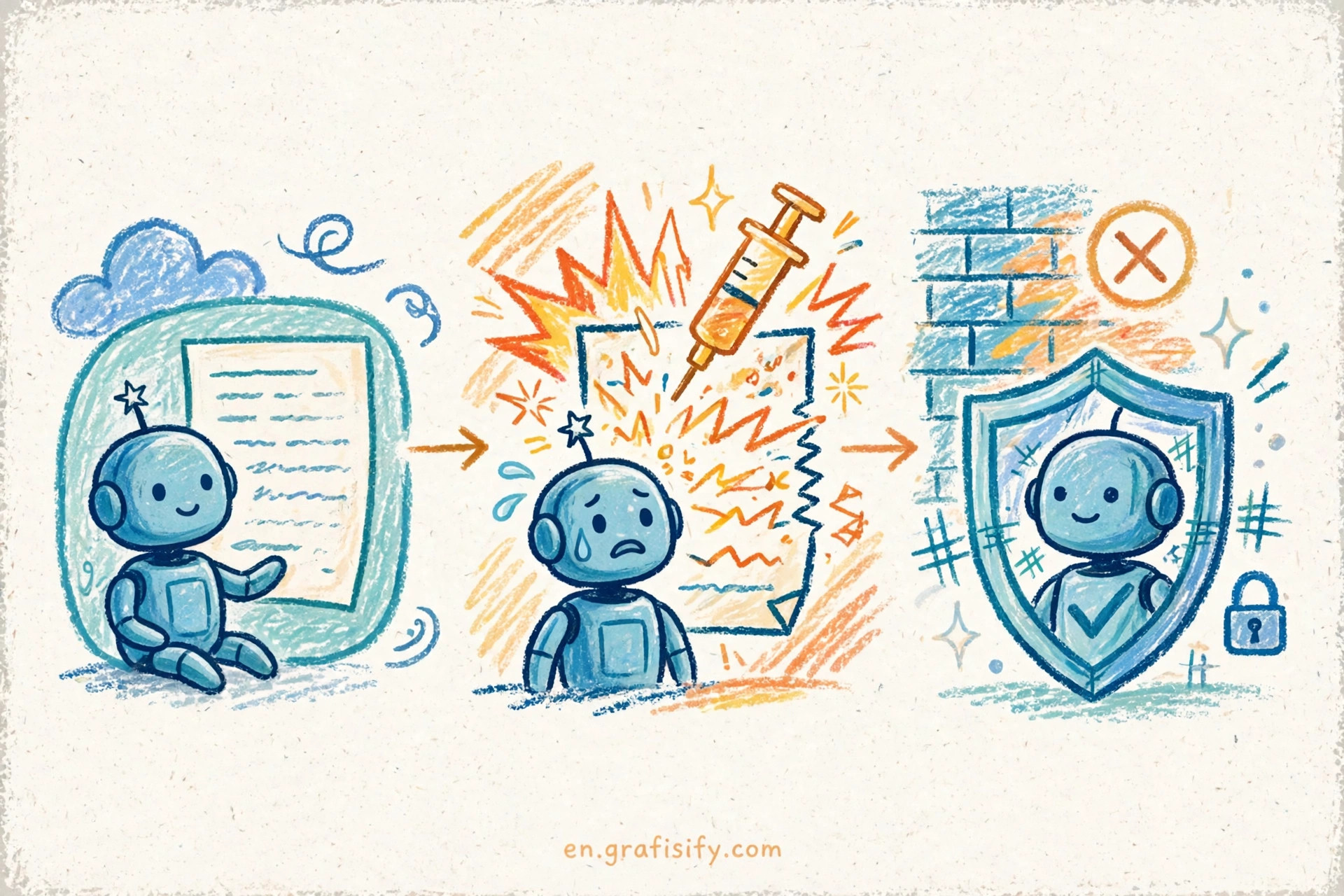
A language model predicts plausible text. It does not check a fact against a source before it writes. That design makes models fluent and fast, and it also makes them confident when they are wrong. A fabricated case citation, a wrong refund rule, or a nonexistent product feature can read exactly like a correct answer. Fluency hides the error, which is why users trust bad output and why teams discover problems late.
Training data adds a second cause. Models learn patterns from text written before a cutoff date, and they fill gaps with the most plausible continuation. Ask about a policy that changed last month, a price that moved last week, or a document that exists only inside your company, and memory alone cannot answer. The model still answers, because nothing in its training told it to stop. The fix starts with that insight: stop asking memory to do the job of a database.

Pressure to be helpful adds a third cause. Assistants are trained to answer, so they answer even when the evidence is weak. Scoring systems that reward coverage over caution push the same way. A team that only tracks how often the assistant answers will watch hallucination rates climb. Track abstention as a success metric too, and the incentives change.
The legal world already has a warning example. In Mata v. Avianca, lawyers submitted a brief containing case citations produced by an AI tool, and several of those cases did not exist. A court sanctioned the lawyers. The failure was human review, but the root cause was structural: nobody in the chain checked each claim against a real source. Production systems need that check built in, not bolted on after a bad output reaches a user.


Ground Answers in Retrieved Sources
Retrieval-augmented generation, or RAG, changes the task from recall to summary. The system fetches relevant documents at query time, passes them to the model as context, and instructs the model to answer only from that context. Meta AI researchers described this approach in 2020, and it remains the highest-leverage single change for factual apps. A support bot that retrieves the current refund policy and quotes it will beat a bot that recalls a generic policy from training, on every question where the policy matters.
Retrieval quality decides whether grounding works. Weak retrieval hands the model the wrong documents, and the model then writes a confident summary of the wrong source. Invest in the retrieval layer first: chunk documents at natural boundaries, keep metadata such as effective dates and document versions, and test retrieval with real user questions before you tune prompts. Our guide to RAG chunking strategies that improve recall covers chunk size and overlap choices in detail, and how embeddings let AI search find meaning explains the matching step underneath retrieval.
Keep the corpus fresh and versioned. Stale documents produce stale answers with fresh confidence. Date every source, retire superseded pages, and log which document version answered each question so a bad answer can be traced to its source. Freshness checks belong in the same pipeline as content updates, not in a quarterly audit.

Scope the corpus per question type. A billing bot needs billing documents, not the full company wiki. Narrow retrieval reduces noise, shortens context, and cuts the chance that the model blends facts from two similar documents into one wrong answer.
Require Citations, Then Verify Them
Citations turn an answer into something a reader can check. Require the model to attach a source to each factual claim, using identifiers from the retrieved set only. Reject any citation that points outside that set. This single rule converts free-form invention into constrained selection: the model picks from known documents instead of inventing new ones. Post-processing can enforce it in code by mapping cited IDs to full references and dropping claims with no matching ID.
Citations alone are not verification. A model can cite a real document for a claim the document does not support. Add a verification step that checks each claim against its cited passage, with a second model or a natural-language-inference check. Claims that fail verification get blocked, flagged, or rewritten from the source. Verification costs latency and tokens, so apply it hardest where stakes are highest: money, health, legal text, and customer-facing commitments.
Log citations with answers. When a user reports a wrong answer, the log should show the question, the retrieved passages, the citations, and the verification result. That trace turns a vague complaint into a debuggable failure, and it shows whether retrieval, generation, or verification broke. Teams that build observability for production AI apps already collect this trace, and hallucination work reuses it directly.
Show citations to users where trust matters. A visible source lets a reader spot a weak answer fast, and it trains users to expect evidence instead of fluency. Internal tools can show full passages; customer products can show short source labels with links.
Constrain Outputs With Schemas and Tools
Where an answer has a fixed shape, force it. Structured outputs, enumerated choices, and strict schemas remove whole classes of invention. A model that can only return one value from a fixed list cannot invent a new value. A refund status field that accepts only approved, pending, or denied will not produce a fourth invented status. Use schemas for classifications, extractions, and any field that feeds code downstream.
Use tools for facts that code can fetch exactly. Prices, balances, order status, and inventory belong in function calls, not in model memory. A model that calls a pricing API returns the current price; a model that recalls a price returns a plausible one. How AI coding tools get context through MCP shows the same pattern in developer tools: structured tool access beats free-text recall for facts the system can look up.
Constrain free text where structure is impossible. Short answer limits, required sections, and banned-phrase lists reduce room for invention, though they cannot remove it. Treat these as soft constraints that support verification, not as a replacement for it.
Validate outputs before they leave the system. Schema validation catches malformed JSON, out-of-range values, and disallowed enums. Add domain rules on top: a discount above the approved cap, a date in the past for a future booking, or a quantity above stock should fail validation and route to a safe fallback instead of reaching the user.
Let the Model Say It Does Not Know
Abstention is the cheapest hallucination control most teams skip. Instruct the model to answer that it lacks enough information when the retrieved context does not support an answer, and reward that behavior in evals. Models guess partly because nothing told them that abstaining was allowed. Give them the exit, and invented answers drop fast.
Abstention needs a graded path, not a dead end. A bare refusal frustrates users. Offer the next useful step: ask a clarifying question, point to the closest verified document, or escalate to a human for high-value cases. A support bot that says it cannot confirm a policy and links the policy page beats a bot that invents the policy and a bot that says nothing at all.
Measure abstention alongside accuracy. A model that answers more questions but gets more wrong is not improving. Score correct answers, wrong answers, and abstentions separately, and treat a rise in correct abstentions as progress. Eval design matters here: how to build LLM evals that catch real failures covers golden test sets and failure categories that make this scoring practical.
Calibrate abstention thresholds by stakes. A brainstorming helper can guess freely with a label that marks output as draft. A billing assistant should abstain fast and escalate. One threshold for the whole product misfires in both directions, so set thresholds per feature and per risk level.
Measure Hallucination Rate Like a Metric
Teams that do not measure hallucination guess about it. Define the metric as the share of claims in answers that retrieved sources do not support, scored on a golden test set plus a sample of live traffic. Run the same checks on every model or prompt change before release, so a regression shows up as a number instead of a user complaint. Re-calibrate automated judges against human review on a schedule, because judge models drift as providers ship updates.
Build the golden set from real failures. Collect wrong answers from production, label the failure type, and add them to the test set. A set built only from easy questions will report a flattering rate and miss the cases that hurt users. Include edge cases: ambiguous questions, near-duplicate documents, outdated pages, and questions with no good answer in the corpus.
Separate the rate by failure cause. Retrieval failures, generation failures, and verification failures need different fixes, and one blended number hides which layer broke. Log the retrieved context with each answer so reviewers can tell a bad retrieval from a bad summary.
| Technique | What it fixes | Cost to run | When to use it |
|---|---|---|---|
| Retrieval grounding | Answers from memory instead of sources | Low to medium | Every factual feature |
| Citations plus verification | Unsupported claims and fake sources | Medium | Customer-facing and regulated answers |
| Structured outputs | Invented values in fields code consumes | Low | Classifications and extractions |
| Tool calls for live facts | Stale prices, status, and balances | Low | Any fact an API can return |
| Abstention | Guessing on thin evidence | Low | Every assistant, tuned by stakes |
| Human review | High-stakes errors automation misses | High | Legal, medical, and financial output |
Watch cost as you add layers. Verification with a second model roughly doubles inference cost on checked answers, and human review costs far more. Prompt caching can cut LLM API bills on repeated context, which helps fund the verification layer without doubling the budget. Spend the expensive layers where errors cost the most.
Conclusion: Guard Actions and Build the Safety Net
A hallucinated sentence is bad. A hallucinated action is worse. Gate high-risk operations behind validation or human approval: database writes, refunds, outbound emails, and permission changes should never run on model output alone. Check the action against policy and current state in code, and require confirmation for anything irreversible.
Keep humans in the loop where stakes justify it. A draft assistant can run free. A system that files, pays, or promises needs a review step for edge cases and a sample of routine cases. Review samples catch drift that golden sets miss, because live traffic always contains questions the test set never imagined.
Design safe fallbacks for blocked output. When verification fails, the system should retry with better retrieval, narrow the question, or escalate, in that order. A fallback that silently returns the unverified answer defeats the whole layer. Log every fallback so the team sees how often each layer fires.
Ship layers in order of leverage. Grounding first, then citations and abstention, then schemas and tools, then verification, then action guardrails. A team that ships all six at once will struggle to tell which layer helped. A team that ships one layer per release can read the metric move and keep what works.
Reliable AI products are built, not prompted. Grounding removes most gaps, citations and verification catch what remains, schemas and tools stop invented values, abstention handles questions with no good answer, and action guardrails stop a slipped error from taking effect. Measure the failure rate, review real failures, and tune each layer by stakes. That stack is the difference between a demo that impresses and a product users can trust with real decisions.
Start this week with two changes: wire retrieval into your most-used factual feature, and add an abstention instruction plus a golden test set that rewards correct refusals. Those two moves alone will cut the invented facts your users see. Then add verification and action gates where errors cost money or trust. If you want a deeper treatment of the layered approach, the production guides at Prefactor on agent hallucination guardrails, KDnuggets on seven production techniques, Nalgo on guardrails that work, Zalt on the four layers, and CustomGPT on reducing hallucinations in RAG each cover the same stack from a different angle.

Irfan is a Creative Tech Strategist and the founder of Grafisify. He spends his days testing the latest AI design tools and breaking down complex tech into actionable guides for creators. When he’s not writing, he’s experimenting with generative art or optimizing digital workflows.







 Artificial Intelligent
 Design & Creative
 Freelance
 Gadgets & Gear
 Insights
 Laptop
 Reviews
 Smartphone
 Tech Guides
 Vibe Coding



