CrewAI vs LangGraph: Which Multi-Agent AI Framework Wins?
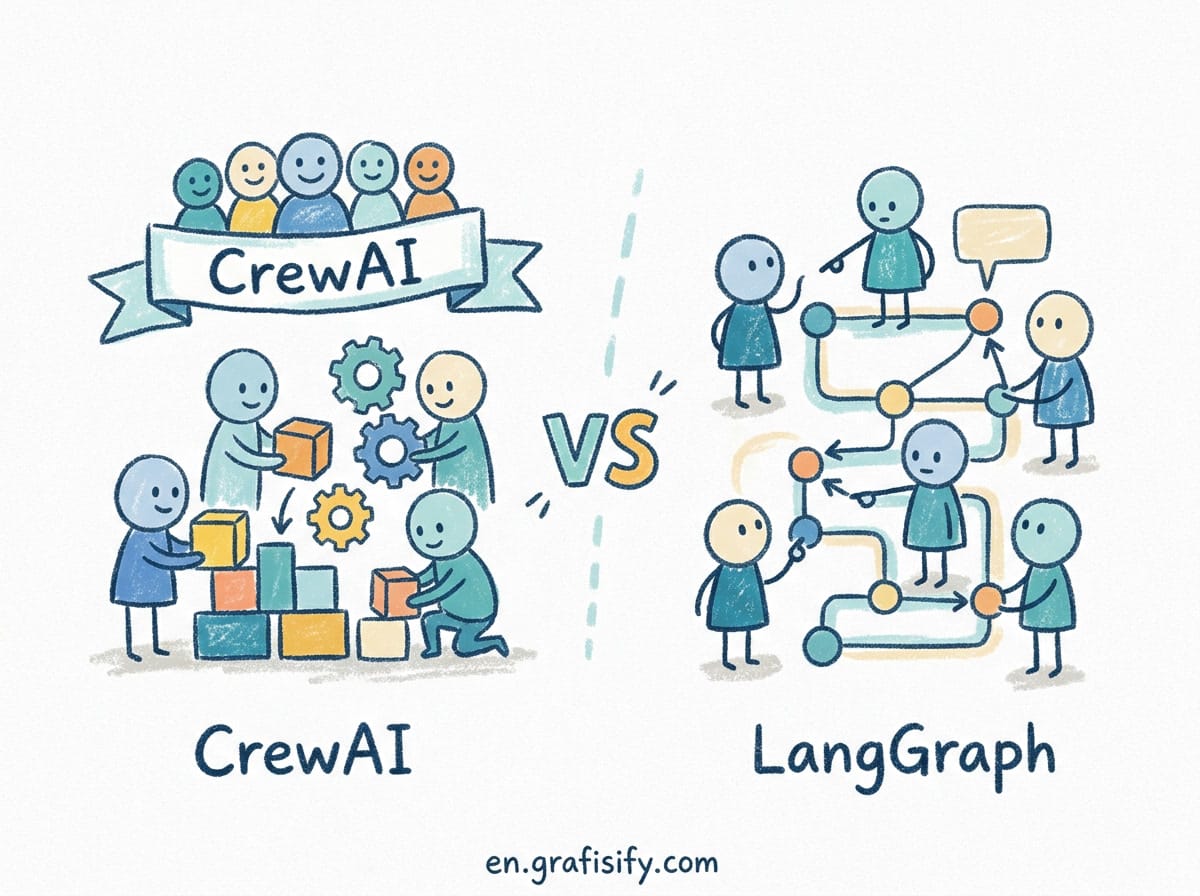
Verdict: CrewAI vs LangGraph
CrewAI excels when you need rapid setup, role-based multi-agent teams, and clean human-like collaboration abstractions. LangGraph is the superior choice for production systems requiring granular control, state management, cyclical graphs, human-in-the-loop validation, and enterprise resilience.
Multi-agent AI systems have shifted from academic research experiments into core architectural components of modern software engineering. Rather than relying on a single monolithic prompt or a basic chain of operations, enterprise applications deploy fleets of specialized AI agents that collaborate, critique work products, execute API tool calls, and complete complex multi-step tasks autonomously. As developers adopt these sophisticated agentic design patterns, two open-source frameworks have emerged as the industry standard: CrewAI and LangGraph.
Choosing between CrewAI and LangGraph dictates how your software engineering team will manage application state, debug dynamic execution graphs, handle system fault tolerance, and scale autonomous AI workflows. While both frameworks support complex multi-agent setups and multi-LLM orchestration, their underlying design philosophies and core developer interfaces differ fundamentally.
In this comprehensive guide, you will explore the operational differences between CrewAI and LangGraph, analyze a side-by-side feature comparison, evaluate state management paradigms, and determine which tool aligns best with your production software requirements.
Understanding the Core Philosophies
To evaluate these multi-agent frameworks effectively, software architects must first examine their underlying design abstractions and target developer personas.
CrewAI: Role-Based Agent Orchestration
CrewAI frames multi-agent coordination around human organizational structures and team dynamics. In the CrewAI ecosystem, developers define explicit Agents equipped with specific roles, operational goals, and detailed backstories. You then assign these agents high-level Tasks, equip them with custom Python tools, and organize them into a collaborative unit called a Crew.

Communication between agents in CrewAI occurs naturally through task delegation, direct memory sharing, and intelligent tool usage. CrewAI manages system prompt construction, agent interaction loops, context passing, and task execution sequences automatically under the hood. This high-level abstraction allows software developers to prototype collaborative multi-agent teams in under fifty lines of clean Python code without managing complex state transitions manually.
LangGraph: Stateful Cyclic Graph Execution
LangGraph, developed as part of the broader LangChain ecosystem, models multi-agent workflows as stateful directed graphs. In LangGraph, individual agents, tool calls, and data processing steps are represented as graph Nodes, while communication paths, evaluation gates, and conditional transitions are explicitly configured as Edges.
A centralized, immutable state object flows continuously through the execution graph, updating deterministically as each node finishes its work. Because LangGraph provides native support for cyclic graph topologies, agents can loop back to prior steps, self-correct after failing unit tests, refine draft outputs, or pause for human approval. LangGraph provides total, low-level control over every edge transition, conditional branch, and state modification step across the entire application lifecycle.
Feature Comparison Table
The following detailed comparison table highlights the primary architectural, operational, and developer-experience differences between CrewAI and LangGraph.
| Feature / Criterion | CrewAI | LangGraph |
|---|---|---|
| Primary Abstraction | Role-based crews, agents, and tasks | Stateful graphs (Nodes, Edges, and State) |
| Control Flow | Sequential, hierarchical, or delegated | Explicit graphs, loops, and conditional branching |
| State Management | Implicit via task outputs and shared context | Explicit, centralized state schema (TypedDict/Pydantic) |
| Cyclic Execution | Limited (managed through task delegation retries) | Native support for arbitrary cycles and feedback loops |
| Human-in-the-Loop | Basic task-level confirmation flags | Built-in checkpointers, breakpoints, and state edits |
| Persistence & Time Travel | Vector-based memory storage | Built-in checkpointer, time-travel, and state rewinding |
| Learning Curve | Low (rapid prototyping and quick integration) | Moderate to High (requires graph theory concepts) |
State Management and Memory Architecture
State management is the single most critical operational differentiator when comparing CrewAI and LangGraph for production systems.
In complex multi-agent setups, multiple agents must exchange context, preserve task state, and process tool outputs without losing focus or exceeding LLM context windows. When state management fails, autonomous agents experience context drift, hallucinate inaccurate data, or enter infinite delegation loops that consume API tokens unnecessarily.
CrewAI handles memory management through a combination of short-term memory, long-term memory, and entity memory backed by vector databases like Chroma or Qdrant. When an agent completes a task, its textual output automatically propagates into the prompt context for subsequent tasks in the pipeline. While this implicit context passing simplifies basic sequential workflows, inspecting, modifying, or debugging intermediate state values during active execution requires custom event callbacks or wrapper functions.
LangGraph shifts state management to an explicit, developer-defined schema using Python TypedDict or Pydantic models. Every node in the graph receives the global application state object, performs its designated computation, and returns explicit partial state updates. Because state updates are deterministic and observable, engineering teams can inspect the exact data payload delivered to any agent at any step in the execution tree. This explicit state paradigm simplifies unit testing, structured logging, and performance auditing in enterprise environments.
Graph Topology and Cyclic Workflows
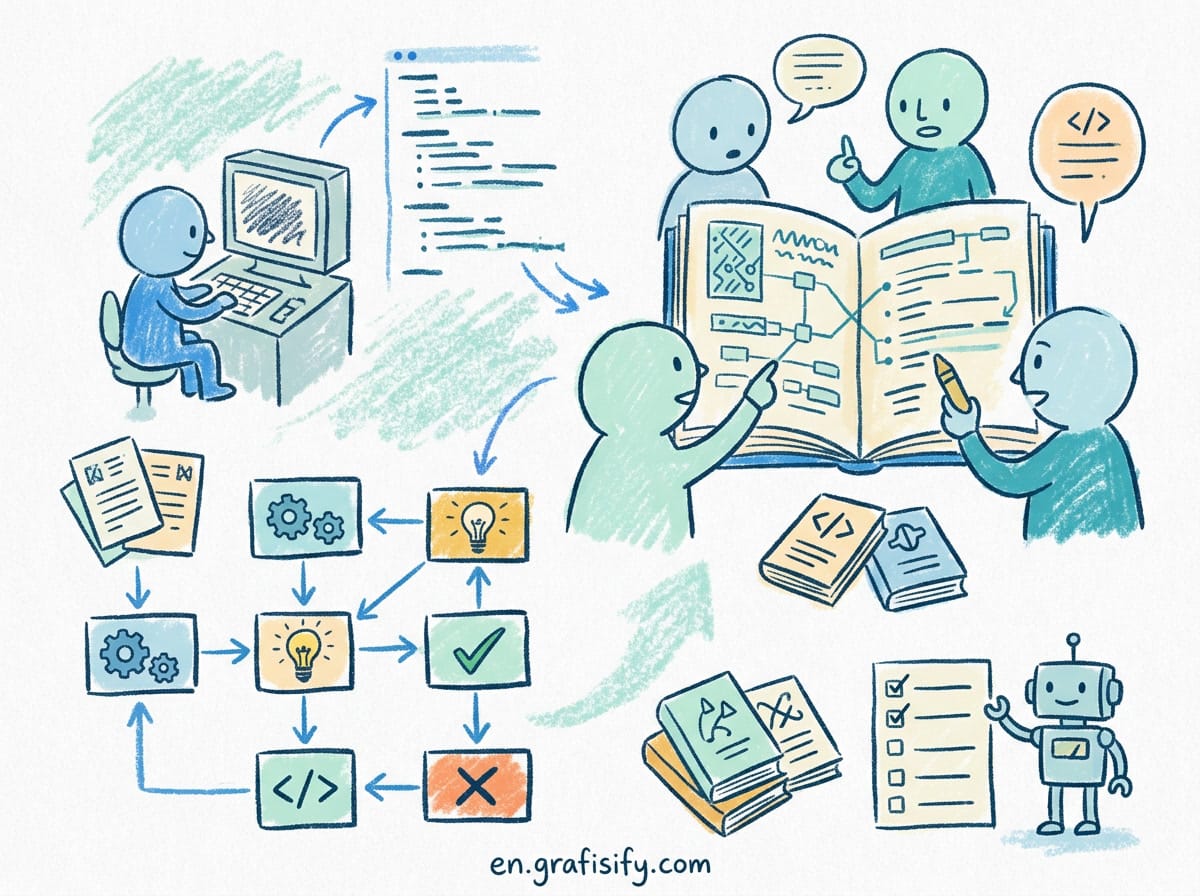
Real-world software engineering workflows are rarely linear or predictable. For example, an autonomous coding pipeline requires a developer agent to write code, a test runner node to execute unit tests, and a conditional gate to route failed test logs back to the developer agent for iterative refactoring.
Implementing recursive feedback loops in traditional linear frameworks often results in stack overflow errors or unmanageable prompt accumulation. LangGraph handles cyclic graph architectures natively. In a LangGraph workflow, an edge can route execution backward to any preceding node based on runtime evaluation logic. A conditional routing function can evaluate whether unit tests passed; if the tests failed, the graph routes execution back to the coding node automatically with full diagnostic context.
CrewAI organizes task execution primarily through sequential or hierarchical structures. In a hierarchical crew, a designated manager agent receives the top-level objective, breaks it down into sub-tasks, assigns work to specialized worker agents, and evaluates output quality before completing the job. While CrewAI supports task delegation loops out of the box, constructing custom graph topologies with multiple nested feedback loops is more restrictive than defining explicit edges in LangGraph.
Human-in-the-Loop (HITL) and Enterprise Resilience
Deploying fully autonomous AI agents into production environments carries inherent operational risk. Enterprise systems frequently demand human oversight before agents perform sensitive operations, such as executing financial transactions, sending external emails, modifying production databases, or deploying software updates.
LangGraph includes enterprise-grade checkpointers that support sophisticated human-in-the-loop workflows. Developers can configure a LangGraph graph to pause execution automatically before reaching specific critical nodes. A human operator can inspect the pending state object, review proposed tool arguments, approve or reject the action, or edit the state values manually before resuming graph execution. Furthermore, LangGraph’s persistent checkpointers enable time-travel debugging: developers can rewind a stalled production execution graph to a previous checkpoint, modify state variables, and re-run execution down an alternate path.
CrewAI provides basic human input flags at the task definition level. When enabled, CrewAI pauses task execution and prompts the user via the terminal or custom application callbacks for clarification or confirmation. However, CrewAI lacks built-in time-travel state rewinding and durable graph checkpointing out of the box, requiring software teams to implement custom persistence layers for mission-critical resilience.
Developer Experience and Code Complexity
The decision between CrewAI and LangGraph often resolves to a trade-off between development velocity and fine-grained control.
CrewAI offers an exceptional developer experience for teams prioritizing speed and readability. Initializing a market research crew with a web scraper agent, a data analyst agent, and a report writer agent requires minimal boilerplate code. The API is declarative, highly intuitive, and easy for software engineers to adopt without mastering complex graph algorithms. Product teams can construct and deploy functional multi-agent prototypes in a matter of hours.
LangGraph demands a higher upfront investment in software design and architecture. Developers must design explicit state schemas, construct nodes as pure functions, define edge routing conditions, and compile the final executable graph. However, this initial complexity pays substantial dividends in long-term code maintainability. As multi-agent applications grow in size and scope, explicit graph definitions prevent the subtle orchestration bugs and unpredictable agent behavior that can emerge in high-level abstraction frameworks.
When to Choose CrewAI vs LangGraph
Both frameworks provide powerful capabilities, but they suit different software engineering goals and team requirements.
Choose CrewAI If:
- You need to prototype, test, and ship multi-agent applications rapidly.
- Your target workflow aligns naturally with human role delegation and team collaboration patterns.
- You prefer clean, high-level abstractions without writing custom graph routing functions.
- Your software task follows a linear or hierarchical execution sequence.
- You want non-technical team members to understand and review agent definitions easily.
Choose LangGraph If:
- You are building complex, production-grade enterprise software requiring deterministic control.
- Your architecture relies heavily on cyclic execution loops, recursive self-correction, or multi-step verification gates.
- You demand granular human-in-the-loop approval mechanisms, state inspection, and live state editing.
- You need built-in graph persistence, state checkpointers, and time-travel debugging capabilities.
- Your engineering team is already integrated into the LangChain ecosystem and Pydantic validation frameworks.
Frequently Asked Questions
Below are common questions engineering teams ask when evaluating CrewAI and LangGraph for software projects.
Can you combine CrewAI and LangGraph in the same project?
Yes, software teams frequently integrate both frameworks. You can encapsulate an entire CrewAI crew inside a single LangGraph graph node. This hybrid approach lets you leverage CrewAI’s intuitive role-based abstractions for localized multi-agent brainstorming or drafting, while using LangGraph to control global state routing, database persistence, and top-level execution logic.
Which framework provides broader LLM provider support?
Both CrewAI and LangGraph support all major commercial and open-source LLM providers, including OpenAI, Anthropic Claude, Google Gemini, Mistral, and self-hosted models running on Ollama or vLLM. CrewAI leverages LiteLLM under the hood for universal API translation, whereas LangGraph utilizes standard LangChain model interface integrations.
Is LangGraph significantly harder to learn than CrewAI?
LangGraph presents a steeper learning curve because it requires developers to conceptualize applications as state machines, design explicit state schemas, and write conditional edge functions. CrewAI is much easier to learn initially due to its straightforward Agent, Task, and Crew abstractions.
Final Takeaway
CrewAI and LangGraph are complementary tools that cater to different stages of multi-agent application development. CrewAI excels at rapid deployment, intuitive role modeling, and team-based task execution. LangGraph provides unmatched precision, explicit state control, cyclic graph topology, and fault-tolerant persistence for complex enterprise systems. By assessing your project’s requirement for cyclic feedback loops and explicit state visibility, you can select the ideal framework for your AI stack.

Irfan is a Creative Tech Strategist and the founder of Grafisify. He spends his days testing the latest AI design tools and breaking down complex tech into actionable guides for creators. When he’s not writing, he’s experimenting with generative art or optimizing digital workflows.


 Artificial Intelligent
 Design & Creative
 Freelance
 Gadgets & Gear
 Insights
 Laptop
 Reviews
 Smartphone
 Tech Guides
 Vibe Coding