How to Raise Your Freelance Rates Without Losing Clients

Why raising your rate is the smartest move you can make
Verdict: Raising your freelance rates is the fastest way to grow income without working more hours. Most clients do not leave when you raise prices, especially if you tie the increase to the value you deliver and give them warning. The freelancers who lose clients usually do it wrong: they apologize, they raise everything at once, or they anchor on their old rate instead of the market. Get the timing, the message, and the packaging right, and you can raise rates 20 to 50 percent with almost no churn.
Most freelancers undercharge for years because the thought of telling a client “my rate is going up” feels like lighting a match near a gasoline tank. The fear is reasonable but mostly unfounded. A client who already trusts your work and sees results is far more likely to accept a modest increase than to start a risky search for someone new.
This guide walks through when to raise, how to say it, and the packaging tricks that make higher prices feel fair rather than greedy.
Why clients rarely leave when rates go up
The worry that drives freelancers to stay cheap is the image of a client slamming the door. In practice that almost never happens for good clients. Harvard Business School research on value-based strategy shows that buyers who perceive higher value are less sensitive to price changes, and they often read a higher price as a signal of higher quality.

When you raise your rate, you are not telling a client you got worse. You are signalling that demand for your work is up, that your skills have grown, or that your time is scarcer. A client who has been happy with your output sees that as a reason to stay, not a reason to leave.
The clients who do leave are usually the ones who were already marginal: they squeezed scope, paid late, or treated your work as a commodity. Losing them is a feature, not a bug. Their departure makes room for better-fit work at better rates.
Value-based pricing beats hourly
The single most effective way to raise income is to stop selling time and start selling outcomes. Hourly pricing caps your earning at the number of hours you can work. Value-based pricing charges for the result you create, which is not bounded by the clock.

Below is a practical comparison of the three common freelance pricing models.
| Model | How you charge | Income ceiling | Client perception |
|---|---|---|---|
| Hourly | Rate times hours logged | Capped by available hours | Watches the clock, questions long tasks |
| Project fixed | Flat fee per deliverable | Medium, limited by project count | Clear upfront, rewards efficiency |
| Value-based | Price tied to business outcome | High, scales with impact | Pays for results, sees you as a partner |
Moving toward project or value-based pricing does two things at once. It lets you earn more per engagement, and it shifts the conversation away from “how many hours” toward “what does this get me”. When the conversation is about outcomes, a rate increase feels like a natural reflection of the value you deliver.
Time your rate increase right
Timing matters more than most freelancers expect. The worst moments to raise rates are mid-project, right after a missed deadline, or during a client’s budget freeze. The best moments are at the start of a new engagement, at the renewal of a retainer, or after you have just shipped a result the client celebrated.
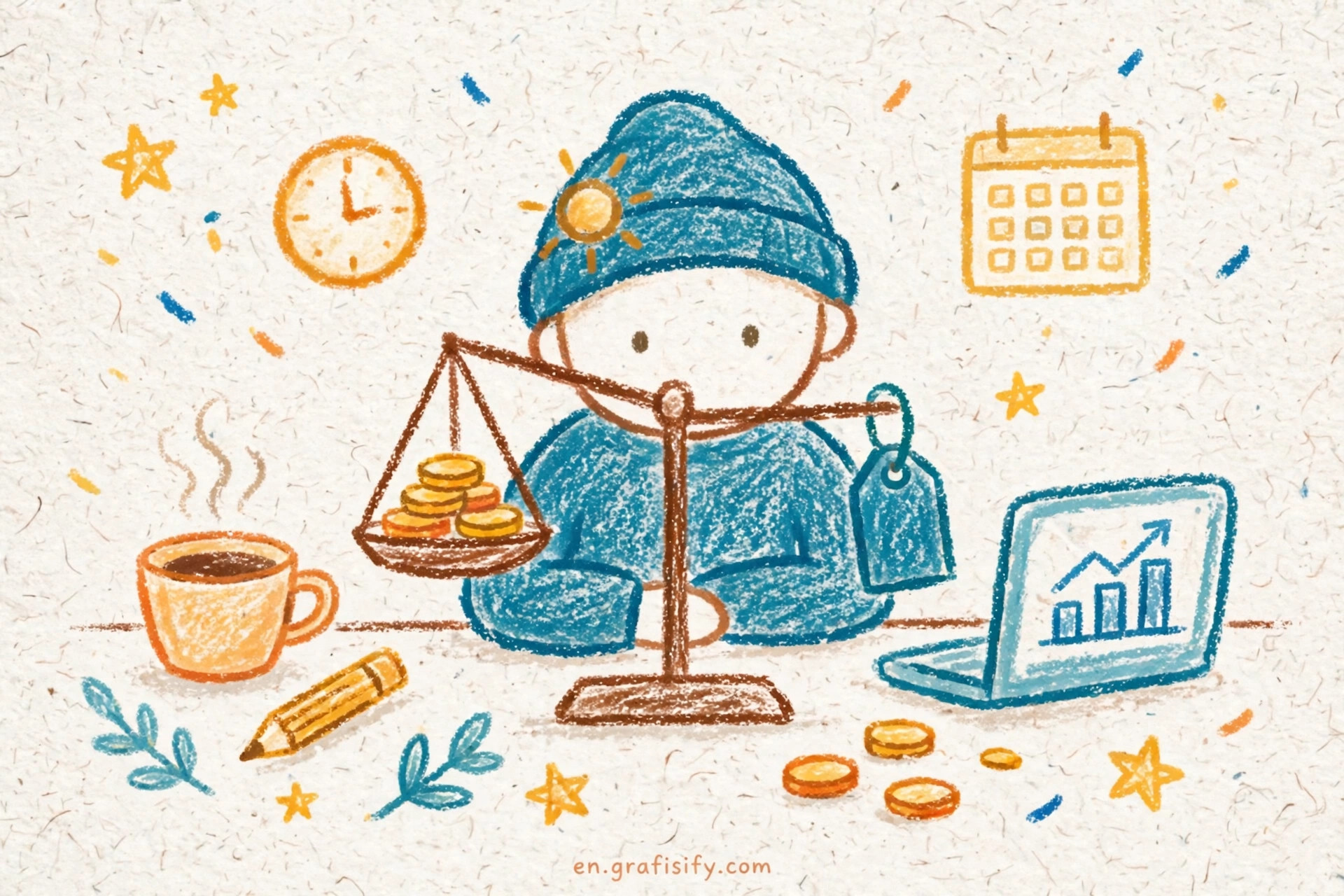
A simple rule works well: announce increases at natural boundaries. New contract, new quarter, new year. That gives clients a clean line in the sand and removes the feeling that the price changed underneath them.
Give at least 30 days of notice. A client who learns about a higher rate on the day an invoice lands feels blindsided, even if the new number is fair. Notice turns a surprise into a decision they can plan around.
How to tell clients without apologizing
The message is where freelancers talk themselves out of the raise. They open with an apology, which trains the client to see the increase as something to negotiate away. Keep it short, confident, and focused on value.

A workable script for an existing client:
“I want to let you know that my rate for new work will move to [new rate] starting [date]. This reflects the deeper results I have been able to deliver on [specific outcome], and it lets me reserve focused time for your projects. Existing in-flight work is unaffected. I am glad we are working together and want to keep building on the progress we have made.”
Notice what is missing: no “sorry”, no “I hate to do this”, no justification that sounds like begging. You state the fact, anchor it to value, protect current work, and affirm the relationship. That is the whole message.
For new clients, you do not owe an explanation at all. You state your rate as the rate. Harvard’s Program on Negotiation research on anchoring shows that the first number on the table carries outsized weight, so let your rate be the anchor instead of quoting low and hoping to climb.
Package a premium tier instead of a flat hike
One of the smoothest ways to raise effective rates is to introduce a premium offer rather than bump the base price across the board. Instead of telling a client “everything costs 30 percent more”, you show them a higher tier with clearer deliverables, faster turnaround, or advisory access.
Clients who want the cheaper option keep it. Clients who have grown to trust you often step up to the premium tier because it names the extra value in concrete terms. Either way, your average rate rises without a single client feeling punished.
This also solves the sticker-shock problem. A flat increase reads as “more for the same”. A premium tier reads as “more for more”, which clients understand and accept.
Handle the clients who push back
Some clients will question the increase. That is normal and not a sign you did something wrong. The goal is not to win an argument. It is to either keep the relationship on fair terms or end it cleanly.
If a client pushes, offer options instead of retreating on price. You can hold the new rate but suggest a smaller scope, a longer timeline, or a different service mix. That preserves your rate integrity while showing flexibility on structure.
If a client says the new rate is out of budget and cannot be met with a scope change, thank them for the work and part ways. A client who only stayed because of a low rate was never your ideal client, and freeing that slot is how you make room for better-paid work.
Common mistakes that actually lose clients
The rate increase itself rarely causes churn. The mistakes around it do. Watch for these:
- Apologizing in the message, which invites negotiation and signals low confidence.
- Raising rates mid-project, which breaks the agreement you already made.
- Quoting your old rate first in a negotiation, then trying to climb, which weakens your anchor.
- Raising everyone by the same flat amount regardless of relationship or value, which punishes your best clients.
- Having no notice period, which makes even a fair increase feel like a ambush.
None of these is about the number. They are about respect for the relationship and clarity about the value. Fix the communication and the rate itself becomes a small detail.
Key takeaways
Raising freelance rates is a revenue lever most independents leave on the table for too long. The clients worth keeping rarely leave, the marginal ones were costing you more than they paid, and the right packaging turns a hard conversation into a routine update.
- Raise at boundaries: new contract, new quarter, new year.
- Give 30 days notice and protect in-flight work.
- Anchor on value, not on your old hourly number.
- Use a premium tier to lift average rate without alienating anyone.
- Stay calm with pushback and offer scope options instead of discounting.
Frequently asked questions
How much can I raise my freelance rate at once?
A 15 to 25 percent increase for existing clients is usually absorbed without friction. Larger jumps work best framed as a new premium tier or reserved for new clients who have never seen your old number.
Should I raise rates for every client or only new ones?
Raise for everyone eventually, but stagger it. New clients get the new rate immediately. Existing clients get notice and a clear start date. This avoids a single mass email that surprises your whole roster at once.
What if a long-term client refuses the new rate?
Offer a reduced scope that fits their budget, and if that does not work, end the engagement on good terms. One client leaving over a fair increase is not a failure. It is room for better work.
Is value-based pricing safe for freelancers new to it?
Yes, as long as you can name the outcome the client cares about. Start by bundling a fixed project fee instead of hourly, then move toward pricing tied to the result as you learn which outcomes clients value most.
Final thoughts
Your rate is a statement about the value you bring, not a number you are stuck with forever. The freelancers who earn well are not the ones who are secretly more talented. They are the ones who update their prices on a schedule and communicate the change with calm confidence.
Pick a date this month. Decide the new number. Write the message. Send it to your next boundary. The clients who value your work will stay, and the ones who leave will clear space for better ones.
If you want to sharpen the conversations that lead to higher-paying work, read our guide on running a client discovery call and our breakdown of writing a freelance proposal that wins clients. For the operational side, our list of AI productivity tools for freelancers and no-code automation workflows shows where the freed-up hours can go.
Sources: Harvard Business School Online on value-based strategy, Freelance Informer on rate negotiation and anchoring, Converse Digital on pricing perception, and FreelanceOS on practical rate-increase steps.
Harvard Business School Online, Value-Based Strategy
Freelance Informer, Negotiating Higher Rates
Converse Digital, Freelancer Pricing Strategy
FreelanceOS, Raising Rates Without Losing Clients


Irfan is a Creative Tech Strategist and the founder of Grafisify. He spends his days testing the latest AI design tools and breaking down complex tech into actionable guides for creators. When he’s not writing, he’s experimenting with generative art or optimizing digital workflows.



 Artificial Intelligent
 Design & Creative
 Freelance
 Gadgets & Gear
 Insights
 Laptop
 Reviews
 Smartphone
 Tech Guides
 Vibe Coding