Refurbished vs New Laptop: Which Should You Buy?
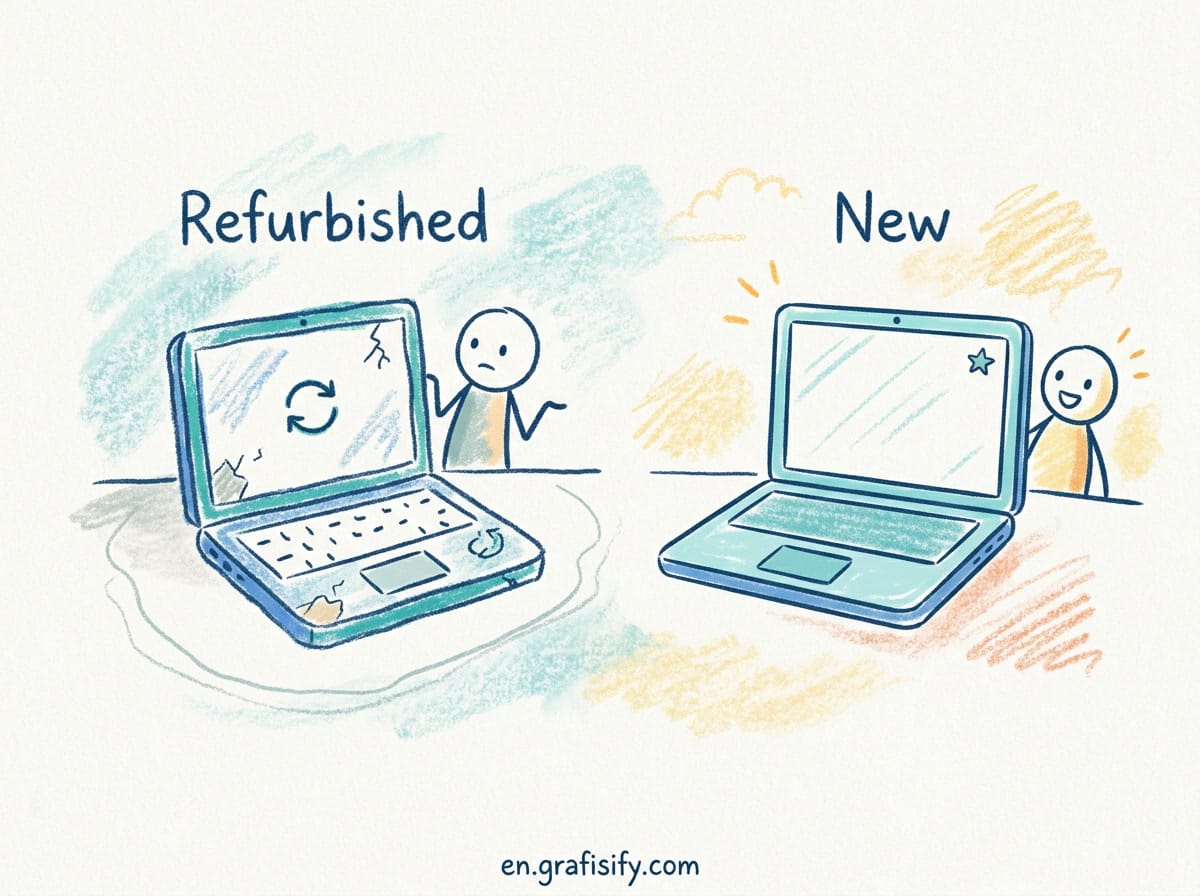
Buying a laptop usually starts with a budget and ends with a hard choice: pay full price for a sealed box, or save a few hundred dollars on a machine someone else already opened. The refurbished market has grown into a serious alternative, not a sketchy back-alley deal. But the savings come with tradeoffs you need to see clearly before checkout.
This guide breaks down what refurbished actually means, where the real risks sit, and how to decide based on your situation rather than the sticker price alone.
The Verdict Up Front
If you want zero surprises and the longest support window, buy new. If you understand grades, check the warranty, and can live with light cosmetic wear, a certified refurbished laptop is the better value for most students, remote workers, and anyone on a tight budget. The gap is not about quality alone. It is about who carries the risk when something breaks.
What “Refurbished” Actually Means
Refurbished is not the same as used. A used laptop is sold as-is, often by a private seller who never tested it under load. A refurbished laptop has been inspected, repaired if needed, cleaned, and reset by a seller or manufacturer. The key word is certified. Apple Certified Refurbished, Dell Refurbished, Lenovo Renew, and HP Renew run their own testing and back the unit with a warranty.

Third-party marketplaces like Amazon Renewed also certify devices, but the depth of testing varies by seller. That variation is exactly why grade labels matter.
The refurbished computers and laptops market was worth about USD 10.54 billion in 2026 and is projected to reach USD 16.71 billion by 2031, growing at a 9.68 percent compound annual rate according to Mordor Intelligence. Grade A devices hold the largest share because buyers want near-new condition at a discount. The demand is real, and so is the supply of poorly graded units if you are not careful.

Understanding the grade labels is the first defense against a bad purchase. RefurbMe explains how Grade A, B, and C map to real-world condition, and GreenWave Electronics breaks down the battery and cosmetic benchmarks sellers use. Read both before you trust any grade a listing shows.
Understanding Refurbished Grades
Sellers group devices into grades so you can compare condition at a glance. The labels are not standardized across the industry, but the pattern is consistent.
| Grade | Cosmetic condition | Battery health | Best for |
|---|---|---|---|
| Grade A | Near mint, little to no signs of use | Typically 80 percent or higher | Buyers who want new-like at a discount |
| Grade B | Light scratches, minor wear | Usually 80 percent or higher | Students and remote workers on a budget |
| Grade C | Visible dents, scuffs, possible screen marks | May be below 80 percent, possible defects | Spare machines, tinkering, tightest budgets |
Most authorized refurbishers require a battery at least 80 percent of original capacity, and premium Grade A units can ship closer to 90 percent according to GreenWave Electronics. A battery below that threshold is the single most expensive surprise you can inherit from a refurbished purchase.
Warranty and Returns: The Real Divide
New laptops ship with a one-year manufacturer warranty and often the option to extend it. Certified refurbished units from the manufacturer carry the same one-year coverage in most cases. Apple Certified Refurbished Macs ship at roughly 15 percent off new with a full one-year warranty and a 14-day return window, which removes most of the risk a private sale would carry.
Third-party refurbishers vary. Some offer 90 days, some offer a year, and some only cover DOA (dead on arrival). Read the warranty line before you pay, not after the laptop fails. A cheaper price with a 30-day warranty is a different product than the same model with a 12-month one.
Before you commit, it helps to know how much memory your workflow actually needs. Our guide on how much RAM you really need in a laptop walks through the specs that decide whether an older refurbished model will keep up.

New Laptop: The Case For Paying Full Price
A new laptop gives you the latest CPU and GPU, a full battery cycle count of zero, and the longest software support window. For creators running heavy exports, gamers, or anyone who needs a specific new feature, new is the safer call. You also get the cleanest resale story later.
The downside is pure economics. You pay a premium for the box, the seal, and the unworn chassis. If your tasks are browsing, writing, video calls, and light spreadsheets, that premium buys very little extra performance over a certified refurbished unit one generation behind.
Refurbished Laptop: The Case For Saving
A certified refurbished business laptop, like a Lenovo ThinkPad or Dell Latitude, often delivers build quality that consumer new laptops at the same price cannot match. You get a metal chassis, a better keyboard, and upgradeable parts for a fraction of the new cost. For students and freelancers, that gap is the difference between affording a laptop and not.
The risk is battery wear and shorter remaining support life. A 2021 model refurbished in 2026 has already burned part of its update window. Check the original release date, not just the refurbish date, before you buy.
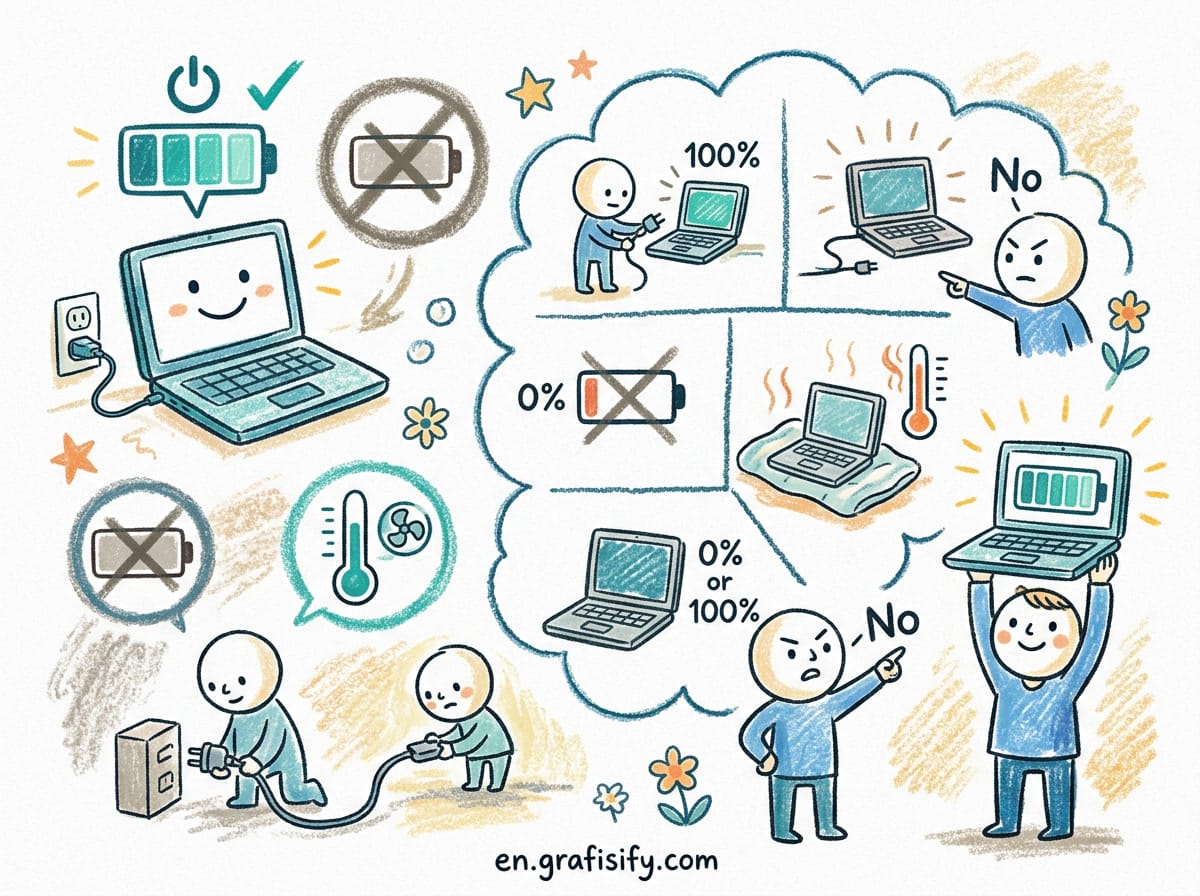
If heat is a worry on an older machine, our piece on keeping your laptop cool and preventing overheating covers the habits that extend an older laptop’s life.
Refurbished vs New: Side-by-Side Comparison
The fastest way to decide is to line the two up on the factors that actually change your experience.
| Factor | New laptop | Certified refurbished |
|---|---|---|
| Price | Full retail, no discount | 10 to 30 percent below new |
| Warranty | 1 year, often extendable | 1 year from manufacturer, 90 days to 1 year from third party |
| Battery | Full capacity, zero cycles | Tested to 80 percent or higher, some cycles used |
| Cosmetics | Flawless, sealed box | Grade A near mint, Grade B/C show wear |
| Support window | Longest remaining updates | Shorter, depends on original release year |
| Resale value | Highest at purchase | Lower, but closer to what you paid |
The table shows the trade is rarely about defects. It is about cosmetic wear, battery cycles, and how many update years remain. If none of those block your use case, refurbished wins on value.
Common Mistakes to Avoid
Most refurbished regrets come from a short list of avoidable errors:
- Chasing the lowest price: A unit far below market usually hides a short warranty or a worn battery.
- Ignoring the release year: A cheap 2019 model in 2026 may already be out of OS support.
- Skipping the serial check: An activation-locked device is a paperweight, no matter the discount.
- Trusting stock photos: Real product images reveal the actual grade, not a marketing shot.
- Forgetting returns: Without a return window, a hidden fault becomes your cost.
What to Check Before You Buy Refurbished
These five checks separate a good deal from a headache:
- Grade and photos: Insist on a stated grade and real product photos, not stock images.
- Battery health: Ask for the cycle count or remaining capacity. Below 80 percent, negotiate or walk away.
- Warranty length: Anything under 90 days from a third party is a red flag.
- Return window: A 14-day return policy lets you test under real load before committing.
- Serial number: Verify it on the manufacturer site to confirm model, specs, and activation lock status.
A private listing with no grade, no warranty, and no return option shifts all the risk to you. That is used, not refurbished, no matter what the title says.
Who Should Buy Which
Choose new if you need cutting-edge performance, the longest support life, or a flawless device for client-facing work. Choose certified refurbished if you want maximum value, can accept minor cosmetic wear, and will verify the warranty and battery first.
Budget buyers and students almost always win with Grade A certified refurbished. Professionals who depend on the machine daily should weigh the longer new-laptop support window against the savings.
For more buying context, browse our Laptop category for hands-on comparisons, or read our RAM guide to size the spec you actually need.
Frequently Asked Questions
Is a refurbished laptop reliable?
A certified refurbished laptop from a manufacturer or authorized seller is reliable because it has been tested and warranted. An ungraded private sale is a gamble.
Do refurbished laptops come with a new battery?
Manufacturer-certified units, like Apple Certified Refurbished, include a new battery. Third-party refurbishers usually keep the original battery if it passes the 80 percent health benchmark.
Can I return a refurbished laptop?
Manufacturer and marketplace certified programs include a return window, commonly 14 to 30 days. Always confirm the exact window before purchase.
Final Thoughts
Refurbished versus new is not a moral choice. It is a risk-and-value calculation. Pay for new when you need the longest life and zero compromise. Choose certified refurbished when you want the same work done for less and you are willing to read the grade, the warranty, and the battery health first. The buyers who regret a refurbished purchase almost never regretted the savings. They regretted skipping the checks.
Start with the grade and the warranty, not the discount. If both check out, a refurbished laptop is one of the few tech purchases where spending less rarely means getting less.

Irfan is a Creative Tech Strategist and the founder of Grafisify. He spends his days testing the latest AI design tools and breaking down complex tech into actionable guides for creators. When he’s not writing, he’s experimenting with generative art or optimizing digital workflows.




 Artificial Intelligent
 Design & Creative
 Freelance
 Gadgets & Gear
 Insights
 Laptop
 Reviews
 Smartphone
 Tech Guides
 Vibe Coding