Reusable AI Prompt Templates That Save Hours Every Week

Why Your Prompts Produce Inconsistent Results
You copy a prompt that worked yesterday, change one detail, and the AI returns something completely different from what you expected. The phrasing drifts, the output loses the format, or the model quietly ignores an instruction you repeated twice. This is the core problem with ad hoc prompting: every request is a fresh experiment with no baseline to improve on.
Reusable prompt templates fix this. Instead of writing a prompt from scratch each time, you build a structured template once, test it, and reuse it with different inputs. A well-made template gives you the same output quality across a marketing brief, a code review, a client email, or a blog outline. The result is faster work, fewer surprises, and a body of prompts that gets better over time instead of resetting to zero every session.
This guide walks through how to design, test, and maintain prompt templates that actually hold up in daily work. You will see the structure that separates a reliable template from a loose collection of instructions, along with ready-made examples you can adapt.
What a Good Prompt Template Contains
A reusable template is not a finished prompt. It is a shell with fixed instruction blocks and slots that change on each use. The fixed part carries the rules, constraints, and output format that should never vary. The slots carry the specific task, source material, and context for that run.
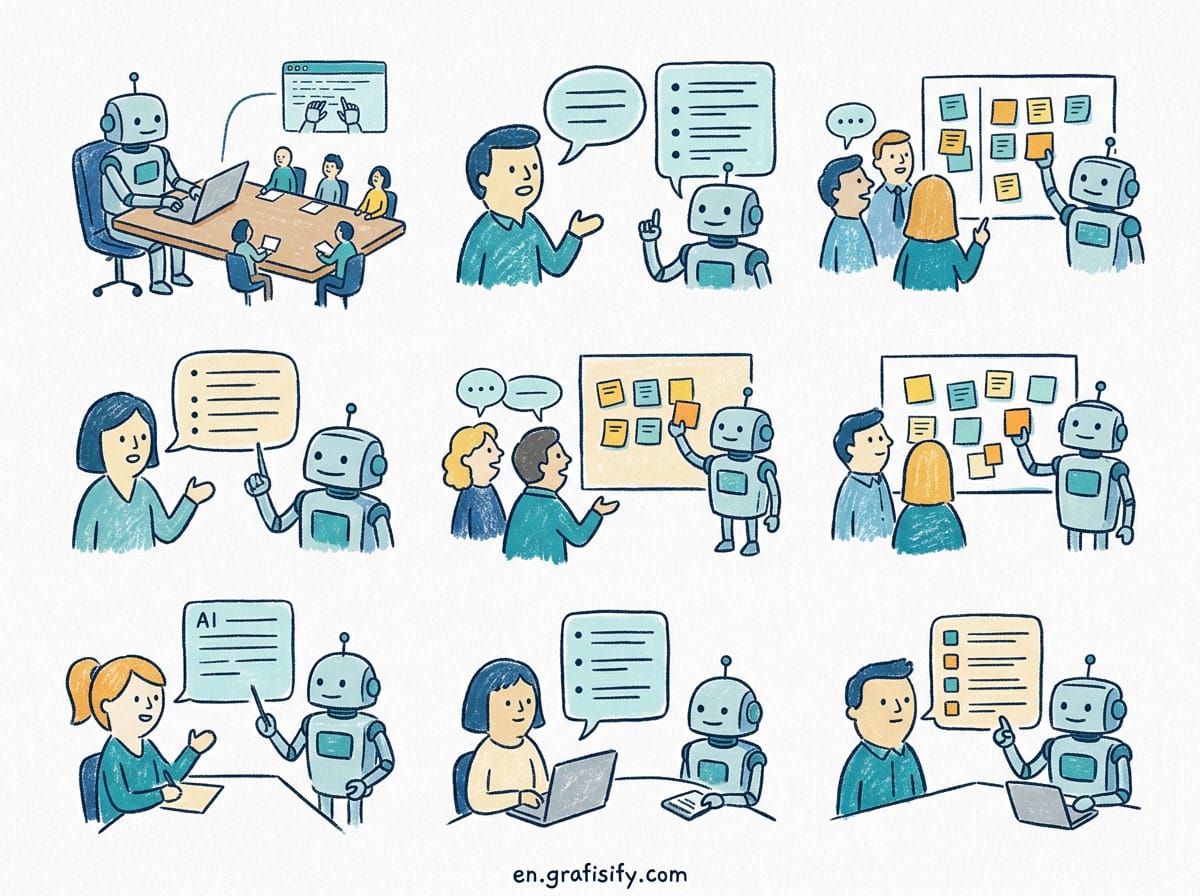
Every solid template has these parts:
- A clear role. Tell the model who it is acting as and who the output is for. “You are a senior technical writer preparing documentation for non-technical readers” changes the default tone more than any list of adjectives.
- A stated goal. Name the exact deliverable up front so the model optimizes for the right thing. “Produce a 400 word summary with three numbered action items” beats “summarize this.”
- Rules and constraints. Explicit boundaries: tone, length, forbidden phrases, audience. Keep these short and terse. Long paragraphs of rules get diluted.
- Input slots. Placeholders like {{topic}}, {{source}}, or {{audience}} mark where variable content goes each run. Replacing these is the entire point of reuse.
- Output format. Specify structure precisely: headings, bullets, a table, JSON fields, or a yes/no verdict. This is what makes output consistent enough to reuse.
- Example output. One strong example anchors the format better than a description. A single “here is what good looks like” beats three paragraphs of format rules.
A toy example makes the difference concrete. A weak prompt might be “write a product description for this coffee maker.” A template version looks like this:
Role: ecommerce copywriter for a premium home goods store.
Goal: product description under 120 words.
Audience: design-conscious buyers, ages 30 to 50.
Rules: no superlatives like "best" or "groundbreaking"; one short paragraph, then three bullet benefits.
Output: JSON with fields title, body, bullets.
Example: {"title": "Pour-over kettle with gooseneck spout", "body": "A gooseneck spout gives you steady pour control...", "bullets": ["Precise flow control", "Stainless steel body", "Fits most stovetops"]}
Product: {{product}}
Swap in a new {{product}} and the template returns the same structure every time. That consistency is what makes the output reviewable, editable, and safe to hand to clients.
Also Read:
Why Ad Hoc Prompts Fail at Scale
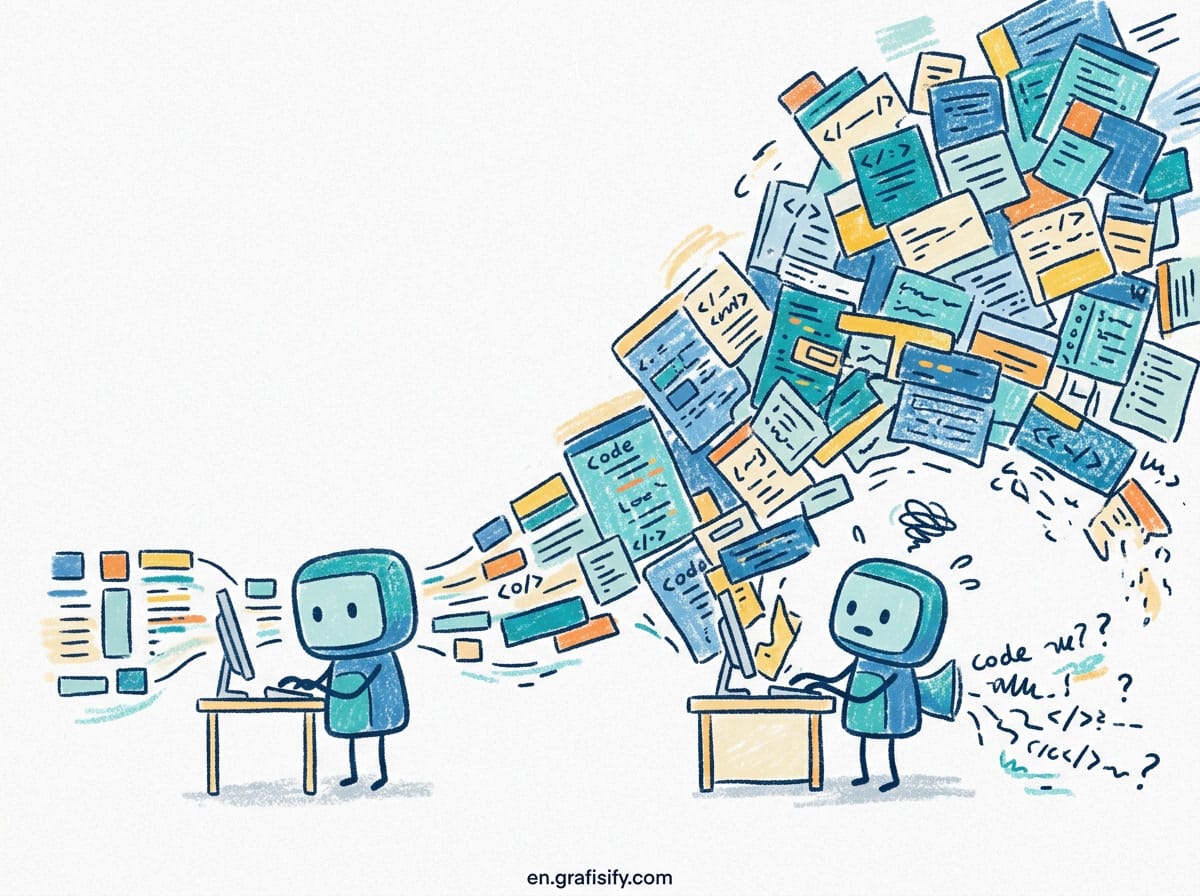
Ad hoc prompting works well enough when you need one answer. Its flaws show up when you do the same type of task repeatedly, because you are re-deciding the same things every time. Your “short customer email” from Tuesday is six sentences, while Thursday’s version is a paragraph and a half. The model guesses at your intent, and the output drifts with your mood and your phrasing on any given day.
There are three failure modes you will recognize immediately:
- Format drift. The same request returns bullets one day and a paragraph the next. Downstream systems break because they expected a specific shape.
- Instruction decay. Models weight the beginning and end of a prompt more heavily. Long, rambling instruction blocks let key rules slip off the edge. A template keeps the critical constraints compact and front-loaded.
- No learning loop. When every prompt is written fresh, there is nothing to compare against. You cannot tell whether a change helped because there is no baseline output to diff. Templates give you a version you can improve incrementally.
Teams that depend on AI output usually discover the cost of this drift the hard way: a leaked internal tone, a client-facing error, or an automation that silently fed the wrong format into a database. Templates are the least glamorous, most effective guard against all three.
Also Read:
How to Test and Version Your Templates
A template is only trustworthy if you know what it does under normal conditions. Testing means running the same template across several inputs and checking whether the output holds together. You do not need a test suite to start, but you do need a habit.
Start with a small test set of three to five inputs that cover the range you expect. For a client email template, test a short request, a complaint, and a scope change. Run all three, look at the outputs side by side, and fix whatever varies. Common issues: the model repeats the role line in the output, one format rule gets ignored on longer inputs, or the tone leans too formal for casual clients.
Versioning is the payoff of testing. Keep a template history with a note about what changed and why. “Version 2: added explicit bullet count because version 1 returned one long paragraph on long inputs.” This gives you a rollback point and a reason for every rule in the template. If a new rule makes output worse, you revert instead of silently keeping a regression.

For teams, two practices keep templates honest:
- Prompt version control. Store templates in a Git repository or a shared doc with change history. Treat a prompt as code: every edit is a modification you can review and revert.
- Automated checks. If your templates feed an automation, add validation that the output matches the expected schema. A simple script that checks for the JSON field, the word count, or the absence of banned phrases catches regressions before they reach a customer.
None of this requires heavy tooling. A folder of text files and a habit of noting changes covers most solo work. The discipline matters more than the tool.
Comparison: Template Approaches for Different Workloads
| Approach | Best For | Setup Effort | Consistency | Maintenance |
|---|---|---|---|---|
| Plain text template in a notes app | Solo users, occasional reuse | Low | Moderate | Manual |
| Structured doc with slots | Frequent same-type tasks | Medium | Good | Manual |
| Prompt manager tool | Teams, many variants | Medium | Good | Centralized |
| Version-controlled prompts with CI | Automation, production use | High | High | Automated |
| Automated optimization (DSPy-style) | LLM-centric pipelines | High | Highest | Automated |
The right choice depends on how often you run the template and how bad a failure is. A solo freelancer sending five client emails a week is fine with a structured doc. A team feeding AI output into a database needs version control and validation. Table stakes: pick the simplest option that gives you a testable, versioned, repeatable baseline.
Ready-Made Templates You Can Adapt Today
These three templates cover the most common professional uses: writing, analysis, and technical work. Each follows the structure from earlier: role, goal, rules, slots, output format, and an optional example.
Content Brief Template
Use this to turn a vague idea into a structured first draft or outline.
Role: content strategist for a B2B technology brand.
Goal: outline with 5 sections and a comparison table.
Audience: {{audience}}
Topic: {{topic}}
Rules: evergreen, no year-specific claims, no clickbait opening.
Output: H2 headings with one line of notes under each.
Decision Memo Template
Use this when you need a recommendation with reasoning instead of a wall of text.
Role: neutral analyst advising a stakeholder.
Goal: decision memo under 300 words.
Options: {{options}}
Constraints: {{constraints}}
Output: recommendation, three reasons, one risk, one open question.
Rules: do not hedge; state the recommendation first.
Code Review Template
Use this for a structured second pass over your own or a teammate’s code.
Role: senior engineer doing a code review.
Goal: review of {{code_or_diff}}.
Focus: correctness, security, readability, test coverage.
Output: severity-tagged list (critical, warning, nit) with a one line fix suggestion each.
Rules: no praise without a concrete reason; ignore style unless it blocks readability.
Adapt any of these by adding your own rules and slots. The value is not the exact wording but the discipline of separating the fixed instructions from the variable input.
Common Mistakes That Break Templates
Even a good structure can fail if the template is written poorly. These mistakes come up constantly:
- Overloading the rules block. Thirty rules read like noise. The model keeps the first few and drops the rest. Cut to the five that actually matter and phrase them tersely.
- Leaving slots ambiguous. A slot named {{input}} tells the model nothing about what belongs there. Name slots by content, like {{client_email}} or {{source_text}}, and describe the expected format in the first use.
- Copy-pasting without testing. A template that worked in one model or one context can behave differently in another. Test it in the tool where you will actually run it.
- Never updating. A template that worked in January may drift as models change. Re-test your critical templates every few months.
- No example output. Describing the format in prose is weaker than showing one good example. When you have a strong output, save it as the reference.
These are fixable with the same test-and-version loop from earlier. A template collection is a living asset, not a static file you write once and forget.
Key Takeaways
- Reusable prompt templates separate fixed instructions from variable input slots, which gives you consistent output across runs.
- A reliable template has a role, a goal, terse rules, named slots, a precise output format, and an example to anchor it.
- Ad hoc prompts fail at scale through format drift, instruction decay, and a missing learning loop.
- Test every template against multiple inputs and version it so you can measure changes and roll back regressions.
- Plain templates cover most solo work; only automation-heavy use needs version control and CI-style validation.
Frequently Asked Questions
Do prompt templates work across different AI models?
Mostly, with caveats. The core structure, role, and output format carry over, but models differ in how they follow instructions and how much they respect terse rules. Test each template in the model you actually use before trusting it.
How many templates should I start with?
Three to five covering your most frequent task types is enough to build the habit. You can add more as repeat tasks appear. Quality and testing matter more than quantity.
Is this the same as prompt engineering?
Template design is the practical, repeatable part of prompt engineering. Prompt engineering also covers reasoning techniques and model selection, but the reusable template is what most professionals gain from day to day.
How often should I update my templates?
Review critical templates every few months or whenever a model update changes output behavior. Update a template when a test fails, not on a fixed schedule.

Irfan is a Creative Tech Strategist and the founder of Grafisify. He spends his days testing the latest AI design tools and breaking down complex tech into actionable guides for creators. When he’s not writing, he’s experimenting with generative art or optimizing digital workflows.

 Artificial Intelligent
 Design & Creative
 Freelance
 Gadgets & Gear
 Insights
 Laptop
 Reviews
 Smartphone
 Tech Guides
 Vibe Coding