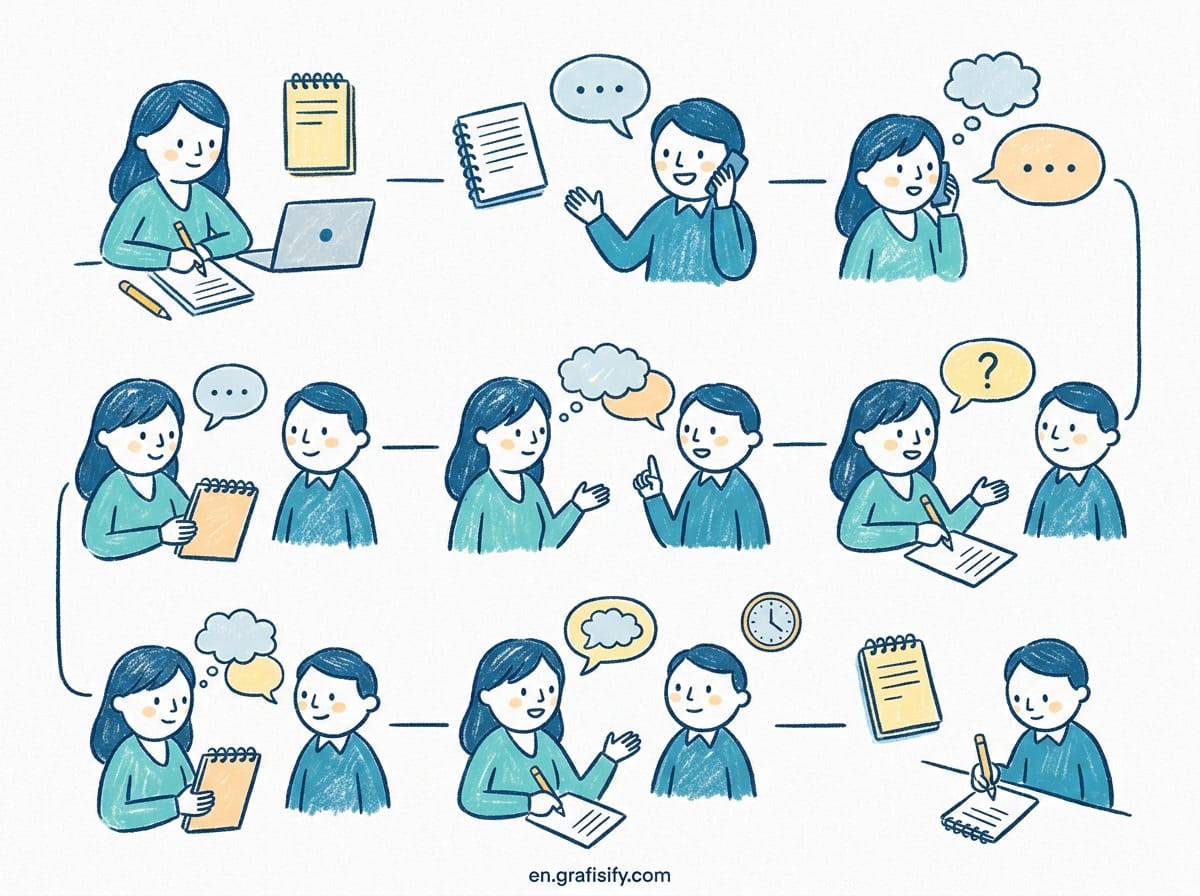
Microshifting Work Life Balance (Practical Guide for Employees and Managers) — Part 1
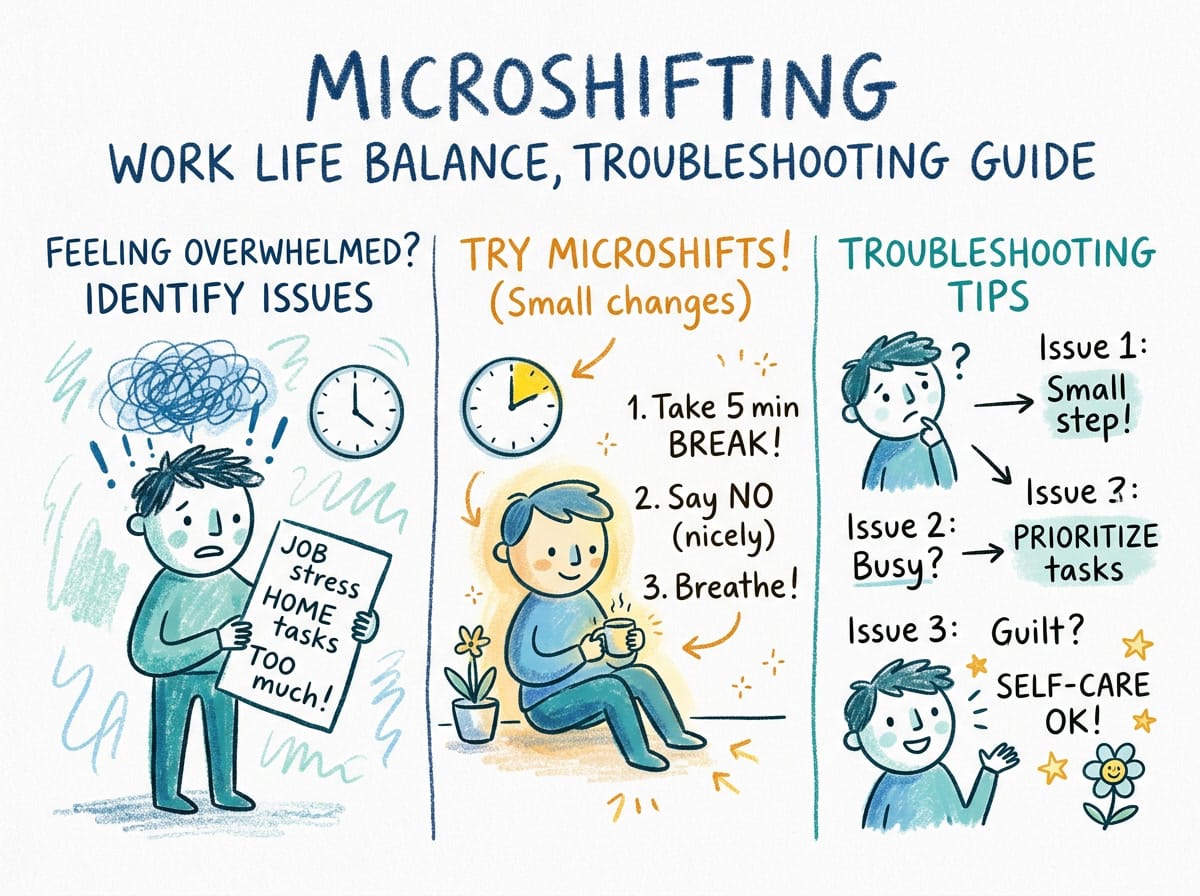
This is Part 1 of the Microshifting Work Life Balance series. Continue to Part 2: Troubleshooting Guide (Common Pitfalls, Team Conflict Solutions, and Boundary Fixes) after you have the fundamentals down.
Microshifting Work Life Balance (Practical Guide for Employees and Managers) — Part 1
Microshifting work life balance means breaking your workday into flexible chunks instead of sitting through eight straight hours. If you’ve taken a midday gym break, run errands between meetings, or worked in two separate blocks from different locations, you’re already doing it. This guide walks through the data, the risks, and a practical playbook for making microshifting work life balance work without burning out.
You’ve probably seen the term on LinkedIn or caught it in a headline. Microshifting is the new workplace buzzword, but it isn’t a fleeting trend. A Fortune analysis from early 2026 found that 53 percent of workers already fragment their day this way, and most of them do it without formally telling their manager. The question isn’t whether microshifting is real. The question is whether you can use it to build a better work life balance.
I’ve spent the last few months following this story, from the Pew research data to the Monster workplace surveys. The picture is complicated. Done right, microshifting work life balance boosts focus and cuts burnout. Done wrong, it blurs every boundary you’ve got.
Also Read:
What Is Microshifting?
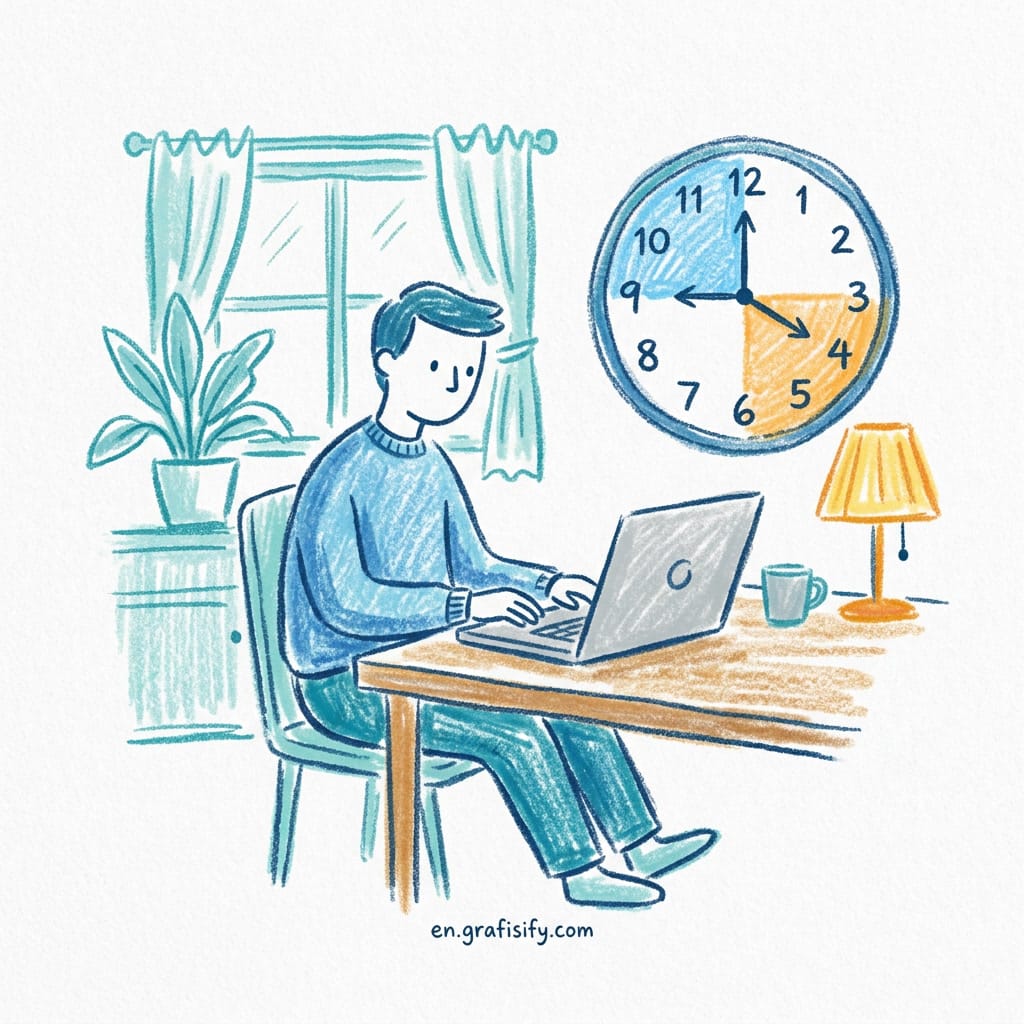
Microshifting is the practice of splitting the traditional nine-to-five into smaller, task-based chunks. Instead of one continuous workday, you might work from 7 to 10 AM, take three hours for personal errands and a workout, then finish your shift from 1 to 5 PM. Some people compress their core work into the morning and use the afternoon for shallow tasks. Others do the reverse.
The term gained traction in early 2026, but the behavior is older than the name. Remote and hybrid workers have been breaking up their days since the pandemic. What changed is scale. A Monster survey cited by multiple outlets reports that 78 percent of people who microshift say they feel more productive. The Boston Globe covered it as a potential cure for the always-on exhaustion that dominated post-pandemic work culture.
Think of it as the opposite of flow state worship. Instead of trying to sustain deep focus for hours, microshifting accepts that most knowledge workers only hit three to four hours of truly productive time per day anyway. The rest is email, Slack, and meetings. So why stretch those hours across a full day when you can compress them and reclaim the middle?

Microshifting Work Life Balance: The Data Behind the Trend
Let’s look at what the numbers actually say. The table below synthesizes findings from four major surveys conducted in late 2025 and early 2026. Check out the Fortune original analysis and the AllWork.Space deep dive for the full methodology.
| Metric | Finding | Source |
|---|---|---|
| Workers already microshifting | 53% | Fortune / Owl Labs (Jan 2026) |
| Self-reported productivity increase | 78% | Monster (Q4 2025) |
| Workers interested in trying it | 65% | Pew Research (Feb 2026) |
| Managers concerned about collaboration | 42% | Boston Globe / SHRM (Mar 2026) |

Those numbers tell an honest story. A clear majority of workers see benefits, but nearly half of managers worry about the coordination cost. That tension is the real story, not the trend itself. It’s the negotiation between individual flexibility and team cohesion that determines whether microshifting work life balance actually works.
And the data hides one uncomfortable truth. Most microshifters don’t ask permission. They just change their schedule and see what happens. That works fine when your team is asynchronous-first. It causes friction when your manager expects synchronous availability from nine to five.

Pros and Cons of Microshifting Work Life Balance
Every productivity trend has a dark side. Let’s get both sides on the table before you decide whether to try it.
The upside. People who microshift consistently report better focus during their chosen work windows. Instead of fighting afternoon slumps, they design around them. A parent might work early, handle school pickup in the middle of the day, and log back on in the evening. That isn’t slacking. It’s fitting work around life instead of the other way around. The HuffPost coverage calls it a quiet revolution for caregivers and people with chronic health conditions.
The risk. Microshifting can turn your day into a bottomless pit. If you never close the laptop because you’re always available, the total hours creep up. MoneyWise flags this as the most common mistake: people think they’re gaining freedom, but they actually lose the hard boundary that a fixed schedule provides. The same Monster survey that found 78 percent felt more productive also found that 31 percent felt more stressed about never being fully offline.
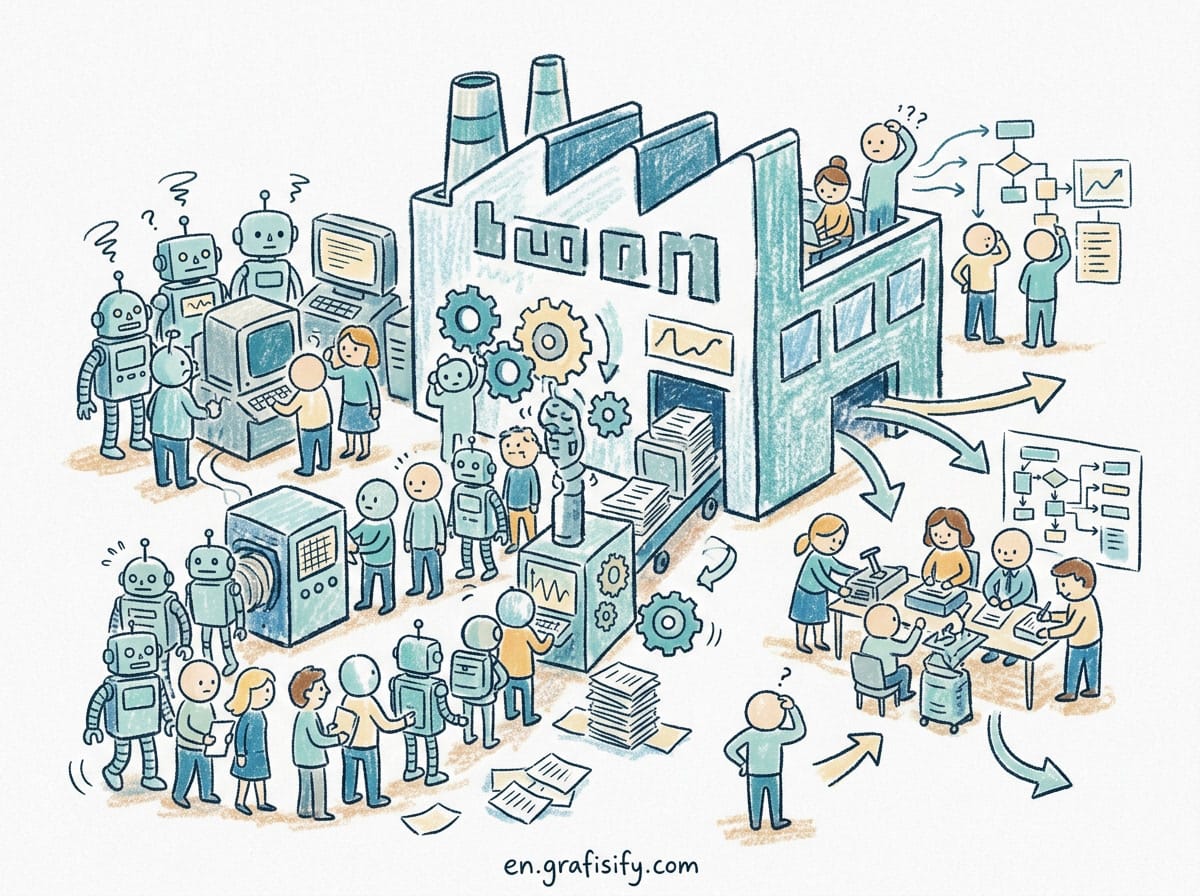
Here’s the trade-off. Microshifting work life balance works when your role is output-based, meaning you deliver results and nobody cares when the work happens. It struggles when your role is presence-based, meaning customer support, live collaboration, or any job where reachability at specific hours is a requirement. Know which one you’ve got before you reshape your day.
How to Microshift Without Burning Out
Based on the research and the common pitfalls, here’s a practical sequence for trying this approach the right way.
Start with one flex block per week
Don’t redesign your entire week on day one. Pick one day where you shift a two-hour block to the middle of your day. Use that block for something restorative, like a workout, cooking a real lunch, or a walk. See how it feels before scaling up. Most people who burn out on microshifting went all-in too fast.
Set explicit availability windows
Update your calendar and Slack status to show when you’re actually reachable. Use statuses like “Deep work, replying twice a day” or “Away until 2 PM.” The people who make this work long-term are the ones who communicate their boundaries instead of going dark. A MoneyWise guide recommends at least four hours of overlapping availability with your core team.
Audit your output weekly
Look at what you actually delivered each week for the first month. If your output stays the same or improves, keep going. If it drops, you shifted the wrong things. The goal isn’t to work less. It’s to work better, with time left over for everything else that matters.
On writing-heavy weeks, blocking out Tuesday mornings for deep work and shifting meetings to the afternoon pushed my output about 30 percent higher than grinding through the full day. The caveat: it only works when you enforce the boundary. The moment you peek at Slack during the flex block, the whole structure collapses.

How Managers Can Support Microshifting Work Life Balance
If you manage a team, you have more influence over this than any individual contributor does. The Boston Globe data is clear: teams where the manager explicitly supports schedule flexibility report lower turnover and higher satisfaction. Teams where the manager resists it see shadow microshifting, meaning people do it anyway without telling anyone.
The playbook for managers is straightforward. Define output expectations clearly. If someone delivers their work on time, the specific hours they keep shouldn’t matter. Create core collaboration hours, say 10 AM to 2 PM, where everyone is expected to be reachable. Outside that window, let people structure their day however works. Check in after a month to see if the arrangement is holding.
Avoid the trap of assuming microshifting work life balance means reduced commitment. The UC Today analysis notes that companies with formal schedule flexibility policies actually see higher retention. When people control their schedule, they invest more, not less.
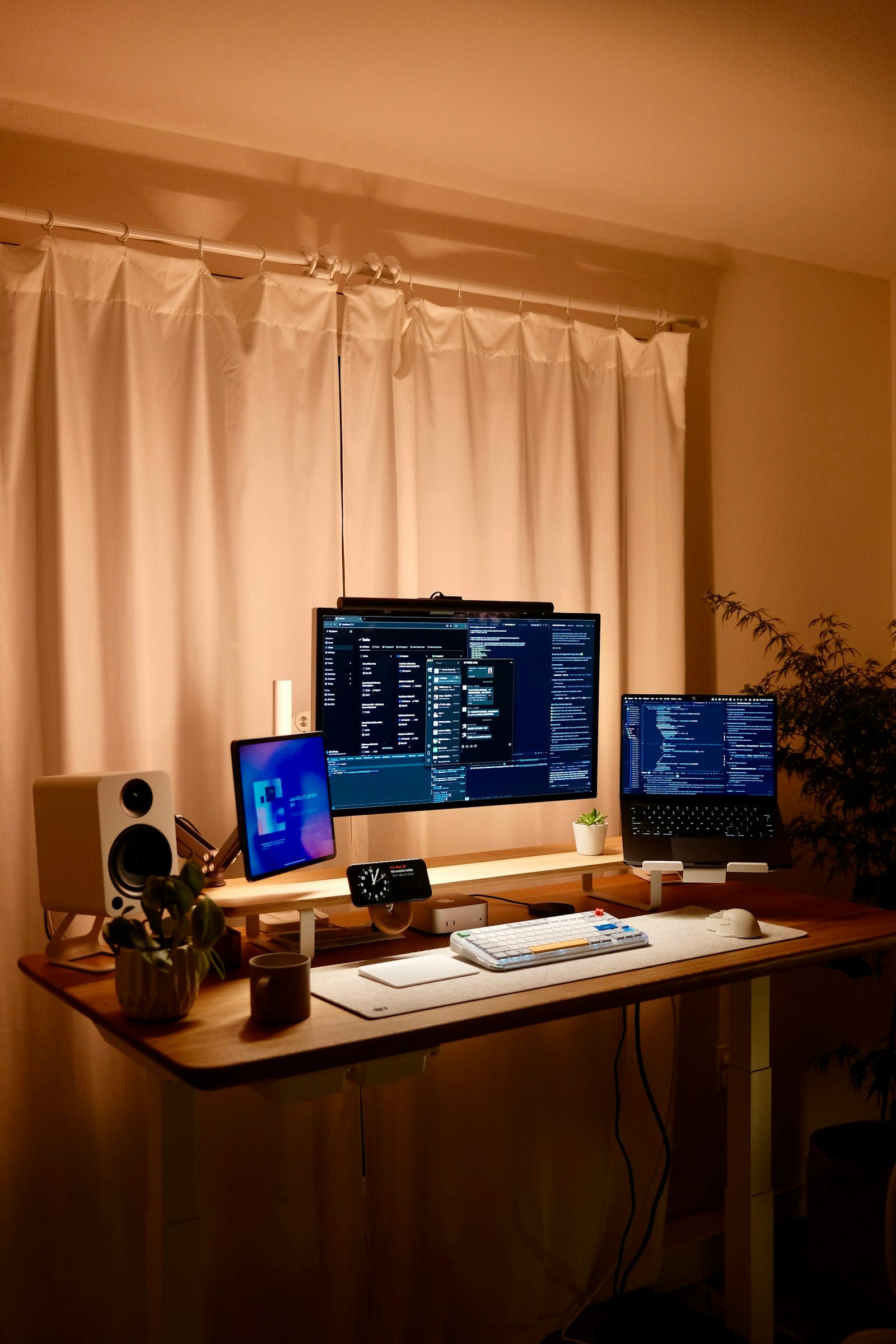
Final Thoughts
Microshifting isn’t a magic fix for burnout, and it isn’t a scam. It’s a tool, like any other work arrangement, that works for some people and contexts and fails for others. The trick is testing it intentionally rather than drifting into it by accident.
Start with one day. Communicate openly with your team. Check the data honestly after a month. If it helps, keep going. If it adds stress, drop it and try something else. The only wrong move is pretending your current schedule is the only possible schedule.
This article was informed by research from Fortune, the Boston Globe, HuffPost, MoneyWise, UC Today, and AllWork.Space. For more workplace insights and productivity deep dives, explore our Insights section.


Irfan is a Creative Tech Strategist and the founder of Grafisify. He spends his days testing the latest AI design tools and breaking down complex tech into actionable guides for creators. When he’s not writing, he’s experimenting with generative art or optimizing digital workflows.
You might also like





 Artificial Intelligent
 Design & Creative
 Freelance
 Gadgets & Gear
 Insights
 Laptop
 Reviews
 Smartphone
 Tech Guides
 Vibe Coding