IP Assignment vs Licensing for Freelancers (Decision Framework for Creators)
IP Assignment vs Licensing for Freelancers (Decision Framework for Creators)
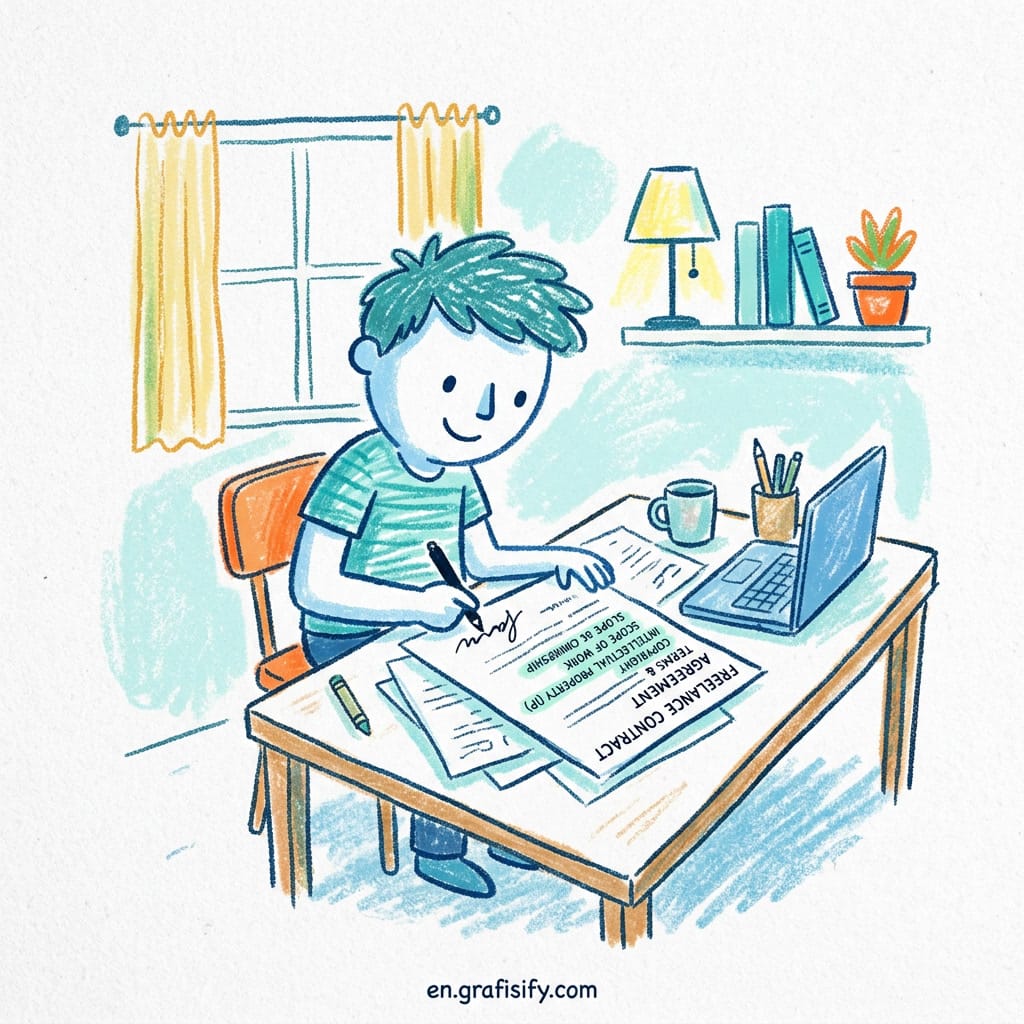
If you create work for clients, you need a clear answer to one question: are you selling ownership of your IP, or just renting it out? That choice between assignment and licensing determines what you can do with your own work after the project ends. It affects your ability to reuse code, display designs in your portfolio, and build products from your own methods. Understanding IP assignment vs licensing for freelancers is the single most important skill you can learn for your freelance career.
Most freelancers sign contracts without reading the IP clause carefully. I have done it too. And the default language in client contracts is almost always tilted toward full assignment. That means you give up everything. The good news? You can push back. And you should.
This guide breaks down the difference between IP assignment and licensing. It shows you the three real options you have. And it gives you sample language you can use in your next contract.
Licensing is different. You keep ownership of the IP, but you grant the client permission to use it. Think of it as renting versus selling. The client gets the rights they need to run their business, but you keep the underlying asset. You can license the same method or framework to other clients (unless you agree to exclusivity), and you can always show the work in your portfolio.
The legal distinction matters because most freelance work falls outside the “work made for hire” doctrine. Under US copyright law, a work made for hire only applies to nine narrow categories. Think employee-created works or specific commissioned types like translations and audiovisual contributions. Standard freelance output like a logo, a website, marketing copy, or code doesn’t qualify. The freelancer owns it by default unless the contract says otherwise.
In the UK, it is the same story. Section 11 of the Copyright, Designs and Patents Act 1988 gives copyright to the creator. A client cannot gain ownership through payment alone. They need a written, signed assignment clause. That is a hard requirement. So when you are looking at IP assignment vs licensing for freelancers, the starting point is clear: you already own what you make. The contract only changes that if you let it.
IP Assignment vs Licensing for Freelancers: Key Differences at a Glance
| Factor | Assignment | License |
|---|---|---|
| Ownership stays with you | No, it transfers to the client | Yes, you keep it |
| Can you reuse the work? | No, unless you negotiate portfolio rights | Yes, unless you agreed to exclusivity |
| Can the client modify or resell it? | Yes, fully | Only within the scope you set |
| Is a written contract required? | Yes, must be signed to be valid | Non-exclusive licenses can be oral, but get it in writing |
| Typical price premium vs baseline | 2-4x the baseline rate | 1-1.5x the baseline rate |
| Best for | One-off projects with no reuse value | Work you may want to adapt or productize |
Deep Dive: Three IP Models Every Freelancer Should Know

Option 1: Full Assignment
Full assignment means the client owns everything. You hand over all rights, title, and interest in the work product. You cannot reuse any of it. That includes the methodology, design patterns, or templates you developed during the project. Unless you negotiate a separate portfolio clause, you cannot even show it to prospective clients.
When should you accept it? When the client genuinely needs ownership to operate independently. When the project has no downstream value for you. And when the price reflects what you are giving up. Research from FreelanceDesk’s 2026 IP guide suggests assignment should command a 200 to 400 percent premium over a baseline license.
Here is sample clause language:
"Upon receipt of payment in full, Freelancer hereby irrevocably assigns to Client all right, title, and interest in and to the Work Product, including all copyrights and other intellectual property rights."Option 2: License
You keep ownership. The client gets defined use rights. That could be limited by duration (12 months), territory (North America), field of use (website only), or exclusivity (nobody else gets the same asset).
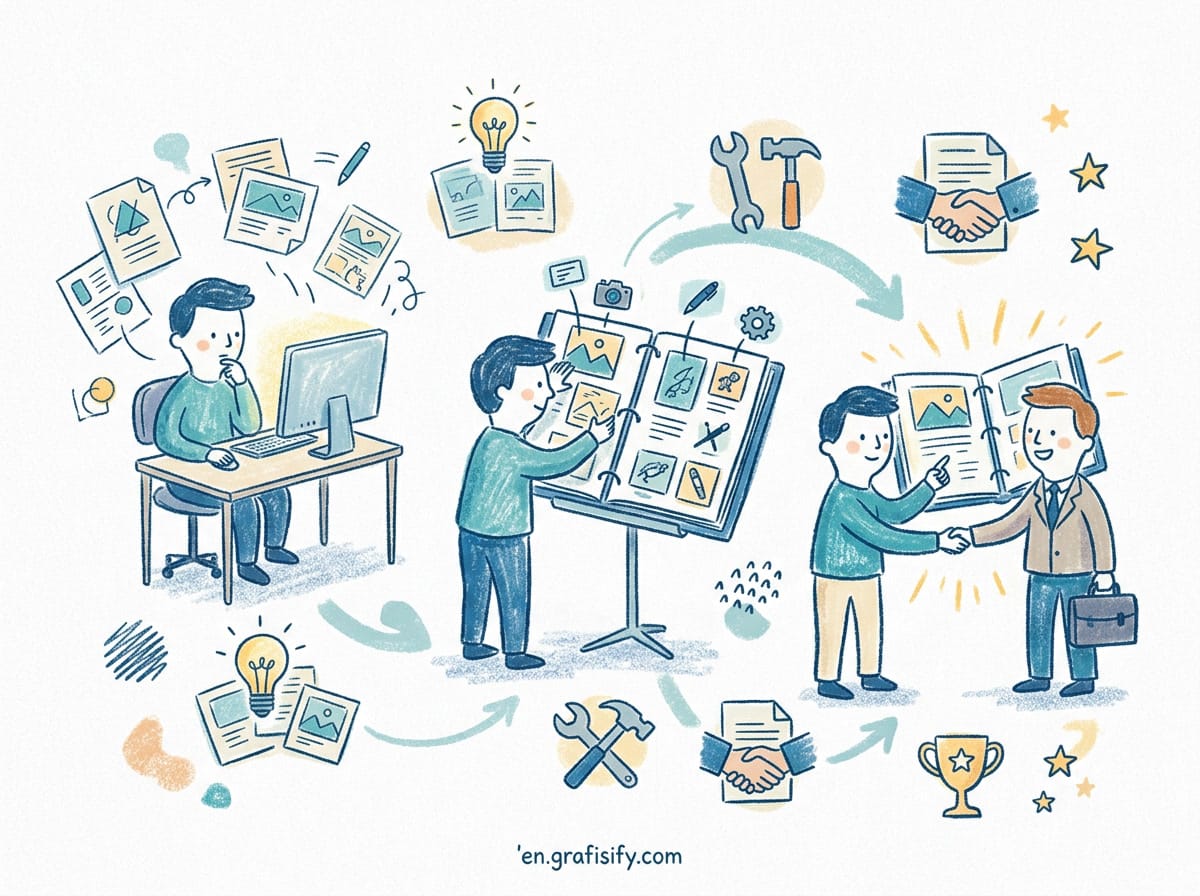
This is the safest default for most freelancers. If you might reuse the work, adapt it for another client, or build a productized version of your method, licensing preserves those options. The Pact IP Rights Guide notes that 60 to 70 percent of clients accept license language once they understand it gives them unlimited usage for their business.
Here is sample clause language:
"Freelancer retains ownership of the Work Product. Upon receipt of payment in full, Freelancer grants Client a non-exclusive, perpetual, worldwide license to use, display, and distribute the Work Product for Client's internal business purposes."Option 3: Hybrid (Recommended for Most Engagements)
This is the compromise that works for almost every project. You assign the client-specific deliverables (the final design, the landing page code, the blog post) while licensing your pre-existing tools, frameworks, and methodologies back to the client.
The key is the pre-existing IP carve-out. That is a clause that explicitly lists what you brought to the project and confirms you keep it. Without one, a broad assignment clause could technically transfer code libraries, design systems, or research frameworks you built years before this client existed. This is the most commonly skipped clause in freelance contracts, and it is the number one source of IP disputes.
Here is sample clause language:
"Freelancer assigns to Client all right, title, and interest in the Work Product, excluding the Pre-existing Materials listed in Exhibit A. Freelancer retains all rights to the Pre-existing Materials and grants Client a perpetual, non-exclusive, worldwide license to use them solely as incorporated into the Work Product."Pros and Cons of Each IP Model
| Model | Pros | Cons |
|---|---|---|
| Assignment | Clean ownership transfer. No ongoing management. Client gets full control. | You lose all reuse rights. Portfolio display needs permission. Must charge 2-4x baseline. |
| License | You keep ownership. Can reuse methods and templates. Portfolio is protected. | More paperwork. Scope must be defined clearly. Exclusivity can complicate future deals. |
| Hybrid | Client gets deliverables, you keep tools. Best of both worlds. | Requires upfront work to list pre-existing materials. Both parties need to agree on what counts. |
How to Choose Between Assignment and Licensing
Ask yourself these four questions before you price the deal or touch the contract:
- Does the client truly need ownership, or is this default procurement language? Most clients copy IP clauses from templates. They do not actually need to own your code. They just need the right to use it.
- Do you want to reuse any part of this work? If you might adapt the design system, repurpose the code architecture, or turn the methodology into a product, choose a license.
- What is the work actually worth long term? A logo you’ll never use again is safe to assign. A SaaS design system with reusable components isn’t.
- Can you accept losing control? Once you assign, you can’t veto how the client uses the work. Even if they modify it in ways you disagree with.
Here is the decision framework I use with my own clients when negotiating IP assignment vs licensing for freelancers:
- Default to a license. Start every negotiation by proposing a license with defined scope. Most clients accept.
- Use assignment only when the client has a real ownership need. For example, acquiring a startup’s codebase or buying exclusive rights to a brand identity.
- Always include a pre-existing IP carve-out. List your tools, libraries, and frameworks in an exhibit. This costs the client nothing and protects years of your work.
- Make IP transfer conditional on final payment. Until the invoice clears, you keep ownership. That gives you leverage if payment is delayed or disputed.
- Negotiate portfolio rights. Even under full assignment, a simple clause lets you display the work for self-promotion. Clients rarely refuse this.
The table below maps the pricing tiers for each IP model based on current market data from freelance legal guides. A $5,000 project under a baseline first-rights license becomes $10,000 to $20,000 under full assignment.
| IP Tier | Price vs Baseline |
|---|---|
| First rights (baseline) | 100% |
| Limited license | 115-125% |
| Unlimited non-exclusive | 125-150% |
| Exclusive license | 150-200% |
| Full assignment | 200-400% |

Final Thoughts
Your IP is the most valuable asset you have as a freelancer. It is the thing that keeps paying you long after a project ends. It fuels reuse, adaptation, and portfolio recognition. Giving it away at the baseline price is a mistake I see freelancers make all the time.
The fix is simple. Default to licensing. Use assignment only when the price and circumstances justify it. And always carve out your pre-existing work. These three rules alone will save you thousands in lost opportunity over your career.
If you’re not sure which approach fits your next project when evaluating IP assignment vs licensing for freelancers, start with the freelance contracts guide on our site for a broader framework on protecting your work. The Pact freelancer IP guide and FreelanceDesk’s ownership clauses guide both have ready-to-use templates. Bookmark them.

Irfan is a Creative Tech Strategist and the founder of Grafisify. He spends his days testing the latest AI design tools and breaking down complex tech into actionable guides for creators. When he’s not writing, he’s experimenting with generative art or optimizing digital workflows.





 Artificial Intelligent
 Design & Creative
 Freelance
 Gadgets & Gear
 Insights
 Laptop
 Reviews
 Smartphone
 Tech Guides
 Vibe Coding