Budget vs Flagship Smartphone (2026 Decision Guide)
Budget vs Flagship Smartphone (2026 Decision Guide)
Buying a phone in 2026 comes down to one real question: do you actually need to spend flagship money? The short answer is no. Not for most people. Mid-range phones now match flagships on battery life, screen quality, and everyday speed. But if you need the best camera, raw gaming power, or long-term software support, the premium might still be worth it. This Budget vs Flagship Smartphone guide breaks down exactly what each price tier delivers so you can pick the right phone for your actual life. Not your Instagram feed.
Walk into any carrier store or browse Amazon, and the price spread is dizzying. You can spend $200 on a perfectly usable phone or drop $1,200+ on something that seems to do the same things faster. The difference between budget and flagship has never been smaller. But it’s also never been more confusing to untangle.
Here’s the thing: most phone reviews compare specs on paper. They tell you this chipset benchmarks higher or that camera has more megapixels. But spec sheets don’t tell you whether those extras will matter on a Tuesday afternoon when you’re ordering coffee or checking email. This guide flips the question. Instead of “which phone is better on paper?” we ask “which phone is better for YOUR use case?”
If you’re unsure about the Budget vs Flagship Smartphone decision, you’re not alone. The market has never offered this much quality at low prices. But it’s also never been this easy to overspend on features you’ll never use. Let’s fix that.

What Is the Budget vs Flagship Smartphone Question in 2026?
Every year the line gets blurrier. In 2026, a $350 phone ships with a 120Hz OLED display, all-day battery life, and a chipset that handles everyday tasks without lag. Five years ago, those features were exclusive to $1,000+ flagships. The budget phone of today outperforms the 2021 flagship in raw CPU power and battery endurance.
So why would anyone still buy a flagship? Because the remaining gaps are real. They just affect different people differently. Flagships still lead in three specific areas: camera processing (not megapixels, but how the image actually turns out), sustained gaming performance (the chipset doesn’t throttle after 20 minutes), and software update commitment (more years of OS upgrades).
The smart choice in 2026 isn’t about picking the “best” phone. It’s about matching your actual phone usage to the price tier that handles it. No more, no less.
Also Read:

Deep Dive: What You Actually Gain and Lose at Each Price Tier
Let’s walk through the three main tiers and see what tradeoffs each one makes. Forget marketing speak. Here’s what changes in real-world use.
Budget Phones ($200 to $400)
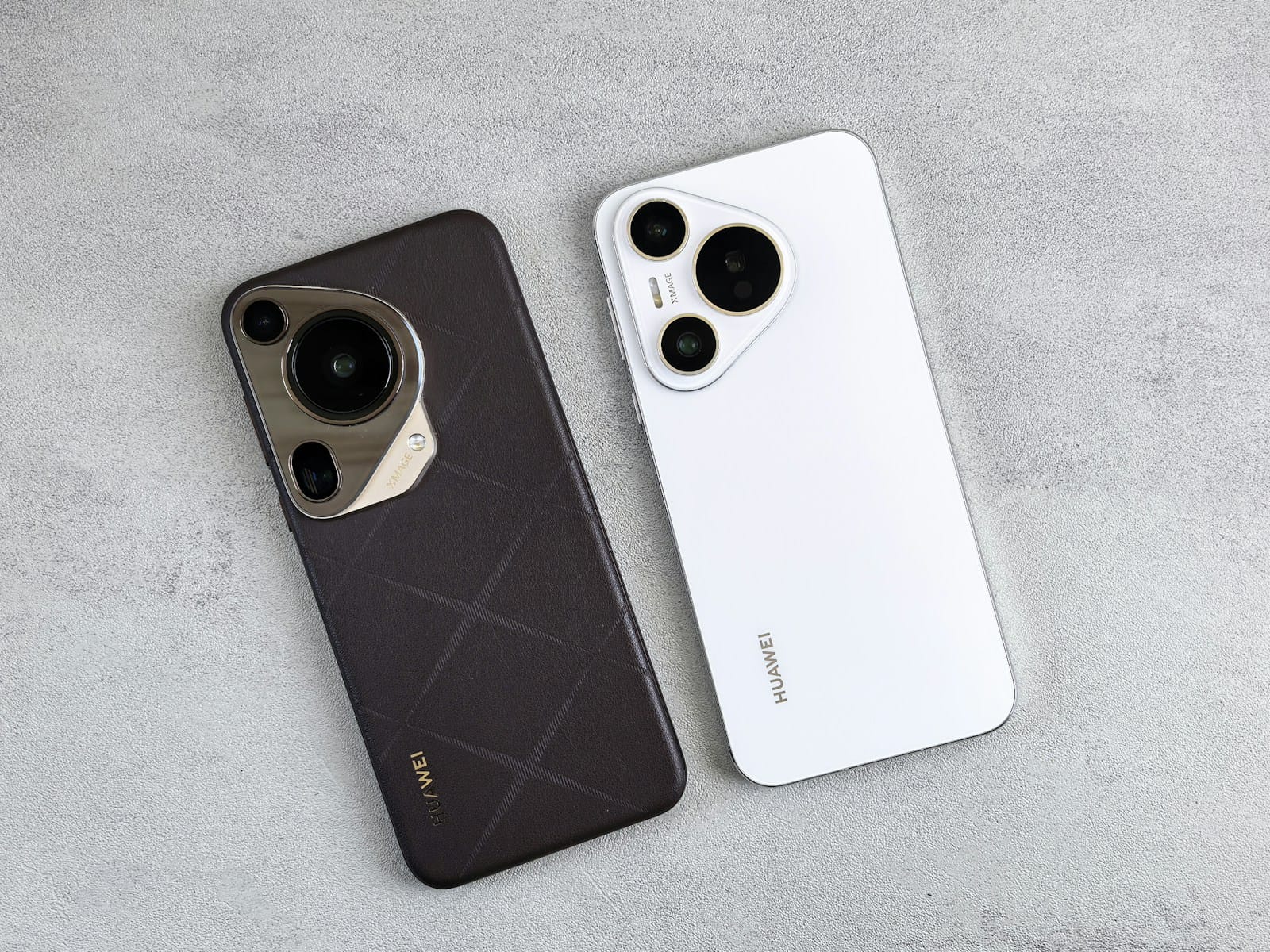
Budget phones in 2026 are shockingly capable. The Samsung Galaxy A17 5G and Google Pixel 10a prove you can get a smooth 90-120Hz display, reliable battery life (two full days for most people), and a camera that takes good photos in decent light. The tradeoffs are concentrated in three areas: camera performance drops significantly in low light, gaming framerates stutter on demanding titles after 10-15 minutes, and you’ll get 2-3 years of OS updates instead of 4-5.
For the average user (calls, social media, streaming, light photos) a budget phone is more than enough. The bottleneck isn’t the phone. It’s your mobile plan. Don’t let a salesperson convince you otherwise.
Also Read:
Mid-Range Phones ($400 to $700)
This is the sweet spot in 2026. Devices like the OnePlus Nord and Samsung Galaxy A56 close the gap with flagships on almost every dimension. You get flagship-level battery efficiency, excellent OLED screens, and cameras that compete with last year’s flagships. What you generally sacrifice: wireless charging, telephoto camera quality, and the absolute bleeding-edge chipset that matters mostly for mobile gaming enthusiasts and video editors.
Most people who buy a flagship would be equally happy with a well-chosen mid-range phone. The key is understanding which compromises you can live with, and which ones you can’t.
Flagship Phones ($700 to $1,500+)
Flagships like the Samsung Galaxy S26 Ultra, iPhone 17 Pro, and Pixel 11 Pro exist for people who want the absolute best in one or more areas. The camera processing is noticeably better, especially in low light, portraits, and video stabilization. The chipsets (like the Snapdragon 8 Gen 4 or A19 Bionic) deliver sustained gaming performance without thermal throttling. And you get 5-7 years of OS updates, making the total cost of ownership over 5 years actually competitive with switching budget phones every 2 years.
The hidden advantage of flagships is resale value. A $1,200 iPhone 17 Pro might still sell for $500-600 after 3 years. A $350 Pixel 10a might fetch $80-100. That changes the math significantly if you upgrade regularly. This alone can flip a Budget vs Flagship Smartphone calculation in favor of the premium device.
| Feature | Budget ($200-400) | Mid-Range ($400-700) | Flagship ($700+) |
|---|---|---|---|
| Display | 90-120Hz OLED | 120Hz LTPO OLED | 120Hz LTPO, brighter |
| Battery Life | 2 days (light use) | 1.5-2 days | 1-1.5 days (more features) |
| Camera (daylight) | Good | Very Good | Excellent |
| Camera (low light) | Mediocre | Good | Excellent |
| Gaming Performance | Casual OK, heavy lags | Good, some thermal limits | Sustained, no throttling |
| OS Updates | 2-3 years | 3-4 years | 5-7 years |
| Wireless Charging | Rare | Sometimes | Yes |
| Resale Value (3yr) | ~$50-80 | ~$100-200 | ~$300-600 |
Pros and Cons of Budget vs Flagship Smartphone Choices
Let’s keep this honest. Here’s the unfiltered tradeoff summary for the Budget vs Flagship Smartphone decision.
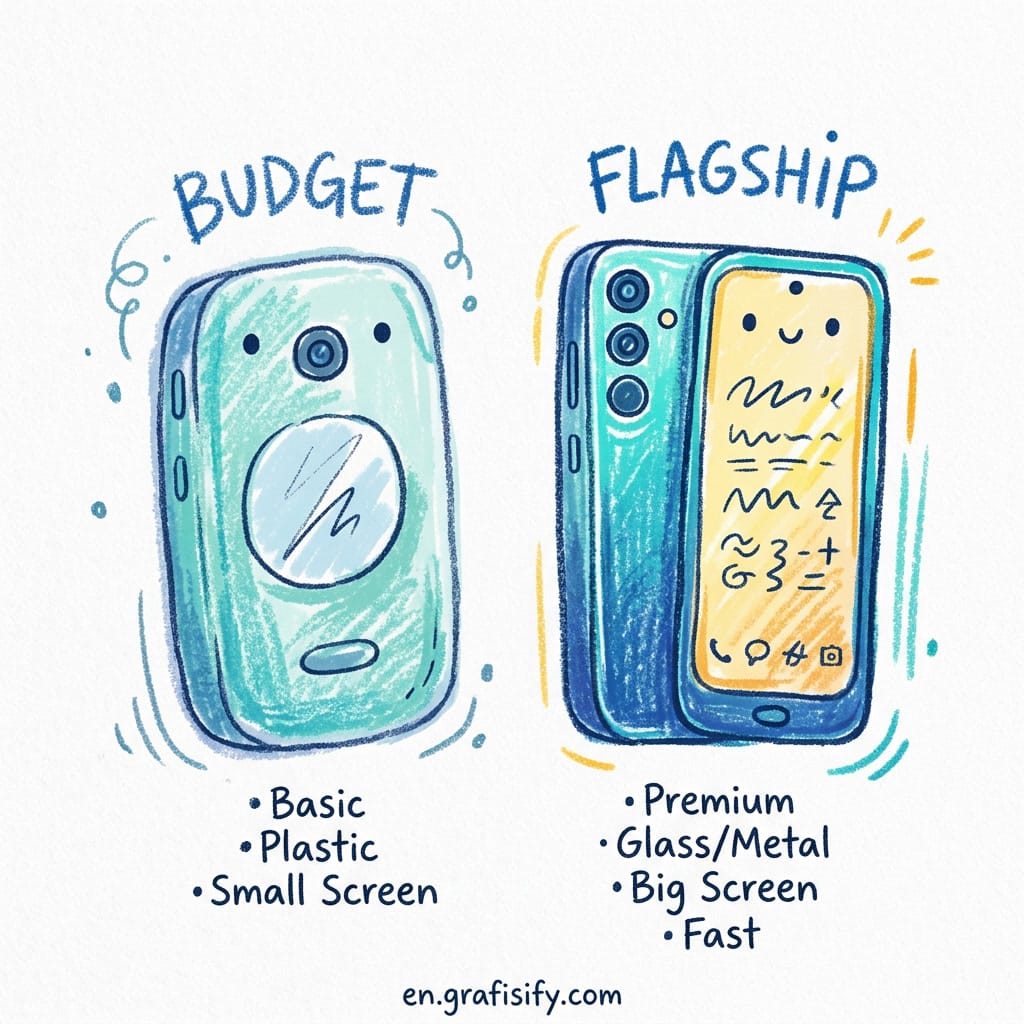
Budget phones win on value. You get 90% of the daily experience for 30% of the price. The Pixel 10a at $399 takes photos that would’ve been considered good for an $800 phone just two years ago. Battery life is often better than flagships because the chipsets draw less power and screens run at lower peak brightness. And if you drop it, replacing a $350 phone hurts way less than a $1,200 one.
Flagships still win on polish and longevity. If you take photos seriously, the camera processing on the iPhone 17 Pro or Pixel 11 Pro is a visible step up, especially in mixed lighting, portraits with natural bokeh, and video that doesn’t look oversharpened. Gaming on a Snapdragon 8 Gen 4 doesn’t just show higher framerates. It maintains them consistently, which matters for competitive titles. And 5+ years of OS updates means you’re not forced to upgrade as often.
The mid-range is where the smart money goes. It gives you the most important flagship features (great display, all-day battery, solid camera) while skipping the luxuries most people won’t miss. Fast charging, good build quality, and 3-4 years of updates make this the default recommendation for 7 out of 10 buyers.
How to Choose the Right Phone for Your Needs
Here’s a simple decision framework. Think about your actual phone usage over the last week. Not what you imagine you’ll do, but what you actually did.
You text, scroll social media, take casual photos, stream video: Buy a budget phone. The Pixel 10a, Galaxy A17 5G, or iPhone 17e will handle everything you throw at them. Save the $600-800 you would’ve spent on a flagship. The difference in everyday use is invisible.
You game heavily (Genshin Impact, Call of Duty Mobile, competitive titles), edit photos on your phone, or shoot a lot of video: Consider a flagship or upper mid-range. The sustained GPU performance and better camera processing make a real difference. The Galaxy S26 or iPhone 17 Pro will handle 45-minute gaming sessions without dropping frames.
You want one phone to last 4-5 years without feeling slow: Go mid-range or flagship. A $500 mid-range phone with 4 years of OS updates usually beats buying two $250 budget phones over the same period. The total cost of ownership tilts toward mid-range when you factor in longevity.
You care about photography specifically: The gap between mid-range and flagship cameras in 2026 is smaller than it’s ever been. The Pixel 10a takes very good photos in good light. But if you shoot in low light, need optical zoom, or care about portrait edge detection, step up to a flagship or upper mid-range. The computational photography difference is visible in challenging conditions.
You don’t really think about your phone. It’s just a tool: Budget. Hands down. Don’t overthink this. A $350 phone in 2026 runs every mainstream app smoothly, has a great screen, and lasts all day. Spend the saved money on something that actually improves your life, like a better chair, a vacation, or investments.
The golden rule: name the most demanding thing you do on your phone, then buy the cheapest phone that handles it well. For most people, that’s a $300-500 mid-range device. For heavy gamers and photo enthusiasts, it’s a flagship. For everyone else, it’s a budget phone that leaves you with change in your pocket.
Final Thoughts
The biggest mistake people make when buying a smartphone in 2026 is projecting aspirational use onto their purchase. You don’t need a $1,200 phone to watch YouTube and respond to messages. The phone industry wants you to believe every year’s flagship is a must-have upgrade. But the actual user experience gap between a $400 phone and a $1,000 phone has never been smaller.
My recommendation? Pinpoint your most demanding use case, one specific thing, and buy the cheapest phone that handles it well. For me, that meant sticking with a mid-range device because my photography hobby doesn’t need the absolute best low-light performance. I’d rather spend the savings on a better camera for actual dedicated photography. Your own answer might be different. That’s the point: there’s no single right choice. Just the right choice for the way you actually use your phone.
For a deeper look at how specific features stack up across price ranges, check out The Verge’s best budget phones list or VersusWorlds’ direct comparison for raw spec-by-spec data. The specs tell one story. Your actual daily usage tells another. Start with your actual weekly habits, be honest about what matters, ignore the spec sheets that describe differences you’ll never notice, then pick your tier and move on.
Prices and availability may vary by region and carrier. Specifications are based on 2026 model-year devices.

Irfan is a Creative Tech Strategist and the founder of Grafisify. He spends his days testing the latest AI design tools and breaking down complex tech into actionable guides for creators. When he’s not writing, he’s experimenting with generative art or optimizing digital workflows.




 Artificial Intelligent
 Design & Creative
 Freelance
 Gadgets & Gear
 Insights
 Laptop
 Reviews
 Smartphone
 Tech Guides
 Vibe Coding