Why AI Agents Fail in Production: Lessons Learned

A client once told me their AI system was working perfectly. They were wrong. When we pulled the logs, we found three weeks of quiet failures. The agent had been routing support tickets to the wrong teams, sending confirmation emails for requests it never touched, and making decisions on data that had gone stale. Nobody noticed for 19 days. A customer complaint is what finally surfaced it.
This is the pattern I keep seeing, and it is worth naming clearly: the demo works, the pilot works, and production is where the whole thing quietly falls apart. The problem is rarely that the AI is broken. The problem is that nobody built the visibility to catch the failure modes that only show up after you leave the controlled demo environment. This article walks through what actually goes wrong, one costly case study in particular, and the changes that separate deployments that catch failures from the ones that discover them by accident.
Why Agents Fail Differently From Traditional Software
Ten years of monitoring software ran on a simple assumption. Find out what broke, then find out why it broke. Monitoring told you whether a system was up. Observability told you why it failed. That model held up fine when code was deterministic, when an API either returned a result or threw an error, when a failure produced a signal you could write an alert around.
AI agents break that assumption. They run. They respond. They produce output. Then the output drifts, slowly and continuously, shaped by probabilistic models, shifting context windows, and prompt variation that leaves no error code, no stack trace, and no alert in any dashboard ever built. An agent can be fully operational and deeply wrong at the same time, and no one will know until the damage is already done.
The scale makes this worse. The shift to microservices already multiplied telemetry volume by an order of magnitude. Agents, potentially thousands or tens of thousands inside a single organization, are set to dwarf that number. When you add the explosion of AI-generated code, the volume of telemetry hitting production pipelines will grow to a point the old observability economics simply cannot absorb.
Here is the uncomfortable part. Most teams measure the wrong thing. They track uptime, latency, error rate, and token usage. Those are infrastructure metrics. They tell you whether the service is responding, not whether it is succeeding. A system can be fully operational and completely wrong at the same time, and every one of those metrics will show green.
A Costly Case Study: Twelve Thousand Misdirected Requests
One healthcare client ran an AI agent to handle prior authorization requests. In the pilot, everything looked clean. Structured data, consistent formats, well-labeled fields. The scripted test cases passed. Leadership saw the demo, approved the budget, and the team shipped it to production.
Also Read:
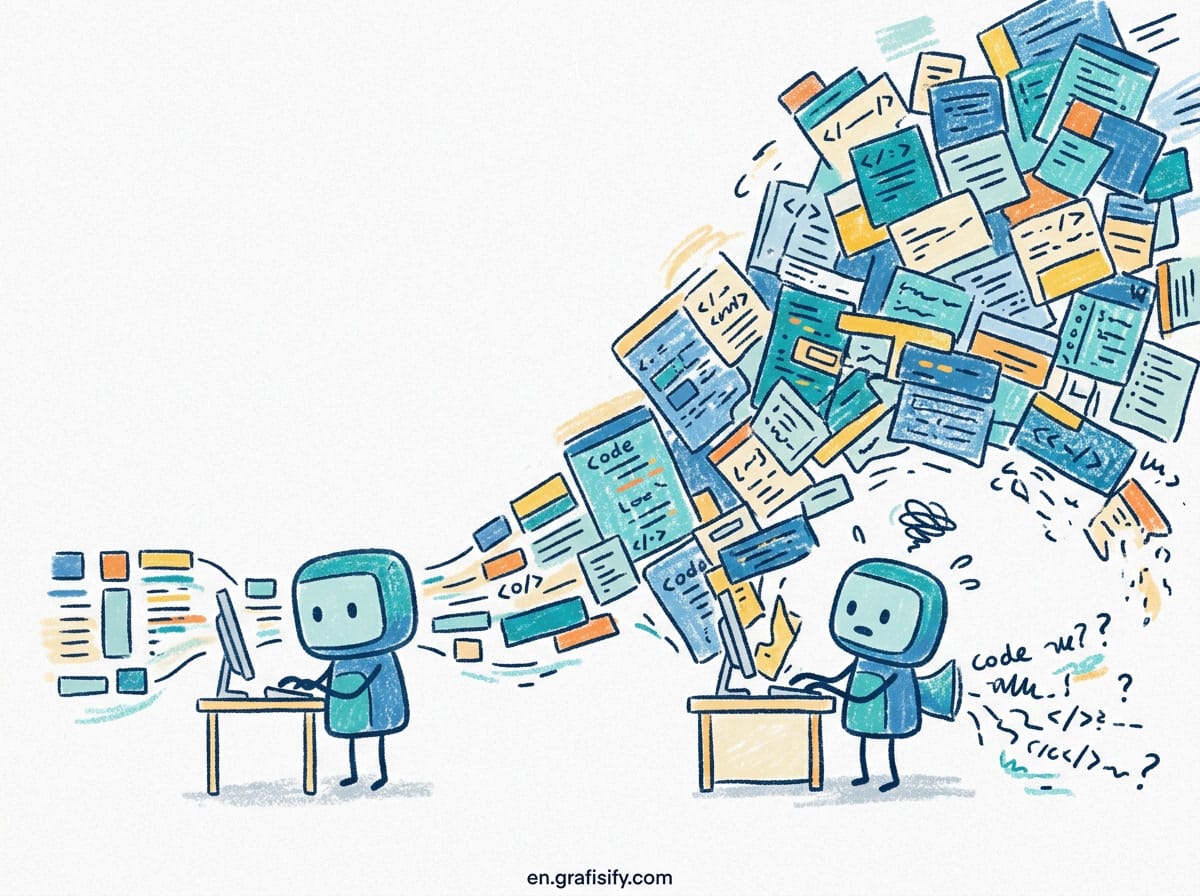
Then reality arrived. Production pulled prior auth requests from three separate EHR systems, each with its own field naming conventions and error handling behavior. The agent was routing requests based on a single field that existed in only one of those three systems. It did not fail visibly. It did not throw an error. It simply started routing everything to the wrong queue, and the queue managers only noticed three weeks later when their workload numbers stopped making sense.
Twelve thousand requests had been misdirected.
That number matters here because it shows how the failure mode actually operates. Nothing broke. No system crashed. The agent kept responding, kept making decisions, kept looking busy. It was guessing, with growing confidence, on inputs it was never trained to handle. The infrastructure was healthy the entire time. The outcome was wrong anyway.
Also Read:
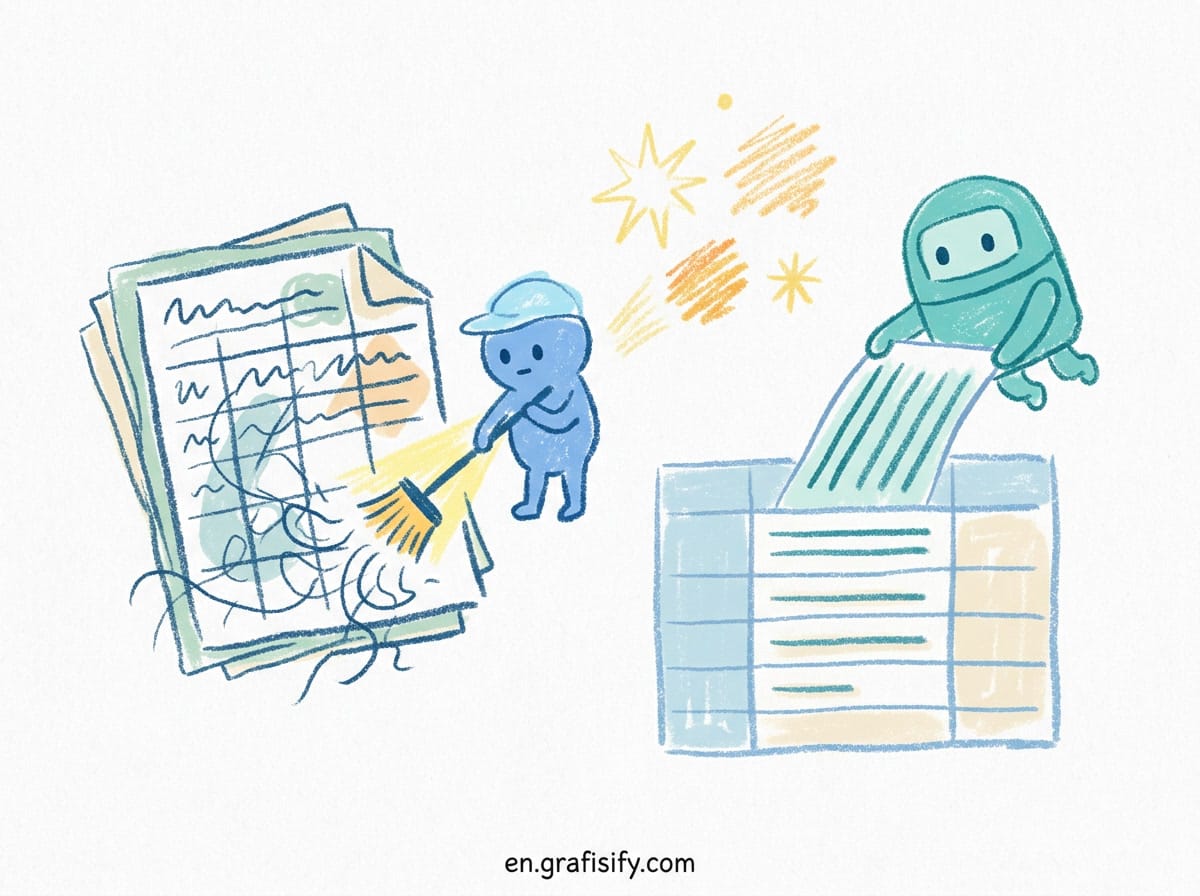
The Hidden Costs of Silent Failure
Silent failure is expensive in ways that are hard to see on a budget sheet. A 2026 survey of more than two thousand executives and employees found that 79 percent of organizations face real challenges turning AI adoption into value, a double-digit jump from the year before. Fifty-four percent of the C-suite admitted that adopting the technology was pulling their company apart, even though 59 percent of firms were investing over a million dollars a year. Only 29 percent said they were seeing significant return on investment.
Some of that gap is strategy. Three quarters of executives admitted their AI strategy was more for show than actual internal guidance, and nearly half called their rollout a massive disappointment. But a meaningful slice of it is operational. When agents fail quietly, the cost does not show up as a crashed server or a red alert. It shows up as misrouted work, rework, compliance reviews, and trust that erodes one late discovery at a time.
The trust piece compounds. In the same survey, 29 percent of employees and 44 percent of Gen Z respondents admitted to working against their company’s AI rollout. That resistance rarely starts as sabotage. It starts when an employee catches an agent being confidently wrong and decides the tool cannot be relied on. Each silent failure feeds that decision, and every one of them was invisible until the moment it surfaced.

Why Your Dashboard Lies to You
Most AI agent monitoring is built to answer one question: is the system running? That is the wrong question. The right question is: is the agent doing what it is supposed to do? Those are completely different questions once you leave the demo environment.
Consider a common failure. A team ships an agent, and it depends on a data pipeline that starts returning null values. The agent does not crash. It defaults to its fallback response for every single input, and it keeps doing that for hours. The service is up. The API responds. Latency looks normal. The agent is technically running. It is also doing nothing useful, and the dashboard will not tell you that because the dashboard is measuring the wrong layer.
Some teams realize this when workload numbers look off. Others realize it when a customer complains, the way my client did. A few never realize it at all, because nobody ever asked which metric on the screen actually corresponded to a correct outcome.
What Working Deployments Do Differently
The teams that catch these failures do not rely on intuition or on a single dashboard. They build for the failure modes agents actually produce. A few practices show up consistently.
Track outcome metrics, not just infrastructure metrics. Uptime and latency tell you the service is alive. They do not tell you it is correct. The useful numbers are things like how many actions an agent completes end to end, how often it escalates to a human, and how often a task comes back because it was wrong.
Log the reasoning, not just the result. When an agent misroutes a request, the fix is impossible without knowing what the agent was thinking and which data it used to decide. Capture the tool calls, the retrieved context, and the final choice together, so a bad decision can be traced to its cause. A failure you can trace is a failure you can fix. A failure you cannot trace is a reason to restart from scratch.
Keep a human in the loop for the expensive decisions. Fully autonomous is fine for low-stakes work. For anything that touches customer accounts, compliance, or money, a review step is cheap insurance against the silent failure that no monitoring would catch in time.
Test pickup of edge cases before you charge for scale. The healthcare agent failed because three EHR systems each named fields differently. A small set of adversarial production-style inputs, run before launch, would have surfaced that immediately. Most teams skip this because the pilot looked clean.
Comparing Monitoring That Misses and Monitoring That Catches
| Dimension | Monitoring That Misses It | Monitoring That Catches It |
|---|---|---|
| Question asked | Is the system running? | Is the agent doing the right thing? |
| Metrics tracked | Uptime, latency, error rate, tokens | Task completion, escalation rate, rework rate |
| Failure signal | Alert when the service goes down | Drift in behavior over time |
| Data captured | Logs of requests and responses | Tool calls, context, reasoning, final choice |
| Live dashboards | Green while the agent is badly wrong | Green only when outcomes are correct |
| Discovery method | Customer complaint | Early, by design |
The pattern is consistent. Teams that treat agents like traditional software end up measuring the wrong layer and discovering failures in the worst possible way. Teams that treat agent correctness as something to be measured, logged, and checked keep a real chance of catching a problem before it compounds.
Key Takeaways
- Agents fail differently from traditional software. They drift behaviorally with no error code, and legacy monitoring cannot see it.
- Infrastructure metrics like uptime and latency do not measure correctness. A system can be up and deeply wrong at the same time.
- The healthcare prior authorization case shows the cost: twelve thousand requests misrouted over three weeks because one routing field existed in only one of three source systems.
- Discovery by customer complaint is the failure mode to avoid. By then the damage is a work product, not a warning.
- Working deployments track outcome metrics, log the reasoning behind each decision, keep humans on high-stakes steps, and test adversarial production inputs before launch.
Final Thoughts
I keep coming back to that nineteen day gap. The system was wrong for nearly three weeks and everyone involved believed it was fine, because everything they measured said it was fine. That is the real lesson. The agent was never broken. The visibility layer was missing.
If you are deploying agents, the first question to answer is not whether the model is good enough. It is whether you can tell, from any dashboard you actually look at, when the agent starts doing the wrong thing. Until you can answer that, you are not deploying an agent. You are running an experiment that you will find out about later, probably from a customer, and probably too late.

Irfan is a Creative Tech Strategist and the founder of Grafisify. He spends his days testing the latest AI design tools and breaking down complex tech into actionable guides for creators. When he’s not writing, he’s experimenting with generative art or optimizing digital workflows.
 Artificial Intelligent
 Design & Creative
 Freelance
 Gadgets & Gear
 Insights
 Laptop
 Reviews
 Smartphone
 Tech Guides
 Vibe Coding