Kimi K3 vs US Sanctions: China Just Released the World’s Largest Open AI Model, and Washington Is Furious
Kimi K3 vs US Sanctions: China Just Released the World’s Largest Open AI Model; and Washington Is Furious
The Largest Open-Weight AI Model Just Dropped; and the US Is Furious
On July 16, 2026, a Beijing-based startup named Moonshot AI released Kimi K3; a 2.8 trillion-parameter open-weight model that now holds the #1 spot on the Frontend Code Arena. It beats both Claude Fable 5 and GPT-5.6 Sol on six out of seven frontend coding domains. Less than two weeks later, the US Treasury is threatening sanctions, and the White House has formally designated AI distillation as a national security threat under NSTM-4.
This isn’t just another model launch. Kimi K3 sits at the intersection of three explosive trends: the rise of open-weight models that can genuinely compete with closed frontier systems, the accelerating decoupling of US and Chinese AI ecosystems, and the escalating controversy over distillation; training a model by querying another model’s outputs at industrial scale. The US claims Moonshot built a sophisticated internal platform to covertly distill Claude Fable 5 across billions of queries. Moonshot denies it, pointing to three original innovations: KDA, AttnRes, and Moon Clip.
Open-weight models reaching frontier capability is a good thing for developers and startups. More competition means lower prices, more transparency, and less vendor lock-in. But when those models come from a sanctioned country and allegedly use stolen capability to get there, the calculus gets messy. Kimi K3 forces everyone; builders, investors, policymakers; to pick a side.
What Is Kimi K3? The Specs That Shocked the Industry
Kimi K3 is a Mixture-of-Experts (MoE) model with 2.8 trillion total parameters; the largest open-weight model ever released. Only ~50 billion parameters activate per token, drawing from 16 of 896 expert modules. That means it delivers frontier-level capability without the compute cost you’d expect from a 2.8T model. It also packs a 1M-token context window and native vision baked directly into the architecture.
Also Read:
On benchmarks, the numbers are staggering. Kimi K3 hit #1 on the Frontend Code Arena with a 1,679 Elo rating, beating both Claude Fable 5 and GPT-5.6 Sol on six out of seven frontend coding domains. It also holds the BrowseComp state-of-the-art at 91.2%; without any external context management. On the broader Artificial Analysis Intelligence Index, it ranks #3 at 57 points, behind Fable 5 (60) and GPT-5.6 Sol. Moonshot itself admits there’s still a “noticeable experience gap” in general conversation, but on specialized coding tasks, K3 is genuinely competitive.
Pricing is aggressive. Kimi K3 runs at $3/$15 per million tokens (input/output), with cached tokens at just $0.30/M; competitive with Claude Sonnet pricing. The model ships under a modified MIT license starting July 27, meaning commercial use, self-hosting, and fine-tuning are all on the table. For developers and startups priced out of frontier models, this changes the math completely.
The Distillation Bombshell; Why Washington Is Threatening Sanctions
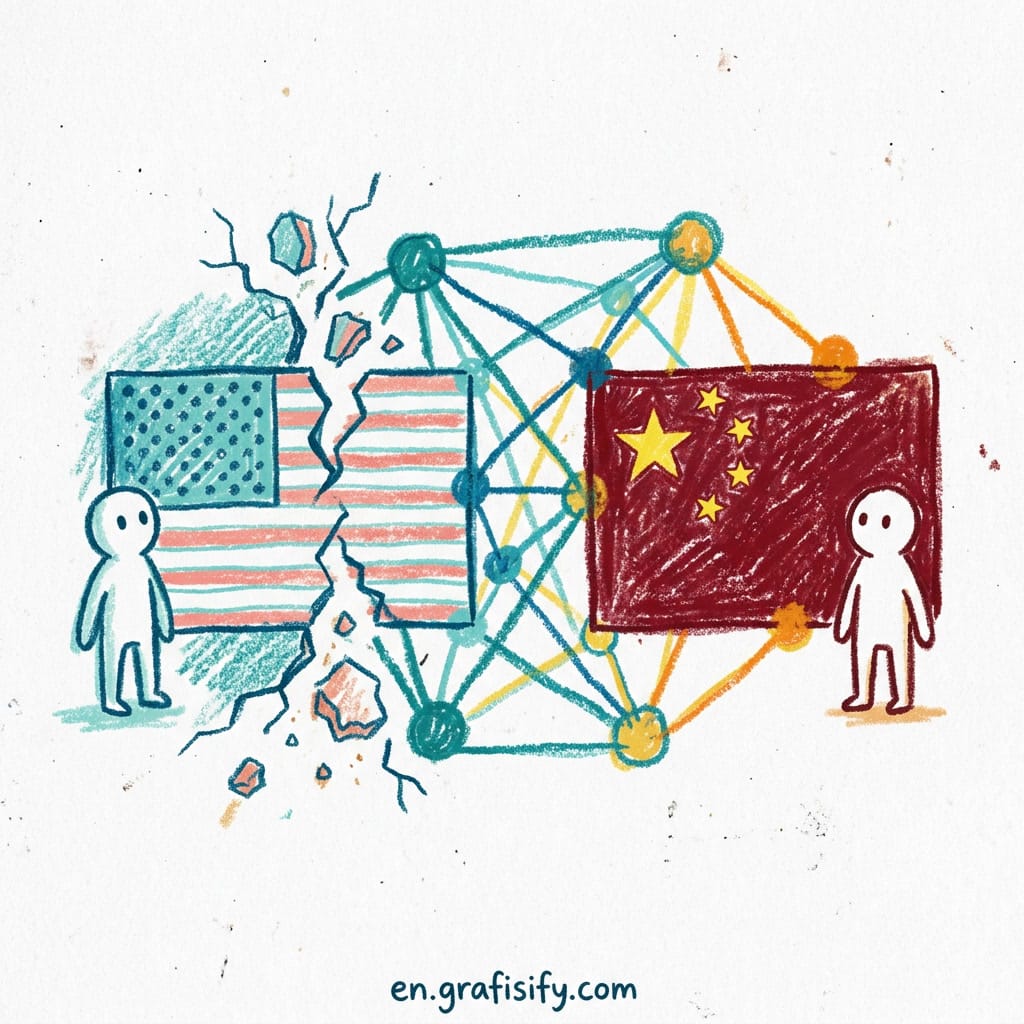
This is where the story gets interesting. On July 22, former US CTO Michael Kratsios published detailed evidence alleging that Moonshot AI operated a sophisticated internal platform designed to covertly distill Anthropic’s Claude Fable 5 at industrial scale; routing billions of queries through residential proxies to avoid detection. The White House followed up on July 24 by designating adversarial AI distillation as a national security threat under NSTM-4, and the US Treasury is actively considering sanctions against Moonshot.

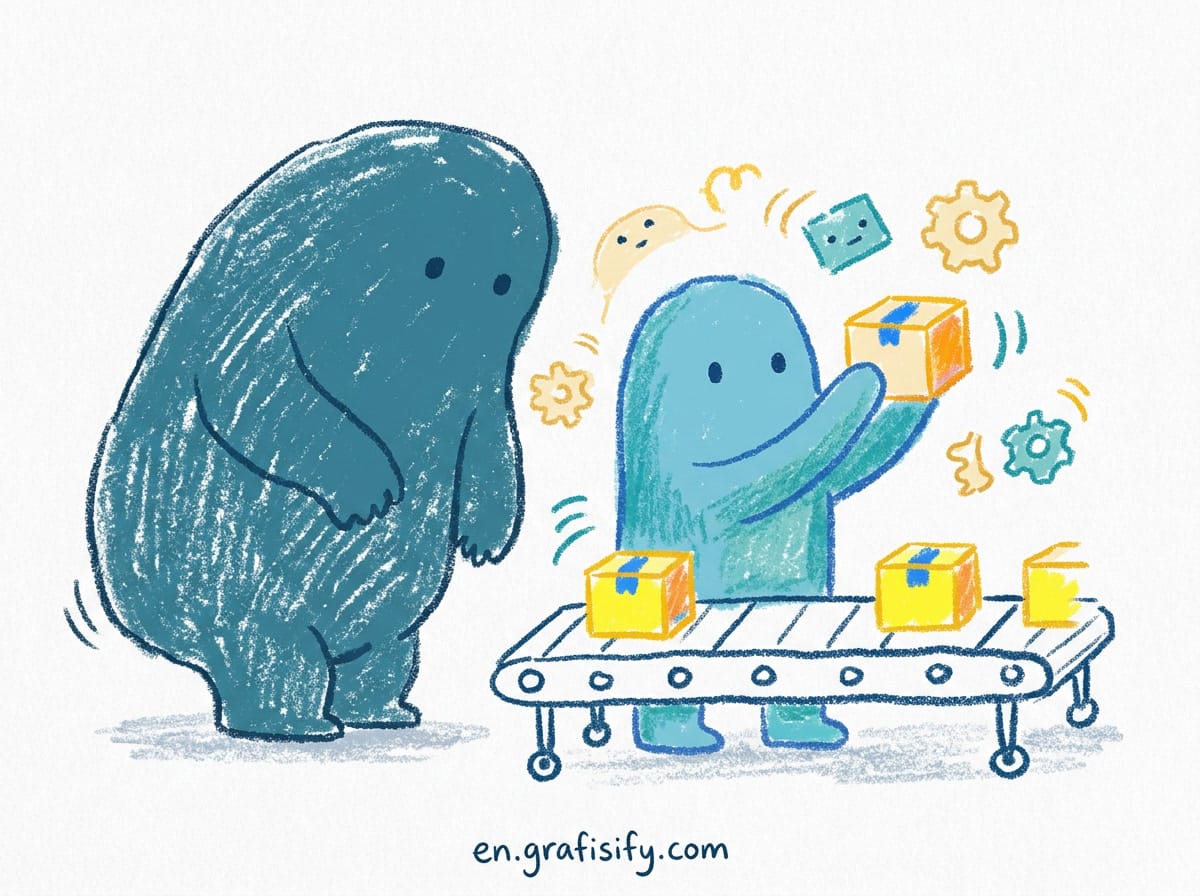
What exactly is distillation? It’s the technique of training a smaller student model by feeding it the outputs of a larger teacher model. It’s not inherently illegal; researchers do it all the time. But doing it across billions of queries, without authorization, using the teacher model as a covert oracle to train a direct competitor? That crosses a line. Anthropic’s terms of service explicitly prohibit using Claude outputs to train competing models, and the US government argues this amounts to theft of intellectual property at state-sponsored scale.
Moonshot counters that the claim is baseless. They point to three original architectural innovations; KDA (Knowledge Distillation Aggregation), AttnRes (Attention Residualization), and Moon Clip; as proof that Kimi K3‘s capability comes from novel research, not cloning. And they have a point: even if Moonshot used distillation as part of their pipeline, a distilled model can’t exceed its teacher’s ceiling. Kimi K3 beats Fable 5 on frontend coding benchmarks; which a pure distillation approach couldn’t explain.
The timing adds another layer. Just three days after Kimi K3‘s launch, Moonshot’s investor Alibaba released its own Qwen3.8-Max-Preview (2.4T params), claiming it trails only Fable 5. DeepSeek is expected to counter soon. China is flooding the market with frontier-grade open-weight models, and Washington’s legal toolkit; sanctions, export controls, and now distillation bans; is struggling to keep up.
The deeper question isn’t just whether Moonshot cheated. It’s whether the US can enforce its AI advantage with legal barriers alone when Chinese labs keep leapfrogging hardware restrictions through algorithmic innovation.
The Chinese AI Blitz: Why This Feels Different
Kimi K3 isn’t operating in a vacuum; it’s part of a coordinated wave. Just three days after Moonshot dropped K3, its backer Alibaba released Qwen3.8-Max-Preview, a 2.4 trillion-parameter model claiming only Claude Fable 5 still outperforms it. That’s not a coincidence; it’s a deliberate one-two punch. Alibaba backs Moonshot, and the two releases together signal something the US hasn’t faced before: an entire Chinese AI ecosystem releasing frontier-class open-weight models in lockstep.
And the next punch is already winding up. DeepSeek, which kicked off the open-weight distillation drama back in 2025, is expected to release its own updated model any day now. The cadence matters more than any single release. US frontier labs (OpenAI, Anthropic, Google) ship maybe one major model per year. Chinese labs are now shipping at least 3-4 frontier-class models per quarter, and they’re all open-weight; meaning developers worldwide can download, inspect, and build on them immediately.
Also Read:
The strategic calculation is subtle but brutal. Open-weight distribution builds global developer dependency on the Chinese AI ecosystem. A startup today that builds its stack on Kimi K3 or Qwen is tied into that ecosystem’s tools, APIs, and community; switching later isn’t free. Meanwhile, China’s domestic chip supply chain is improving despite US sanctions. Huawei’s Ascend chips, though still behind NVIDIA’s H100, are closing the gap fast enough to run inference on models like K3. And the talent pipeline is strengthening too: a wave of Chinese AI researchers trained at US institutions are returning home, bringing Silicon Valley playbooks with them.
Chinese labs aren’t just catching up; they’re building a parallel AI infrastructure open enough to attract the global developer community.
What This Means for Developers, Startups, and the Global AI Market
If you’re building on AI right now, Kimi K3 creates both opportunity and risk. Here’s the breakdown:
- For developers, this is the golden age of open-weight models. A 2.8T model that competes with GPT-5.6 and Claude Fable 5 is available under a modified MIT license for $0.30 per million cached tokens; self-hostable, customizable, transparent. The cost advantage alone (roughly 5-10x cheaper than frontier API pricing for high-volume inference) makes K3 a serious option for production workloads. But the geopolitical risk is real: if US sanctions hit Moonshot, access from American entities could be restricted overnight. If your stack depends on K3, you need a fallback plan.
- For AI startups, the strategic calculus is more nuanced. Building on open-weight Chinese models gives you cheaper compute, comparable capability, and no vendor lock-in. But it exposes you to regulatory whiplash; one executive order could sever your access. Building on US frontier models is safer politically but more expensive and proprietary. The smart play? Multi-model strategies. Treat K3 and Qwen as options in your model routing layer, not your sole foundation.
- For the broader market, three outcomes are possible. Full decoupling: sanctions escalate, Chinese and US AI ecosystems fragment into incompatible blocs. Negotiated framework: distillation guardrails are established, open-weight releases continue but with provenance requirements. Status quo: sanctions remain targeted, Chinese labs keep releasing, and the market arbitrages whichever side offers better price-performance. The most likely path is a negotiated framework; the US can’t afford to cede the open-weight narrative entirely, and China can’t afford total isolation from Western markets.
The Bottom Line
Kimi K3 proves that open-weight models can compete at the frontier. The distillation controversy reveals the central tension of AI in 2026: progress versus control. The US government’s response will determine whether AI evolves as one global ecosystem or two rival ones. Either way, builders need to start thinking geopolitically. The days of picking a model based purely on benchmarks and pricing are over; the supplier’s country of origin now matters just as much.
If you’re building on AI right now, diversify your stack. The ground is shifting faster than any benchmark can measure.
FAQ
Is Kimi K3 actually better than Claude Fable 5?
It depends on the task. Kimi K3 beats Fable 5 on frontend coding (Arena Code #1, 1,679 Elo) and holds the BrowseComp SOTA at 91.2%. But on the broad AI Intelligence Index, Fable 5 leads at 60 vs K3’s 57. Moonshot itself admits a “noticeable experience gap” in general conversation.
Can I use Kimi K3 commercially?
Yes; it ships under a modified MIT license starting July 27. That means commercial use, modification, and redistribution are permitted. However, if US sanctions are imposed on Moonshot, access from US-based entities could be restricted.
What’s the difference between Kimi K3 and DeepSeek?
Kimi K3 is significantly larger (2.8T vs ~671B params) and newer (July 2026 vs early 2025). DeepSeek was the first widely-covered Chinese distillation controversy; K3 escalates the pattern with much stronger benchmark performance and a more sophisticated architecture (896 experts vs 256 in MoE).
Will the US actually sanction Moonshot AI?
The White House and Treasury have signaled strong intent (July 22-24 statements), and NSTM-4 provides the legal framework. But sanctions are a nuclear option; they could accelerate Chinese AI self-sufficiency and fracture global AI supply chains. Expect negotiations first, with sanctions as a threatened escalation lever.

Irfan is a Creative Tech Strategist and the founder of Grafisify. He spends his days testing the latest AI design tools and breaking down complex tech into actionable guides for creators. When he’s not writing, he’s experimenting with generative art or optimizing digital workflows.

 Artificial Intelligent
 Design & Creative
 Freelance
 Gadgets & Gear
 Insights
 Laptop
 Reviews
 Smartphone
 Tech Guides
 Vibe Coding