10 AI Tools to Automate Your Daily Work: A Practical Guide for Professionals
10 AI Tools to Automate Your Daily Work: A Practical Guide for Professionals
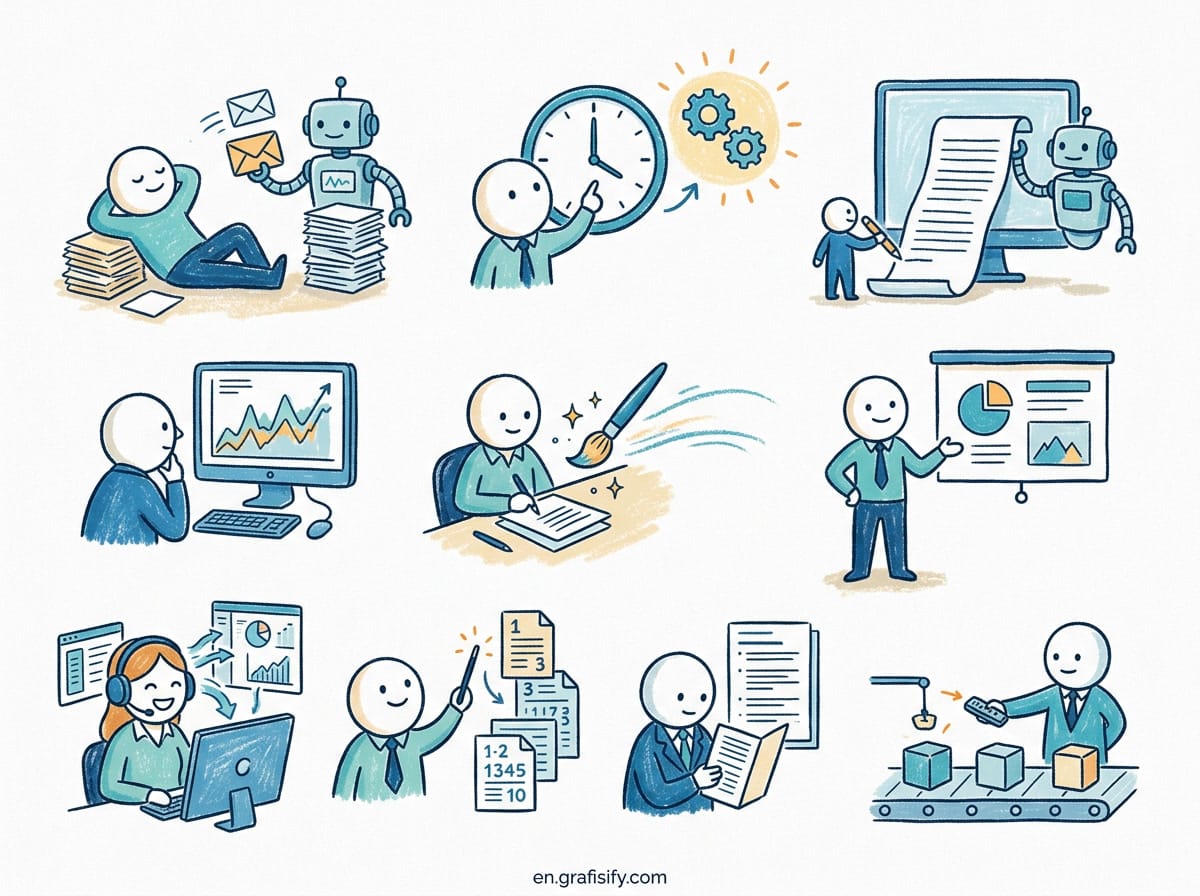
If you’re spending hours each week on repetitive tasks—scheduling meetings, writing emails, organizing notes—you’re not alone. The average knowledge worker spends nearly three hours daily on administrative work that could be automated.
The good news: ‘s AI productivity tools have moved beyond gimmicks. They now integrate into the apps you already use and actually handle multi-step workflows without constant supervision. This guide covers ten tools that deliver measurable time savings, based on real usage across product teams, marketing, engineering, and operations.
Why Is Different
The defining shift is that AI stopped being a bolt-on feature and became the default layer inside existing apps. Notion, Reclaim, Raycast, and Zapier all bundled AI into their core products rather than charging separate line items. Pricing stabilized at $8 to $20 per seat per month for full functionality.
Second, agentic automation arrived. Tools like Zapier Agents and Notion Agents completed multi-step workflows autonomously—reading an email, deciding what to do, acting across several apps without waiting for human input. That capability raised the stakes on data access and permissions, so smart implementations keep human checkpoints on anything irreversible.
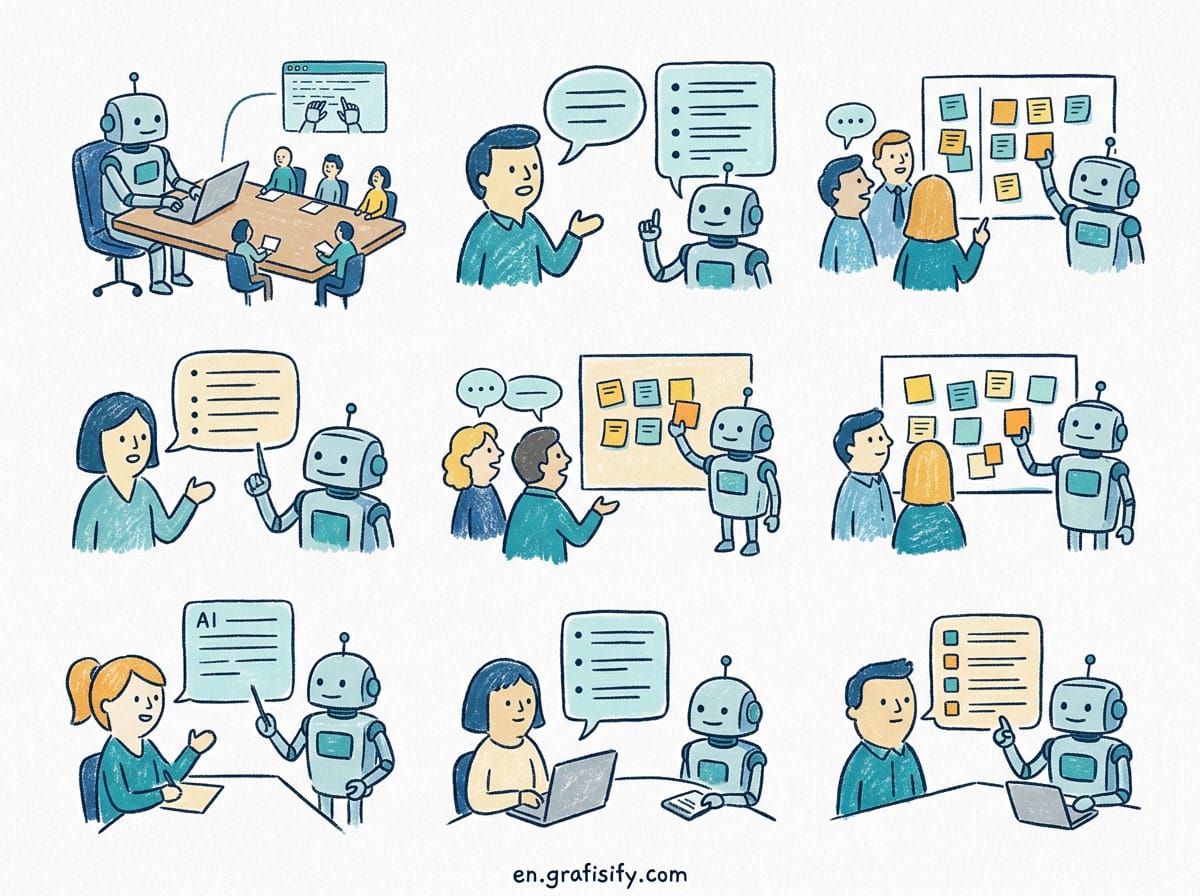
Top 10 AI Tools for Daily Automation
1. Notion AI, Best for Teams Using It as Workspace
Notion AI isn’t another chat interface; it queries your actual workspace. You can ask it to summarize a project document, draft a page, or answer questions pulled from wikis, databases, and meeting notes you stored weeks ago. The standout strength is context: for teams maintaining a well-organized Notion setup, this delivers the highest leverage because the AI doesn’t sit in isolation—it reads what you already wrote.
The trade-off is pricing: full AI features live exclusively on the Business plan at $20 per member after Notion eliminated the flat add-on. Free and Plus users get only limited trial access. For individual knowledge workers who already organize projects and notes in Notion, the upgrade pays for itself once the AI answers questions that previously required manual searching.
Free tier: Limited trial
Pricing: $20/user/mo (Business plan)
Best for: Teams that want AI inside their existing knowledge base
Also Read:
2. Reclaim.ai, Best for Protecting Focus Time
Scheduling takes up most of a professional’s day. Reclaim solves this by analyzing your calendar and automatically blocking focus work, habits, and tasks around existing meetings. It integrates with Asana, Linear, Todoist, and Google Calendar so tasks flow directly into available time slots without you manually dragging events.
The free Lite tier covers task scheduling, habit blocking, and basic calendar sync—enough for individuals. Paid tiers matter more for teams where unlimited Smart Meetings and team analytics matter. At $10 per seat monthly for Starter, Reclaim stays affordable while defending deep work against a meeting-saturated week.
Free tier: Yes (Lite)
Pricing: $10/seat/mo (Starter), higher for Business/Enterprise
Best for: People whose schedules break down when meetings dominate
Also Read:
3. Raycast AI, Best for Keyboard-Driven Mac Users
Raycast replaced Spotlight for power users who hate switching between applications. It combines clipboard history, window management, code snippets, extensions marketplace, and AI accessible from a single keystroke. Because it lives one shortcut away instead of requiring opening another app, its AI Commands get used far more frequently than standalone chat services ever would.
The core launcher is genuinely free and complete, which makes adoption frictionless. The Pro tier adds unlimited AI chat at $8 monthly, with Advanced AI at $16 for heavier model access including frontier models. The catch: platform limitation. Raycast targets keyboard-driven Mac users; casual Spotlight users won’t feel the pull.
Free tier: Yes (full core launcher)
Pricing: $8/mo (Pro), $16/mo (Advanced AI)
Best for: Mac power users who live on the keyboard

4. Zapier AI, Best for Cross-App Workflow Automation
Zapier connects over 7,000 apps so an event in one triggers action in another seamlessly. Its edge is inserting AI steps directly into any workflow: receive a customer email, have AI classify or draft a response, then route it onward—all without writing code.
AI by Zapier lets you build AI teammates that take multi-step actions across your tech stack. The bread-and-butter example: a new lead fills out a form, Zapier creates a CRM record, an AI step summarizes and scores it, Slack alerts the right salesperson, a follow-up task gets scheduled automatically. That entire flow removes copying, pasting, and routing.
Free tier: Yes (very restrictive: 100 tasks/month, single-step Zaps)
Pricing: $19.99/mo (Professional), task-based pricing scales up
Best for: Anyone connecting multiple apps and automating handoffs
5. Motion, Best for Aggressive Scheduling & Replanning
Motion looks at your tasks, deadlines, meetings, and working hours and lays out your entire day on the calendar. When something slips—a meeting runs long or a priority shifts—it replans the rest of the week in seconds. The 2025 ‘Motion Projects’ release added Gantt-style planning kept current automatically.
This works best for people managing multiple projects with hard deadlines and many recurring meetings. Motion is more opinionated and aggressive about auto-scheduling than alternatives. It requires committing two weeks before deciding whether the algorithmic approach fits your style.
Free tier: No (7-day trial only)
Pricing: $19/seat/mo (Pro AI)
Best for: Founders and operators juggling competing deadlines
6. Granola, Best for Meeting Notes Without Bot In Call
Granola fixed everything annoying about Otter, Fireflies, and Fathom: no bot in the call (audio captured locally on your machine), notes generated from your typed scaffolding plus AI transcript, and clean formatting that reads like a human wrote them. The 2025– maturity added multi-language support, custom templates per meeting type, and integrations with Notion, Linear, Slack, HubSpot, Salesforce.
For anyone attending five+ meetings daily, Granola is the fastest note experience available. Meetings group automatically into folders (1:1s, customer calls, hiring loops) using smart tagging. No awkward bot introductions, no security concerns about third-party listeners.
Free tier: Yes (30-day history)
Pricing: $14/mo
Best for: Meeting-heavy professionals wanting local privacy
7. ChatGPT, Best Overall AI Assistant
ChatGPT anchors daily drafting and reasoning for most users. It handles brainstorming, research, summarization, analysis, coding questions, and everyday work tasks better than almost anything else. The value comes from versatility: paste text, get rewritten versions; describe a problem, get solutions; feed data, get summaries. Claude beats it on long documents and nuanced reasoning, but ChatGPT wins on breadth of capabilities.
Free tier covers casual drafting and light research. Paid Plus ($20/mo) adds priority access during peak times, faster responses, and usage of stronger models. Most productivity stacks run ChatGPT alongside one specialized tool rather than replacing it entirely.
Free tier: Yes
Pricing: $20/mo (Plus)
Best for: General reasoning, writing, research
8. Todoist AI, Best Affordable Task Management
Todoist remains the cheapest entry point for AI task management with full Task Assist and Ramble features at just $5/month. Natural language parsing (“Schedule weekly review every Monday at 10am until August”) converts directly into structured tasks with due dates, priorities, and projects. Ramble helps brainstorm task breakdowns—”break this big project into smaller chunks.” Compared to Motion, Todoist lacks calendar integration but serves lighter users perfectly.
Free tier: Yes (limited AI features)
Pricing: $5/mo (Pro)
Best for: Individuals needing structured tasks without complex scheduling
9. Superhuman, Best AI Email Triage
Superhuman offers the fastest inbox UX with built-in AI drafting, thread summarization, and smart prioritization. Unlike Gmail-only alternatives, Spark Mail works across Gmail, Outlook, and iCloud equally well—but Superhuman edges ahead on raw speed and AI accuracy. Features include schedule events with natural language commands and deep inbox search powered by AI responses.
It only works with Gmail accounts currently, which limits platform flexibility. However, for Gmail-native teams seeking instant reply drafts and comprehensive thread summaries, Superhuman returns time immediately. The tradeoff: cost enters premium territory compared to freemium competitors.
Free tier: Limited
Pricing: $12-15/mo (Pro), higher for business tiers
Best for: Gmail users wanting fastest AI email triage
10. Mem, Best for AI-Organized Personal Notes
Mem automatically organizes notes without manual filing, which eliminates the most common productivity drain. Write or dictate something, and Mem connects related ideas, suggests links to previous notes, and surfaces relevant context when you return weeks later. Think of it as having an assistant who remembers everything you’ve written and proactively surfaces connections you forgot.
The Pro tier at $12/mo unlocks deeper AI features. Active agents exist at $99/mo for heavy autonomy. For personal knowledge workers tired of organizing files and folders, Mem’s zero-maintenance approach saves substantial mental overhead.
Free tier: Yes
Pricing: $12/mo (Pro), $99/mo (agents)
Best for: Knowledge workers avoiding manual file organization
How to Pick Your Stack
There’s no single best tool because “AI productivity” spans five different jobs. Start with your biggest daily friction point, not flashiest capabilities. If meetings consume your calendar, try Reclaim or Motion first. If you live in documents, Notion AI returns immediate value. If writing-heavy work blocks progress, start with ChatGPT or Claude. If you repeatedly copy information between apps, Zapier may save more time than another writing assistant.
Most productive people run two or three tools together rather than expecting one solution. A practical starter combination might be: ChatGPT or Claude for thinking and writing, Reclaim or Motion for scheduling focus time, and Zapier for connecting workflows between apps. Upgrade from free tiers only when hitting real ceilings that block actual work.
Final Thoughts
The AI productivity category matured significantly. Tools stopped being novelty experiments and started solving real bottlenecks: protecting focus time, organizing chaotic calendars, connecting disconnected apps, capturing meeting insights without awkward bot intrusions. Selection criteria shifted from “what can it do?” to “where does it fit in my existing workflow?”
Success means picking one tool that solves your dominant bottleneck, proving value on the free tier, then expanding your stack gradually. Don’t sign up for everything at once—the winners share three traits: the AI lives where work already happens, it shows visible value within the first session, and it gets out of the way when not requested.
FAQ
Can I use these tools indefinitely for free?
Several options are usable indefinitely without payment. Raycast gives a full Mac launcher with AI at core app level. Obsidian stays fully free for personal use with unlimited notes and plugins. Grammarly’s free plan covers everyday grammar and spelling across applications. Reclaim, Notion, Todoist, and Zapier offer freemium tiers running real work through, though usually capping usage or gating advanced AI features.
Are AI productivity tools worth the cost for small businesses?
Yes—if the tool solves a repetitive problem consuming employee hours. A $10-20/month subscription paying for itself in saved labor hours delivers clear ROI. Start with team trials, measure actual usage after two weeks, and evaluate whether time savings justify subscriptions. Notion works strongly for team wikis; Zapier excels when automating client-facing workflows.
What’s the main difference between Motion and Reclaim?
Motion is more aggressive about taking over daily planning, automatically slotting tasks into calendar gaps and replanning aggressively as priorities shift. Reclaim layers lighter-touch smart time-blocking on top of Google Calendar, respecting your existing calendar structure while adding protective buffers. Reclaim starts at $10/month and defends focus time; Motion starts at $19/month with only a seven-day trial and feels more opinionated by design. Choose based on how much control you want to relinquish to the algorithm.
Is agentic automation safe for sensitive data?
Careful permission management matters here. The best implementations keep human checkpoints on irreversible actions—approve before sending, confirm before deleting, review before publishing. Review each tool’s data access requirements before granting broad permissions. Look for SOC 2 compliance, GDPR support, and transparent data handling policies when evaluating enterprise needs.
Do I need multiple AI tools or will one suffice?
One tool suffices if it covers multiple categories adequately. However, most professionals benefit from specialized tools paired together: one general assistant for drafting and reasoning (ChatGPT/Claude), one scheduling tool protecting focus time, and one automation platform connecting apps. The right stack depends entirely on where your day leaks time most heavily.

Irfan is a Creative Tech Strategist and the founder of Grafisify. He spends his days testing the latest AI design tools and breaking down complex tech into actionable guides for creators. When he’s not writing, he’s experimenting with generative art or optimizing digital workflows.


 Artificial Intelligent
 Design & Creative
 Freelance
 Gadgets & Gear
 Insights
 Laptop
 Reviews
 Smartphone
 Tech Guides
 Vibe Coding