Freelance Portfolio Mistakes That Cost You Clients

The Verdict: Fix These Five Mistakes Before Your Next Pitch
Your portfolio is the hardest-working salesperson you have. It pitches while you sleep, answers objections before the first call, and sets your rate before you name it. Most freelancers hand this job to a gallery of old work with no context, then wonder why inquiries stay flat.
Numbers back this up. Upwork reports that talent with a published portfolio get hired nine times more often than talent without one. A hiring survey cited by The Interview Guys found that 86% of employers review a portfolio when a candidate provides one, and 71% say its quality influences the hiring decision. Your portfolio carries real weight in the decision. Give it the effort that weight deserves.
Clients scan fast. They look for proof that you solve their kind of problem, then they move on. Five common mistakes push them away at that scan stage. Each section below names one mistake, shows the fix, and hands you a concrete next step you can act on this week.


Mistake 1: Treating Your Portfolio Like a Museum
The instinct is understandable. You made the work, you feel proud, you want it seen. The portfolio grows into an archive holding every logo, every landing page, every experiment from the last six years.
Clients do not browse archives. They hunt for relevance. A brand designer who opens your site and scrolls past app icons, wedding invitations, and a 3D render from a weekend course reaches one conclusion: this person does a bit of everything, and nothing for me.
Cut hard. Keep four to six projects that match the clients you want next. HiGlobe, writing for freelancers chasing global clients, puts it plainly: four to six well-chosen projects with clear results beat twenty polished samples with no proof attached. Remove anything older than two or three years unless it still represents your best thinking.

Curation is a skill clients pay for. Demonstrate it inside the portfolio itself. A tight selection tells a prospect you understand focus, and focus is what they want to buy. When every project on the page speaks to the same kind of client, that client feels seen within seconds.
Mistake 2: Showing Work Without the Story Behind It
A screenshot of a finished homepage tells a client what you made. It says nothing about what you solved. Clients hire problem-solvers, not screenshot collectors.
Give every project a short case study built on three parts: the challenge, your process, the result. Three compact paragraphs beat a wall of mockups. The Behance editorial team recommends exactly this narrative shape, problem to research to process to outcome, because it mirrors how clients evaluate risk before they spend.

Write the challenge in one or two sentences and name the constraint. A SaaS startup needed trial signups, and their homepage buried the signup form below four screens of features. Then describe what you changed and why, in plain language a non-designer follows. Close with the outcome, with a number wherever you have one.
You do not need dramatic numbers for every project. A line like “cut the signup flow from five steps to two” reads as competence. Freeyork notes that case studies became the backbone of client-winning portfolios precisely because stories keep visitors engaged longer than image-only layouts. Clients connect the dots between your past decisions and their future results, but only when you draw the dots first.
Mistake 3: Skipping Proof That Your Work Made Money
Design skill gets you admired. Business impact gets you hired. Portfolios full of beautiful work with zero outcomes leave the most important question unanswered: did any of this move a number that matters?
Also Read:
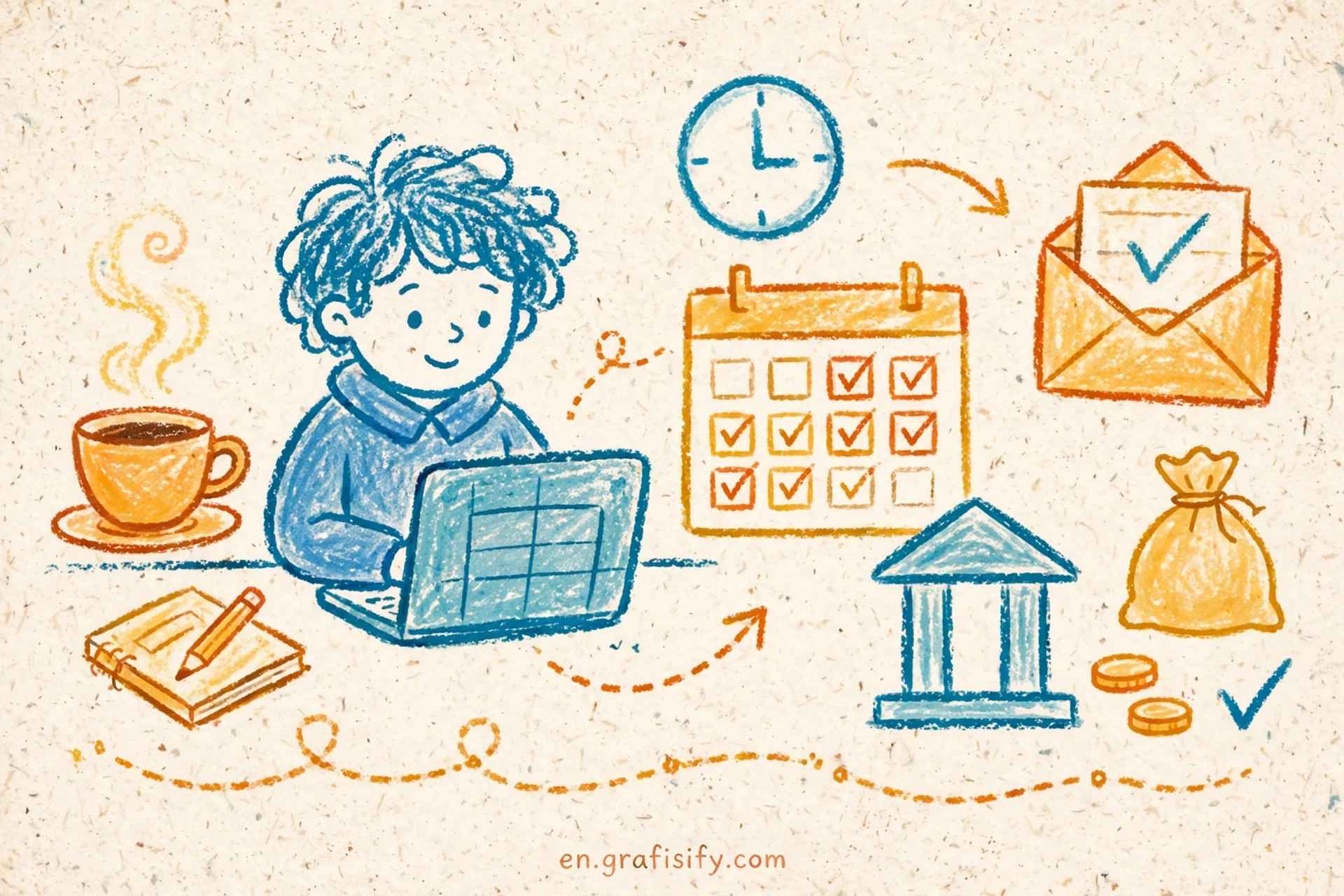
Add one metric to every project you can. Conversion lift, revenue attributed, support tickets reduced, onboarding time shortened. N26 advises freelancers to sprinkle statistics through their portfolios because numbers signal a results-driven professional. Modest figures work fine. An email redesign that lifted click-through from 1.8% to 3.1% tells a sharper story than a paragraph of adjectives.
Pair metrics with a client quote when possible. A testimonial next to a strong result convinces more than either one alone. HiGlobe suggests aiming for testimonials on at least half of your featured projects, and prompting clients to be specific about what improved.
When you lack client data, measure your own work. Track steps removed from a flow, hours saved by a template you built, or scores improved in usability tests you ran yourself. Honest small numbers beat vague big claims every time. Clients have learned to distrust portfolios that promise transformation with no evidence.
| What the client sees | With proof | Without proof |
|---|---|---|
| Project description | Challenge, process, and result in three short paragraphs | Image gallery with a one-line caption |
| Metrics | One number per project, even a modest one | No numbers anywhere on the page |
| Testimonial | Client quote tied to a specific outcome | No voice on the page but your own |
| Client takeaway | This freelancer moves the kind of metric I care about | Pretty work, unclear business value |
Mistake 4: Parking Everything on One Platform
Many freelancers keep their portfolio in exactly one place: a Behance profile, an Upwork portfolio tab, or a PDF they email on request. Each option reaches some clients and hides you from the rest.
Research cited by Jobbers.io found that 78% of hiring managers research a freelancer’s external portfolio before making a decision, even when they first discovered that freelancer on a marketplace. One platform rarely covers the full journey from discovery to decision.
Run a simple two-layer setup. Layer one is your own site, with full case studies and contact details you control. Layer two is marketplace and community profiles: Behance for discovery, Upwork for buyers who arrive with intent to hire, each one linking back to your site. Jobbers.io also notes that 80% of clients value portfolios highly, and Upwork applicants with at least three portfolio samples are 50% more likely to pass profile review on the first attempt.
Keep the story consistent across layers. Same project selection, same metrics, same contact path. Clients check multiple platforms before they decide. Make every check confirm the last one instead of contradicting it.
| Platform | Best for | Watch out for |
|---|---|---|
| Your own website | Full storytelling, search traffic, zero platform risk | You drive the traffic yourself |
| Behance | Discovery by clients browsing visual work | Shallow context unless you write real case studies |
| Upwork profile | Buyers with intent, built-in trust signals | You compete inside a busy marketplace feed |
Mistake 5: Letting Your Portfolio Go Stale
A portfolio whose latest work dates back two years sends a quiet message: this freelancer stopped growing, or stopped getting hired. Neither interpretation helps you win the next project.
Treat the portfolio as a living document. HiGlobe recommends a review every three to four months: add your strongest recent work, remove anything older than two to three years, and refresh outdated stats and client details. Freelance illustrator Tatiana Vovchek, featured on the Behance blog, calls updating a habit and advises unpublishing outdated projects to make room for new stories.
Stale also means broken. Test every link twice a year. Replace dead project URLs with archived screenshots so the story survives even when the client redesigns. Update your bio, your availability note, and your contact form while you are in there.
Small, regular updates beat the once-a-year overhaul. Put a quarterly portfolio review on your calendar and treat it like client work, because it brings in client work.
The Fix: A Seven-Day Portfolio Reset Plan
On day one, list every project in your portfolio and score each one for relevance to your ideal client. On day two, delete everything below the bar, plus anything older than three years that no longer represents your best thinking. On day three, pick your four to six keepers and draft the challenge paragraph for each.
On day four, write the process and result paragraphs, and attach one metric to every project. On day five, email two or three past clients and ask for a one-line testimonial tied to a specific outcome. Make the ask easy by suggesting the result they could confirm. On day six, publish the updated case studies on your own site, then mirror the best two on Behance and your Upwork profile, with every mirror linking back to the full story.
On day seven, test every link, open the site on your phone, and send the new portfolio to one warm lead. Pair the send with a stronger proposal or a sharper cold email so the portfolio arrives with context. Momentum beats perfection. Ship the reset, then refine it each quarter.
Conclusion: Clients Buy Proof, Not Potential
Your portfolio has one job: prove you can solve the client’s problem, with evidence. Four to six curated projects, each with a story and a number, hosted where clients actually look, refreshed every quarter. That is the whole system, and it fits on an index card.
Start with the reset plan above. Cut first, because subtraction does most of the work. Then add context, proof, and a second platform. Strengthen the rest of your client pipeline alongside it: run better discovery calls, sharpen your personal brand, and protect the business side by getting paid on time. Your next pitch deserves a portfolio that sells as hard as you do.

Irfan is a Creative Tech Strategist and the founder of Grafisify. He spends his days testing the latest AI design tools and breaking down complex tech into actionable guides for creators. When he’s not writing, he’s experimenting with generative art or optimizing digital workflows.





 Artificial Intelligent
 Design & Creative
 Freelance
 Gadgets & Gear
 Insights
 Laptop
 Reviews
 Smartphone
 Tech Guides
 Vibe Coding