The “Thinking with Video” Era Is Here: Why Sora-2 Just Made Text-Based AI Look Obsolete

Forget “Chain of Thought.” The future of AGI is a simulation, and it’s happening at 24 frames per second.
For the last three years, the entire artificial intelligence industry has been obsessed with a single concept: Chain of Thought (CoT). It was the breakthrough that took us from chatbots that hallucinated wildly to reasoning engines like OpenAI’s o1 and o4-mini. The logic was simple: if you force a model to “think” in text steps before it speaks, it gets smarter.
But there’s a massive, glaring problem with text-based reasoning. The real world doesn’t happen in text. It doesn’t even happen in static images. The real world is dynamic, temporal, and governed by physics. If you want an AI to understand how a ball bounces or how a car navigates traffic, “writing” about it isn’t enough. It needs to visualize the process.
Enter the “Thinking with Video” paradigm.
A groundbreaking new paper out of Fudan University, released this November 2025, has just blown the doors off our understanding of multimodal AI. By leveraging Sora-2, researchers have demonstrated that video generation models aren’t just for making surreal Hollywood clips—they are capable of complex, dynamic reasoning that leaves traditional Vision-Language Models (VLMs) in the dust.
Here’s the kicker: The research suggests that the path to Artificial General Intelligence (AGI) might not be a better chatbot. It might be a World Simulator.
“Video generation models… show great promise as unifying, general-purpose foundation models for machine vision. By generating videos in the reasoning chain, models can visualize dynamic processes… achieving a more natural alignment with human cognitive processes.”
The Core Story: When AI Starts “Imagining” Solutions
The research paper, titled “Thinking with Video: Video Generation as a Promising Multimodal Reasoning Paradigm,” introduces a novel benchmark called VideoThinkBench. The researchers pitted Sora-2 against top-tier heavyweights like GPT-5 (High), Gemini 2.5 Pro, and Claude Sonnet 4.5.
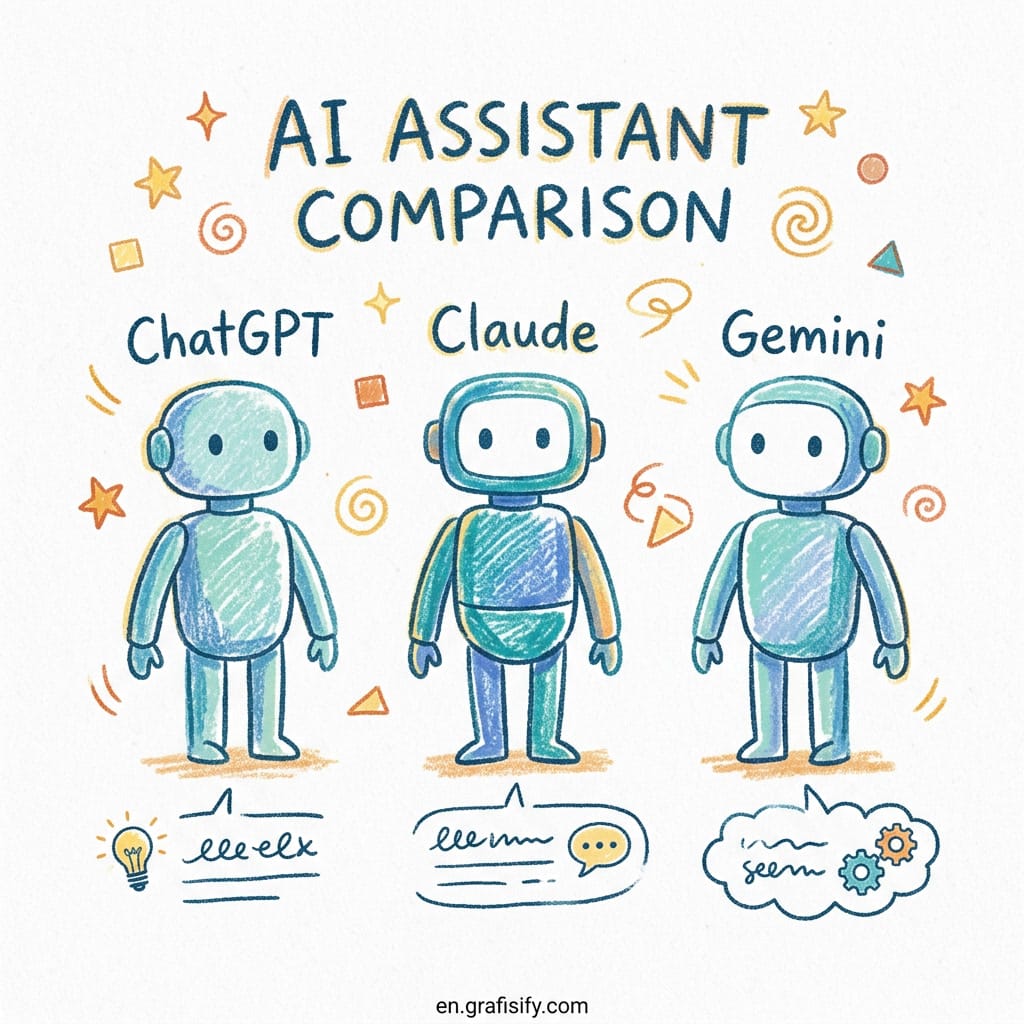
The results paint a picture of a technology that is evolving faster than most people realize. The researchers divided the tests into two main camps: Vision-Centric Tasks (spatial reasoning, physics) and Text-Centric Tasks (math, general knowledge).
The “Eyeballing” Phenomenon
The most compelling part of this study is something they call the “Eyeballing Puzzle.” Imagine asking an AI to look at an image of three lines and find the exact intersection point, or to draw a line parallel to another passing through a specific dot.
Traditional VLMs (like Gemini or GPT-4o) look at the static pixels and guess the coordinates. They are essentially doing math on a grid. Sora-2, however, utilizes “Thinking with Video.” It effectively draws the line in real-time video, simulating the extension of rays or the reflection of light.

The stats are telling:
- Ray Intersection: Sora-2 achieved an 88% accuracy rate using its “Major Frame” evaluation method.
- Comparison: Competitors like Gemini 2.5 Pro and GPT-5 High struggled significantly with these geometric construction tasks, often failing to “see” the spatial relationship because they couldn’t simulate the movement of the lines.
This proves a fundamental hypothesis: Dynamic processes require dynamic reasoning. You can’t just explain physics; you have to simulate it.
The “Prompt Rewriter” Mystery
However, the report also uncovered something incredibly bizarre—and slightly controversial—about how these models handle text and math.

When tested on GSM8K (a grade-school math benchmark), Sora-2 achieved a staggering 98.9% accuracy in its audio output. It solved the problems verbally with near-perfection. But when the researchers looked at the video frames where the model was supposed to be “writing” the solution on a whiteboard, it was a disaster.
Over 43% of the written solutions were unreadable or logically flawed, even though the spoken answer was correct. Why? The researchers discovered that the “reasoning” wasn’t happening in the video pixels. It was happening upstream.
“We speculate that Sora-2’s Text-Centric Reasoning ability originates from its prompt rewriter.”
Essentially, a text model (likely a VLM hidden under the hood) solves the math problem first, then rewrites the prompt to tell the video generator what to display. The video generator is just an actor following a script written by a smarter text model. This distinction is crucial for developers: we aren’t seeing “visual thought” here; we are seeing “visual translation” of text thought.
Context & Background: The Evolution of AI Reasoning
To understand why this paper is making waves in the US tech scene, we have to look at the trajectory of AI over the last 24 months.
Phase 1: Thinking with Text (2022-2024)
This was the era of “Let’s think step by step.” Models like GPT-4 were trained to break down problems into verbal chunks. It worked wonders for coding and essays but failed at spatial awareness. If you asked GPT-4 if a couch would fit through a door, it would try to calculate volume rather than visualizing the rotation.
Phase 2: Thinking with Images (2024-2025)
With the release of GPT-4o and Gemini 1.5, models gained “eyes.” They could analyze static snapshots. This allowed for better chart reading and meme understanding, but it was still a slideshow. It lacked causality. It couldn’t predict what happens next.
Phase 3: Thinking with Video (The Now)
This is where Sora-2 and the open-source Wan2.5 come in. By generating video, the model isn’t just predicting the next token (word); it’s predicting the next state of the world. This is what cognitive scientists call “Internal World Modeling.”
The Competitor Landscape
The Fudan University paper heavily references GPT-5 High and Claude Sonnet 4.5. While these models (which represent the pinnacle of text/static vision) dominated in pure pattern recognition tasks like “Visual Puzzles” (finding color patterns), they were consistently outperformed by Sora-2 in tasks requiring action, like navigating a maze or verifying a trajectory.
This creates a fork in the road for the industry. Do we keep making LLMs bigger, or do we switch gears to Large World Models (LWMs) that simulate reality to solve problems?
Expert Analysis: The “Self-Consistency” Breakthrough
Deep inside the data, there is a nugget of gold for ML engineers and SEOs looking at the future of search and compute.
The researchers applied a technique called Self-Consistency—typically reserved for text LLMs—to video. Instead of asking Sora-2 to generate one video solution, they asked it to generate five. They then used a “Major Frame” voting system to aggregate the results.
The result? Accuracy on the “Arc Connect” puzzle jumped from 56% (single try) to 90% (majority vote).
Why this matters:
This confirms that “Test Time Compute”—the idea of letting a model “think” longer before answering—applies to video generation too. If you are building applications on top of future video APIs, you won’t just ask for one generation. You’ll ask for ten, cross-reference them, and extract the “truth” from the consensus. This will skyrocket inference costs, but it will also skyrocket reliability.
The Hardware Implication
For the US market, this signals a massive incoming demand for GPU compute. Generating one second of reasoning video requires exponentially more FLOPS than generating a paragraph of text. If “Thinking with Video” becomes the standard for complex reasoning (like engineering simulations or medical diagnostics), the current chip shortage is going to look like a minor hiccup.
The Verdict: Is It Ready for Primetime?
Not entirely, but it’s dangerously close. The disconnect between Sora-2’s audio (perfect math) and its video (hallucinated whiteboard writing) shows that we haven’t fully merged the modalities yet. The “brain” (text) and the “imagination” (video) are still talking to each other through a noisy translator (the prompt rewriter).
However, the VideoThinkBench results prove that for spatial and physical tasks, video is superior. We are moving toward a future where:
- Robotics will train on these video reasoning models to navigate warehouses.
- Education tools will visually solve geometry problems for students, dynamically adjusting the lines based on the student’s confusion.
- Search Engines won’t just give you a link; they will generate a custom video tutorial solving your specific leak under your specific sink.
Future Outlook: What’s Next?
The “Thinking with Video” paradigm is arguably the bridge to physical AGI. An AI that can write a sonnet is impressive; an AI that can visualize the consequences of knocking over a glass of water—and catch it before it falls—is revolutionary.
The next step is closing the loop. Once models like Sora-3 or the next iteration of OpenMOSS can write text on a video whiteboard as accurately as they can speak it, the distinction between “knowing” something and “simulating” it will vanish.
For now, keep your eyes on the benchmarks. The moment video reasoning costs drop to match text inference, the internet as we know it changes forever.
Tagged with:
AGIComputer VisionDeep LearningFudan University Researchgenerative aiLarge World ModelsMultimodal ReasoningOpenAISora-2Tech Trends 2025
Irfan is a Creative Tech Strategist and the founder of Grafisify. He spends his days testing the latest AI design tools and breaking down complex tech into actionable guides for creators. When he’s not writing, he’s experimenting with generative art or optimizing digital workflows.
You might also like




 Artificial Intelligent
 Design & Creative
 Freelance
 Gadgets & Gear
 Insights
 Laptop
 Reviews
 Smartphone
 Tech Guides
 Vibe Coding