AI Tools for Literature Review: A Practical Workflow
Verdict: Which AI Literature Review Tool Actually Pays Off
If you read papers for a living, the win is not a single magic tool. It is a stack: one tool to find papers, one to screen them, and one to keep your notes straight. Free options cover most of the work. Paperguide and Elicit lead the paid tier when you handle 50-plus sources, while Zotero plus NotebookLM handles the rest at zero cost.
This guide walks through a working literature-review workflow you can adopt this week, with concrete tools, real pricing, and where each one saves time versus where it wastes it.
Why Researchers Are Rebuilding the Review Process
The old method is slow because it is manual at every step. You search PubMed or Google Scholar, skim hundreds of abstracts, read the top 30 to 50 papers, build extraction tables in a spreadsheet, then write the review in a word processor while formatting citations by hand. That cycle runs four to six weeks for a real review.
AI tools compress the discovery and screening steps. The 2026 tool landscape splits into two groups. Free academic platforms such as Semantic Scholar, ResearchRabbit, and PubMed cover discovery and citation mapping at no cost. Paid research workspaces such as Paperguide, Elicit, and SciSpace own larger workflows, screening thousands of papers and grounding every claim in a citation. The right move depends on how many sources you manage and how much citation accuracy matters to you.
Also Read:
The catch most guides skip: AI does not replace judgment. It removes the repetitive reading, not the thinking. You still decide what counts, what contradicts, and what belongs in your argument.
Publication volume makes the manual route worse every year. More than 5 million academic articles now appear annually, which means a comprehensive manual review of a busy field is no longer practical for one person. The tools exist because the pile outgrew the old process, not because vendors invented a problem to sell.
A second point worth stating plainly: citation accuracy is a safety feature, not a nice-to-have. A review with one fabricated reference can sink a submission during peer review. The tools that retrieve and link citations back to the source paper protect you from that failure. The ones that generate plausible-looking references from training data do the opposite.
Also Read:
The Core Workflow: Plan, Search, Screen, Extract, Write
The strongest platforms now run literature review as a structured multi-stage workflow instead of a one-shot prompt. The stages are predictable.
Plan. Write the research question and your inclusion criteria before touching a search box. A vague question produces a vague review.
Search. Pull from large corpora. Paperguide draws from 200 million-plus peer-reviewed papers across PubMed, arXiv, OpenAlex, and Semantic Scholar (arXiv, OpenAlex). arXiv matters if you work in physics, math, computer science, or quantitative biology, because those fields publish there first.

Screen. Apply your criteria at scale. Elicit screens up to 5,000 papers on its Pro plan, which turns a week of abstract reading into an afternoon.
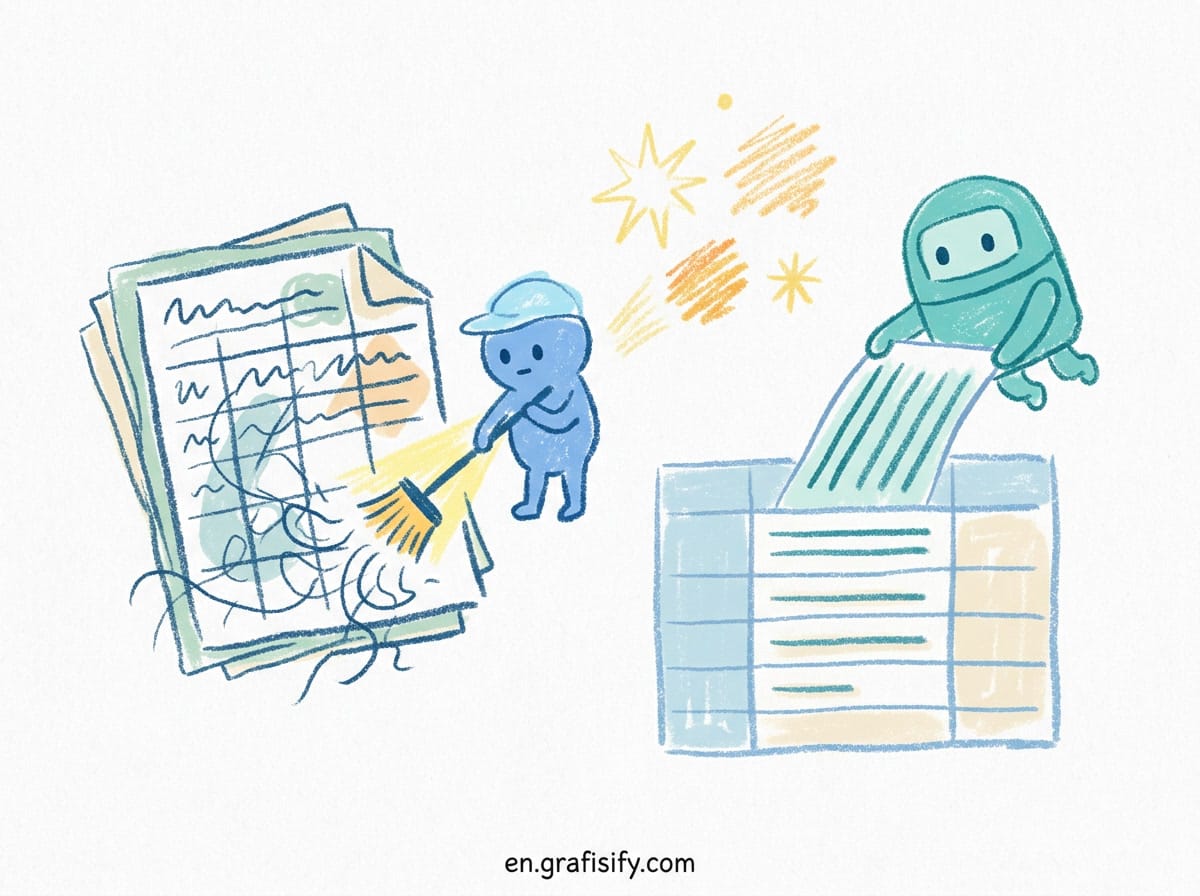
Extract. Pull methods, sample sizes, and outcomes into a structured table. This is where tools beat a spreadsheet: they read the full paper, not just the abstract.
Write. Draft with citation autocomplete, then verify every claim links back to a source. Verified citation grounding is the feature that separates useful tools from confident liars. Pick tools that retrieve citations rather than generate them.

Tool Comparison: Free vs Paid
The table below maps the main tools to the job they do best. No single tool wins every row.
| Tool | Best For | Free Tier | Paid Starting Price |
|---|---|---|---|
| Zotero | Reference management, browser capture | Yes (300 MB storage) | None (open source) |
| Semantic Scholar | Citation graph, paper discovery | Yes | None |
| ResearchRabbit | Citation-based recommendations | Yes | None |
| NotebookLM | Closed-corpus Q&A on your sources | Yes | Plus plan available |
| Elicit | High-volume systematic screening | Limited | Plus at 12 USD per month |
| SciSpace | Paper-by-paper deep reading | Limited | Student at 10 USD per month |
| Connected Papers | Visual literature mapping | 5 graphs per month | Pro at 6 USD per month |
| Paperguide | Full Plan-Search-Screen-Extract-Write workflow | Limited | Subscription, 40 percent student discount |
Most researchers need three or four complementary tools rather than one do-everything platform. A reference manager, an AI discovery tool, a reading or annotation layer, and a writing aid cover the full loop.

The Free Stack That Covers 80 Percent of the Work
You can run a credible review without spending a cent. The combination below is what I recommend to anyone starting out.
Zotero holds your library. The browser connector grabs any paper in two clicks, and the Word plugin formats citations in 1,000-plus styles (zotero.org). Group libraries let a lab share one collection.
Semantic Scholar shows how a paper has been cited and by whom, which helps you find the foundational texts fast (semanticscholar.org). ResearchRabbit learns your interests and recommends related work through citation analysis, the same way a music app suggests songs. Both are free.
NotebookLM takes your saved PDFs and answers questions against that closed set. Upload 20 papers, ask “what methods do they share,” and you get an answer grounded in your files, not the open web. For synthesis, that closed-corpus behavior is safer than a general chatbot.
The limit of the free stack shows up at scale. Screening 500 papers one at a time is still slow, and the free tools do not build extraction tables for you. That is the line where paid tools earn their price.
When the Paid Tier Is Worth It
Elicit is the strongest pick for systematic screening. It extracts methodologies and outcomes across studies and returns a comparison table, which is exactly the grind a review demands. At 12 USD per month on Plus, it pays for itself the first time it screens a batch you would otherwise read by hand.
SciSpace is built for depth on individual papers. Its Chat with PDF mode explains an unfamiliar method in plain language, which helps when you read outside your field. It works best paper by paper, less so across 50 sources.
Paperguide is the only platform that owns the full workflow from question to finished draft in one workspace, with two screening modes (Standard 100/20 and Extended 200/50) and citation grounding throughout. If you write thesis chapters or journal manuscripts with 50 to 200 sources, the consolidation alone is worth the subscription. The 40 percent student discount with a verified university email narrows the gap further.
Skip the paid tier if your review stays under 30 sources and you already use Zotero. The free stack handles that volume fine.
A Sample Workflow You Can Run This Week
Here is a concrete loop that mixes free and paid without overlap.
Day one: open Zotero, install the browser connector, and create a project library. Write your research question and inclusion criteria in the notes.
Day two: search Semantic Scholar and ResearchRabbit to build a seed set of 15 to 20 papers. Drop them in Zotero. Use Connected Papers to spot the visual cluster you missed.
Day three: if the pile grew past 100, run Elicit to screen and extract. If it stayed small, read in SciSpace and summarize in NotebookLM.
Day four: write the review in your processor with Zotero’s citation plugin. Check that every claim links to a retrieved paper, not a generated one.
This loop keeps each tool in its strength. You avoid the trap of asking one chatbot to do discovery, screening, and writing at once, which is where fabricated citations sneak in.
Key Takeaways
- A literature-review stack beats a single tool: discovery, screening, and notes each want a different app.
- Free tools (Zotero, Semantic Scholar, ResearchRabbit, NotebookLM) cover most reviews under 30 sources.
- Paid tools pay off at scale: Elicit for screening, SciSpace for deep reading, Paperguide for the full workflow.
- Citation grounding is non-negotiable. Retrieve citations, never let the model invent them.
- AI removes repetitive reading, not your judgment. You still decide what belongs in the review.
Frequently Asked Questions
Can AI tools run a complete literature review without me? No. They compress discovery and screening, but you set the question, the criteria, and the final argument. Treat the output as a first draft that needs verification, not a finished product.
What is the difference between these tools and ChatGPT? Research tools retrieve from real paper corpora and link claims to sources. A general chatbot guesses from training data and will fabricate references that look correct. For a review, grounded retrieval is the whole point.
Do these tools work on papers behind paywalls? Partly. They index metadata and abstracts widely, but full text depends on open access or your institution’s access. Upload PDFs you already have to close the gap.
Which tool should a student start with? Zotero plus Semantic Scholar plus NotebookLM. All three are free, cover discovery through synthesis, and teach the process instead of hiding it.
Final Thoughts
The literature review is not getting shorter, but the manual parts are. Pick a small stack, run the four-stage workflow, and keep citation grounding as your floor. The researchers who move fastest in 2026 are not the ones with the biggest AI budget. They are the ones who automated the reading and kept the thinking.
For more on building practical AI workflows, see our guides on context engineering for AI agents and AI agents for personal finance. If your work leans technical, our local LLM setup guide shows how to keep models on your own machine, and our analysis of AI feature failure modes explains why grounding matters.

Irfan is a Creative Tech Strategist and the founder of Grafisify. He spends his days testing the latest AI design tools and breaking down complex tech into actionable guides for creators. When he’s not writing, he’s experimenting with generative art or optimizing digital workflows.




 Artificial Intelligent
 Design & Creative
 Freelance
 Gadgets & Gear
 Insights
 Laptop
 Reviews
 Smartphone
 Tech Guides
 Vibe Coding