Prompt Chaining Explained: How to Get Reliable AI Output

TL;DR: The Short Version
Prompt chaining outperforms one giant prompt whenever a task has more than two moving parts. You break the job into small calls, check each result, then feed it into the next step. That is the whole idea, and it works because every step stays small enough for the model to handle well.
- A chain gives you a checkpoint after every step, so mistakes get caught early instead of piling up.
- The research backs this: chain-of-thought prompting let a large language model beat a finetuned GPT-3 system on the GSM8K math benchmark without any retraining (Wei et al., 2022).
- Chaining costs extra tokens and time, so save it for work that actually matters.
- Your next step: pick one repetitive task, split it into three steps, and run your first chain tomorrow.
What Prompt Chaining Actually Is
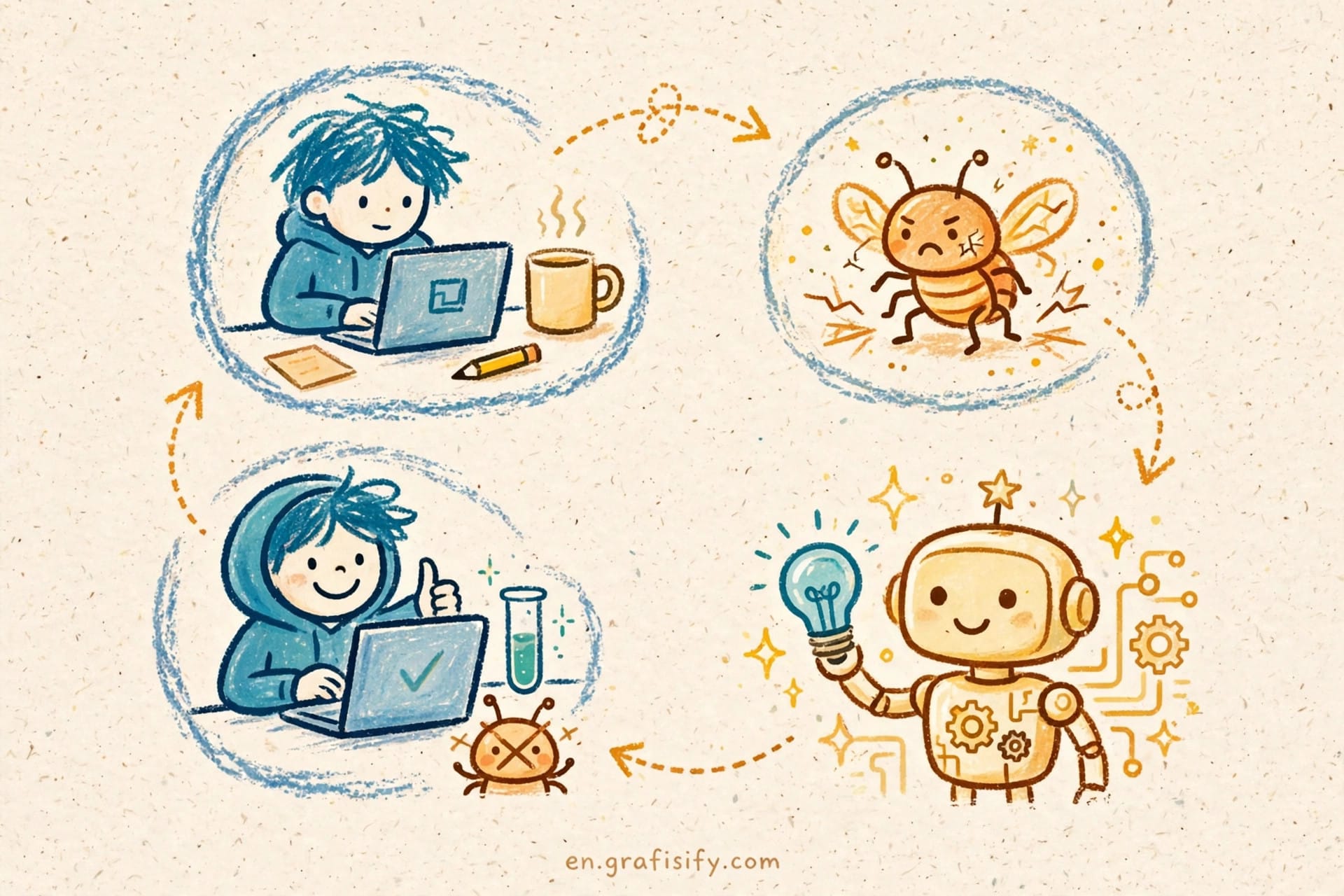
Prompt chaining means decomposing a task into a fixed sequence of smaller prompts, where each model call processes the output of the previous one. Anthropic describes this pattern in its engineering guide on building effective agents, and the team there treats it as one of the foundational workflows for reliable AI systems. Each link in the chain does one thing: extract, draft, critique, rewrite, or format.
Picture a market research brief. A single prompt that says “research the market and write me a full brief” forces the model to juggle analysis, structure, and prose at the same time. A chained version looks different. Call one produces a bare outline. Call two expands each outline point with facts you supply. Call three edits the draft against a style checklist. Call four formats the result. Four small jobs, four chances to steer.
I started chaining after losing too many evenings to bloated prompts that almost worked. The moment I split them apart, I could see exactly which step produced the weak output, and fixing one link stopped breaking the other three.
Why One Giant Prompt Fails on Complex Work
Long prompts fail for predictable reasons. First, attention dilutes: when you ask for ten things at once, models quietly drop two or three of them. Second, instructions start to conflict, and the model resolves the conflict silently instead of telling you. Third, when the answer disappoints, you have no idea which requirement failed, so every fix is a guess.
OpenAI’s official prompt engineering guide lists “split complex tasks into simpler subtasks” as a core strategy, right alongside writing clear instructions and giving the model time to think. The reasoning is practical rather than theoretical. Smaller scopes mean fewer failure modes per call, and failures become visible instead of hidden inside a wall of text.
Error compounding makes this worse over long outputs. If step one misreads your goal by twenty percent, every following paragraph inherits that wrong direction. By page three you are editing material built on a cracked foundation. A chain stops this early, because a checkpoint after step one catches the drift while it is still cheap to fix.

There is a quieter cost as well. A mega prompt locks your entire process inside one unbreakable text blob. Suppose you want to reuse the research half with a different tone for a different client. In a single prompt you would copy everything and prune carefully, hoping nothing snaps. In a chain you swap the last link and keep the rest untouched.
A Five Step Prompt Chaining Workflow You Can Copy
- Define the final deliverable first. Write down what “done” looks like: format, length, audience, tone. The chain exists to produce this artifact, so every step must move toward it.
- Map the smallest useful steps. Most writing tasks need four to six links: gather input, outline, draft, critique, polish. If you cannot name what a step produces, merge it with a neighbor.
- Write each prompt with one narrow job. Include the input, the exact output format, and two or three worked examples when format matters. Google’s Vertex AI documentation makes the same point about few-shot examples: showing the model what a good response looks like gets you far more consistent answers than describing it.
- Add a checkpoint between steps. This is where chains earn their keep. Give each checkpoint a tiny rubric, such as “does the outline cover pricing, competitors, and risks?” If the answer is no, fix that step before continuing. Never let a bad handoff flow downstream.
- Iterate the weakest link only. Run the chain, find the step whose output most often fails its checkpoint, and improve that single prompt. Because the chain is modular, you upgrade one link without touching the rest.
I keep my chains in a plain text file with one block per step, and I reuse the checkpoint rubrics across projects. Same approach works for summarizing client calls, by the way: the workflow overlaps heavily with what dedicated AI meeting assistants like Granola, Fireflies, and Fathom automate for you.

Prompt Chaining Techniques Compared
Chaining is one technique inside a bigger family. Knowing which one fits your task saves real money, because effort and token cost differ a lot between them. The table below sums up the tradeoffs.

| Technique | What It Does | Best For | Effort | Reliability Gain |
|---|---|---|---|---|
| Single zero shot prompt | Ask once, no examples, no steps | Quick drafts, definitions, rewrites | Minimal | Baseline |
| Few shot prompting | Show two to five worked examples | Fixed formats, matching house style | Low | Moderate |
| Chain of thought | Model reasons step by step before answering | Math, logic, decisions with constraints | Low | High on reasoning tasks |
| Self consistency | Sample several reasoning paths, take the majority answer | High stakes numeric answers | Medium | Highest measured lift |
| Prompt chaining | Split the task into linked calls with checkpoints | Long documents, multi stage workflows | Medium to high | High, and debuggable |
Two numbers are worth remembering. On the GSM8K benchmark of grade school math problems, eight chain-of-thought examples were enough for a 540 billion parameter model to reach state of the art accuracy and beat a finetuned GPT-3 system that used a verifier (arxiv). On top of that, self consistency samples multiple reasoning paths and takes a majority vote across them, which added another 17.9 percent on GSM8K (Wang et al., 2022). Neither result required new training. They came from changing how the prompt was structured, which is exactly the lever you have available today.
When Not to Chain Your Prompts
Chains have a real cost. Every extra call adds latency, tokens, and one more place where formatting can break. Anthropic is explicit about this tradeoff in the agents guide: chaining gains reliability and easier debugging at the price of higher latency and cost for tasks that fit fixed subtasks comfortably. For everything else it is overhead.
My rule of thumb: if you can state the task in one sentence and judge the result in five seconds, do not chain it. Brainstorming names for a project, tightening an email, or generating ten headline options are single-prompt jobs. Chains shine when the task has stages, dependencies, or a quality bar you would normally enforce with a human editor.

There is also a failure mode worth naming here. Once you wire chains into automated agents that act without review, weak checkpoints become real liabilities. The security risks around AI agents grow precisely when nobody inspects intermediate output, so treat manual checkpoints as training wheels you remove slowly, not immediately.
Seven Mistakes That Break a Prompt Chain
- Vague handoffs. If step two receives “the previous output” with no format contract, the chain drifts. Spell out exactly what each step passes forward.
- Skipping checkpoints. Running five steps unattended recreates the original problem: errors compound invisibly. Check first, then continue.
- Too many links. Past roughly seven steps you spend more time managing the chain than doing the work. Merge steps until the map fits on one screen.
- No examples where format matters. Tables, JSON, or brand voice collapse without two or three demonstrations inside the prompt.
- Ignoring context limits. Passing a full document through every step eventually overflows the window. Summarize or slice inputs between links.
- Asking the model to grade itself without a rubric. “Is this good?” returns polite yeses. Give the checkpoint concrete criteria instead.
- Never saving versions. When a chain works, freeze the prompts. I keep dated copies, because a tweak that helps one task often hurts another.
Frequently Asked Questions
How many steps should a prompt chain have?
Three to six covers most jobs. Below three you gain little structure, above six the coordination overhead starts eating the benefit. Start with four: outline, draft, critique, polish.

Do I need an API to run chains?
No. Copying output from one chat message into the next works fine and teaches you the mechanics fast. APIs and automation tools matter later, when a chain proves itself and you want it scheduled or hands free. Teams that graduate from manual chains usually connect them through workflow builders, similar to the setups described in guides on prompt chaining techniques.
Is prompt chaining the same as chain-of-thought prompting?
Close but different. Chain of thought happens inside one call: the model shows its reasoning before the answer. Prompt chaining spans multiple calls, each with its own narrow job. Strong chains often use chain of thought inside individual links, especially at critique steps.
Final Thoughts and Next Step
Reliable AI output comes from structure, not from magic phrases buried in a super prompt. Splitting work into chained steps gives you checkpoints, smaller failure surfaces, and prompts you can improve one at a time. The evidence behind step-by-step reasoning is solid, and the workflow costs nothing but discipline to try.
Here is your move. Take one recurring task you did this week, cut it into three prompts tonight, and run the chain tomorrow with a checkpoint after every step. Once the habit sticks, go deeper with our guides on writing rules files for AI coding agents and running spec-driven development with AI agents. Both build directly on the chaining mindset you just learned.

Irfan is a Creative Tech Strategist and the founder of Grafisify. He spends his days testing the latest AI design tools and breaking down complex tech into actionable guides for creators. When he’s not writing, he’s experimenting with generative art or optimizing digital workflows.






 Artificial Intelligent
 Design & Creative
 Freelance
 Gadgets & Gear
 Insights
 Laptop
 Reviews
 Smartphone
 Tech Guides
 Vibe Coding