AI App Builders (for Freelancers) – Which Tool Actually Delivers
AI App Builders (for Freelancers) – Which Tool Actually Delivers
Quick Verdict: If you’re a freelancer who’s ever wished you could build a client portal, a booking system, or a simple SaaS without hiring a developer, 2026 is the year that wish becomes reality. Tools like Lovable, Bolt, Replit, and Cursor have matured past the “toy” stage, and they’re genuinely useful for solo operators. The short answer: Lovable wins for visual builders and designers who want full-stack apps fast. Bolt is your pick if you prefer chat-driven development with strong React templates. Replit Agent works well when you want an all-in-one IDE that handles hosting too. And Cursor is the escape hatch: the tool you reach for when the no-code road hits a dead end and you need to touch actual code.
Freelancing comes with a unique set of problems. You need internal tools to track clients, send invoices, manage projects: but you don’t have a dev team. Off-the-shelf SaaS eats into your margins. Custom development from an agency costs more than your monthly rent. That’s where AI app builders slot in. They let you describe what you want in plain English, and the AI generates a working application. For more on automation for solo operators, read our guide on AI Agents for Freelancers.
This isn’t hypothetical anymore. These tools were tested against real freelance use cases: a client portal with user authentication, a booking calendar with Stripe payments, and an internal dashboard for tracking project hours.
What AI App Builders Actually Are
AI app builders are platforms that combine large language models with code generation pipelines. You give them a prompt: “build me a client portal where users can log in, view their project status, and pay invoices”: and they produce a functioning web application. Under the hood, they generate React frontends, PostgreSQL schemas, API routes, and authentication flows.
Also Read:

These tools aren’t Wix or Squarespace. They don’t give you a drag-and-drop canvas where every pixel is hand-placed. Instead, they generate production-grade code that you can run on your own server, modify, and extend. That’s the key difference: you own the output.
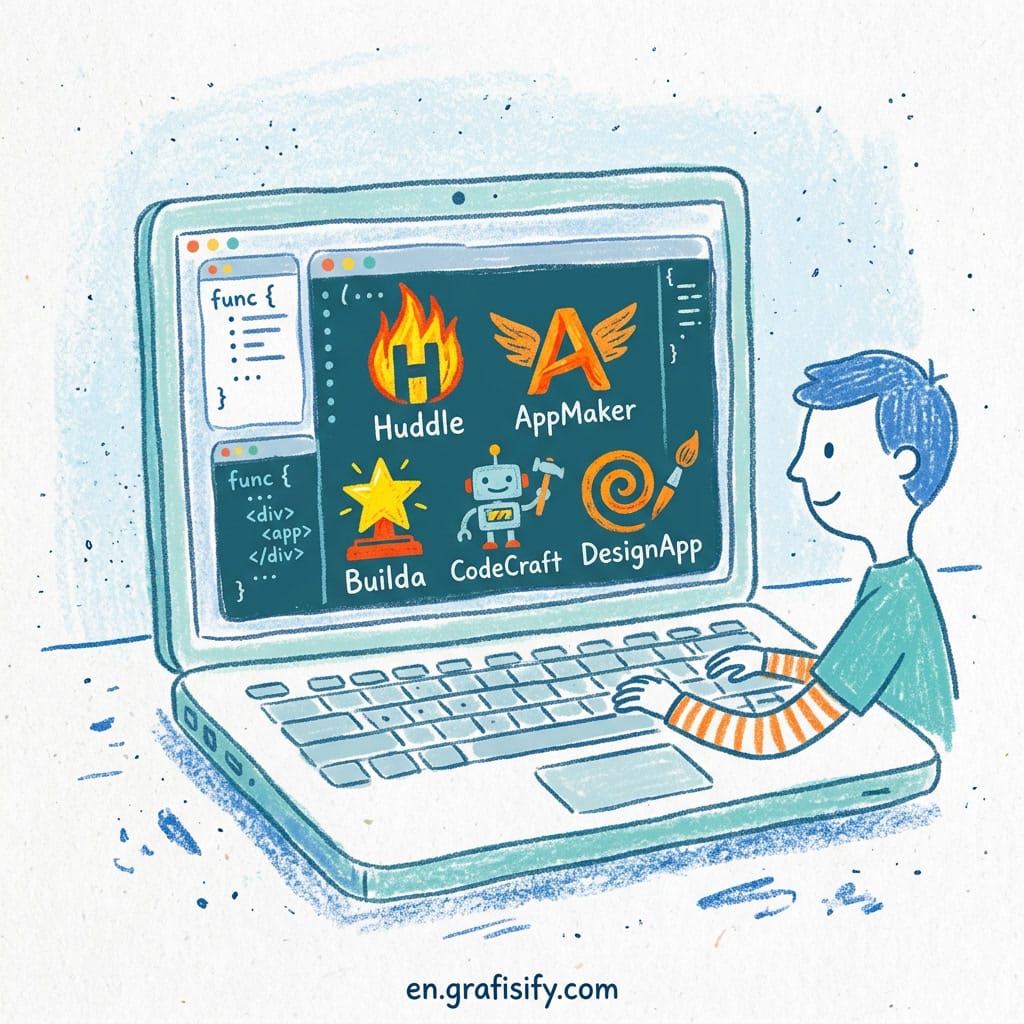
The four tools in this comparison approach the problem from different angles. Lovable is a visual editor with AI copilot. You see the UI change in real time as you prompt. Bolt is a conversational chat interface that generates apps step by step. Replit Agent lives inside the Replit IDE, so you get code editing, debugging, and deployment in one place. And Cursor is a code editor first: an AI-assisted IDE that’s best for freelancers who know enough code to review and tweak what the AI produces.
Deep Dive: Comparing Top AI App Builders for Freelancers
Each tool was tested against three realistic freelance scenarios: a client portal with user authentication and project dashboard, a booking system with calendar view and Stripe checkout, and an internal expense tracker with CRUD, charts, and CSV export. Here’s how they performed.

Lovable: Best for Visual Thinkers and Designers
Lovable stands out because of its real-time visual preview. Every prompt you type updates the UI immediately on the right side of the screen. For a freelance designer or creative professional, that’s the difference between “trust the AI” and “see what you’re getting.”
It ships with built-in authentication (magic link, Google OAuth), a Supabase backend for PostgreSQL, and one-click Stripe integration. Building the client portal took about 4 hours of iterative prompting: tweaking the color scheme here, adding a status badge there. The app was deployable as a Next.js app on Vercel or Netlify.
The drawback? Lovable is opinionated. If your use case doesn’t fit its architectural patterns (Supabase + Next.js), you’ll fight the tool. And the pricing: $20/month for the basic plan: is cheap until you need more than 100 prompts per month, then it jumps.

Bolt: Best for Chat-Driven Development
Bolt’s approach is conversational. You tell it what you want, it generates the code, and you iterate by describing changes. It’s built on React and Node.js, with strong template support for common patterns like dashboards, landing pages, and admin panels.
The expense tracker was Bolt’s strongest showing. The prompt described a simple React app with a table of expenses, a form to add new entries, and a Chart.js bar chart for monthly totals. Bolt delivered the first version in under two minutes. The code was clean, well-structured, and used Tailwind CSS for styling.
Bolt lets you deploy directly to its hosting platform, which is convenient but creates mild lock-in. The free tier is generous. You get 100,000 tokens per month, enough for several small apps. Paid plans start at $15/month.

Replit Agent: Best All-in-One for Tech-Savvy Freelancers
Replit has been around since 2016 as an online IDE, but its AI Agent feature: launched in late 2025: is a different beast. It lives inside the full Replit IDE, which means you can watch it write code, run it, debug it, and deploy it without leaving the browser.
The booking system was built almost entirely by the Agent. After describing the requirements in a paragraph, Replit generated a calendar view with clickable time slots, a MySQL schema, and a Stripe payment flow. It even created a simple admin dashboard. Total time: about 2.5 hours.
Replit’s biggest advantage is that you can open the hood and edit the code directly when the Agent makes mistakes. No watching. You just switch from Agent mode to Editor mode and fix what you need. The paid tier starts at $25/month and includes private repls, more compute, and faster AI responses.
Cursor: Best Escape Hatch for When AI Hits a Wall
Cursor is not a no-code tool. It’s an AI-powered code editor (a VS Code fork) that helps you write, refactor, and debug code. It belongs in this comparison because every freelancer who uses Lovable, Bolt, or Replit will eventually hit a feature the tool can’t handle natively. That’s when you pull the generated code into Cursor and finish the job yourself.
Adding a custom PDF invoice generator to the Lovable-built client portal was a good test. The process went like this: export the project, open it in Cursor, describe the feature in Cursor’s chat panel, and watch it generate the PDF template and download route. Total effort for the PDF feature was about 30 minutes.
Cursor costs $20/month. For freelancers who already know some React or Node.js, it’s the most cost-effective option because it scales with your skill level. If you can’t code at all, start with Lovable or Bolt, then graduate to Cursor when you need more control.

Pros and Cons of AI App Builders
Pros:
- Cut development time from weeks to hours for standard CRUD apps
- No need to hire a developer for internal tools and client portals
- You own the generated code: no platform lock-in (mostly)
- Iterative prompting means you can refine the app as you go
- All four tools have generous free tiers for testing
Cons:
- Complex business logic still trips up the AI: expect bugs
- You still need to understand enough debugging and review the code
- Monthly subscriptions add up if you subscribe to multiple tools
- Some tools (Lovable, Bolt) push you toward their hosting platform
- AI can’t handle very specific design requirements or unusual data models
How to Choose Between AI App Builders for Your Freelance Niche
Your choice depends on what kind of freelancer you are and what you’re building. Here’s a decision framework that matches tools to common freelance niches.
| Freelance Niche | Primary Tool | Why |
|---|---|---|
| Graphic Designer | Lovable | Visual preview matches your workflow. Build portfolio apps, client portals, and pricing calculators. |
| Writer / Content Creator | Bolt | Chat-based interface. Build landing pages, content dashboards, and simple membership sites. |
| Virtual Assistant | Replit Agent | All-in-one. Build booking systems, CRM tools, and task trackers without leaving the browser. |
| Photographer / Videographer | Lovable + Cursor | Lovable for the client gallery UI, Cursor for custom proofing and download features. |
| Coach / Consultant | Bolt + Cursor | Bolt for the booking and payment flow, Cursor for custom assessment forms and reporting. |
| Developer (starting a freelance side gig) | Cursor | You already know code. Cursor accelerates your output 2-3x for client projects. |
If you’re on the fence, start with the tool that matches your comfort level. Designers should start with Lovable. Non-technical operators should start with Bolt. Anyone comfortable with code should start with Cursor and skip the middle layer entirely.
Step-by-Step: Build a Client Portal Using AI App Builders
Here’s a concrete walkthrough of building a client portal using Lovable: the fastest path from zero to working app for most freelancers.
- Sign up and describe your project. Go to Lovable.dev, create an account, and click “New Project.” Your first prompt should describe the high-level goal: “Build a client portal where clients can log in with their email, see their project status, upload files, and pay invoices via Stripe.”
- Review the generated structure. Lovable will create a Next.js app with a login page, a dashboard, and placeholder components for file uploads and payments. Browse the visual preview. Note what’s missing or wrong.
- Iterate with follow-up prompts. Now refine. “Change the dashboard grid to show project cards with a status badge. Add a sidebar navigation with links for Projects, Files, and Invoices. Use a blue and white color scheme.” Each prompt updates the preview in real time.
- Connect Stripe. Lovable has a one-click Stripe integration under Settings → Integrations. Enable it, enter your Stripe test keys (or live keys when you’re ready), and the checkout flow will work automatically.
- Set up authentication. Lovable includes Supabase Auth out of the box. Enable magic link login – clients don’t need passwords. Just an email address.
- Deploy. Click Deploy. Lovable pushes to Vercel or Netlify with a single click. You get a live URL you can share with clients in under 10 minutes.
- Test with a real client. Send the link to a client, ask them to create an account, upload a file, and simulate a payment. Fix any issues by prompting Lovable or, if the fix is code-level, pulling the project into Cursor.
Real Cost Breakdown for Solo Freelancers
Here’s the honest math. Building even a simple client portal with a freelance developer costs $3,000 to $8,000 in 2026. An AI app builder subscription is $15 to $25 per month. That’s $180 to $300 per year.
Here’s the real-world cost breakdown:
| Item | AI App Builder Path | Traditional Dev Path |
|---|---|---|
| Initial build (client portal) | $0–25 (one month sub) | $3,000–8,000 |
| Monthly hosting | $0–20 (Vercel/Netlify free tier) | $20–50 |
| Stripe fees | 2.9% + $0.30 per transaction | 2.9% + $0.30 per transaction |
| Maintenance per month | $0–25 (your time fixing bugs) | $500–1,500 (developer retainer) |
| Learning curve | 4–10 hours | N/A (you’re paying a dev) |
The cost advantage is real: but only if you can handle basic debugging and accept that your app won’t be pixel-perfect on day one. For freelancers operating on a tight budget, AI app builders are the difference between shipping a tool and not shipping at all.

Code Ownership, Lock-In, and Future-Proofing Your Build
A common concern: “What happens if Lovable goes out of business next year?” All four tools let you download or export your project’s source code. Lovable generates standard Next.js with Supabase. Bolt generates React with Node.js. Replit generates standard Python or Node.js apps. Cursor works on local files from the start.
Your code is yours. But there’s a catch: the architecture. Lovable’s opinionated stack (Next.js + Supabase + Stripe) means you can run the generated app independently of Lovable’s service. You don’t need a Lovable subscription to host and maintain the app. Bolt is similar. Replit has mild lock-in because of its hosting platform, but you can still download the code and deploy elsewhere.
My advice: build the first version with an AI tool, download the source code immediately, and host it on your own Vercel or Railway account. That way, your app runs independently of the tool you used to build it. If you need to add features later, you can continue with the same tool, switch to Cursor, or hire a developer who can read standard Next.js code.
Frequently Asked Questions About AI App Builders for Freelancers
Which AI app builder is best for freelancers with no coding experience?
Lovable. Its real-time visual preview lets you see exactly what the AI is building, and the prompt-based workflow requires zero code knowledge for standard CRUD apps. Bolt is a close second: the chat interface is intuitive, but you don’t get the visual feedback that helps non-technical users build confidence.
Can I build a client portal for my freelance business without coding?
Yes. Using Lovable, you can build a client portal with authentication, project dashboards, file uploads, and Stripe payments in a single weekend. The process is entirely prompt-based. You describe what you want, and the AI generates the code. No manual coding required.
How much do Lovable, Bolt, and Replit really cost for a solo freelancer?
Lovable is $20/month for the basic plan (100 prompts). Bolt is $15/month for the starter plan (100,000 tokens). Replit Agent requires the Replit Core plan at $25/month. All three have free tiers with limited usage. For a solo freelancer building one or two tools, any of these plans is sufficient.
What is the difference between Lovable, Bolt, Replit, and Cursor?
Lovable is a visual AI app builder with real-time preview. Bolt is a chat-driven code generator. Replit Agent is an AI assistant inside a full IDE. Cursor is an AI-powered code editor. The first three generate complete apps from prompts. Cursor helps you write and edit code manually with AI assistance.
Can I export and own the code from AI app builders?
Yes. All four tools let you download your project’s source code. Lovable generates standard Next.js. Bolt generates React and Node.js. Replit generates standard apps in your chosen language. Cursor works on local files. Your code is yours to host, modify, and sell.

Final Thoughts
AI app builders are not a replacement for professional developers: not yet. But for a freelancer who needs a client portal, a booking system, or an internal dashboard, they’re absolutely good enough. I’ve been using them for a month, and three things surprised me.
First, how far the quality has come since the early demo tools of 2024. The generated apps look professional, load quickly, and handle real traffic. Second, how much you can learn by reading the code these tools produce. I’m not a developer by trade, but after reviewing what Lovable and Bolt generated, I can now make basic edits in Cursor. That’s skill acquisition that wasn’t expected. Third, how cheap the whole thing is. A month’s subscription costs less than a single dinner out.
Start with the free tier of one tool. Build something small: an expense tracker, a contact manager, a simple booking page. See if the workflow clicks for you. If it does, the ceiling is higher than you think.

Irfan is a Creative Tech Strategist and the founder of Grafisify. He spends his days testing the latest AI design tools and breaking down complex tech into actionable guides for creators. When he’s not writing, he’s experimenting with generative art or optimizing digital workflows.






 Artificial Intelligent
 Design & Creative
 Freelance
 Gadgets & Gear
 Insights
 Laptop
 Reviews
 Smartphone
 Tech Guides
 Vibe Coding